Laodicea is one of the seven churches addressed by Jesus in Revelation, specifically in Revelation 3:14–22. The church is described as neither hot nor cold but lukewarm, and its central problem is spiritual self-sufficiency: it believes it is rich and needs nothing, while Jesus says it is poor, blind, and naked.
The message to Laodicea is both a severe warning and an invitation. Jesus calls the church to recognize its true condition, receive what only he can provide, and respond to his correction with repentance, faith, and renewed fellowship.
The main biblical passage about Laodicea is Revelation 3:14–22, the seventh and final message among the letters to the churches in Revelation 2–3. These messages were given to churches in the Roman province of Asia, in what is now western Turkey. Each message addresses a particular congregation while also presenting principles that apply more broadly to Christian communities.
Laodicea is also mentioned in Paul’s letter to the Colossians. Colossians 2:1 refers to the believers in Laodicea, and Colossians 4:13–16 describes Paul’s concern for the Christians there and instructs the Colossians to exchange letters with them. These references show that Laodicea was part of a connected network of early Christian churches.
The letter in Revelation is addressed to the angel of the church in Laodicea. The wording is commonly understood as referring to the church’s representative or messenger. The message itself, however, is directed to the congregation as a whole, especially in its repeated call for those who hear to listen and respond.
Key passage: Revelation 3:14–22 is the essential text for understanding Bible Laodicea. Read it alongside Colossians 2:1 and 4:13–16 for additional context about the church and its relationship with nearby congregations.
What kind of city Laodicea was
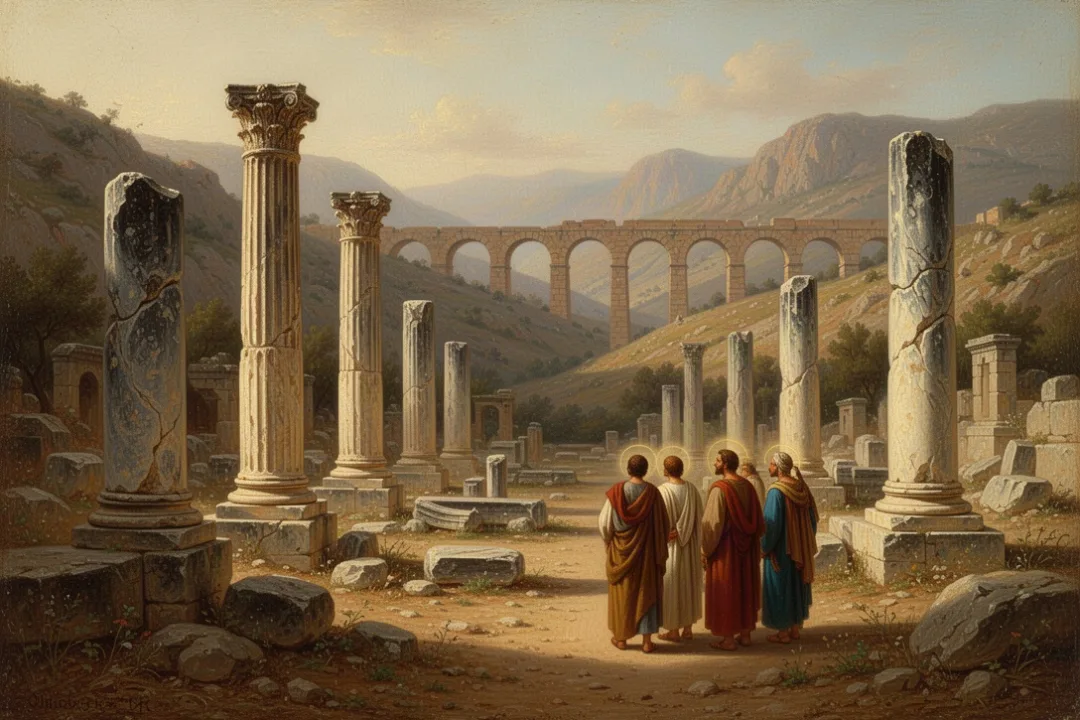
Laodicea was a prosperous city located in the Lycus Valley, near Colossae and Hierapolis. Its position along important trade routes helped it develop as a significant commercial center. The city was also associated with banking, textile production, and a medical tradition connected with eye treatment.
These features help explain why Revelation uses images of gold, clothing, and eye salve. The message contrasts the city’s material reputation with the church’s spiritual condition. Laodicea may have been known for wealth, fine fabric, and medical expertise, yet Jesus tells the church that it lacks the spiritual riches, covering, and sight it truly needs.
Laodicea also had a history of recovering from a major earthquake without relying on outside financial assistance. Ancient writers describe the city’s refusal of imperial help after a disaster, although the details should not be turned into a simplistic explanation for every line in Revelation. The broader point remains clear: the city had a reputation for independence and prosperity, and the church had adopted a similar attitude toward God.
Nearby Hierapolis was known for hot springs, while Colossae was associated with cool water. Laodicea’s water supply was less desirable by the time it reached the city, having traveled through an aqueduct. This background may help explain the imagery of hot, cold, and lukewarm water, although the exact historical relationship between the water systems and the wording of Revelation is debated.
What Jesus means by “lukewarm” in Revelation
The word lukewarm is often used to describe weak enthusiasm or halfhearted religious commitment. That idea is present in the passage, but the image may carry an additional contrast. Hot water can be useful for bathing or healing, and cold water can be refreshing. Lukewarm water is unpleasant and less useful for either purpose.
Jesus’ rebuke therefore concerns more than emotional intensity. The Laodicean church is not accused of lacking a dramatic worship style or constant excitement. Its deeper failure is that its faith has become ineffective, complacent, and detached from dependence on Christ. The church has the appearance of belonging to Jesus, but it does not live with the humility, trust, and obedience that such belonging requires.
The warning should not be reduced to the idea that Jesus prefers people who are openly opposed to Christianity over people who struggle with spiritual energy. The passage focuses on the church’s uselessness and self-deception. Laodicea has settled into a condition where it neither offers the refreshing witness associated with cold water nor the beneficial warmth associated with hot water.
Many Christians experience seasons of weariness, grief, doubt, or spiritual dryness. Those experiences are not automatically the same as the Laodicean condition. A person who is troubled by weakness and seeks God’s help is not displaying the same self-satisfied attitude as a person who assumes nothing is wrong.
Why Jesus says Laodicea is poor, blind, and naked
The church’s self-assessment appears in Revelation 3:17: it says that it is rich, has become wealthy, and needs nothing. Jesus gives a completely different diagnosis. He describes the church as wretched, pitiable, poor, blind, and naked. The contrast exposes the difference between visible success and spiritual reality.
Laodicea probably had genuine material resources. The criticism is not that wealth itself is sinful or that every prosperous believer is spiritually compromised. The problem is that the church has allowed material security to create an illusion of spiritual security. It does not merely possess wealth; it believes its wealth proves that it lacks nothing.
Spiritual poverty means lacking the dependence, righteousness, wisdom, and vitality that come from Christ. A congregation can own property, maintain programs, attract respected people, or have a strong public reputation while still neglecting prayer, truth, mercy, holiness, and love. Outward stability cannot substitute for inward faithfulness.
The images of blindness and nakedness deepen the warning. Blindness suggests an inability to see the church’s actual condition. Nakedness suggests exposure and shame, especially in contrast with the fine clothing for which the region was known. Jesus is not insulting the church for its own sake; he is uncovering its false confidence so that it can seek healing.
What the three remedies offered to Laodicea mean
Jesus tells the church to buy from him refined gold, white clothing, and eye salve. The language is figurative and points to the spiritual resources that Laodicea cannot produce through money, reputation, or local expertise. The command to “buy” does not mean that salvation can literally be purchased. It emphasizes the need to turn away from false sources of security and receive what Christ supplies.
Refined gold represents genuine spiritual wealth
Gold that has been refined is valuable and tested. In the letter, it represents true riches that endure before God. Laodicea has financial wealth but lacks the kind of faith that has been purified and proven genuine. The remedy is not simply to give away all possessions or to become materially poor. It is to seek lasting spiritual treasure rather than treating money as evidence of divine approval.
Other New Testament passages also connect faith with testing and endurance, but Revelation presents the image in a direct rebuke to a wealthy church. The congregation needs wealth that cannot be measured by its bank accounts, buildings, clothing, or social influence.
White clothing represents restored honor and righteousness
White clothing appears repeatedly in Revelation as a symbol associated with purity, victory, and belonging to God. For Laodicea, white garments answer the shame of spiritual nakedness. The image points to a status and righteousness received from Christ rather than manufactured through public respectability.
This does not excuse immoral behavior. The letter calls for repentance and changed loyalty. Yet the clothing image emphasizes that the church cannot cover its true condition through polished appearances. Christ provides the covering, and the believer’s response is to live openly under that grace rather than hide behind religious performance.
Laodicea’s association with medical treatment for the eyes makes the image especially pointed. The church has physical or cultural resources connected with sight, but it cannot see its own spiritual poverty. Jesus offers the ability to recognize truth, sin, need, and grace accurately.
Spiritual sight includes more than gaining information. It means learning to judge circumstances from God’s perspective. A church with restored sight can recognize when success has become an idol, when religious language is covering disobedience, and when a struggling person needs compassion rather than dismissal.
How Jesus’ correction reveals his relationship with Laodicea
After the severe diagnosis, Jesus says that he corrects and disciplines those he loves. This statement changes the tone of the message without minimizing its seriousness. The rebuke is not evidence that Jesus has abandoned Laodicea; it is evidence that he is still calling the church back to reality.
Correction is loving when it aims at restoration rather than humiliation. Jesus does not flatter the church or allow its claims to go unchallenged. He identifies the danger precisely because the congregation can still respond. The command to be earnest and repent shows that the door remains open.
This passage also challenges a common misunderstanding of divine love. Love is not always approval of a person’s current condition. In Revelation, love tells the truth, exposes self-deception, and demands a meaningful response. A church that receives only praise may remain comfortable while drifting further from Christ.
The passage ends with an image of Jesus standing at the door and knocking. It is often used in evangelistic settings, especially as an invitation for an individual to accept Christ. In its immediate context, however, the words are addressed to a church that already identifies as Christian. The image therefore speaks powerfully about Christ seeking renewed fellowship with a congregation that has pushed him to the margins.
Revelation 3 presents Jesus as correcting the church because he loves it and still calls it to fellowship.
What “I will spit you out” means
The vivid language about spitting out the lukewarm church expresses strong rejection of its condition. It is not a mild complaint about imperfect performance. The church has become distasteful because its confidence and identity no longer match its dependence on Christ.
Readers should handle this warning carefully. It does not mean that every Christian who feels spiritually tired has been rejected by God. It also does not provide a formula for deciding which other churches are genuine. The passage calls each church and believer to examine self-deception, complacency, and misplaced confidence.
The warning is especially relevant when a congregation assumes that size, wealth, tradition, influence, or doctrinal vocabulary automatically proves faithfulness. Those things may be useful, but none can replace repentance and dependence on Jesus. The question is not whether a church looks successful from the outside; it is whether its life reflects the character and authority of Christ.
Practical ways to respond to the Laodicean warning
The message to Laodicea is not meant to produce vague anxiety. It gives a pattern for honest spiritual examination and renewed obedience. Individuals and churches can use the following questions to identify where self-sufficiency may be taking root:
What do you believe you need from God? If the practical answer is “nothing,” examine whether comfort or success has replaced dependence.
What evidence supports your spiritual self-assessment? Distinguish between reputation, activity, and genuine fruit such as love, truthfulness, mercy, holiness, and perseverance.
Where have you become unable to see your own condition? Invite trustworthy, mature believers to speak honestly and receive their observations without immediate defensiveness.
What are you using to cover spiritual weakness? Religious vocabulary, busyness, public service, and strong opinions can hide a neglected relationship with Christ.
What would repentance look like in practice? Name a specific change in prayer, conduct, relationships, generosity, worship, or accountability rather than settling for general regret.
Are you making room for fellowship with Jesus? The image of the door calls for more than acknowledgment; it calls for listening, welcoming, and responding.
These questions should lead to humility rather than comparison. The purpose is not to label another congregation “Laodicean” while avoiding personal examination. The same warning can confront a thriving church, a small church, a ministry leader, or an individual believer.
Practical caution: Do not use the word “lukewarm” as a quick label for someone who is grieving, questioning, disabled, exhausted, or moving through a difficult season. The passage confronts proud self-sufficiency, not every form of weakness.
Common mistakes when interpreting Bible Laodicea
Laodicea is one of the most quoted church passages in Revelation, but several interpretations can flatten its meaning. Avoiding these mistakes helps preserve the force and balance of the text.
Reducing lukewarmness to low emotion: A person may worship quietly or feel spiritually tired without being complacent. The issue is usefulness, dependence, and honest response to Christ.
Treating wealth as automatic proof of sin: Revelation criticizes self-reliance, not the mere possession of money. Wealth becomes spiritually dangerous when it replaces trust, generosity, justice, and humility.
Using the passage only for non-Christians: The message is addressed to a church. It speaks directly to people who claim Christian identity but have become self-satisfied.
Reading the door image without its context: Revelation 3:20 can invite personal response, but it first portrays Jesus calling a church back into fellowship.
Assuming the historical water illustration explains everything: The hot, cold, and lukewarm imagery is illuminating, but archaeological and historical details should not be treated as more certain than the biblical text itself.
Stopping at condemnation: The passage includes a diagnosis, a call to repentance, an offer of spiritual riches, and a promise to the one who conquers. Its aim is restoration through renewed allegiance to Christ.
What the promise to the conqueror means
At the end of the message, Jesus promises that the one who conquers will sit with him on his throne, just as he conquered and sat with his Father on his throne. This promise connects Laodicea with the repeated “to the one who conquers” sections in the letters to the seven churches.
To conquer does not mean achieving flawless performance or winning social power. In Revelation, overcoming involves remaining faithful to Jesus amid pressure, compromise, deception, and spiritual apathy. For Laodicea, overcoming means rejecting self-sufficiency and receiving Christ’s correction with obedient faith.
The promise is striking because it follows the church’s humiliating diagnosis. The congregation that thinks it needs nothing is invited to share in Christ’s reign. This is not a reward for pretending to be strong. It is a promise of grace to those who listen, repent, and remain faithful.
How churches can apply the message today
A congregation can apply Laodicea’s warning by examining how it defines success. Attendance, budgets, buildings, online reach, and public approval may all provide useful information, but they cannot measure the whole health of a church. Leaders should also ask whether the church is growing in love for God, care for neighbors, truthfulness, prayer, justice, generosity, and courage.
Churches can build regular opportunities for honest evaluation. These may include prayerful leadership review, transparent financial practices, meaningful care for vulnerable people, confession where harm has occurred, and feedback from members who are often overlooked. Such practices do not guarantee spiritual health, but they resist the isolation and overconfidence that marked Laodicea.
Members can apply the passage by refusing to confuse participation with discipleship. Attending services, volunteering, giving, or defending correct beliefs can be good, but they should flow from a living relationship with Christ. The central question is whether the church’s activity expresses dependence, love, and obedience rather than the need to appear successful.
Leaders should also take care with how they use the warning. Calling people lukewarm as a means of pressure can create fear without repentance. A faithful application names sin honestly while pointing people toward Christ’s provision, patient correction, and invitation to renewed fellowship.
Why the Laodicean message still matters
Laodicea remains relevant because self-sufficiency can appear in religious forms. A church may speak constantly about God while relying mainly on money, strategy, branding, political access, or charismatic leadership. An individual may know Christian language and maintain respectable habits while quietly assuming that spiritual need belongs to other people.
The letter asks you to compare your self-image with Christ’s assessment. It warns that comfort can hide poverty, reputation can hide nakedness, and information can coexist with blindness. It also assures you that recognition of need is not the end of faith; it is the beginning of receiving what Jesus offers.
The message to Bible Laodicea therefore holds warning and hope together. Christ rejects complacency, but he does not abandon the complacent church without a call. He exposes false wealth so that true wealth may be received, exposes blindness so that sight may be restored, and exposes shame so that genuine covering may be found in him.
Frequently asked questions
What is the main message of the church at Laodicea?
The main message is a warning against spiritual complacency and self-reliance. Laodicea considered itself prosperous and in need of nothing, but Jesus judged it spiritually poor, blind, and exposed. He called the church to recognize its condition, receive true spiritual provision from him, repent sincerely, and renew its fellowship with him.
Does lukewarm mean that a Christian must feel passionate all the time?
No. Spiritual fatigue, grief, doubt, and quiet faith are not automatically the lukewarm condition described in Revelation. The warning focuses on proud self-sufficiency and a faith that has become ineffective or disconnected from dependence on Christ. A person who admits weakness and seeks God’s help is responding differently from the complacent church at Laodicea.
Was the Laodicean church wealthy?
Laodicea was known as a prosperous city, and the church appears to have shared the city’s confidence in material security. Revelation does not condemn every possession or every wealthy believer. Instead, it confronts the assumption that financial success proves spiritual health. The church’s wealth had contributed to an attitude that it needed nothing from Christ.
Is Revelation 3:20 only about becoming a Christian?
Revelation 3:20 is often used as an invitation for an individual to receive Christ, and that application can be meaningful. In its immediate setting, however, Jesus is speaking to a church that already identifies as Christian. The image primarily describes his call for a complacent congregation to welcome him back into active fellowship and obedience.







Leave a Reply