Bible Quote Notebook: The Ultimate Scripture Journal for Daily Inspiration and Prayer
Bible Quote Notebook: The Ultimate Scripture Journal for Daily Inspiration and Prayer
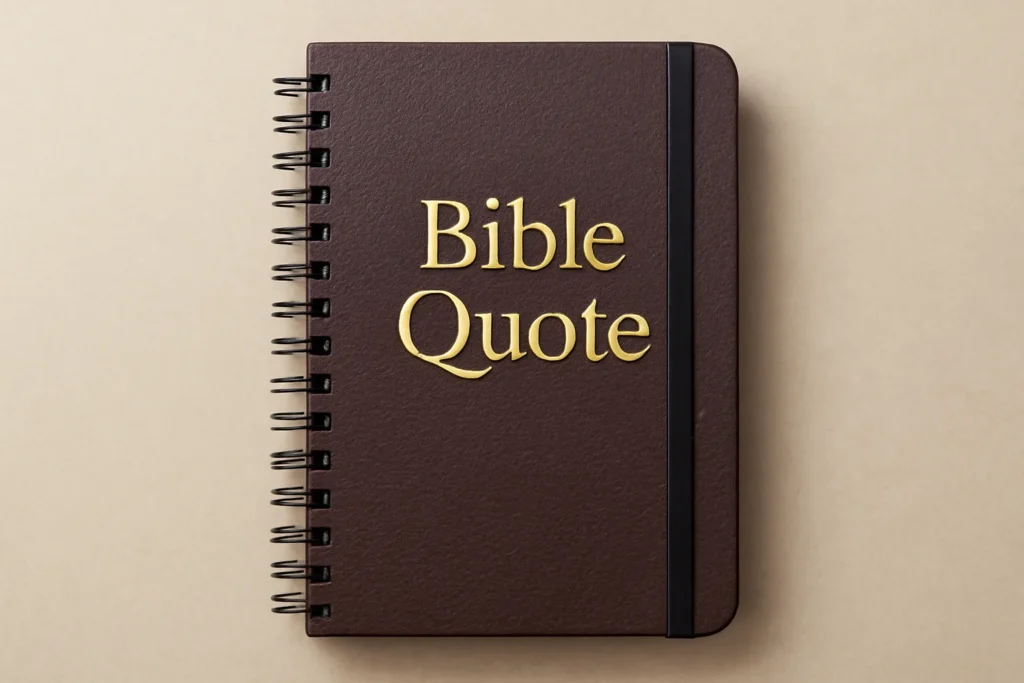
A bible quote notebook is more than a collection of verses; it is a dedicated space for capturing the living words of Scripture, reflecting on their meaning, and guiding daily prayer and action. In a world full of noise, this kind of scripture journal helps you slow down, listen, and respond to God with intention. Whether you are new to journaling or have years of practice, a well-designed verse notebook can become a trusted companion for spiritual growth, discipline, and encouragement.
A bible quote notebook is a personal journal that centers on memorized or freshly read verses, short reflections, and prayer requests tied to each passage. It blends the discipline of study with the intimacy of prayer, creating a bridge between knowledge and lived faith. While the exact layout can vary, most models share some common elements: a place to 기록 date, a space for the verse text, a section for reflection, and a line or section for prayer or application. In practice, this notebook becomes a private archive of God’s voice in your daily life.
Why choose a dedicated Bible quote notebook?
It promotes daily practice and accountability by giving you a defined space and routine.
It helps with memory and meditation as you repeatedly write and reflect on verses.
It provides a personal record of spiritual growth, answered prayers, and changing perspectives over time.
It strengthens your ability to apply Scripture to real-life situations, relationships, and decisions.
It creates a sense of poise and clarity in prayer, guiding you toward concise, earnest communication with God.
The Power of Using a Scripture Journal
Using a dedicated notebook for verses and prayers can alter the rhythm of faith practice. The act of writing slows the mind, allowing the Holy Spirit to illuminate truth in fresh ways. This is not merely about rote memorization; it is about internalizing God’s Word so that it informs thoughts, choices, and attitudes. A well-used verse journal can become a map for spiritual transformation, a source of encouragement during trials, and a record of answered prayers.
How journaling amplifies spiritual disciplines
Memorization becomes more natural when verses are transcribed, studied, and revisited.
Meditation emerges as you wrestle with a verse, rewrite it in your own words, and consider what it reveals about God and His character.
Prayer deepens as you move from reading to requesting guidance, mercy, and strength in specific areas of life.
Key Features of the Ultimate Bible Quote Notebook
While there are many ways to structure a Scripture journal, certain features consistently enhance usability and longevity. The best bible quote notebook balances simplicity with structure, enabling you to capture, reflect, and act on the Word of God. Here are essential features to look for or incorporate:
Date and source fields to anchor each entry and help you recall context (book, chapter, verse).
Verse text or a space for copying the verse, which reinforces memory and reverence for the Word.
Reflection and interpretation prompts to guide meaning, application, and personal insight.
Prayer and petitions sections to respond to the verse with specific requests and thanksgiving.
Action steps or commitments to practice the truth you’ve learned (e.g., forgiveness, generosity, patient communication).
Gratitude and praise entries to cultivate a posture of gratefulness in daily life.
Thematic tagging to track topics such as faith, hope, peace, family, work, or relationships.
Flexibility for format—some pages offer two columns (verse on one side, reflection on the other), while others provide full-page journaling with margins for notes.
Durability and portability—whether a compact pocket size or a larger notebook with sturdy binding. A quality binding and acid-free paper make the practice sustainable over months or years.
Design and readability—clear typography, generous line spacing, and optional decorative elements for inspiration without distraction.
How to Use a Bible Scripture Journal Daily
Developing a consistent routine around your scripture notebook is the most practical path to sustained growth. The following steps outline a simple, repeatable process that can be adapted to fit your season of life.
Begin with a short moment of quiet to center your heart and invite the Holy Spirit to guide your time.
Read a selected verse or passage slowly, perhaps multiple times, and observe words that stand out or questions that arise.
Copy the verse into your notebook to honor the text and practice handwriting as a form of reverence.
Write a brief reflection in your own words. Consider what the passage reveals about God, yourself, and the world.
Pray through your observations—thanksgiving for insights, confession where needed, and requests for guidance in applying the verse.
Record practical applications—specific steps you will take today or this week to live out the truth of the verse.
Close with gratitude—note one reason you are thankful and one thing you observed about God’s faithfulness.
Tips for a fruitful daily rhythm
Short, consistent sessions often beat long, sporadic ones. Aim for 5–15 minutes daily.
Read with a plan—start with a short verse, then transition to a broader passage to deepen context.
Use a bookmark or page flag to mark frequently revisited passages.
Tap into community by sharing insights with a trusted friend or mentor, if appropriate.
Different Styles and Formats for a Quote Notebook
Not every Bible quote notebook must look the same. Different formats can suit different personalities, goals, or seasons. Below are several popular styles, each with its own advantages.
Minimalist daily tracker — a clean layout focusing on date, verse, brief reflection, and one action step. Great for consistency and clarity.
Two-column study journal — one column for the verse, the opposite column for reflection and prayer. This format emphasizes juxtaposition between text and response.
Full-page reflection journal — larger margins for doodling, sketches, or extended contemplation. Ideal for creatives and those who learn visually.
Thematic verse booklet — pages organized by themes (grace, patience, mercy) with cross-references and related verses. Useful for topical study.
Gratitude-forward journal — prioritizes expressions of thanks tied to Scripture, helping cultivate a hopeful outlook amid challenges.
Prayer-focused notebook — structured around prayer categories (confession, intercession, praise) with verses that inform each prayer.
Art-integrated scripture notebook — combines lettering, calligraphy, or simple artwork alongside verses to enhance memorization and engagement.
Choosing a style that fits your life
Consider your pace, temperament, and purpose. If you travel frequently, a compact, durable, minimalist quote journal might be ideal. If you are a visual learner or enjoy creative expression, a full-page, art-friendly format could keep motivation high. The best option is the one you can return to consistently, so design or select a version that feels inviting rather than intimidating.
Crafting Your Own Bible Quote Notebook
Creating your own bible quote notebook can be a meaningful project. It gives you control over layout, materials, aesthetics, and the exact prompts you want to use. Here are practical steps to assemble a personalized Scripture journal from scratch or by customizing a cheap notebook you already own.
Choose a binding and paper type that fits your lifestyle—spiral bound for easy flipping, stitch binding for durability, or a bound hardcover for longevity. Ensure the paper is suitable for ink that you typically use (avoid feathering with fountain pens if possible).
Design your layout—start with a basic template: Date, Verse, Reflection, Prayer, Action, Gratitude. You can later add sections like “Prompts” or “Theme Tag.”
Prepare prompts or prompts lists—having a ready set of prompts helps you stay consistent. For instance: “What does this verse reveal about God’s character?” or “How can I apply this verse today?”
Stock up on optional adornments—highlighters, ruled margins, color codes for themes, or decorative stamps. Do not let decor become a barrier to writing; keep it functional and inspiring.
Decide on a color-coding scheme—for example, blue for truth, green for obedience, gold for gratitude. The scheme can support memory and quick reference.
Set a cadence—determine whether you will journal daily, several times a week, or weekly, and then adapt as needed.
Integrated Prayer Journal: Connecting Verses with Prayer
One of the strongest benefits of the Bible quote notebook is its ability to bridge Scripture with prayer. A robust prayer journal section helps you articulate requests and intercessions in light of verses you’ve read. The process might look like this: read a verse, write a reflection, then craft a prayer that echoes the truth of the verse and requests aligned with its message. This alignment makes your prayers more focused and spiritually coherent.
Examples of how to connect verses to prayer include:
Thanksgiving prayers tied to gratitude expressed in the verse.
Confession and repentance aligned with verses that reveal God's holiness and our shortcomings.
Petitions for guidance drawn from verses that emphasize wisdom, discernment, or divine direction.
Intercession for others based on promises of provision, mercy, or healing found in Scripture.
Prompts and Practices to Inspire Daily Reflection
Prompts can spark thought and prevent stagnation in your journaling. Here are varied prompts designed to deepen your engagement with the Word and the Lord in daily life:
What is the最 important word in this verse, and why does it stand out to me today?
What does this verse reveal about God’s character? How does that shape my trust or fear?
Is there a command, warning, or promise here? What is one concrete step I can take this week?
Who in my life might be encouraged by this verse? How can I share it in a loving, practical way?
What is a current challenge I face, and how would applying this verse change my approach?
What prayer arises from this passage? Write it as if you are praying for others as well as yourself.
Additionally, you can employ structured templates for specific days, such as a “grace-focused” entry on Fridays or a “glory to God” entry on Sundays, to keep the practice lively and varied throughout the week.
Keeping It Personal: Privacy, Security, and Personal Growth
A personal Bible quote notebook is a private space. For physical notebooks, privacy is straightforward: keep it in a secure location and consider a simple lockable case if needed. For digital or hybrid options, consider password protection or encryption if you store sensitive thoughts or prayers. The most important aspect is that your notebook remains a safe place where you can be honest, vulnerable, and persistent in your growth. Privacy supports honesty, which in turn supports true growth.
Beyond privacy, think about personal growth as a long-term objective. Review is a powerful practice: every few weeks or months, reread past entries to observe patterns, growth areas, or answered prayers. This reflective loop helps you see God’s faithfulness over time and motivates continued discipline.
Digital vs. Physical: Choosing Your Bible Quote Notebook
Both digital and physical formats have merits for a Bible quote notebook, and many people blend the two. Here are considerations for each approach:
Physical notebook — tactile, distraction-free, and permanence-oriented. Writing by hand can improve memory and emotional connection to Scripture. It is easy to carry and can be customized with your own handwriting style and art.
Digital notebook — searchable text, cloud backups, and features like cross-referencing verses, tagging, and multimedia notes (photos, audio). It is excellent for on-the-go journaling or for those who prefer typing.
Hybrid approach — keep a core “core verses” list in a physical edition for daily quiet time, and maintain a digital companion for notes, broader references, and quick backups.
Regardless of format, the aim remains the same: to cultivate a dependable, meaningful practice that centers your heart on God and translates Scripture into daily living.
Maintenance, Review, and Growth: Making the Notebook a Lifelong Companion
To ensure your Bible quote notebook remains a living, dynamic resource, integrate regular maintenance and review into your routine. Consider these practices:
Monthly review — go back to the entries from the previous month. Note any patterns: what truths stood out, what prayers were answered, and what actions were taken.
Annual reflection — set aside time at the end of the year to summarize growth, favorite verses, and the biggest lessons learned. Create a “best of” list to guide the next year’s focus.
Update and prune — if certain pages no longer speak to you, consider updating the layout, changing prompts, or consolidating notes under themes to improve clarity and usefulness.
Celebrate progress — track answered prayers, changed attitudes, or improved relationships as signs of spiritual progress and God’s faithfulness.
Over time, the Bible quote notebook becomes a spiritual archive that not only records the Word but also the sanctifying work of the Spirit in your life. It can serve as a durable legacy for others—family, friends, or mentees—demonstrating how faithfully Scripture shaped a life over the years.
Common Pitfalls and How to Avoid Them
Even the best intentions can stumble without mindful practices. Here are common pitfalls and simple strategies to avoid them:
Overcomplication — keep the format simple enough to be sustainable. Start with a few fields: date, verse, reflection, prayer, and an action step.
Rote writing without reflection — pair copying with genuine reflection and personal connection to the verse; ask questions that require more than a single sentence to answer.
Neglecting to follow through — set small, actionable steps for applying the verse in daily life, and schedule reminders to revisit commitments.
Judging progress by feelings — growth is often gradual and quiet. Measure it by consistency, transformed attitudes, and evidence of obedience rather than emotional highs.
To give you a sense of what a Bible quote notebook looks like in practice, here is descriptive guidance for sample page layouts you might use or adapt:
Entry A — Minimalist: Date, Verse, One-sentence reflection, One action step, Prayer.
Entry B — Reflective: Date, Verse, 3–5 bullet reflections, Personal takeaway, Prayerful response, Gratitude line.
Entry C — Thematic: Date, Verse, Theme tag (e.g., grace), Reflection, Related verse cross-reference, Prayer.
Entry D — Artistic: Date, Verse, Large margin for doodle or calligraphy of the verse, Reflection, Prayer, Visual reminder note.
These templates can be combined or adjusted to fit your personal routine and preferred learning style. The key is to keep the format usable and inviting so you will return to it again and again.
Frequently Asked Questions
Here are common questions readers often ask about the Bible quote notebook, along with concise answers to help you decide how to start or improve your practice.
The goal is to cultivate a practical, personal engagement with Scripture—capturing verses, meditating on their meaning, applying them in daily life, and anchoring them in prayer.
Do I need special equipment?
No. A simple notebook and a pen are enough to begin. If you prefer, you can upgrade to a dedicated journal with features like tagging, margins, or pre-printed prompts.
How long should I journal each day?
Many people find 5–15 minutes to be effective. The exact duration isn’t as important as a consistent habit that you can maintain over weeks and months.
Can I use a Bible quote notebook for study groups?
Absolutely. A shared notebook can become a powerful tool for group reflection, as long as entries remain personal and respectful. Group members can swap prompts or share insights with consent.
Is digital journaling less meaningful than handwriting?
Not inherently. The effectiveness of journaling comes from the discipline of engagement with the Word, not the medium. A digital journal can be equally meaningful if it promotes consistent time with Scripture and thoughtful reflection.
Conclusion: The Bible Quote Notebook as a Lifelong Resource
A bible quote notebook or scripture journal is a purposeful instrument for daily inspiration and prayer. Its value lies not just in what you write, but in how the process shapes your heart and actions. By selecting a format that suits you—whether a minimalist verse notebook, a thematic quote journal, or an art-friendly edition—you create a durable practice that can accompany you through seasons of joy, challenge, and growth. Over time, the verses you record become more than words on a page—they become a living guide, a catalyst for transformation, and a constant reminder of God’s presence in everyday life. If you have yet to begin, consider starting today with a single verse, a brief reflection, and one concrete step you will take in response. Your future self, and those you influence, may thank you for it.
Whether you call it a bible quote notebook, a verses notebook, or a scripture journal, this practice is about honoring Scripture, growing in prayer, and living out faith with intention. May your pages be filled with truth, grace, and hopeful expectancy as you walk daily in the light of God’s Word.










Leave a Reply