Bible story coloring pages are printable illustrations that depict scenes from biblical narratives.
They are designed for children, families, teachers, and caregivers to engage with stories from Scripture
in a hands-on way. These pages combine the creativity of coloring with the educational goal of
understanding major biblical themes, characters, and events. While the primary audience
has often been children, coloring pages can be a meaningful activity for learners of all ages who wish
to reflect on sacred texts in a calm, meditative setting.
The phrase free printable Bible coloring sheets usually refers to digital files that you can
download, print at home or in a classroom, and then color with crayons, colored pencils, or markers.
Because they are printable, they can be shared in Sunday school, homeschooling environments, youth groups,
or family devotional times without any cost. In this article, we will explore the different varieties,
practical uses, and how to maximize the educational and spiritual value of these coloring pages.
Benefits of Bible Story Coloring Pages
Engaging with coloring pages offers a range of benefits that support both learning outcomes and spiritual reflection. Here are some of the most widely recognized advantages:
Memory reinforcement: Coloring scenes tied to specific verses or stories helps children remember details
from the narrative through visual association.
Comprehension and sequencing: Recreating scenes in order or identifying key moments supports understanding
of plot progression and cause-and-effect within a story.
Fine motor skills and concentration: The physical act of coloring develops hand-eye coordination and sustained attention.
Creativity and personal engagement: Coloring pages invite learners to interpret characters, settings, and emotions
in their own way, making the story personal and meaningful.
Spiritual reflection: Coloring can become a quiet time for prayer, contemplation, and discussion about moral lessons,
mercy, courage, faith, forgiveness, and gratitude.
Accessibility and inclusivity: For children who absorb information visually or who benefit from
hands-on activities, coloring pages provide an alternate entry point into biblical narratives.
When designed with care, coloring pages can align with educational goals such as vocabulary development
(new biblical terms), geography (places like Jerusalem, the Nile, or the Sea of Galilee), character studies, and
moral reasoning. They also offer a flexible format that can be adapted to group activities, individual
tasks, or family devotional times.
Types and Variations of Bible Coloring Pages
There is no single right way to present a Bible story in coloring form. In fact, a broad spectrum of types of pages exists
to suit different ages, learning styles, and classroom objectives. Below are several common variations you may encounter or wish to use.
Printable Coloring Sheets
Printable coloring sheets compile a single scene from a Bible story on one page. These pages usually feature large,
bold outlines suitable for younger children and simpler details for easier coloring. They are ideal for quick classroom activities,
take-home sheets, or family devotionals when time is limited.
Color-by-Number Pages
Color-by-number Bible pages provide a guided approach to coloring by assigning specific colors to numbered regions.
This type supports number recognition, color matching, and precision. It can also streamline classroom management because the
expected color outcomes are predetermined, helping younger children focus on the story rather than artistic technique.
Outline-Only or Black-and-White Pages
Outline-only pages present line drawings without shading or color suggestions. These pages invite more creative freedom
and are particularly useful for storytelling activities where students choose color choices to reflect mood, symbolism, or character traits.
Coloring Pages with Captioned Verses
Some sheets pair an illustration with a short captioned verse or a memory verse. This pairing reinforces the narrative context
and helps students connect the image to the written text. It also supports early readers who are developing fluency with
familiar biblical phrases.
Thematic Bundle Sets
Thematic bundles group stories by overarching topics (e.g., creation, miracles, parables, or leadership). Bundles
can be useful for unit studies, church curricula, or themed weeks in Sunday school. They provide a cohesive set of pages that
explore related messages and symbols across multiple stories.
While the primary focus is on printable pages, many publishers also offer digital coloring experiences.
Digital formats might include interactive coloring apps, drag-and-drop tools, or PDF files optimized for tablet devices.
In settings where devices are available and appropriate, digital coloring can complement traditional print-based activities.
Popular Bible Stories and Their Coloring Page Variations
Across biblical narratives, certain stories recur as favorites for coloring due to their strong
imagery, moral lessons, and broad appeal. Here are some core stories and how coloring pages may
vary to reflect different educational goals.
Creation and the Garden Narrative
Coloring pages about Genesis creation often depict light, plants, animals, and the first humans.
Variations may include the seven days in one composite scene, a focused panel on Adam and Eve in the Garden,
or symbolic elements like the Tree of Life. These pages support discussions about stewardship, responsibility,
and the beauty of the world as a divine creative act.
Noah and the Flood
Noah’s Ark pages frequently show the ark on the water, pairs of animals, and a rainbow as a symbol
of covenant. Some variations emphasize the faithfulness of Noah, the animals boarding in pairs, or the moment of
the dove returning with an olive branch. These pages pair well with lessons on obedience, trust, and God’s protection.
Moses and the Exodus
Coloring scenes of Moses may illustrate the burning bush, the parting of the Red Sea, or receiving
the Ten Commandments. Outline-only pages can highlight dramatic moments, while color-by-number sheets can help
younger learners engage with a sequence of events from the oppression in Egypt to liberation in the wilderness.
David and Goliath
The David and Goliath theme emphasizes courage, faith, and the contrast between human weakness and divine strength.
Coloring pages might depict the slingshot, the moment of triumph, or the crowd witnessing the victory. These pages invite
discussions about faith, preparation, and perseverance.
Jonah and the Big Fish
Jonah stories often feature a large fish, a stormy voyage, and the repentance of Nineveh. Variations may focus on
the prophet’s reluctance, the sea rescue, or the message delivered to Nineveh. Coloring pages can accompany lessons on obedience,
repentance, and God’s mercy.
Daniel in the Lions’ Den
Pages about Daniel in the lions’ den typically depict faith under pressure, angelic protection, and relief from danger.
They can be used to discuss courage, integrity, and remaining faithful in difficult circumstances.
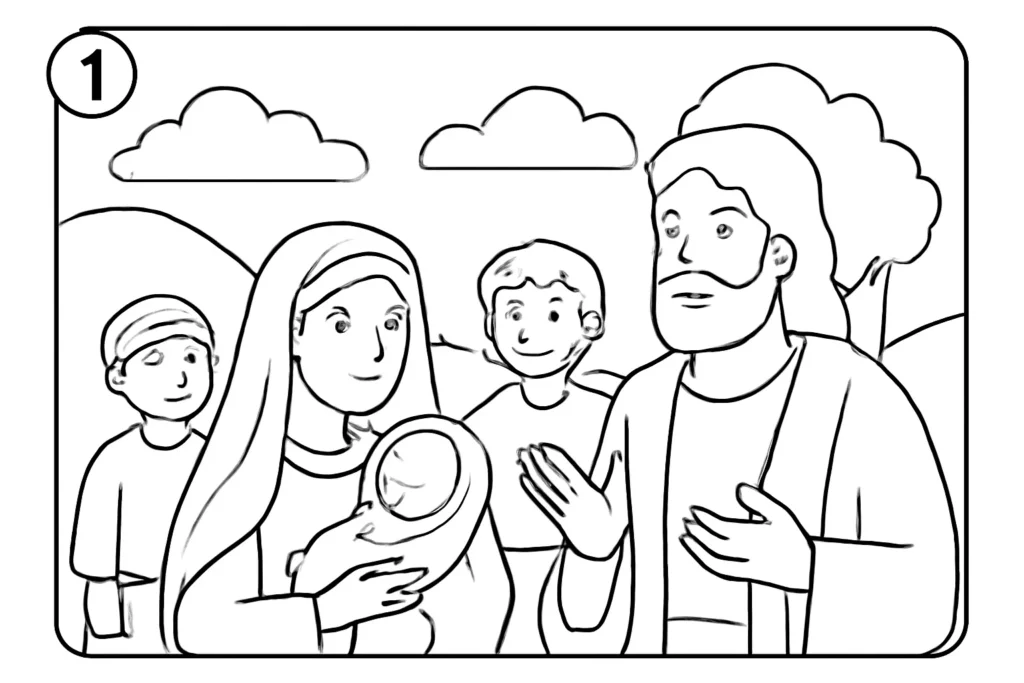
The birth narratives and early life of Jesus are staple subjects for coloring pages. Variations include
the nativity scene, the shepherds, the Magi, and scenes from Jesus’ childhood. These pages support conversations about
hope, joy, and the significance of Jesus’ arrival in the world.
Miracles of Jesus
Pages illustrating miracles—such as turning water into wine, feeding the 5,000, walking on water, or healing the sick—offer
opportunities to discuss faith in action, divine power, and compassion. Colorful scenes can highlight the human responses of
awe, gratitude, and belief.
Parables and Teachings
Parable-themed coloring pages may depict the Good Samaritan, the Prodigal Son, or the Lost Sheep with accompanying captions that
summarize the moral lesson. These pages encourage critical thinking about everyday choices and ethical
living.
Resurrection and Easter Narratives
Pages focused on the Resurrection and Easter themes often convey hope, victory over death, and new life.
They can be used for quiet reflection moments after larger discussions about the crucifixion and the empty tomb.
How to Use Coloring Pages in Teaching and Family Devotions
Coloring pages are not just art activities; they are instructional tools that can structure and enrich
biblical learning. Consider the following practical approaches to maximize impact.
Story narration and visualization: Tell the story aloud while students color a page that illustrates a key moment.
This reinforces listening skills and helps with retention of details.
Verse integration: Pair a coloring page with a short scripture verse. Have learners color while repeating
or memorizing the verse, then discuss its meaning in context.
Discussion prompts: After coloring, ask targeted questions such as: What choice did the character make? What
can we learn about faith, courage, or compassion from this scene?
Art and writing extensions: Encourage a short writing activity, such as a caption for the scene, a diary entry
from a character’s perspective, or a prayer inspired by the moment.
Memory verse cards and display: Create a mini-poster set with a color page and the memory verse, then display
them in a classroom or home study space to reinforce learning.
Group activities: Divide a larger story into scenes and let small groups color different panels. At the end,
assemble a single narrative timeline on the wall to visualize the story arc.
When choosing which pages to use, consider age appropriateness, learning goals, and
the attention span of your group. For younger children, simpler outline pages with bold lines work well.
For older learners, color-by-number or more detailed scenes can provide greater challenge and engagement.
Accessibility, Inclusivity, and Design Considerations
Accessibility is important when selecting and using Bible coloring pages. Consider the following design principles to
ensure that pages are usable for as many people as possible.
Large print options: Use larger images with thicker lines for easier coloring and for participants with fine motor challenges.
High-contrast palettes: Encourage the use of high-contrast colors to improve visibility and reduce strain.
Alt text for digital versions: If you provide downloadable PDFs or digital coloring pages, include descriptive
alt text for accessibility tools and screen readers.
Simple, clear outlines: Bold lines and uncluttered backgrounds help focus attention on the main figures and actions.
Culturally sensitive imagery: When possible, use diverse and respectful depictions of people and settings to reflect
the universality of biblical stories.
Language accessibility: If captions or verses accompany pages, consider bilingual options or simpler phrasing for younger readers.
In addition to accessibility, inclusivity also means offering a range of themes and representations so that
families from different traditions can find materials that resonate with their approach to Scripture.
Printer Tips and Practical How-To for Free Printable Bible Coloring Sheets
Getting great results from free printable Bible coloring sheets involves a few practical steps. Here are
tips to help you print, store, and use pages effectively.
Choose the right paper: Standard 20–24 lb printer paper works for crayons and colored pencils. For markers or longer
sessions, consider heavier weight (80–110 lb) cardstock or laminated sheets.
Printer settings: Print at 300 dpi or higher for crisp lines. Use grayscale printing if color pages are not necessary
or to save ink, then color by hand for a personal touch.
Print size options: Most pages are designed for standard letter size (8.5 x 11 inches). If you need larger
artwork, print multiple pages at 125% or use a poster layout option to create a bigger scene on a single sheet.
Coloring tools: Crayons and colored pencils are beginner-friendly and affordable. Markers can be used for bold, saturated
colors but may bleed through thin paper—consider placing a sheet of scrap paper behind the page.
Laminating and reuse: Laminating finished pages creates durable keepsakes or teaching aids. You can also scan and reuse
pages in a class set with temporary markers or dry-erase markers for ongoing activities.
Organization and storage: Use a binder or folder with dividers labeled by story or theme. Create a simple catalog
of which page covers which passage, so teachers can quickly assemble lesson plans.
For best results, plan a brief set of pages around a single story or theme, then rotate to different pages across several
weeks. This approach helps maintain engagement and builds a cohesive learning arc.
If you want to customize materials for your group, creating your own coloring pages can be a rewarding project. Here are
practical steps to help you begin.
Choose a story or theme: Pick a narrative that aligns with your curriculum and the age of your learners.
Sketch the scene: Create a simple line drawing that captures the central moment or message. Focus on clear silhouettes
and major characters or symbols.
Simplify for coloring: Remove extraneous details that might overwhelm color choices. Keep the outlines bold and distinct.
Add optional captions or verses: Include a short verse or prompt to guide discussion and reflection.
Test with your audience: Print a draft and have a few learners try coloring it. Observe which areas are easy to color
and which might need thicker lines or reduced complexity.
Digitize and share: Scan the drawing and convert it to a PDF, then provide it as a free printable to your church or classroom.
For families who enjoy DIY projects, creating your own coloring pages can become a collaborative activity—drawing together, then
coloring as a shared devotional time. It also gives you control over the level of detail, the thematic focus, and the educational goals you want to emphasize.
Best Practices for Using Free Bible Coloring Pages inFAITH-Lost or Home Settings
Whether you are a Sunday school coordinator, a homeschool educator, or a family caregiver, integrating coloring pages
into your faith practice benefits from intentional planning. Consider these best practices.
Pre-read the story: Before coloring, provide a brief narration or a short reading from the chosen passage to set the context.
Limit distractions: Create a calm environment where coloring is part of a focused devotional time rather than a free-for-all activity.
Link to daily life: After coloring, discuss how the story’s themes might apply to daily decisions, relationships, or acts of service.
Include a reflective closing: End with a prayer, a blessing, or a moment of silent reflection connected to the story.
Incorporate cross-curricular elements: Tie the coloring activity to arts, literature, or social studies by exploring symbolism, geography,
or historical context related to the story.
Free Resources and How to Vet Quality Coloring Pages
The internet offers a wide array of free Bible coloring pages. When selecting pages for your group, consider quality, accuracy,
and alignment with your teaching goals. Here are some practical tips for finding and vetting resources.
Check accuracy: Look for pages that reflect canonical biblical stories and accurate character depictions in a respectful manner.
Look for clear outlines: Strong, bold outlines improve usability for younger children and reduce ambiguity in scenes.
Confirm licensing and reuse rights: Use pages labeled for free distribution or under a license that permits classroom use. Respect creator rights and provide attribution when required.
Preview for age-appropriateness: Scan the imagery for suitability to your audience’s maturity level and cultural sensitivities.
Consider diversity in imagery: Choose or create pages that reflect diverse people and settings to broaden resonance for learners from different backgrounds.
In addition to individual pages, you can assemble curated collections of pages around a single topic (for example,
“Creation Week” or “Miracles of Jesus”) to build a memorable, immersive experience.
Closing Thoughts: Making Bible Coloring Pages a Rich Educational Experience
Bible story coloring pages are more than simple art activities; they are engaging gateways to Scripture that can,
when used thoughtfully, enhance comprehension, retention, and spiritual growth. By offering a variety of page types—from printable sheets to color-by-number designs and outline pages—educators and families
can tailor experiences to different ages, abilities, and learning preferences. The inclusion of stories such as Creation, Noah, Moses, David and Goliath, Jonah, Daniel, and Jesus’ life provides a broad canon of material to explore faith, morality, courage, mercy, and hope.
When you use these resources, aim for a balanced approach: pair coloring with storytelling, discussion, and personal reflection.
Encourage learners to connect the narratives to real-life choices and acts of kindness. With thoughtful planning and access to
a range of page types, free printable Bible coloring sheets can become a valued component of faith formation
that is both educational and spiritually enriching.





Leave a Reply