Bible Study: The Prodigal Son - Parable & Key Lessons
Bible Study: The Prodigal Son - Parable & Key Lessons
Bible Study: The Prodigal Son - Parable & Key Lessons
The Prodigal Son is one of Jesus’ most enduring parables, tucked into the gospel of Luke as a vivid portrait of grace, repentance, and reconciliation. This Bible study guide invites readers to explore the story not merely as a children's tale about wasteful youth, but as a layered teaching about the character of God, the dynamics of family, and the demands of discipleship. By examining the parable from multiple angles—historical context, literary structure, and practical application—readers can gain a richer understanding of how this narrative speaks to life in communities of faith today.
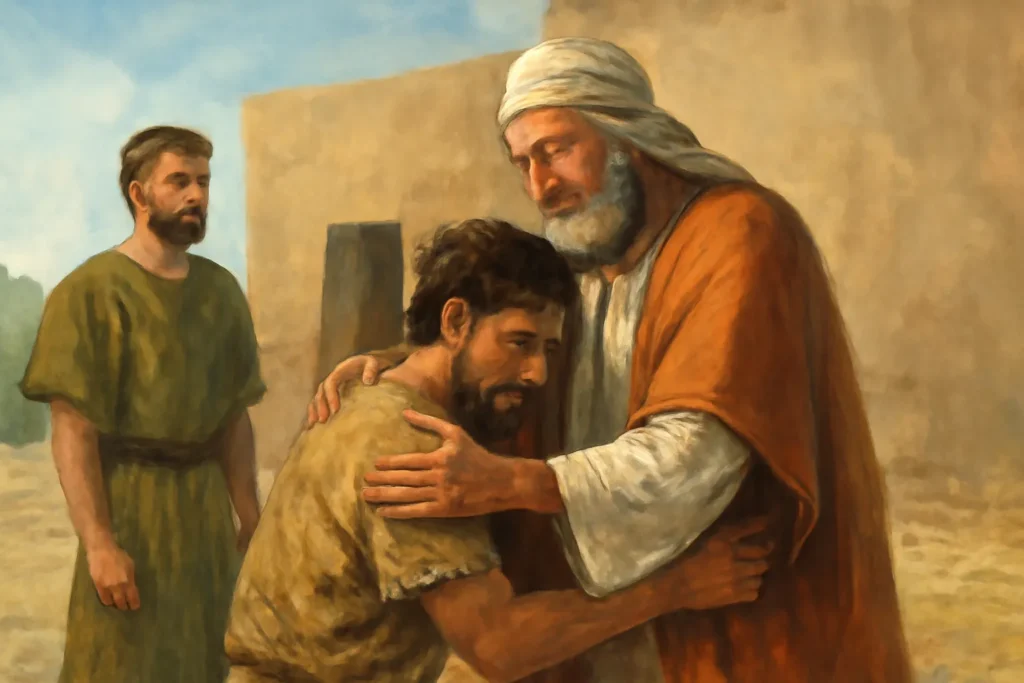
In its simplest form, the tale concerns a younger son who asks for his share of the inheritance, ventures into a distant land with it, wastes his wealth, and then returns home in humility, seeking mercy. The father welcomes him with open arms, but the older brother, loyal and dutiful, wrestles with jealousy and conceptions of fairness. The story culminates in a dramatic embrace of forgiveness and a call to embrace the lost. Yet behind the emotional surface lie profound implications about grace, mercy, responsibility, and the father’s surprising generosity.
Overview of the Parable
The parable appears in Luke 15:11–32, immediately following two other well-known stories about what is lost and found—the Lost Sheep and the Lost Coin. Luke uses a deliberate sequence of loss and rediscovery to illuminate the nature of the kingdom of God. The Prodi gal Son, also called the Younger Son, requests his share of the inheritance and leaves for a distant country, where he squanders everything in riotous living. In a turn of fate, a famine hits, and he finds himself in need, feeding pigs—a condition that would have been deeply humiliating for a Jewish audience. When he decides to return, he rehearses a confession, but the father’s response exceeds expectation: not scolding, but celebration, a restoration of status, and a public declaration of worth. The elder son, who remained home and worked hard, confronts the father with a different form of rigidity—resentment toward mercy extended to his brother.
Reading this parable through a study lens helps us notice how storytelling devices convey theological truths. The father’s unconditional welcome, the younger brother’s humble confession, and the elder brother’s together form a microcosm of how God relates to humanity. The story’s arc challenges readers to see themselves in each character: the wanderer who longs to come home, the forgiving parent who overcomes social shame, and the dutiful observer who fears generosity gone awry.
Historical and Cultural Context
Setting in Luke’s Gospel
Luke writes for a predominantly Gentile audience in the early Christian movement, emphasizing that Jesus came to reach the lost and marginalized. The Prodigal Son narrative aligns with Luke’s broader themes of repentance, hospitality, and the inclusion of outsiders. The father’s decision to harvest the feast and to publicly celebrate the son’s return signals a vision of the kingdom where grace triumphs over stigma and where kinship extends beyond bloodlines.
In First-Century Judea, to demand one’s share of the inheritance before the father’s death would be an implicit claim to sever ties. It communicates a desire to separate from family obligations and social expectations. The act would have been seen as a break in honor-shame culture, inviting judgment from neighbors. The parable thus uses a provocative scenario to reveal how God’s grace transcends human expectations of fairness. The father’s handling of the situation—giving the younger son freedom, running to meet him, and ordering a lavish welcome—depicts a divine posture of mercy that defies customary social calculations.
Sharing a meal in the Jewish world signified acceptance and restored fellowship. The father’s command to clothe, ring, and celebrate with a feast signals full restoration of the younger son’s status. The imagery of the feast is not merely culinary; it is a public signal that the relationship has been repaired. In this sense, the parable foregrounds the idea that reconciliation is both restorative and revelatory—bringing joy to the household and inviting the community to participate in mercy.
Characters and Their Roles
The Younger Son
The Younger Son represents those who seek freedom apart from parental or divine guidance. His request for inheritance is a bold statement of autonomy that presumes the right to control the future. The ensuing squandered wealth, the famine, and his experiential descent into need illustrate the dangers of self-centered living. Yet his decision to return marks a pivotal movement toward repentance and recognition of his dependence on mercy. The elder brother’s reaction helps us see that repentance is not merely a private sentiment but a relational posture that can be rejected or received within a community.
The Father
The father in the parable stands as a portrait of grace and forgiveness. He runs to meet his son, which in that cultural context would be unusual for a patriarch—an act that signals vulnerability, compassion, and a willingness to suspend social norms for the sake of restoration. The father’s speeches—first to the prodigal son, then to the older brother—offer powerful lessons about language choices in extending mercy, about naming value (with the best robe, ring, sandals), and about refusing to rehearse grievances while choosing celebration. The father embodies a divine disposition toward sinners and a hospitable posture toward all who come home.
The Older Brother
The Older Brother personifies fidelity and loyalty but also legalism and self-righteousness. He stays at home, dutiful, observing every rule, yet he cannot rejoice when mercy is shown to his sibling. His protest reveals how a community can become complicit with “fairness” as a proxy for love. The elder brother’s reaction invites readers to examine how often we equate righteousness with exclusion, rather than with extravagant love that breaks down barriers to welcome the lost. The parable invites believers to examine their own posture toward mercy and to recognize that faithfulness includes embracing God’s generous heart toward others.
Key Theological Themes
Grace over merit: The father’s welcome is not earned by the son’s repentance alone, and it cannot be earned by the elder brother’s good behavior. God’s favor operates far beyond human calculations of merit.
Repentance and return: The younger son’s return, with a prepared confession, models the humility necessary to receive forgiveness. Repentance is not merely remorse; it is a turning toward home and relationship.
Forgiveness and restoration: The party, the robe, the ring, and the sandals symbolize full restoration to the status of son or daughter within the family—an emblem of reconciliation in God’s family.
Mercy and inclusion: The father’s reaction demonstrates that God’s mercy extends to those whom society might deem unworthy, inviting the community to participate in the joy of restoration.
Identity in the beloved: The younger son’s true identity is clarified only through relationship with the father; his worth is affirmed by belonging, not just by achievement or possession.
Freedom vs. constraint: The story contrasts the freedom of the prodigal to spend his wealth with the constraint of the older brother’s rigid code, inviting readers to weigh how freedom in grace truly operates in community life.
Literary and Theological Insights
Parabolic Structure
The Parable of the Prodigal Son functions as a classic parable structure: a provocative premise, a human response, and a divine resolution. Jesus uses a narrative frame that shocks expectations—mercy granted to the wayward, not only the dutiful. The structure invites readers to examine their assumptions about who deserves mercy and how God’s kingdom operates on principles that often defy human logic.
Language and Imagery
Language in the parable emphasizes action over abstract theology: the father’s running, the robe’s graphic symbolism, the ring’s authority, and the feast’s joy. This imagery communicates a robust message about reconciliation as a lived experience. It is not only an inward feeling of forgiveness; it is an outward, relational event that reconstitutes family and community. The imagery of the pigsty and the famine also underscores the extent of the prodigal’s need and the depth of the father’s mercy.
Bible Study Methods for the Prodigal Son
Approach for Personal Study
When studying a familiar parable like the Prodigal Son, a careful approach helps uncover new layers of meaning:
Observe the text: Read Luke 15:11–32 slowly. Note who is present, what actions are taken, and what emotions are described. Look for repeated words (for example, “came” or “rejoice”) and motifs (home, feast, inheritance).
Interpret the meaning: Ask what the parable says about God, humanity, and the community of faith. Consider the cultural context and why Jesus chose this story to accompany the other Lost-and-Foun d parables.
Apply the message: Reflect on how grace shapes relationships in your life—family, church, workplace, and neighborhood. Consider ways to embody the father’s mercy in concrete actions.
Group Study Techniques
In a Bible study group, the Prodigal Son can spark meaningful dialogue. Effective methods include:
Character study: Assign roles (younger son, father, elder brother) and discuss motivations, actions, and consequences.
Thematic exploration: Each week, focus on a theme (grace, repentance, forgiveness, reconciliation) and gather cross-references from Luke 15 and related parables.
Application circles: In small groups, create action steps that translate the parable’s lessons into real-life practices (e.g., extending mercy, welcoming the outsider).
Cross-References and Parallels
The Prodigal Son is part of a trio of parables in Luke 15 about lost and found. Exploring related passages enhances understanding:
The Lost Sheep (Luke 15:3–7): A single lost item is worth searching for, illustrating God’s personal pursuit of the one who is far away.
The Lost Coin (Luke 15:8–10): A woman’s joyful search and recovery echoes the heavenly joy over a sinner who repents, highlighting communal celebration and value of every individual.
The Parable of the Merciful Father or The Prodigal Son (Luke 15:11–32): The central story that binds loss, return, and restoration as a portrait of God’s grace in action.
Practical Applications for Believers Today
What does the Prodigal Son teach Christians in contemporary contexts? Several practical implications emerge:
Embrace grace, extend grace: Just as the father extends mercy to the prodigal, modern believers are called to offer grace to those who have harmed or withdrawn from the community—without demanding immediate perfection.
Reframe repentance: Repentance is not merely feeling sorry; it is turning toward relationship, recommitting to the community, and choosing a new course in life guided by mercy and accountability.
Avoid self-righteousness: The elder brother’s critique reminds readers that fidelity without love can become legalistic. True obedience flows from a heart transformed by grace, not from compulsion or pride.
Rebuild relationships through feasting and welcome: In many communities, reconciliation requires tangible expressions of welcome—shared meals, public affirmation, and renewed partnership in mission.
Ask hard questions about judgment: Who do we deem worthy of mercy, and on what grounds? The parable challenges readers to examine biases that prevent reconciliation.
Discussion Questions
Use these prompts to guide a personal reflection or a group conversation. They encourage critical thinking and practical application:
What aspects of the younger son’s decision do you relate to, and what would you have done differently in his situation?
In what ways does the father’s response challenge common assumptions about justice and fairness?
How does the elder brother’s reaction illuminate your own tendencies toward judgment or exclusion?
What role does the community play in the process of repentance and restoration in Luke 15?
How can you embody the father’s posture of welcome in today’s church or family context?
Variations of the Phrase and Semantic Breadth
Throughout study materials and sermons, ministers and scholars describe this story using varied phrasings to capture different angles. Here are some common semantic variations you might encounter in study guides, commentaries, and discussions:
Bible study the prodigal son as an entry point for personal devotion and sermon planning.
Parable of the Prodigal Son used in theological discussions about grace and forgiveness.
Prodigal Son parable analysis for critical exegesis on audience, genre, and historical context.
Younger Son in Luke 15 focusing specifically on the descent into distant living and the return journey.
Father’s mercy in the Prodigal Son narrative to emphasize divine mercy and reconciliation patterns.
The prodigal narrative resonates across cultures because its core message speaks to universal human experiences: wandering, longing for belonging, and the need for belonging that is not earned but granted. The parable’s implications include:
Hospitality as a theological virtue: The act of welcoming the prodigal returns a sense of community that transcends economic or moral judgments.
Hospitality as burden and joy: While inviting, hospitality requires a willingness to bear the costs and to celebrate liberally when mercy is granted.
God as Father figure: The narrative reframes God’s relationship with humanity through a parental lens that emphasizes care, concern, and limitless mercy.
Ethics of grace: Grace is not a license for wrongdoing; it creates space for transformation, accountability, and renewed purpose within the community of faith.
Further Reading and Resources
To deepen your study, consider these resources:
Commentaries that explore Luke 15 in historical-critical, literary, and homiletic dimensions.
Devotional guides that pair the Prodigal Son with personal reflection prompts and prayer topics.
Sermon collections that offer varied perspectives on grace, repentance, and reconciliation.
Pastoral resources for leading group studies, including discussion prompts and activity ideas for different age groups.
The Prodigal Son remains a powerful teacher because it refuses to present a simple moral tale. Instead, it invites readers into a complex conversation about grace, mercy, forgiveness, and reconciliation within a family, a community, and a faith that aspires to emulate the Father’s extravagant love. The parable challenges assumptions about who is worthy of mercy and how forgiveness should be practiced in everyday life. By approaching the text with careful study, thoughtful discussion, and practical application, readers can grow toward a more generous, compassionate, and faithful way of following Jesus.
Whether you approach this story as a lifelong believer, a curious skeptic, or a student of biblical literature, the Prodigal Son offers a multi-dimensional vision of what it means to come home, to be welcomed, and to participate in the joy of God’s redeeming work in the world. In that sense, the parable is not only about a wayward son; it is about the way of living in the grace-filled household of God today.









Leave a Reply