Rebuilding the Third Temple: History, Prophecy, and Modern Times
Rebuilding the Third Temple: History, Prophecy, and Modern Times
Across the long arc of history, few ideas have persisted with as much religious, cultural, and political resonance as the notion of rebuilding the Third Temple. This article surveys the idea from its ancient roots to its modern contours, tracing how a once-central act of worship in ancient Jerusalem transformed into a broad set of beliefs, projections, and debates that touch on prophecy, archaeology, politics, and interfaith dialogue. It is not a manifesto or a political program; rather, it aims to explain what the Third Temple concept means to people in different eras and traditions, how it has evolved, and what modern discussions about it entail. The topic invites careful distinction between historical memory, theological interpretation, and contemporary realities on the ground, including the sensitive status of sacred spaces in Jerusalem and the broader Middle East.
Historical Foundations: From Solomon’s Temple to the Second Temple
The story begins in ancient Israel with the First Temple, traditionally identified with the biblical Temple in Jerusalem built by Solomon in the 10th century BCE. This temple served as the primary locus of Jewish worship, housing the Ark of the Covenant and the sacred Holy of Holies. Its destruction by the Babylonians in 586 BCE was a seismic event in Jewish history, initiating a long period of exile and reorientation that shaped Jewish identity in diasporic communities.
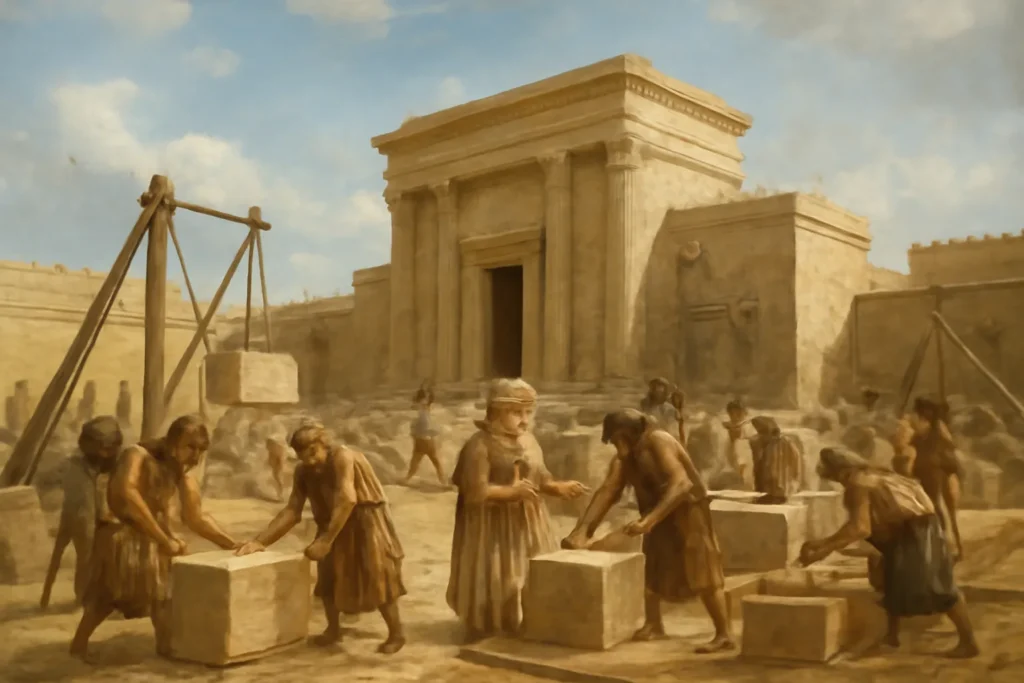
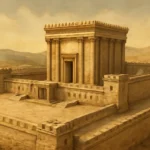
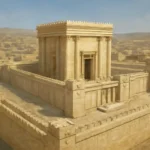
After the Persian period, a new temple complex rose in Jerusalem—the Second Temple—completed around 516 BCE. It stood on the same sacred precinct and became the heart of Jewish life for centuries, though it underwent major renovations under Herod the Great during the late Second Temple period. The Second Temple era is characterized by a wealth of ritual practice, temple leadership, and a central sacrificial system that drew Jewish life into a shared religious calendar—festivals, daily offerings, and procedures conducted by priests in a sacred space surrounded by courts and gates.
The destruction of the Second Temple by the Romans in 70 CE precipitated a long dispersion of Jewish communities across the Mediterranean and beyond. Yet the longing for a restored temple—the Holy Sanctuary in Jerusalem—recurred in religious poetry, liturgy, and later messianic expectation. The destruction did not erase memory; it transformed memory into longing, ritual repetition, and, in some communities, a vision of future restoration. The Western Wall today remains a visible remnant of that Second Temple period, and it serves as a potent symbolic touchstone for many who yearn for a future restoration of the temple service.
Key historical milestones include the building of the First Temple, its destruction, the rebuilding of the Second Temple, its expansion under Herod, and its destruction in 70 CE.
The Temple Mount emerged as the site’s defining platform, a place held sacred across generations and faith communities.
In historical memory, the Temple was not only a building but a symbol of covenantal worship, ritual purity, and the possibility of divine encounter in a dedicated sanctuary.
Over the centuries, the Beit HaMikdash—the Hebrew term for the Holy Temple—became more than a physical structure; it was a theological ideal, a blueprint for worship, and a touchstone for Jewish hope. When people today speak of rebuilding the Third Temple, they are often invoking a layered set of significances: a prophetic expectation, a cultural memory, and a political statement about sovereignty, geography, and religious expression.
Prophecy and Theological Framework
Prophecy has played a central role in shaping the idea of a future temple. In the Hebrew Bible, certain prophetic books articulate visions of a future, divinely guided restoration that would reconstitute sacred space and ritual life. The most often cited chapters in this regard are in the book of Ezekiel, especially chapters 40–48, which present a detailed, symbolic blueprint for a future sanctuary. Readers across traditions have debated how literally to interpret these chapters: as a concrete architectural plan, as visionary poetry, or as a metaphor for divine restoration and renewal of the covenant.
Other prophetic voices influenced the mood around temple restoration. In the post-exilic period, Haggai and Zechariah encouraged the exiles to complete temple rebuilding as part of renewed obedience and social reform. In Jewish understanding, these prophetic exhortations historically framed the Second Temple period as a time when human agency and divine timing intersected to realize sacred purposes on earth.
In Christian eschatology, the idea of a future temple often intersects with expectations about the end times, the return of the Messiah, and the renewed order of creation. Some Christian interpretations read Ezekiel’s temple visions as foreshadowing a future eschatological temple or as symbolic language describing God’s ultimate dwelling with humanity. It is important to note that Christian readings vary widely; many do not speak in terms of a literal rebuilding of a physical temple, while others engage with the imagery in transformative ways.
Judaism: Interpretive Range and Practical Implications
Many traditional Jewish authorities view a future temple as a legitimate, even essential, possibility—but one that is contingent on divine timing and guided by halacha (Jewish law) and the leadership of a recognized Sanhedrin or equivalent authority.
Others emphasize ethical living and the restoration of justice and peace as prerequisites for any temple-era reorganization, arguing that the spiritual conditions matter as much as, or more than, physical reconstruction.
There is also a long-standing tradition of debate about the exact location, the ritual purity required, and how the temple operations would integrate with modern life and all faith communities sharing Jerusalem’s sacred space.
When discussing the symbolic and prophetic weight of the Third Temple, it is essential to keep in view the diversity of belief within Judaism and the broader religious world. The language of prophecy can carry aspirational energy, but it must be understood in its historical and interpretive context to avoid conflating symbolic expectation with a concrete political program.
Modern Movements, Institutions, and Debates
In modern times, the idea of reconstructing the Holy Temple has taken on a tangible, organized character in certain religious communities. Institutions, scholars, and activist groups have engaged in study, planning, and the dissemination of ritual and architectural concepts that would be relevant if conditions permitted a future temple service on the Temple Mount or a nearby site under appropriate authority and consensus. It is important to emphasize that these efforts are highly controversial and politically sensitive, given the contemporary status of Jerusalem and the religious rights of multiple communities in the city.
One prominent phenomenon is the work of groups that study the Temple's ritual requirements and explore the ceremonial implements that would be used in a future temple service. These efforts often include:
Archival and textual research into Temple-era liturgy, ritual purity, and priestly service.
Creation of ceremonial objects and garments to illustrate or guide future practice, alongside scholarly materials that describe the rites described in biblical and rabbinic sources.
Educational outreach that explains how temple worship was conducted in antiquity, as well as how some modern readers interpret those traditions.
Among the most widely known organizations is a Jerusalem-based institute devoted to teaching about the Temple and to preparing ritual implements. While their work provides a window into how people imagine the temple’s service, it also raises questions about how a future temple would be governed, who would perform the rites, and how a restored temple would relate to the existing religious landscape in Jerusalem.
Political dynamics surrounding the Temple Mount add another layer of complexity. The site houses the Dome of the Rock and the Al-Aqsa Mosque, which are revered by Muslims as sacred space. The current arrangement—often referred to as the “status quo”—limits changes to the site’s use and maintains a delicate balance among religious communities. Any credible initiative to rebuild the Temple must reckon with this context, the sovereignty of the Israeli state, Jordanian guardianship, and the international norms that govern places of worship with global significance.
In addition to formal institutions, broader civil society and scholarly communities participate in the discourse by examining architectural possibilities, historical reconstructions, and the ethical dimensions of claims to sacred space. Some commentators argue for a measured approach that prioritizes peaceful coexistence, dialogue among faith communities, and the protection of human life and worship rights.
Ritual Objects and the “Plan” for a Future Temple
Proponents often discuss specific ritual objects and temple elements that would be essential in a hypothetical future restoration. These include articles such as ceremonial vessels, the menorah, the showbread table, the altar for offerings, and the priestly garments described in ancient sources. While these objects can illuminate historical practice, they also become symbols in modern discourse—emblems of continuity with the past and prompts for questions about present-day religious identity and public policy.
Because the terrain is so delicate, many observers stress the distinction between imagining a future temple in principle and taking any concrete, on-the-ground steps that could inflame tensions or violate laws protecting religious life and public safety. The conversation, for now, tends to revolve around scholarly inquiry, liturgical imagination, and ethical reflection rather than treaty-level political planning.
Archaeology, Geography, and the Layout of the Sacred Site
Historical memory of the temples is inseparable from geography. The Temple Mount has long been a contested and revered site, and archaeological work in and around Jerusalem has unfamiliarly intertwined with politics, faith, and memory. While archaeologists study the ancient layers of the city, the exact, step-by-step layout of the First and Second Temples remains a matter of interpretation and debate. What is broadly agreed is that the temples stood on the elevated platform in the present-day sacred precincts that have continued to shape Jewish, Christian, and Muslim religious life for millennia.
The surviving remnants of the Second Temple complex include components of the outer precinct and the Western Wall, which are tangible reminders of this period. The account of the temple’s interior—such as the Holy Place, the Holy of Holies, the altar, and the surrounding court spaces—appears in biblical and post-biblical sources, but many details are reconstructed from textual tradition rather than preserved architectural plans. As a result, any contemporary discussion about the rebuilding project must acknowledge the gap between ancient descriptions and modern architectural reality.
Archaeology offers a window into ancient ritual life, but it cannot—by itself—reproduce a functioning sanctuary from antiquity. The physical, ceremonial, and ritual dimensions of a future temple would require decisions about the sanctity of space, ritual purity, and who may participate in rites that would, by their nature, be distinct from ordinary religious practice. These are not only technical questions; they are also questions of religious law, local custom, and international diplomacy.
In sum, the geography of the temple site is the stage on which any future discussions would play out. The interplay of sacred space, political sovereignty, and communal memory makes the landscape uniquely sensitive and uniquely powerful as a symbol of identity for multiple communities.
Ethics, Interfaith Dialogue, and Responsible Discussion
Because the concept of rebuilding the Third Temple sits at the intersection of faith, history, and political sovereignty, it invites ethical reflection and careful discourse. Responsible discussion in pluralistic societies includes:
Respecting the religious significance of sacred sites for different communities, including those who revere the Temple Mount as a core part of their history and worship.
Acknowledging that any future steps would have sweeping implications for public safety, regional stability, and the rights of worshippers of various faiths.
Distinguishing between scholarly exploration of ancient practices and contemporary political action that could heighten tensions or lead to violence.
Encouraging dialogue that seeks common ground—such as shared human values around memory, reverence for the past, and the aspiration for peace—in place of exclusively partisan aims.
In practice, debates about the third temple project tend to reveal broader questions about sovereignty, identity, and the role of religion in public life. Some communities emphasize spiritual longing and religious fulfillment in a future era, while others insist on protecting existing religious freedoms and maintaining the status quo that safeguards interfaith coexistence. The ethical challenge is to engage with a profound sacred topic without inflaming divisions or compromising the safety and dignity of all who hold Jerusalem and its sacred places as central to their faith.
The Future: Scenarios, Possibilities, and Responsible Speculation
Speculation about the rebuilding of the Third Temple tends to fall into a few broad categories. It is important to treat these as hypothetical scenarios that illustrate how people think about sacred space, rather than as actionable plans. Common lines of thinking include:
Temple-relaunch scenarios: In some visions, the temple would be rebuilt as a future sanctuary under a carefully regulated framework, with cooperation among religious authorities, state institutions, and international actors to ensure security, reverence, and peaceable worship.
Mikdash Me’at concepts: Some rabbis discuss the possibility of a smaller, interim sanctuary or a partial restoration as a cautious, transitional phase—an approach sometimes described as Mikdash Me’at (the “Mini-Temple”)—intended to delay full-scale rebuilding until conditions are right.
Symbolic or liturgical reinterpretation: Other voices emphasize that the temple’s significance can be honored through liturgy, ritual memory, and ethical service without a physical rebuilding in the immediate future.
Architectural elaboration: There are design plans and scholarly models that attempt to reconstruct ancient temple architecture conceptually, to study the geometry, acoustics, and ceremonial spaces as an intellectual exercise rather than a political program.
Whatever the future holds, it is clear that any discussion about the third temple construction must be firmly attached to the realities of sovereignty, international law, and the right to worship freely. The idea remains, for many, a theological horizon; for others, a political pressure point. For scholars and students, it offers a powerful case study in how memory, arcane ritual knowledge, architecture, and current events intersect.
Ultimately, the question is not only about “how would one build” but about “how would such an endeavor be reconciled with human dignity, regional stability, and the shared heritage of Jerusalem.” As such, it is a topic that invites careful listening to diverse voices, rigorous historical research, and a commitment to peaceable engagement across faith communities.
In summary, the conversation about rebuilding the Third Temple sits at the boundary between history and prophecy, memory and politics, reverence and responsibility. It is a topic that has animated communities for millennia and continues to evoke strong feelings in the modern era. Whether treated as a theological ideal, a symbolic vision, or a potential political reality—and regardless of one’s stance—it remains a part of the larger narrative of Jerusalem as a living city where past and future constantly negotiate with the present. Understanding this topic requires sensitivity to history, clarity about diverse interpretations, and a respect for the lives and beliefs of people for whom this sacred subject holds deep personal meaning.



Leave a Reply