The concept of a Third Temple sits at the crossroads of ancient history, sacred narrative, and modern political reality. For many, the phrase building the Third Temple evokes a longing rooted in centuries of memory about the Beit HaMikdash (the Holy Temple) in Jerusalem, as well as a future expectation tied to prophetic writings and messianic hopes. This article surveys historical context, prophecy, and modern efforts without prescribing action. It aims to explain how people have understood the idea across time, what religious sources say, and how contemporary movements navigate a highly sensitive religious and geopolitical landscape. Throughout, the text uses variations of the phrase building the Third Temple to reflect the breadth of discussion, from scholarly inquiry to religious supplication to public debate.
Historical Context
The Beit HaMikdash: Beit HaRishon and Beit HaSheni
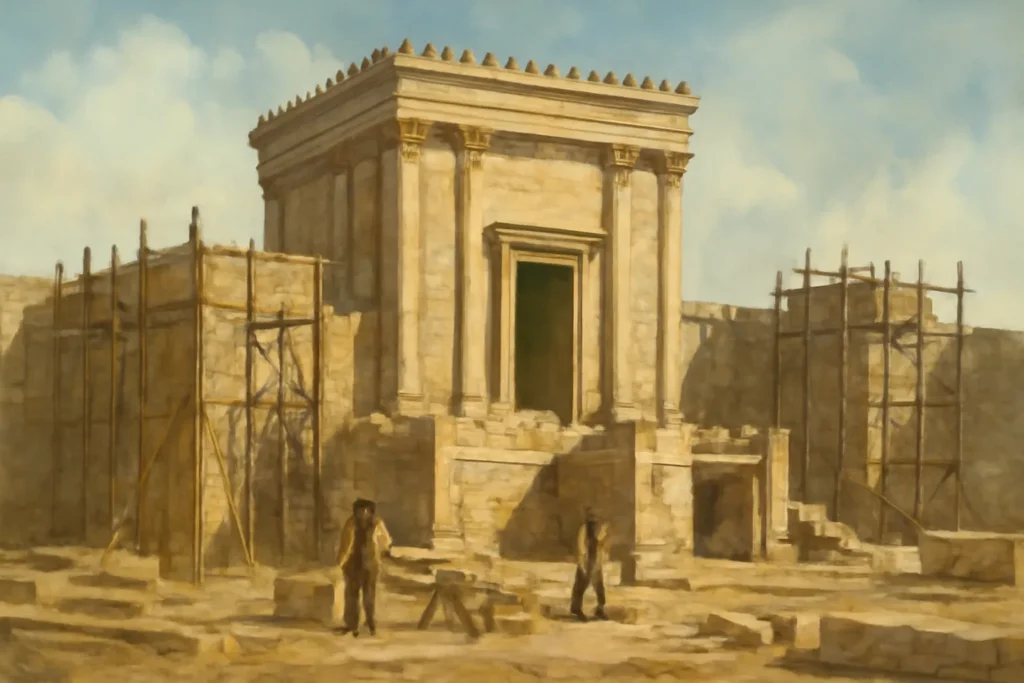
The First Temple (Beit HaMikdash HaRishon) was traditionally understood to have been constructed under King Solomon in the 10th century BCE. It stood as the central sanctuary for the Israelite people and the site of periodic sacrifices and ceremonial rites.
In 586 BCE, the First Temple was destroyed by the Babylonians, leading to an exile and a long period of diaspora memory centered on Jerusalem and its sacred landscape.
The Second Temple (Beit HaMikdash HaSheni) was rebuilt several decades later, around 516 BCE, during the return from exile under Persian rule. This rebuilt temple underwent a major renovation under King Herod in the first century BCE, transforming its scale and splendor.
The Second Temple era culminated with its destruction by the Romans in 70 CE, a moment that dramatically reshaped Jewish religious life and liturgical focus for centuries to come.
Continuities of Memory and Practice
Even after the destruction of the two Temples, the idea of a future sanctuary persisted in Jewish prayer, ritual, and memory. Many prayers in daily life and during special holidays look toward a rebuilt sanctuary where offerings once again could be made. The longing for a sacred center in Jerusalem shaped liturgy, religious study, and the architectural imagination of communities across the centuries. The historical arc from the Beit HaMikdash to the present day is not a straight line but a complex interplay of loss, longing, scholarship, and divinely guided expectation as described in classical sources.
Archaeology, Geography, and Sacred Space
Scholars have studied the urban layout of ancient Jerusalem, the Temple precincts, and the ritual spaces associated with the temples. The geography of the Temple Mount and its surrounding esplanade appears repeatedly in Jewish, Christian, and Muslim sources, influencing how later generations imagined the sanctified area. While archaeological evidence can illuminate historical details, it also intersects with present-day political realities, making debates about the site both historical and highly charged in contemporary discourse.
Prophecy: Visions of a Future Sanctuary
Biblical Foundations and Prophetic Imagination
Ezekiel occupies a central place in discussions of a future sanctuary. In the latter chapters of Ezekiel, many readers encounter a detailed and highly symbolic vision of a future temple and an orderly divine presence within an envisioned Jerusalem. These chapters have inspired centuries of interpretation about a time when the sanctuary would be restored or reimagined.
Other prophetic literature in the Hebrew Bible speaks of renewed age and restored worship, often linked with a broader arc of redemption and peace. The imagery associated with a future temple is frequently entwined with expectations about an era when all peoples recognize the sovereignty of the God of Israel.
Within rabbinic and later Jewish thought, a range of opinions exists about whether a physical rebuilding of the sanctuary will occur in the Messianic era, and what form it might take. Some traditions emphasize spiritual renewal, while others contemplate a literal sanctuary with priestly service and sacrificial rites, at least in eschatological imagination.
Messianic Expectation and Halakhic Nuance
Several classic and medieval authorities discuss the becoming of the Messianic era and the possible restoration of sacred rites. In some rabbinic writings, the rebuilding of the Beit HaMikdash is presented as part of a future redemption that would accompany the arrival of the Messiah. In others, the emphasis shifts toward ethical renewal, repentance, and the rebuilding of communal life around Torah study and observance, with the Temple as a symbol of spiritual reconciliation rather than a current political project. Modern readers encounter a spectrum of views: some hold that a temple must await divine intervention, while others maintain that preparation—such as priestly garments, sacred vessels, and ritual knowledge—can proceed in anticipation of a future restoration.
Interpretive Diversity: The Role of Prophecy in Contemporary Thought
To many, the prophetic literature inspires both hope and caution. The idea of a future sanctuary intersects with debates about sovereignty, prayer practices, and the appropriate locus of worship. Across Jewish communities, prophecy is treated as a source of meaning rather than a blueprint for immediate political action. In scholarly and faith communities alike, the interpretation of these prophecies often emphasizes ethical conduct, study, and humility in the face of events beyond human control.
Modern Efforts: Contemporary Movements, Institutions, and Debates
Religious Perspectives Within Judaism
The question of building the Third Temple is expressed differently across Jewish denominations and movements. Some Orthodox voices emphasize the sanctity of the Temple Mount and the spiritual readiness required before any physical reconstruction could be contemplated within halakhic and religious boundaries. Other groups emphasize symbolic or alternative forms of temple-centered worship, focusing on communal prayer, Torah study, and acts of service as living expressions of the temple's core values.
Temple Institute: An influential organization dedicated to education, ritual preparation, and the development of ceremonial objects. Its activities include training in priestly service, compiling documents on temple procedures, and creating symbolic accoutrements used in study and prayer. The Institute speaks to a long-running fascination with the Beit HaMikdash while acknowledging the immense political and religious challenges that any actual reconstruction would entail.
Varieties of Messianic Expectation: Within Judaism, some adherents hold that a future Messianic era will inaugurate the rebuilding of the sanctuary, whereas others interpret temple-related themes as metaphorical cues for ethical deeds and communal reform in the present age.
Academic and cultural discourse: Scholars examine how the idea of a Third Temple has shaped Jewish thought, liturgy, and national identity, and how it has interacted with global Jewish communities and the broader Middle East context.
Political and Legal Realities
Any discussion of constructing a sanctuary on the site traditionally identified with the Temple Mount is inseparable from politics, sovereignty, and international diplomacy. The Jerusalem sacred precincts sit at the intersection of Israeli law, Jordanian custodianship, and Muslim religious authority. The status quo arrangement, which limits certain religious actions on the site, reflects ongoing negotiations and security considerations. For many observers, the prospect of erecting a physical Beit HaMikdash is not only a religious question but also a political one, in which steps toward any reconstruction would require extraordinary consensus, legal frameworks, and broad regional dialogue that respects the rights and concerns of multiple communities.
Architectural Concepts and Models
Over the centuries, architects and scholars have proposed models and layouts inspired by the dimensions of the ancient temples. Conceptual discussions often focus on the hierarchical arrangement of spaces—the outer court, the Altar, the Holy, and the Holy of Holies—alongside considerations about cleanliness, ritual purity, and priestly responsibilities. In modern discussions, these architectural ideas are typically presented as hypothetical studies or educational designs, not as blueprints for immediate construction. Proposals emphasize reverence for history and the religious significance of the site while acknowledging that any real-world project would be subject to stringent religious and civil controls.
Beit HaMikdash Preparations Without Immediate Construction
Even in the absence of a concrete plan to physically rebuild the sanctuary, many communities engage in preparatory activities that reflect a deep, enduring relationship with the temple idea. These include:
Educational programs about the Temple’s rituals, history, and geography
Training in priestly (Kohanim) and Levitical roles for ceremonial purposes in the future
Acquisition and study of sacred vessels, garments, and religious texts, enabling informed liturgical practice
Commemorative liturgy and prayers that reflect a longing for a restored center of worship
Ethical and Practical Considerations
Proponents and commentators stress that the idea of a future sanctuary must be reconciled with peace, safety, and mutual respect among diverse communities. The ethical questions include whether symbolic or spiritual expressions of the temple idea can coexist with the practical realities of a multi-faith city and a fragile regional equilibrium. Critics argue that any project touching the Temple Mount requires careful, inclusive dialogue to avoid escalation and ensure that religious aspirations do not translate into political conflict. In this sense, the modern discourse around the Third Temple is often reframed as a debate about how faith tradition can inform living ethics and civic responsibility in the present era.
The Way Forward: Dialogue, Humility, and Shared Stewardship
Avenues for Education and Reflection
Rather than focusing solely on physical reconstruction, many scholars and faith leaders encourage a broader understanding of the temple idea as a call to ethical action, inclusive study, and communal harmony. Educational initiatives can explore:
The historical chapters of the Beit HaMikdash in Jewish history, and what they have taught generations about memory and identity
The prophetic voices that speak of renewal, peace, and justice as inseparable from spiritual aspiration
Interfaith dialogues that address sensitivities surrounding sacred space, sovereignty, and shared rights to the city of Jerusalem
Interfaith and Intercommunal Dialogue
Many writers, theologians, and community leaders emphasize constructive dialogue among Judaism, Islam, and Christianity about the sacred landscape of Jerusalem. A shared approach to the city’s holy sites can foster mutual respect, reduce tension, and enable communities to pursue their religious aims without undermining others’ rights or safety. In this light, the conversation about the Third Temple becomes less about rapid construction and more about shared stewardship, mutual recognition, and contemplative practice that honors the diverse spiritual heritage of the city.
When discussing building the Third Temple, it is important to distinguish between historical imagination and concrete political action. The former can illuminate the depth of spiritual longing and cultural memory; the latter requires careful assessment of law, security, and regional stability. An informed public discourse asks: What do people mean by a temple in modern times? Is the value primarily theological, liturgical, or symbolic? How can communities express these values in ways that contribute to peace, justice, and human flourishing?
The conversation about constructing a Third Temple sits at the confluence of centuries of longing, theological interpretation, and present-day realities. From the First Temple and Second Temple eras to the prophetic visions that have inspired generations, the temple idea has consistently carried profound meaning. In the modern era, religious groups, scholars, and political actors navigate a spectrum of positions—from preparation and education to cautious diplomacy and, for many, principled restraint. The central takeaway is not a blueprint for action but an invitation to understand how a sacred past informs a living present. The question of whether and how a future sanctuary might be realized remains one of the most sensitive and debated topics at the intersection of faith, history, and public life. By examining historical context, prophecy, and modern efforts with care and nuance, readers gain a richer sense of why the idea endures, what it represents to different communities, and how a respectful, informed approach can contribute to a more peaceful future in a city of immense religious significance for billions around the world.







Leave a Reply