Bible Verses About Tattoos in Leviticus: What the Bible Says
Bible Verses About Tattoos in Leviticus: What the Bible Says
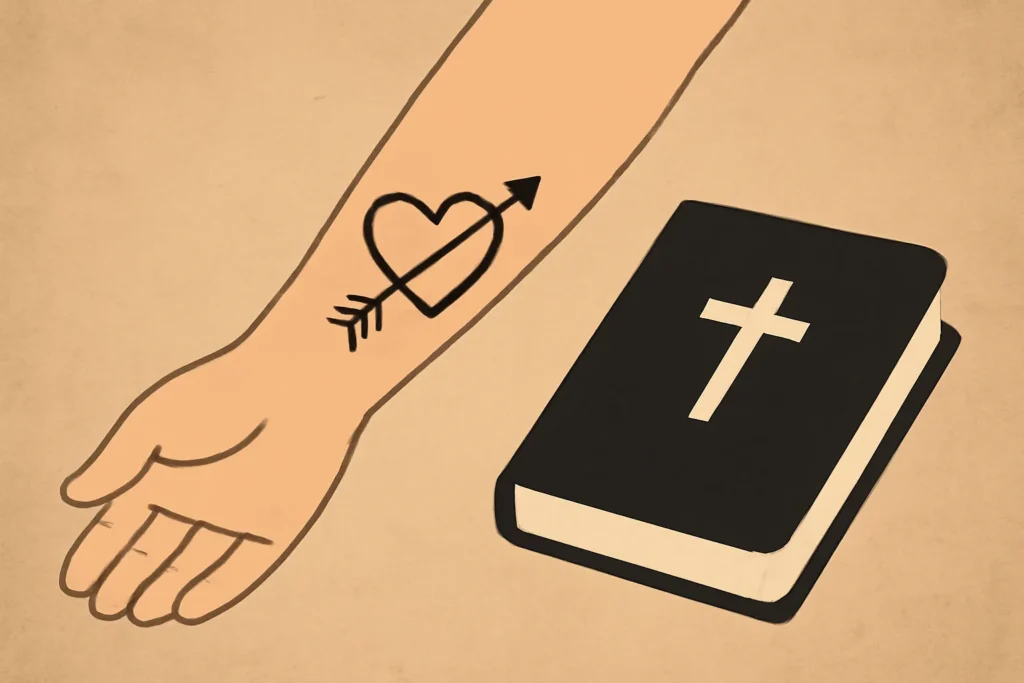
The topic of tattoos in Scripture often centers on a single verse from Leviticus 19:28.
That verse has shaped centuries of debate about what the Bible says about body modification, ink,
and markings. In this article, we explore Leviticus as a whole, the exact wording of
the key verses, how different translations render the language, and how readers today interpret
these verses in light of culture, history, and theology. By examining the wording across translations
and considering the surrounding laws in Leviticus, we can gain a clearer sense of what the Bible
says, what it might have meant in its original context, and how people live out their faith in
relation to tattoos in contemporary times.
Core Verse: Leviticus 19:28 and the Notion of Markings
The central verse often cited in discussions about tattoos is Leviticus 19:28, which
addresses marks on the body. Depending on the Bible translation, the exact phrasing varies, but the
sense remains similar: a prohibition on making markings on the skin as part of religious or cultural
practices of the time. Below are representative renderings from several well-known translations.
KJV (King James Version): "Ye shall not make any cuttings in your flesh for the dead,
nor print any marks upon you: I am the Lord."
This rendering emphasizes two elements: (1) cuttings in the flesh and (2) printing marks upon you, both framed by the declaration I am the Lord.
NIV (New International Version): "Do not cut your bodies for the dead or put tattoo marks on yourselves.
I am the Lord."
The NIV presents the verse in a more straightforward, contemporary form, using the word tattoo marks and a direct command-like sentence.
ESV (English Standard Version): "You shall not make any cuts on your body for the dead
or tattoo yourselves: I am the Lord."
The ESV retains formal language while clearly linking the prohibition to both bodily markings and identity with God.
NASB (New American Standard Bible): "You shall not make any cuts on your body for the dead
nor make any tattoo marks on yourselves."
The NASB uses the term tattoo marks in a compact, direct form, mirroring the sense of a prohibition.
NRSV (New Revised Standard Version): "You shall not tattoo yourselves for the dead nor tattoo marks on yourselves."
The NRSV offers another faithful, readable rendering, highlighting the act of tattooing itself.
Across these translations, the essential idea remains: a prohibition on bodily markings
or tattoos performed for the dead or in connection with certain ritual practices.
The exact terminology—whether it speaks of cuttings, marks, or tattoo marks—
varies, but the underlying command is clear in most traditional translations: maintain a certain boundary
on how the body is marked.
It is important to note that the verse sits within a larger collection of laws in Leviticus that regulate
ritual purity, holiness, and social identity. The surrounding verses address dietary rules, purity
statutes, and priestly duties. When engaging with Leviticus 19:28, readers often ask questions such as:
What was the purpose of this prohibition? Was it about pagan practices, health concerns, or the symbol of belonging?
And how should we apply a verse that seems to arise from a very different cultural and religious setting?
Additional Wording in Leviticus About the Flesh: Related Passages
In addition to Leviticus 19:28, another closely related verse that touches the idea of bodily markings appears in
the same book, with a slightly different focus. The priestly and ceremonial context sometimes cites Leviticus 21:5, where the language speaks about prohibitions on certain bodily alterations for priests.
Leviticus 21:5 (various translations): "They shall not make baldness on their head or shave off the edges
of their beard, nor make any cuts in their flesh."
This verse emphasizes that priests are to avoid certain body modulations, including cuts in the flesh,
reinforcing a broader sense of specialized conduct for those serving in the sanctuary.
The pairing of Leviticus 19:28 with Leviticus 21:5 helps readers see that the issue of bodily alterations
appears in contexts of ritual purity, priestly boundaries, and communal identity. The discussion about
tattoos often extends beyond the exact wording to consider how these regulations function within a
cohesive system of holiness, rather than as isolated prohibitions.
Contextualizing Leviticus: Why Such Wording Appears
The book of Leviticus lays out laws for Israel’s worship, community life, and moral conduct in a specific
historical setting. The prohibitions about bodily markings would have carried cultural resonance in
the ancient Near East, where various peoples used tattoos, body piercings, ritual scarification, or
other markings as part of religious initiation, funerary rites, or status markers.
Cultural Practices: In some cultures at the time, tattoos or cuttings could have signified
allegiance to deities, membership in a cult, or rites of passage. The Levitical laws often aimed to set
Israel apart from surrounding nations in matters of worship and identity.
Holiness and Distinctiveness: The overarching theme of Leviticus is holiness to be set apart.
Restrictions on the body may be understood as part of maintaining a distinct way of life that honors
the sacred space of God’s presence among the people.
Ritual Purity: The language of purity and impurity frequently appears in Leviticus. Bodily markings could be connected
to concerns about ritual cleanliness, contamination, or symbolic meanings that contradicted the
community’s sacrificial system.
When readers study these verses, they often encounter a delicate balancing act: honoring the historical context
while seeking relevant guidance for today. Some readers hold to a literal interpretation, while others
prefer to read these verses in light of broader biblical themes such as freedom in Christ, the new covenant,
and the ongoing discernment about cultural practices.
How Christians Have Interpreted Leviticus 19:28 Across Time
Interpretations of Leviticus 19:28 vary widely among Christian traditions. Some readers and theologians
argue for a plain, literal reading that restricts tattoos and similar markings, while others emphasize a
contextual approach that considers the shift from Old Covenant practices to New Covenant living in Jesus.
In a literalist or traditionalist reading, the verse is treated as a clear command applicable to all believers
in all ages. Proponents might argue that since the verse prohibits bodily markings, modern Christians should
refrain from tattoos or other visible inscriptions on the skin that originate from ritual contexts. This view
often emphasizes continuity with the moral and ceremonial law, though it may differ on how to integrate
health, design, and personal expression with faith.
Historical-Cultural Context Perspective
A common approach among scholars and many theologians is to interpret Leviticus 19:28 within its original
historical setting. This view recognizes that the prohibition was addressed to an ancient Israelite community
navigating specific religious and cultural pressures. From this angle, tattoos in themselves are not categorically
condemned for all people and all times; rather, the verse serves as a boundary marker within a particular
ceremonial system. The focus then becomes discerning how to apply timeless biblical principles—such as holiness,
worship, and personal responsibility—while allowing for thoughtful discernment about contemporary practices.
Grace, Freedom, and the New Covenant Perspective
In Christian theology, many hold that the coming of Christ changes how Old Testament regulations apply to believers.
Passages in the New Testament speak of freedom in Christ and the removal of certain ceremonial barriers. For some,
this means that bodily markings do not automatically disqualify a person from standing in faith,
so long as the practice reflects love for God and neighbor and does not become an idol or a barrier to worship.
This perspective invites a conversation about motive, conscience, community impact, and how personal choices
align with gospel principles.
Practical Reflections: What This Means for Today
For readers seeking to live out their faith in contemporary society, the discussion around tattoos in Leviticus can
be a helpful case study in how to approach Scripture with humility, discernment, and respect for others who may
disagree. Consider the following practical reflections:
Motivation matters: Why would a person desire a tattoo—artistic expression, memory, love for a family member, or identity? The Bible often weighs intentions alongside actions.
Community impact: How does a particular choice affect your church community, your workplace, or your family? Some communities practice discernment and grace without condemnation.
Freedom with responsibility: If a believer accepts freedom in Christ, how does that freedom translate into responsible choices that honor God and love others?
Humility in disagreement: People will interpret the same verse differently. Dialogue grounded in respect helps nurture unity rather than division.
Focus on holiness: The broader biblical message about holiness, love, and worship can guide decisions about physical appearance and personal expression.
It is helpful to read Leviticus 19:28 alongside surrounding laws about holiness, dietary rules, and purity
codes. The resulting picture is not simply a prohibition against tattoos; it is part of a larger system
that called Israel to a distinctive way of life in covenant relationship with God. In modern faith communities,
readers often translate that call into practices that reflect love for God, respect for neighbors, and a
conscientious stance toward cultural practices.
Questions for Personal Study and Group Discussion
If you are studying this topic personally or in a small group, here are some open-ended questions to guide
reflection and conversation:
What is the historical context of Leviticus 19:28, and why might such a prohibition have been included in the laws given to Israel?
How do different translations shape understanding of the verse, and what might be gained by comparing them side by side?
What role do motive and conscience play in how a believer approaches tattoos or other bodily markings today?
How does the broader message of the Bible—such as love, holiness, and freedom in Christ—inform personal decisions about body art?
What should one do if a family member or friend interprets the verse differently? How can conversations remain constructive and compassionate?
Conclusion: Reading Leviticus 19:28 with Wisdom and Charity
In concluding, Leviticus 19:28 is a verse that scholars and believers have wrestled with for generations.
Its precise wording—across translations—points to a prohibition about bodily markings within a specific religious and cultural
milieu. At the same time, the larger biblical narrative invites readers to ask broader questions about holiness, freedom,
love, and the purpose of sacred boundaries.
For many Christians today, the most helpful approach is to read Leviticus 19:28 in conversation with other biblical
principles, recognizing that the cultural context has shifted since ancient Israel. This does not require abandoning
important moral considerations, but it does invite thoughtful discernment about how to express faith in ways that honor
God, respect others, and reflect the transformative work of Jesus in our lives.
Whether you lean toward a literal interpretation, prefer a historical-context approach, or affirm grace and freedom
in Christ, the core goal remains the same: to engage the Bible with humility, seek wisdom, and allow Scripture to guide
love for God and neighbor. As you study Leviticus 19:28 and related passages, may your reflections lead to greater clarity,
compassion, and character as you navigate questions about tattoos, identity, and faith in a diverse world.










Leave a Reply