Introduction: the enduring presence of the crucifix in Catholic life
The crucifix—a cross bearing the figure of Christ—has been a defining emblem of Catholic devotion for nearly two millennia. It is not merely a decorative object or a reminder of a distant event; in Catholic practice, the crucifix embodies a living memory of the Incarnation, Passion, and Resurrection. Across churches, homes, schools, and shrines, the crucifix with corpus (the body of Jesus) serves as a focal point for prayer, meditation, catechesis, and liturgical ceremony. This article explores the history of the Catholic crucifix, its meaning, and the rich symbolism that has grown around this sacred sign.
What is a crucifix? Distinguishing the cross from the crucifix
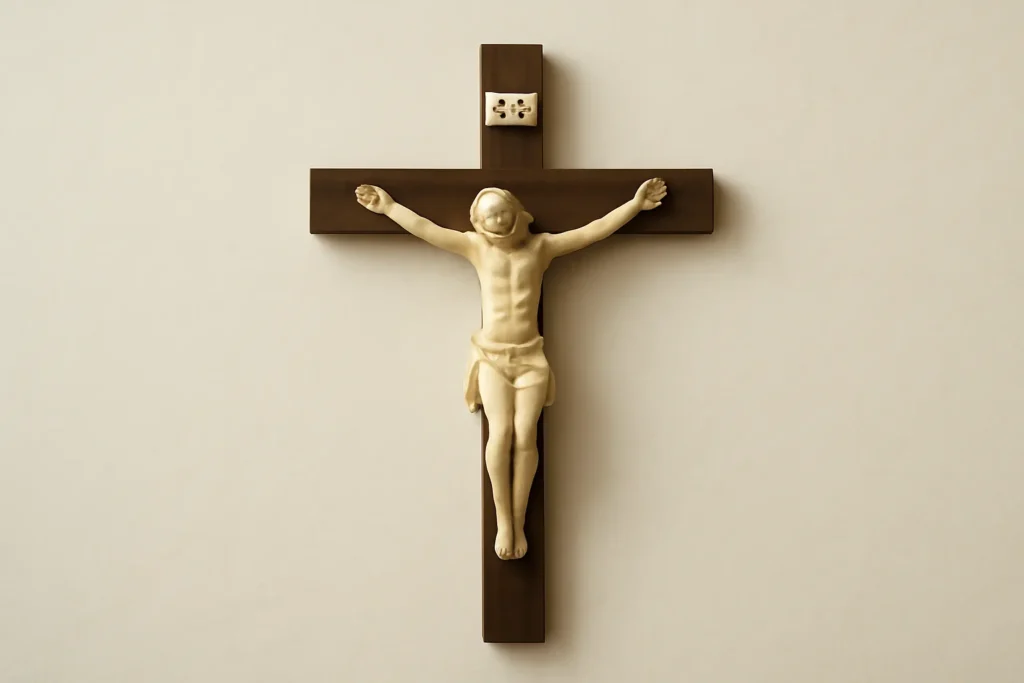
In common parlance, a crucifix refers to a cross that includes a relief or full figure of Christ crucified. By contrast, a plain cross—often called a cross or Latin cross—may lack any figure on it. In Catholic and some Orthodox contexts, the distinction is important both theologically and devotionally. The crucifix emphasizes the reality of the Passion: Christ is crucified, subjected to suffering, yet conqueror through love and obedience to the Father. The Cross in its bare form highlights the victory of the Resurrection, the empty tomb, and the promise of eternal life; the crucifix layers that victory with intimate, personal suffering redeemed.
Several terms recur in Catholic discourse and art, offering semantic breadth for discussion and study. Some useful phrases include:
Crucifix with corpus—the common form showing Jesus on the cross.
Christ on the Cross—a straightforward descriptive variant.
Holy crucifix—a term emphasizing sacred use and blessing.
Processional crucifix—a larger crucifix carried in liturgical processions.
Home crucifix—a smaller, personal crucifix for prayer in daily life.
Liturgical crucifix—a crucifix set for use in chapels and altars during Mass or prayer services.
Across Catholic communities, the crucifix is often integrated with other symbols such as the INRI plate (an abbreviation of the Latin phrase Iesus Nazarenus Rex Iudaeorum), which traditionally appears above the corpus. The presence or absence of the INRI sign, as well as other iconographic elements, can convey specific devotional emphases or historical periods.
Historical overview: from early Christianity to the modern era
Origins and early Christian art
In the earliest centuries of Christian worship, crucifixion scenes appeared in catacombs, sarcophagi, and wall paintings as iconographic memory rather than devotional objects designed for personal prayer. The robust and explicit depiction of a corporeal Christ on a cross—what would become the Catholic crucifix—began to emerge more clearly in late antiquity and the early medieval period. These early representations carried theological significance: they linked Christ’s suffering to redemption and to the salvific plan of God.
Medieval development
During the Middle Ages, the crucifix assumed a central role in Christian pedagogy and devotion. Monastic communities and cathedral churches commissioned sculpted relics, painted panels, and carved altars bearing the figure of Christ. The Corpus on the cross became more naturalistic and individualized, reflecting evolving artistic styles—from the stylized forms of early medieval sculpture to the more emotive, humanized depictions of the Gothic era. In this period, the crucifix was not only a devout object but also a theological teaching tool: the faithful could contemplate the Passion through the visible signs of nails, crown of thorns, and the gash of the side, all rendered with reverent symbolism.
Renaissance, Baroque, and post-medieval adaptions
The Renaissance and Baroque eras brought renewed attention to the drama, emotion, and sensory experience of faith. Artists and artisans sought to evoke contemplation and piety through movement, light, and the physical presence of the corpus on the cross. The crucifix became a centerpiece of altars and chapel decorations, often accompanied by candles, flowers, and incense. In some Catholic traditions, the processional crucifix—large, portable, and elaborately adorned—accompanied religious processions, re-creating the journey of the faithful in a tangible way. Across different regions, local styles emerged: wooden carvers in one culture, metalworkers in another, and late medieval/early modern workshop schools that produced standardized yet deeply meaningful symbols of the Passion.
Theology and meaning: what the Catholic crucifix communicates
The crucifix carries layered meanings that touch on doctrines, pastoral practice, and personal faith. Several theological themes are central to Catholic understanding of this sacred sign:
Incarnation and love: the divine Word becomes flesh, and the Cross remains a sign of unconditional love, offered for the salvation of all humanity.
Redemption: through the Passion, Christ opens the way to reconciliation with God and the forgiveness of sins.
At-one-ment (atonement): the Cross unites the Creator with creation and invites believers into a shared life with Christ.
Suffering and mercy: the crucified Christ reveals the meaning of suffering when it is united with love and obedience to God’s will.
Victory through obedience: the Passion is not only sorrow but triumph—Christ’s victory over sin and death is sealed in the Resurrection.
Eucharistic meaning: the crucifix informs Catholic devotion to the Eucharist, whose sacrifice is made present in the Church’s liturgy.
Among Catholics, the crucifix is also a visual catechism. It teaches the faithful about the passion narrative, invites contemplation on the person of Christ, and invites a response of faith, repentance, and prayer. The presence of the corpus on the cross signals that Jesus is not a distant figure but the suffering, interceding, and risen Lord who cares for every believer.
Iconography and symbolic elements on the Catholic crucifix
The crucifix is rich with symbolic elements. While there is broad agreement about the core image—the crucified Christ—the surrounding details can vary by culture, era, and devotional intention. Here are some key symbolic components often found on or associated with the Catholic crucifix:
Corpus (the body of Christ): the central feature, rendered to convey prophecy, vulnerability, and divine mercy.
INRI plate: the inscription above Christ, identifying him as Jesus of Nazareth, King of the Jews.
Thorns and blood: the crown of thorns and the wounds emphasize the sacrifice and the humanity of Jesus.
Nails and cross-beam: the nails fix Jesus to the cross; the cross-beam (patibulum) reflects the physical reality of crucifixion.
Spear and side wound (the Lance of Longinus): sometimes depicted to illustrate the fulfillment of Scripture and to emphasize the humanity of Christ.
Angels, saints, or figures: occasional additions around the crucifixmay include depictions of Mary, John the Evangelist, or angels in reverent adoration, highlighting the cosmic significance of the Passion.
Light imagery: halos or rays may symbolize divinity, resurrection, or the light of grace shining from the cross.
Terra firma symbols: base elements such as rocks, skulls (Golgotha) or symbolic inscriptions that ground the scene in historical or spiritual geography.
These elements contribute to a composite language of symbol that communicates the mystery of salvation in a way that words alone cannot. The Catholic crucifix invites the faithful to enter into the Passion narrative with their whole selves—mind, heart, and hands—through prayer, meditation, and action grounded in love.
Forms and variations: how crucifixes differ across settings
Crucifixes appear in countless forms, each with a purpose and a setting. Here are some common types and how they serve Catholic devotion:
Residential or home crucifix: a smaller, durable crucifix intended for private prayer spaces, bedrooms, or study corners.
Church crucifix: often larger, highly crafted, and used behind the altar or in side chapels; designed to be seen by the congregation and to aid communal worship.
Processional crucifix: a portable crucifix carried in penitential processions, often on a staff with ceremonial cover and metal embellishments.
Lenten and devotional crucifixes: sometimes displayed with additional symbols of penance, such as a scourge or a small cross with a banner bearing a message of mercy.
Liturgical crucifix: the one used on the altar during Mass, sometimes featuring a tall, vertical cross and a prominent corpus for visibility to the congregation.
Crucifix jewelry or medal crucifix: personal devotional items worn by the faithful—necklaces or bracelets that remind the wearer of Christ’s love and sacrifice.
Icon crucifix: in some Catholic regions, crucifixes fuse with local iconographic traditions, creating a cross that reflects regional artistic identities.
Iconostasis and crucifix on altars: within some churches, a crucifix may be integrated into an iconostasis or a larger devotional tableau alongside other sacred images.
Choosing the right crucifix depends on the devotional context, available space, and personal or family devotion. Some people prefer very traditional wood-carved crucifixes with a natural finish, while others opt for metal, ivory, or polychrome variants that reflect a particular historical period or cultural heritage.
Liturgical use and devotional life
The crucifix plays a central role in Catholic liturgy and private devotion. Its presence shapes how the faithful approach prayer, the Eucharist, and the memory of Christ’s Passion. Here are some of the primary ways Catholics engage with the crucifix in worship and daily life:
Adoration and contemplation: believers may gaze on the crucifix during adoration or quiet prayer, contemplating the mystery of the Incarnation and the Passion.
Stations of the Cross: a devotional practice that often features images of Jesus on the cross at each station; the crucifix is a natural focal point for meditation on the final journey of Christ.
Mass and liturgy: while the central liturgical sign is the cross, a crucifix behind the altar reinforces the reality of Christ’s sacrifice and love during the celebration of the Eucharist.
Prayer before meals: in many Catholic homes, a simple prayer before meals may accompany the sight of a kitchen crucifix, reminding families of gratitude and care for others.
Family devotion: parents pass along the faith through family prayers and the use of a home crucifix as a teaching tool for children and teens.
Mission and outreach symbolism: crucifixes carried by missionaries or displayed in mission posts convey the message of Christ’s love to diverse cultures and languages.
In all these settings, the crucifix serves not merely as a symbol but as a means of relationship—between the believer and Christ, between the faithful and the Church, and between the local community and the universal Church.
Global and cultural variations in the Catholic world
Despite a common core message, the crucifix reflects a diversity of artistic traditions and theological emphases around the world. The Catholic Church’s universal reach means that crucifixes can be found in a range of cultural idioms, each communicating the Passion in a way that resonates with local faith communities:
Western Europe: medieval sculptural traditions, Gothic altars, and Baroque exuberance have left enduring legacies in churches and museums.
Italy and southern Europe: prominent use of wood and polychromy, with the corpus often depicted with a deeply human, suffering expression that invites empathetic prayer.
Eastern Catholic churches: while not all communities place the same emphasis on a pierced corpus in the Western sense, crosses and cruciform imagery appear in varied liturgical art, blending with icons and mosaics.
Latin America and Africa: crucifixes may incorporate local materials (such as carved wood, gourds, or metalwork) and stylistic features that reflect indigenous or regional artistic sensibilities—yet the theological meaning remains centered on Christ’s Passion and mercy.
Asia and Oceania: crucifixes may appear in mission churches, schools, and parishes with careful attention to inculturation, ensuring the image communicates the gospel in a culturally meaningful way.
Across these contexts, the crucifix remains a unifying sign of Catholic devotion, while simultaneously acting as a canvas for local expressions of faith, memory, and hope.
Choosing and caring for a crucifix: practical guidance
For individuals or families seeking a new crucifix, several practical considerations help ensure that the object will be a faithful, enduring aid to prayer and worship. Here are some guidelines to help in selection and care:
Purpose: determine whether the crucifix is for the home, a church, a school, or a processional use; this will influence size, weight, and material.
Material: common choices include wood (warmth and tradition), metal (durable and ceremonial), ivory or bone (rare and symbolic), and polyresin or plaster (cost-effective). Each material has its own care needs.
Size and visibility: for a home prayer corner, a smaller crucifix may be appropriate; in a church or chapel, a larger crucifix ensures visibility for all worshippers.
Corpus style: the artistic portrayal of Christ (realistic, stylized, or symbolic) can affect how the crucifix communicates the Passion to viewers and how it harmonizes with the surrounding space.
Blessing and consecration: a crucifix is typically blessed by a priest before first use; for a home crucifix, some families may seek a blessing during a special devotional moment.
Maintenance: regular dusting and careful cleaning preserve the finish and details; for wooden crucifixes, avoid direct sunlight and humidity which can cause warping; for metal crucifixes, occasional polishing may be appropriate.
Placement: position the crucifix in a place of reverence—an altar, a wall behind the seating area in a chapel, or a dedicated prayer corner at home. The orientation matters in liturgical settings and often follows local custom or priestly guidance.
Beyond aesthetics, selecting a crucifix should be a personal encounter with faith. The crucifix you choose should invite you and your family into a deeper contemplation of Christ’s love and a more faithful imitation of his mercy in daily life.
Impact on worship, education, and community life
For parishes, schools, and religious communities, the crucifix serves multiple roles beyond individual devotion. Its presence shapes worship, catechesis, and community identity:
Teaching tool: catechists use the crucifix to illustrate the Passion narrative, the meaning of the Atonement, and the centrality of Christ in Catholic life.
Liturgical symbolism: the crucifix anchors the worship space and reinforces the gravity of the Eucharistic celebration, especially during Holy Week and the Easter season.
Ritual and processions: in processions and Holy Week ceremonies, a processional crucifix embodies the public witness of faith and the journey of the Church with Christ.
Community identity: a parish’s architectural crucifix can reflect its historical roots, artistic heritage, and spiritual priorities, linking generations of believers through shared symbols.
The crucifix thus acts as a bridge between personal devotion and communal life, helping bridge private prayer with the Church’s mission to evangelize, educate, and serve the world in the name of Christ.
Conclusion: the living sign of faith
From its humble origins in the earliest Christian communities to its central place in today’s Catholic churches and homes, the catholic crucifix remains a powerful symbol of faith, memory, and mercy. Its history reveals a continual refinement of form and function, while its meaning remains anchored in the Passion of Christ—the event that Catholics believe accomplished the salvation of humanity. The symbolism of the crucifix invites believers to enter into Christ’s suffering with reverence and hope, to join their own lives to the redemptive work of God, and to witness the transformative power of divine love in the world. In a sense, every crucifix is a doorway—an invitation to encounter the living Lord, to meditate on the mystery of the Cross, and to participate more fully in the Church’s mission of love and mercy.
For readers seeking to deepen their understanding beyond the surface image, consider exploring:
The biblical foundations of the Passion narratives and how they are reflected in crucifix iconography.
The theological debates around suffering, redemption, and the meaning of the Cross in different eras of Church history.
The cultural adaptations of crucifix imagery in diverse Catholic communities around the world.
How to incorporate a crucifix into family life, catechesis, and parish mission in a way that is both reverent and accessible.
In the end, the crucifix remains a teacher of faith, a balm for the wounded heart, and a beacon of hope. It is a reminder that in the paradox of Christian belief—the cross as sign of suffering and the cross as sign of salvation—the destinies of humanity and God’s mercy meet. The Catholic crucifix invites all people to encounter Jesus, to contemplate His love, and to respond with a life shaped by grace, mercy, and the courage to walk in the light of the Resurrection.









Leave a Reply