Advent Wreath Definition: Meaning, History, and Symbolism
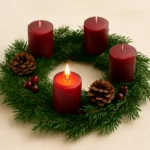
The Advent wreath is a traditional circular garland placed in homes, churches, and public spaces to mark the season of Advent—the four weeks leading up to Christmas. While the exact wording of its definition can vary, at its core the Advent wreath is a symbolic object that combines evergreen foliage, a circular ring, and candles to signal time, anticipation, and spiritual preparation. This article explores the definition of the Advent wreath, its meaning, its history, and the symbolism embedded in its design and use. Readers will encounter multiple ways to describe the wreath, from its liturgical function in worship to its devotional use in the home, along with practical guidance for making and using one in daily life.
Defining the Advent wreath in contemporary usage
In contemporary language, the phrase Advent wreath definition can be summarized as a decorative ring of evergreens that encircles a set of candles, each responsible for a specific week of Advent. The practice is both ceremonial and devotional: it provides a visible rhythm of expectation as each candle is lit, and it invites prayer, reflection, and study during the season. Some sources emphasize the wreath as a symbol of eternity due to its circle shape, while others focus on the liturgical calendar it helps illuminate. Regardless of the emphasis, the wreath remains a unifying symbol—connecting ancient Christian practice with modern family rituals and church services.
History of the Advent Wreath
The history of the Advent wreath is a journey through time, geography, and Christian practice. While the basic idea—a circular ring of greens with lights—appears in various cultures, the modern Advent wreath as we know it has specific roots in 19th-century Germany and later spread across Europe and North America.
Origins in Germany: the Prophetenkranz and practical beginnings
The roots of the Advent wreath are often traced to the 19th century German Protestant and Lutheran church and home traditions. In Hamburg, a young Lutheran pastor named Johann Hinrich Wichern created a devotional device known as the Prophetenkranz (Prophet’s Ring) in 1839 for a children's mission project. His ring began with a wooden wheel, a large number of small candles, and later candles symbolic of the weeks of Advent. Over time, the concept of a circular evergreen ring with candles became a practical and symbolic way to count down the weeks until Christmas.
From church practice to home devotion: diffusion and adaptation
As missionary work and church reform movements spread, local congregations began adopting the wreath as a centerpiece for Advent worship. In many contexts, the wreath moved from a strictly liturgical setting to the private sphere of households and classrooms. The symbolism—light piercing darkness in a season of expectant waiting—resonated with families and communities facing long winters and the spiritual longing for the coming of Christ. By the early 20th century, the Advent wreath had become a familiar feature in many Western churches and homes, with variations in candle numbers, colors, and accompanying prayers.
Structure and Components: What makes up an Advent Wreath?
Although there are regional variations, most Advent wreaths share several common elements. Understanding these components helps illuminate the meaning behind the wreath and why each piece matters.
The circular ring or base: A symbol of eternity and the unending life promised through Christ. The circle has no beginning and no end, mirroring the eternal nature of God and the perpetual anticipation of Advent.
Evergreen foliage: Greenery such as pine, fir, holly, or cedar represents resilience, life, and renewal even in the darkest seasons of the year.
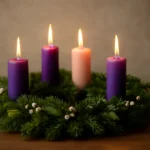
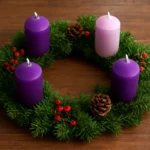
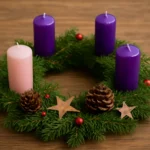
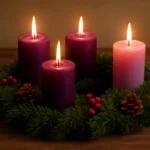
Candles: Typically four, sometimes five, candles are placed on the ring. The candles represent the Sundays of Advent (and, in some traditions, the anticipation of Christ’s coming). Each candle carries its own symbolic meaning and is lit in sequence as the weeks progress.
Candle colors: The most common palette is purple (or blue) for penitence and contemplation, and pink (rose) for joy during Gaudete Sunday—the third week of Advent. Some traditions also include a white Christ candle.
Lighting mechanism and holders: Candles may be held in individual holders around the ring or placed in a lantern, tray, or stand to ensure safety and easy lighting during services or home observances.
Different candle configurations: four vs. five candles
The standard Advent wreath used in many churches and homes features four candles. The arrangement often follows a progression of themes:
Hope (often represented by a purple candle): The first week emphasizes anticipation and readiness for God’s intervention in human history.
Peace (often purple): The second week invites contemplation of peace with God and peace in one’s own life.
Joy (pink or rose): The third week celebrates joy in the coming of Christ and the nearness of God’s promises fulfilled.
Love (purple): The fourth week closes the Advent season with a focus on love demonstrated in the birth of Jesus and shared in community.
Some wreaths include a fifth candle, known as the Christ candle, which is placed in the center and lit on Christmas Eve or Christmas Day to signify the arrival of Christ. When a Christ candle is used, it is often a white candle that remains unlit during Advent and is lit only on the final day of the season, signaling the Nativity celebration.
Symbolism and Meaning Behind the Advent Wreath
The Advent wreath is rich with symbolism that spans theology, liturgy, and everyday faith practice. Each element of the wreath contributes to a broader narrative of anticipation, transformation, and hope.
Evergreen foliage stands for eternal life and the continuity of God’s promises, undiminished by the winter months.
The circular shape represents eternity and the unbreakable covenant between God and humanity—there is no beginning and no end to the divine love proclaimed in Advent.
Candles are a visible countdown to Christmas. Each lighting marks a step in spiritual preparation, inviting prayer, scripture reading, and reflection on the coming of Christ.
Color symbolism in Advent wreaths has multiple facets:
Purple (or blue) signals repentance, preparation, and longing for redemption.
Pink (rose) on Gaudete Sunday embodies joy and celebration in the midst of waiting.
White for the Christ candle in some traditions signals purity, light, and the manifestation of God in the world.
Light overcoming darkness is a central theme. Lighting candles in a dim church or home each week personifies the progression from ambiguity and waiting to the clarity and wholeness brought by the Incarnation.
Advent wreath vs. Advent calendar
Though both are seasonal tools used during the same period, the Advent wreath and the Advent calendar serve different purposes. The wreath emphasizes liturgical time and spiritual preparation through a tactile ritual of lighting candles. The Advent calendar, on the other hand, emphasizes daily countdown through small doors or pockets that reveal scriptures, prayers, or treats. Together, they offer a complementary way to mark the season with rhythm and meaning, though they are distinct traditions.
The way an Advent wreath is used varies by tradition, denomination, and local custom. It can appear in formal church worship as part of a collective liturgy or be a centerpiece for family devotion in the home. Regardless of the setting, the practice invites reflection on spiritual themes such as expectation, repentance, joy, and love.
Liturgical use in churches
In many congregations, the Advent wreath is placed on or near the pulpit or lectern, or centered in the chancel. A rotating sequence is followed:
Reading a Scripture passage related to Advent or Christmas.
Offering a brief meditation or prayer for the week.
Lighting the week’s candle after a short liturgy or hymn.
Responsorial or congregational singing that aligns with the Advent theme.
Home devotion and family practices
Families often use the Advent wreath as a simple, repeatable routine:
Gather around the wreath in a quiet space, perhaps after dinner or before bedtime.
Light the current week’s candle(s) and recite a brief prayer or a Scriptural passage.
Reflect on a theme for the week (Hope, Peace, Joy, Love).
Sing a Christmas carol or a short hymn, if desired.
The colors used on Advent wreaths are not arbitrary; they reflect centuries of liturgical practice and regional tradition. While purple and pink are common, other color schemes have appeared in different churches or cultural contexts.
Purple or blue candles emphasize preparation, penitence, and contemplation.
Pink or rose candles highlight joy and anticipation, typically lit on the third Sunday of Advent (Gaudete Sunday).
White (Christ candle) is sometimes added in the center for Christmas Eve or Christmas Day, symbolic of purity and the Incarnation.
Some churches use blue instead of purple to denote a different liturgical emphasis, but the underlying idea of waiting remains the same.
Regional and denominational differences
While the four-candle model is widespread, some traditions experiment with five candles or with different color sequences. In some Catholic or Anglican communities, the order and significance of each week’s candle may be framed by distinct catechesis or devotional guides. In non-liturgical Protestant settings, the wreath may function more as a devotional aid than a formal liturgical object, but the symbolic arc remains recognizable: from darkness to light, from waiting to fulfillment.
Whether you attend a church regularly or celebrate at home, you can create a meaningful Advent wreath with materials that fit your setting, budget, and safety needs. Here is a practical overview to help you plan and implement a wreath that respects tradition while accommodating modern life.
Materials and safety considerations
Base ring or sturdy frame, typically four to five inches in diameter for a table wreath, larger for a floor-stand wreath.
Evergreen greens (real or artificial) to form the circular shield of life and resilience.
Candles (four or five): safe holders, glass chimneys, and a wind- or rain-protected environment if used outdoors.
Adhesives and holders to secure candles and greens (floral wire, hot glue, or a pre-mounted candle base).
Protective surface (tray or plate) to catch wax and protect furniture.
Optional decorations such as ribbons, pinecones, dried fruits, or ornaments, used sparingly to avoid clutter and maintain balance.
Safety tip: If real candles are used, never leave the wreath unattended while lit, place it away from flammable items, and consider LED candles as a safer alternative for homes with children or pets.
Step-by-step assembly
Prepare the base and securing surface; lay out greenery to form a circle that sits firmly on the surface.
Attach the greens to the base, ensuring an even distribution around the ring for a balanced look.
Place candle holders around the ring, spacing them evenly; insert the four traditional candles (or five, if using a Christ candle).
Attach any decorative elements with care, avoiding overlap with candle flame zones.
Install a central or outer Christ candle if using a five-candle configuration; place it in a secure center position or in a separate holder if the ring design demands it.
Test lighting routine with a practiced sequence; verify stability and wax flow.
Plan a simple weekly order of lighting, with prayers or readings to accompany each lighting.
Liturgical and devotional usage tips
Keep the weekly theme aligned with the candle color and season’s message: Hope, Peace, Joy, and Love.
Use short readings from Scripture, poems, or prayers that focus on the Advent themes to accompany each lighting.
Consider including a moment of silence or a brief reflection for personal or family prayers.
In public worship, combine the lighting with a hymn or a responsive reading to reinforce the communal dimension of Advent.
While the Advent wreath is widely recognized, its practice is not identical everywhere. Below are some notable variations that illustrate the breadth of Advent wreath traditions around the world.
Catholic, Anglican, Lutheran, and Reformed traditions
In Catholic contexts, the Advent wreath is commonly used in parishes during Mass or in devotional ceremonies. The candles’ color scheme often mirrors the universal church calendar. In Anglican and Lutheran churches, the wreath is a familiar item in both worship spaces and homes. Some Reformed denominations may favor a simpler arrangement, but the cycle of lighting remains a powerful reminder of the season’s spiritual meanings.
Regional stylistic differences
In some regions, wreaths incorporate blue or alternate color sequences that reflect local liturgical preferences. In northern European countries, wreaths may be larger and include more robust greenery to withstand longer winters. In North America, the wreath is often a centerpiece in Sunday services and households, with community groups sometimes sharing the lighting responsibilities.
Beyond church buildings and private homes, the Advent wreath has made its way into schools, civic centers, and community events as a symbol of the Advent season. This broader adoption reflects the wreath’s capacity to convey a universal message of waiting with hope and preparing for a special moment of celebration. While some observers may view the wreath as a religious symbol, many communities appreciate its role in promoting quiet reflection, beauty, and shared tradition during a festive but contemplative period.
What is the primary definition of the Advent wreath?
The primary definition describes it as a circular evergreen arrangement with candles that marks the four weeks of Advent, each candle representing a specific spiritual theme and time of preparation for Christmas.
The most common interpretation assigns each candle a theme: Hope, Peace, Joy, and Love. A fifth, central candle—often white—may symbolize Christ and is lit on Christmas Eve or Christmas Day in some traditions.
What do the candle colors mean?
Colors communicate mood and message. Purple or blue invites contemplation and penitence; pink or rose signals joy and celebration, typically on the third Sunday of Advent. The Christ candle, when used, is frequently white and lit for Christmas, representing purity and the light entering the world.
No. While it has strong roots in liturgical settings, many families and schools use Advent wreaths as devotional tools or seasonal decorations that invite reflection, prayer, and communal or family time around the Advent themes.
Can LED candles be used instead of real candles?
Yes. LED or battery-operated candles can safely provide the same symbolic lighting sequence without the fire risk. They are especially practical for homes with children, in public spaces, or in outdoor settings where maintaining real flames would be impractical.
The enduring appeal of the Advent wreath lies in its ability to translate a season of waiting into a tangible, communal practice. The circular form speaks to the continuity of God’s love across time; the evergreen life speaks to hope that endures through winter; the gradually lit candles invite a rhythm of reflection, prayer, and anticipation. Whether observed in a formal church service, a quiet family moment around the dinner table, or a classroom circle, the wreath helps people slow down, name their longings, and prepare their hearts for the celebration of Christmas. In its simplest form, it is a visible schedule for Advent—an invitation to walk through the season with intention, light, and hope.
In sum, the definition of the Advent wreath encompasses its role as a ceremonial object, its symbolic meanings, and its practical use in worship and devotion. Its history reminds us how a practical devotional tool can evolve into a shared cultural symbol that bridges generations. Its enduring symbolism—eternity in a circle, life in evergreen, light in darkness—continues to resonate in diverse contexts, making the Advent wreath a meaningful fixture of Christian tradition and a gentle reminder of the anticipation and wonder that define the weeks leading to Christmas.







Leave a Reply