Cross Christian: Meaning and History of the Symbol
Introduction to the Cross as a Central Christian Emblem
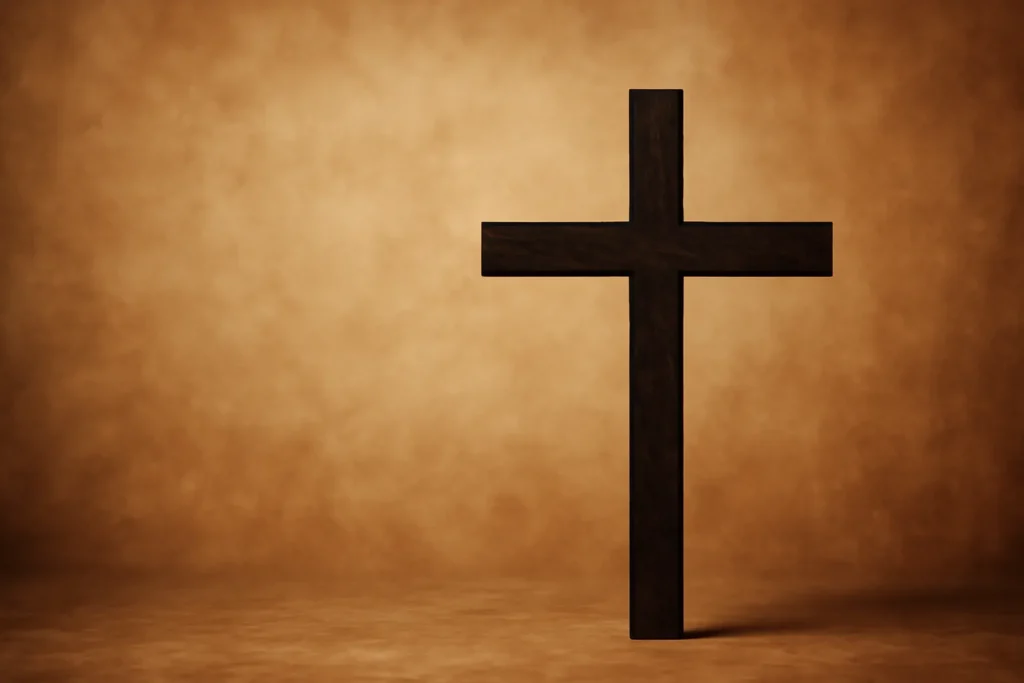
The Cross — often known simply as the Christian cross — is the most enduring symbol of Christianity.
It is not merely a geometric figure, but a loaded sign steeped in theology, history, and lived faith. In many contexts it is
presented as the ultimate symbol of sacrifice, atonement, and redemption,
reminding believers of the crucifixion of Jesus Christ and the promise of new life through the Resurrection.
Across centuries and continents, the emblem known as the Cross has taken many forms and conveyed a spectrum of meanings
— from personal devotion to public proclamation, from liturgical liturgy to artistic expression.
In this article, we examine the Cross Christian as a symbol, tracing its origins, its diverse shapes,
and the historical currents that have shaped its interpretation in different Christian traditions. We will also consider how
the Cross has come to inhabit secular culture, art, architecture, and contemporary discourse, sometimes as a source of inspiration
and sometimes as a subject of controversy. The aim is not only to describe a form, but to illuminate the ideas that the Cruciform image has conveyed to countless communities over a long arc of time.
Origins and Early Adoption of the Cruciform Sign
The question of when the Cross began to function as a distinct Christian symbol is complex. In the earliest
Christian communities, believers used a variety of marks and metaphors to signify their faith. The idea of a cross-shaped
emblem appears in Christian art and inscriptions in the 2nd and 3rd centuries, but the deliberate, public use of a cross representing
the crucifixion of Jesus—often called the Cross of Christ or the Crucifixion cross—developed more fully
in the following centuries.
Two forces helped crystallize the meaning of the Cross in antiquity and the medieval era:
The explicit theological claim that Jesus’ death on a cross brought salvation for humanity — a doctrine central to patristic and later Catholic and Orthodox theology.
The broad adoption of Christian identity within the empire and, later, within scholarly and devotional communities
who used the cross to distinguish themselves from other religious traditions.
Early Christian art frequently employed the cross in a symbolic or abstract way. In some cases it appeared as a simple
intersection of lines, a monogram (for example, the Chi-Rho), or a cross within a circle. Over time, more explicit cruciform
representations emerged, culminating in the widespread use of the Latin cross form in Western Europe and the Greek cross and other configurations in the East.
Cruciform Motifs in Pre-Christian and Early Christian Imagery
Before Christianity defined the Cross as a central emblem, cruciform shapes appeared in various traditions and
were sometimes used for non-Christian purposes such as protection or memory. When early Christians adopted the symbol,
they imbued it with theological significance: the vertical arm signified the divine dimension, the horizontal bar signified
human community and outreach, and the intersection of the two symbolized the union of God and humanity in the person of Jesus.
This symbolic reading laid the groundwork for centuries of interpretation in theology, liturgy, and art.
Forms of the Cross: Shapes, Meanings, and Cultural Variants
The Christian world has produced a remarkable variety of cross forms, each carrying distinct historical associations,
devotional uses, and cultural resonances. The most common shapes include the Latin cross, the Greek cross, and the Armenian cross, but there are many others with their own stories
and symbolic overtones.
Latin cross — the most widely recognized form in Western Christianity. The longer vertical arm
emphasizes the idea of Christ’s sacrifice and the salvific drama of the Passion.
Greek cross — arms of equal length forming a symmetrical cross, commonly associated with the Eastern
Orthodox tradition and Byzantine art. It often conveys balance, universality, and the church’s mission to the world.
Armenian cross — a distinctive, ornate cross that reflects the artistic and architectural sensibilities
of the Armenian Christian tradition, sometimes featuring a flared, stepped, or branched design.
Cross potent — characterized by small projections at the ends of the arms; it is found in medieval
heraldry and ecclesiastical art, signaling guardianship and the enduring protection of the faithful.
Cross pattée — arms that widen toward the ends, used by several medieval crusader orders and in heraldry;
its form evokes motion and conquest as well as faith.
Maltese cross — with four V-shaped arms, symbolizing the eight beatitudes and, in the modern era,
associations with chivalric tradition and humanitarian service.
Jerusalem cross — a large cross surrounded by four smaller crosses, symbolizing Christ and the four corners
of the world being brought under the gospel.
Celtic cross — a cross with a ring surrounding the intersection, reflecting a synthesis of Christian faith
and Celtic symbolism, often interpreted as eternity or the unity of heaven and earth.
Orthodox variations — including the St. George cross and the Russian cross, which often
incorporate additional crossbars or diagonal elements to convey theological ideas about the Passion and the Trinity.
Cross in Art and Sacred Architecture
The shape of the Cross has deeply influenced Christian art and church architecture. In the medieval period, cruciform churches
arranged their floor plans to mirror the cross, guiding movement and gaze toward the altar or the crucifix hanging above it.
In stained glass, mosaics, and sculpture, the Cross became a visual catechism — telling stories of the Passion, the life of Christ,
and the history of salvation to a largely illiterate population.
In addition to liturgical liturgy and sacred space, the Cross appears in devotional objects, such as pendants,
rosaries, icons, and portable medallions. The practice of bearing a cross necklace or carrying a small
cross in a pocket or on a keychain is a personal reminder of faith, commitment, and grace.
Symbolic Meanings Across History: What the Cross Has Signified
Across time and tradition, the Cross has carried a spectrum of meanings. While the core narrative centers on
the crucifixion of Jesus, believers have understood the symbol in multiple, sometimes overlapping, ways. Here are some
of the most influential interpretations:
At-one-ment and reconciliation — the Cross is seen as the instrument by which humanity reconciles with God.
Sacrifice and redemption — Jesus’ voluntary suffering is understood as atonement that liberates humanity
from sin.
Salvation and eternal life — the Cross points to the promise of Christ’s resurrection and the hope
of life beyond death.
Love and mercy — the Cross is frequently invoked as a sign of self-giving love, compassion, and
forgiveness extended to enemies and strangers alike.
Martyrdom and witness — for many saints and early Christians, bearing the Cross represented steadfast
faith in the face of persecution and the courage to proclaim the Gospel.
Redemption of suffering — some theologians interpret the Cross as God’s way of transforming pain
into a path toward healing and solidarity with the broken and the marginalized.
Hope and perseverance — in secular contexts as well, the Cross can signify resilience and the resilience
of a community in the midst of trial.
Differences in Emphasis Among Traditions
While all Christians affirm the Cross as a central emblem, different traditions emphasize certain dimensions more than others.
For example:
Catholic and Orthodox traditions often foreground the Cross in conjunction with the crucifix, emphasizing
the Passion narrative and the veneration of Christ’s suffering as a source of grace.
Protestant and Anglican contexts may highlight the Cross as a symbol of justification by faith and the
proclamation of the Gospel, with a wide variety of cruciform art and liturgical expressions.
Nontrinitarian or symbol-focused communities might center the Cross as a universal sign of
Christianity that transcends particular doctrinal formulations, while still honoring its core message.
Cross in Culture: Practice, Liturgy, and Public Life
The Cross appears in many facets of culture beyond prayer services. It shapes private devotion as well as public
life, influencing clothing, jewelry, architecture, corporate logos, and even national flags. The way people encounter and use the
Cross can reflect local customs, historical experiences, and evolving social norms.
Devotional and Liturgical Roles
In devotional life, individuals may wear a Cross pendant as a reminder of faith and commitment. In church
worship, the Cross is central to the liturgy, especially during the seasons of Lent and Holy Week.
Icons, crucifixes, and processions bring the Cross into public view as a moving visual narrative of Christ’s Passion and victory.
The Cross also functions as a didactic object in iconography and sermon imagery. Its presence invites contemplation
of themes like forgiveness, hope, and the mystery of the Incarnation.
Art, Architecture, and Public Expression
From medieval cathedrals to modern churches, the Cross has shaped the layout of sacred spaces. The cruciform plan, altars
adorned with crosses, and the placement of crosses in chancels, cloisters, and chapels all reflect centuries of design
thinking about how worshippers approach the divine mystery.
In cathedrals, a prominent cross often marks the central axis, guiding pilgrims toward the sanctuary.
In mosaics and stained glass, the Cross helps narrate the life of Christ and the story of salvation
for congregants who may have been illiterate in earlier centuries.
In cityscapes, Christian symbolism appears in monuments, public squares, and even hospital emblems that
adopted cross imagery as a sign of care and service.
Variations by Tradition and Geography: How Local Context Shapes the Cross
The Cross acquires different stylistic features and devotional emphases depending on geography, culture, and the
particular faith community. In the Eastern Christian world, the Orthodox cross and its variants may include
additional crossbars and a more elaborate ceremonial use. In Western traditions, the Latin cross and its
Catholic and Protestant expressions tend to be highly visible in churches, art, and popular culture.
Regional Examples
In the Byzantine and Eastern Orthodox sphere, icons and liturgical objects often display the cross in complex
compositions that highlight the Trinitarian and Resurrection themes.
In Latin Rite Catholic and Protestant churches, cruciform imagery is integrated into architecture, art,
and devotional objects, with variations that reflect local saints, feast days, and historical memory.
In Armenian, Coptic, Ethiopian, and other Eastern Christian communities, unique cross forms (such as the
Armenian cross or the Ethiopian cross) blend local artistry with theological symbolism.
Modern Contexts: The Cross in Contemporary Life and Ethical Considerations
In the modern era, the Cross continues to be a potent symbol in fashion, media, and public discourse.
It can function as a personal sign of faith, a cultural emblem, or a political marker — with all the attention that such a symbol
can attract. Discussions about the Cross in public life often touch on questions of freedom of religion, secular ethics, and
the responsibilities that accompany powerful symbols.
Contemporary Debates and Tensions
Several topics recur in conversations about the Cross today:
The balance between reverence and appropriation: how to respect sacred meaning while recognizing modern uses in education and
art.
The Cross in public institutions: debates about display, neutrality, and the rights of individuals of diverse faiths or none.
The distinction between symbolic and doctrinal significance: how communities articulate what the Cross means for personal salvation
versus institutional power.
The role of the Cross in interfaith dialogue: common ground with other traditions that use the cross or cross-like symbols in
different ways to express moral ideals.
Even as the Cross is embraced as a mark of identity, many theologians and scholars emphasize that the symbol gains its deepest
significance through the lived memory of the Gospel, the preached word, and acts of charity that embody Christian
witness. For many believers, the Cross remains a dynamic invitation to follow Christ, to love neighbor,
and to work toward a more just and compassionate world.
Social and Humanitarian Implications
Beyond worship spaces, the Cross has inspired humanitarian missions and relief efforts. Organizations bearing the Cross
emblem have historically engaged in charitable work, medical care, disaster response, and advocacy on behalf of vulnerable
communities. This broad legacy reinforces the Cross not only as a symbol of suffering but also as a beacon of service and mercy.
Glossary of Terms and Quick References
To help readers navigate the wide range of terminology associated with the Cross, here is a compact glossary of key terms and
phrases frequently encountered in discussions of the crosses and cruciform symbolism.
Cruciform — describing something that is cross-shaped or arranged in the form of a cross.
Crucifix — a cross that bears the figure of Christ, used in Catholic devotion and some Orthodox and Anglican contexts.
Crucifixion — the historical mode of Jesus’ death, central to Christian teaching about salvation.
Monogram — a symbol created by combining letters, often used with Christograms like Chi-Rho as early Christian motifs.
Christogram — a symbolic representation of Jesus Christ through letters, such as the Chi-Rho or INRI inscription.
Cruciform architecture — church layouts designed to resemble a cross in floor plan.
Iconography — the visual language of sacred images, including representations of the Cross and the Passion.
Passion — the events surrounding Jesus’ suffering, death, and resurrection; a central theme in Cross imagery.
Conclusion: The Enduring Narrative of the Cross
Across centuries and cultures, the Cross has remained a dynamic and multi-faceted emblem. It is a historical
sign whose meanings have been shaped by scripture, liturgy, theology, art, and lived faith. From its emergence in the early Christian era
to its pervasive presence in contemporary life, the Cross Christian symbol has served as a catechetical tool, a
source of consolation, a public declaration of belief, and a reminder of core Christian convictions — namely the
themes of the Paschal mystery (Christ’s suffering, death, and triumph), redemption, and the call to
imitate Christ in love and service.
For readers new to the topic, the journey through the various Cross forms and their meanings can illuminate not only
a symbol, but the wide and diverse landscape of Christian history itself. The Cross is, in that sense, both a private meditation
and a public testament — a bridge between ancient doubt and modern faith, a reminder of sacrifice that invites today’s believers
to respond with compassion, justice, and hope.
Whether encountered in a quiet chapel, a grand cathedral, a museum gallery, or a piece of jewelry, the Cross invites
reflection on what it has meant to countless people across time: to confess belief, to endure trial, and to trust in a future answer
greater than human certainty. In every era, the Cross remains a central symbol of Christian identity and an enduring
invitation to live out the message at the heart of the Gospel.









Leave a Reply