Catholic Wreath: Meaning, Types, and Decor Ideas for Faithful Homes
Catholic Wreath: Meaning, Types, and Decor Ideas for Faithful Homes
The Catholic wreath is more than a decorative circle of greenery. It is a tangible symbol that brings the rhythms of the Christian year into the home and church, inviting prayer, reflection, and family togetherness. Whether you encounter a dedicated Advent wreath on a kitchen table or a lush Catholic home wreath gracing a living room wall, this devotional ornament serves as a visual reminder of faith, hope, and mercy. In this article, we explore the meaning, the varieties, and the decor ideas that make the wreath a meaningful addition to faithful homes.
At its core, a Catholic wreath embodies several layered symbols that connect daily life with Catholic faith. The most enduring elements are eternal life, the light of Christ, and the cyclical nature of the liturgical year. Explaining these ideas helps families use the wreath not just as a pretty ornament, but as a partner in prayer and catechesis.
The circle and the evergreen
A wreath forms a perfect circle, symbolizing eternity without beginning or end. In Catholic spirituality, this is often interpreted as the eternal love of God and the everlasting life promised through Christ. The use of evergreen branches—pine, fir, cypress, or holly—emphasizes a living faith that endures beyond seasonal changes. Even as the world appears to waver, the evergreen reminds the faithful that God’s love remains steadfast.
Light and candles
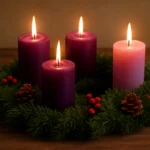
Candles are a central feature in many Catholic wreaths, especially the Advent wreath. Each candle lit in anticipation of Christmas represents a facet of spiritual expectation: hope, peace, joy, and love. The glow of the candles is a symbol of Christ as Light in the world, guiding households through darkness toward the dawn of the Nativity. The practice of lighting flames can become a family prayer routine, turning the wreath into a liturgical instrument at home.
Colors and seasons
Colors used in wreaths reflect liturgical seasons and intentions. For Advent wreaths, common choices include:
Purple (violet) for penance and preparation
Rose (pink) for joyful anticipation on the third (Gaudete) Sunday
White or gold can appear on Christmas Eve or Christmas Day to signify the Nativity and joy
For other Catholic devotion wreaths, you might see combinations of blue for Mary, red for martyrdom or the Holy Spirit, and green for ongoing life. The palette itself becomes a catechetical tool, teaching the faithful to remember the rhythm of feasts, feints of sorrow, and bursts of joy throughout the year.
History and origins of the wreath in Catholic life
The Advent wreath as a practice has roots in the Christian tradition of using candles and evergreen branches to mark the season of expectation. While commonly associated with Protestant traditions in its early development, the idea spread across Christian denominations, and Catholic families adopted it as a natural way to honor the four weeks of Advent. The Catholic home, parish, or chapel can use an Advent wreath to connect domestic devotion with the broader liturgical calendar. In addition to Advent, Catholic households have employed wreaths during Christmas, Marian month celebrations (May and October in particular), and feast days that lend themselves to floral and evergreen symbolism.
Many Catholic communities emphasize wise use of symbols rather than sheer ornamentation. The wreath becomes a visual catechesis: a way to talk about the Incarnation, the life of Jesus, the role of Mary and the saints, and the hope of eternal life. In this sense, the humble wreath serves as a small, daily doorway into the mysteries of faith.
Types of Catholic wreaths and their devotional purposes
There are several distinct forms of wreaths that Catholics may welcome into their homes or churches. Here are the main varieties, each with its own devotional focus and practical considerations.
Advent wreath
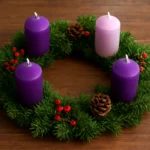
The Advent wreath is the centerpiece of pre-Christmas devotion in many Catholic households. It typically features a circular evergreen arrangement with four candles placed around the circle. A number of variations exist, but the classic form includes:
Four candles arranged around the circle: usually three purple and one pink, though some households use three purple and one white, depending on local custom
One candle lit on the first Sunday of Advent, then one additional candle lit each week for the remaining weeks, culminating in the lighting of all four candles by Christmas
Optional white or gold center Candle (Christ candle) lit on Christmas Eve or Christmas Day
Around the wreath, supplemental greens, berries, and ribbons can symbolize joy, hope, and the dawning of the Nativity season
Outside the home, many parishes display a large Advent wreath in the church sanctuary, with a brief liturgical service accompanying each candle lighting. The domestic Advent wreath, however, is meant for family prayer: a simple ritual that invites weekly Scripture readings, prayers, and reflection on the mysteries of the Incarnation.
Christmas wreaths for the home
Christmas wreaths are a natural extension of Advent devotion, turning evergreen circulars into festive messengers of Christ’s birth. Catholic home wreaths for Christmas can be highly decorative or modest and spiritual, depending on family preference. Common features include:
Lush evergreen base with red, gold, or white accents
Nativity scenes, angels, or images of Mary and Jesus as central focal points
Ribbons or bows, often in liturgical or festive colors such as red, white, gold, or blue
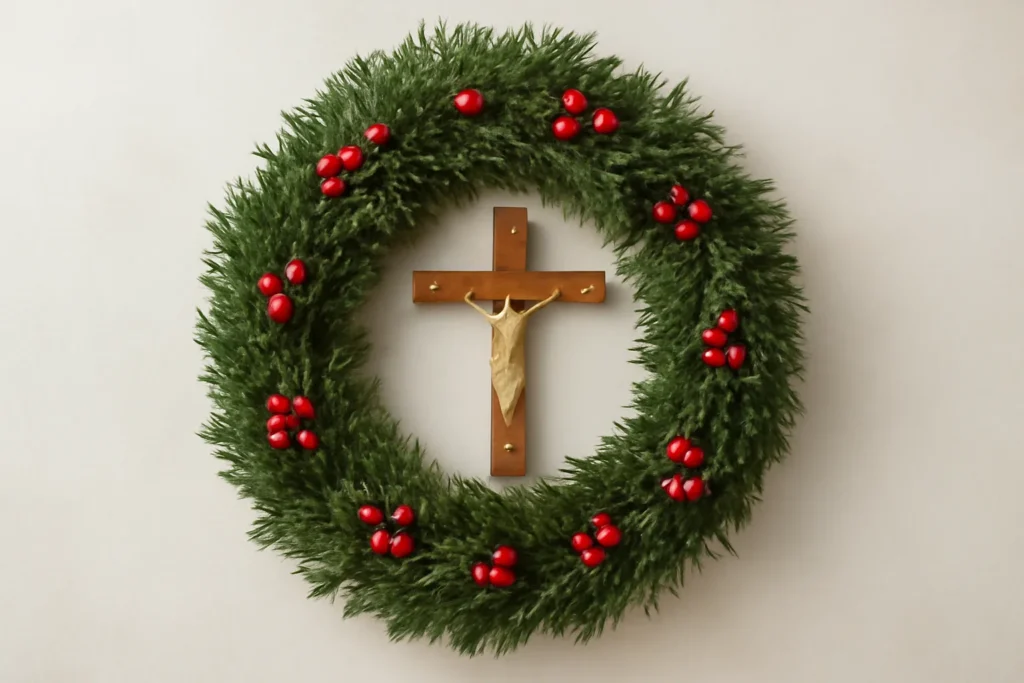
While Christmas decorations are widely secular in culture, a Catholic Christmas wreath often includes a deliberate devotional centerpiece—an image of the Nativity, a small crucifix, or a blessing inscription—so that the outer beauty remains connected to sacred meaning.
Marian and devotional wreaths
To honor Mary or specific saints, families may create Marian wreaths or memorial wreaths that reflect particular mysteries of the Rosary or feast days. Characteristics can include:
Colors associated with Marian devotion (commonly blue and white)
Images or icons of Mary, including the Immaculate Heart or Our Lady of Guadalupe
Names of Marian feasts or saintly patronages inscribed on ribbons
These wreaths become a tangible expression of devotion in the home, inviting prayer and contemplation on the mysteries of the faith and the saints who accompany believers on their journey.
Funeral and memorial wreaths
Wreaths in Catholic contexts can also be used for memorials, funeral rites, or remembrance of loved ones. In these settings, the wreath expresses consolation and the hope of resurrection. The symbolism here emphasizes eternal life and the communion of saints. While solemn, such wreaths can still offer beauty and comfort to grievers through carefully chosen greens, respectful colors, and simple, tasteful adornments.
In some churches and families, wreaths are adapted for regional feast days or local devotions. Examples include wreaths decorated with regional flowers for saints’ days, or wreaths focusing on a particular religious object (such as a crucifix or a monstrance) that the family wishes to honor. These variations remind us that a wreath is a flexible devotional instrument that can reflect local culture, family history, and church tradition.
Materials and construction: building a Catholic wreath for the home
Crafting a Catholic wreath combines materials, meaning, and technique. Whether you choose a traditional, fresh-green wreath or a durable artificial version, the process invites patience, care, and prayerful intention. Here are common components and practical tips to help you assemble a faithful wreath for your home altar or entryway.
Common materials
Wreath forms: grapevine, wire, foam, or a wooden ring
Evergreen greens: pine, fir, cedar, holly, or a mix for texture and color
Candles: real or LED (safest for homes) lamps, with appropriate holders
Ribbons: linen, satin, or grosgrain in seasonal colors
Decorative elements: dried fruits, pinecones, berries, bells, crosses, Nativity figures, or Marian motifs
Religious imagery: small icons, crucifixes, medals, or rosaries suitable for wreath embellishment
Preservatives: if you plan to keep the greens longer, use floral preservative or wired stems to maintain shape
Construction and safety basics
Whether you purchase a kit or assemble components yourself, a few practical steps help ensure a sturdy, beautiful wreath that can be used season after season.
Begin with a secure wreath form or base. Ensure it is robust enough to hold candles and heavy adornments without bending or sagging.
Attach greens firmly to the base using floral wire or twist ties. Layer greens to create depth and fullness.
Place candles or LED lights securely in holders, avoiding direct contact with dry foliage to minimize fire risk. If using real candles, never leave them unattended and extinguish before leaving the room.
Distribute decorative elements evenly, balancing weight so the wreath sits level on doors, tables, or walls.
When using a Marian or saintly motif, place the image or symbol at the wreath’s focal point to maintain reverence and clarity of purpose.
Decor ideas for faithful homes across seasons
One of the most appealing aspects of the Catholic wreath is its adaptability. A single wreath can witness to different seasons and feasts with only a few careful adjustments. Here are practical ideas to keep the decor meaningful throughout the year.
Seasonal adaptations
Advent: add four candles, purple and pink ribbons, and a small banner with a hopeful scriptural verse.
Christmas: place a Nativity scene or a central Christ figure; include red or gold accents that evoke joy and celebration.
Mary and the saints: incorporate blue ribbons, small Marian symbols, or a saint card as a centerpiece on the wreath.
Lent and Easter: adapt the wreath with violet ribbons and a white center candle to signal the Resurrection.
Placement and display ideas
Front door wreath welcomes guests with a message of faith and hospitality.
Tabletop altar wreath creates a small prayer corner for daily devotion or family prayer.
Living room or entryway wreath can function as a focal piece that invites contemplation as people pass by.
Church or parish display wreaths can honor a feast day, a saint, or a specific intention for the community.
Styling tips for meaningful displays
Keep the design simple and reverent for devotional use; avoid excessive glitter or distracting elements that pull attention away from prayer.
Pair the wreath with a small prayer card, scriptural passage, or a blessing inscription to reinforce the spiritual aim.
Coordinate with other sacred images in the room, such as a crucifix, a Bible corner, or a Marian statue, to maintain a coherent devotional space.
Care, maintenance, and longevity of Catholic wreaths
To ensure that a devotional wreath remains beautiful and meaningful year after year, consider the maintenance needs of your chosen materials and the environment where it will hang or stand. Fresh greenery offers fragrance and a vibrant life, but it also requires special care, while artificial greens require less upkeep but should be refreshed to avoid looking stale.
Fresh greens vs. artificial greens
Fresh evergreen wreaths offer natural scent and texture, which some people find deeply evocative of celebration and reverence. They have a limited lifespan and can dry out and shed needles, especially in warm homes. Artificial wreaths are durable, reusable, and safe for homes with candles or small children, though they may lose their seasonal charm over time if not updated with seasonal ribbons or motifs. A hybrid approach—fresh greens for Advent and Christmas and an artificial base to preserve the form—can balance aesthetics and practicality.
Keep wreaths away from direct heat sources (heating vents, radiators) to slow drying and shedding.
Lightly mist fresh greens with water to maintain freshness and reduce dryness between weeks of use.
If using real candles, replace with LED candles for safety; ensure heat does not damage the greens.
Check for dry or fragile elements and replace them to prevent breakage or detachment of ornaments.
Where to display Catholic wreaths for maximum devotional impact
Choosing the right display location can enhance the wreath’s devotional effect and integrate it into daily life. Consider these common placements and the reasons they work well in Catholic homes.
Home entrance—a welcoming sign of faith that greets visitors and reminds family members to begin with prayer.
Family prayer corner—beside a Bible, a crucifix, or a small tabernacle image to anchor daily devotion.
Kitchen or dining area—a place where families gather; use the wreath to frame grace before meals or daily prayers.
Living room or hall—a central piece that ties together sacred imagery with home life.
Practical guidance for choosing a Catholic wreath
When selecting or constructing a wreath for Catholic devotion, consider more than aesthetics. Reflect on symbolism, the intended setting, and how the wreath will function in family prayer. This practical guidance helps ensure that the chosen piece remains a true servant of faith rather than a mere ornament.
Define the purpose: Advent preparation, Christmas celebration, Marian devotion, or memorial remembrance.
Match colors and motifs to the liturgical season or the devotional focus you wish to emphasize.
Choose a durable base if you plan to reuse the wreath for multiple years; ensure the base can support candles or heavy embellishments.
Opt for safety-first elements when candles are included—LED alternatives and flame-retardant decorations are prudent choices for homes with children or pets.
Common mistakes to avoid
Even thoughtful Catholic families can fall into a few pitfalls that diminish the wreath’s spiritual impact. Being mindful of these helps preserve reverence and practicality.
Overloading the wreath with secular ornaments that distract from the sacred purpose.
Using real candles without proper holders or supervision, which risks heat damage or fire.
Neglecting to bless or dedicate the wreath, if that is part of your family tradition, through a simple blessing prayer conducted by a priest or head of the household.
Forgetting to rotate seasonal motifs; a wreath should evolve with the seasons to maintain spiritual freshness.
Blessing and consecration considerations
In many Catholic homes, a simple blessing before the wreath is placed in the home is a meaningful practice. A priest or a layperson who has the authority to bless objects can consecrate the wreath for use in private devotion. Even in households where a formal blessing is not scheduled, a short family prayer inviting God’s grace upon the wreath can be a modest, powerful act of faith. Consider hvordan you frame this blessing: a brief invocation of God’s mercy, a Scripture verse that connects with the chosen devotion (e.g., Isaiah 9:6, Luke 1:46-55, or John 1:9), and a moment of silence for personal intentions.
Variations of language and terminology you might encounter
The topic of a Catholic wreath covers a broad semantic field. You may see it described as a devotional wreath, a Catholic home wreath, an ecclesiastical wreath, a religious wreath, or simply a Christian wreath intended for Catholic practice. While these labels emphasize slightly different nuances, they all point to the same fundamental purpose: a symbolic, tactile instrument to invite prayer, catechesis, and liturgical awareness into daily life. When shopping or planning, feel free to use variations like Advent ring, Catholic holiday wreath, or memento wreath to describe your project. The important thing is to maintain reverence and intention in how the wreath is used and displayed.
Conclusion: embracing a faithful decorative tradition
A Catholic wreath, in its many forms, offers more than beauty. It is a bridge between home and heaven—between the ordinary rhythms of daily life and the sacred mysteries that shape Catholic belief. By choosing a wreath with deliberate symbolism, building it with care, and using it as a focal point for prayer and family conversation, households can cultivate a living practice of faith. Whether you are preparing for Advent, celebrating Christmas, honoring Mary and the saints, or remembering a loved one, the everyday circle of greens and candles can become a powerful reminder of God’s presence, a source of comfort, and a joyful expression of communal devotion.
Ultimately, the Catholic wreath invites you to slow down, breathe, and turn your family space into a small sanctuary. It is a sacramental of ordinary life—an outward sign that leads toward inward grace. In a world that often rushes by, such a symbol can help keep faith at the center of home.





Leave a Reply