Child dedication vs baptism: what they are and why they matter
The decision between embracing a child dedication or a baptism is a formative moment for many families. The two practices are connected by themes of blessing, commitment, and belonging, yet they sit in different theological and liturgical frameworks. This article explores the meanings, purposes, and practical differences between dedicating a child and baptizing a child (or an adult), with attention to how communities interpret these rites, how families participate, and what each ritual communicates about faith, covenant, and community life.
Definitions and core meanings
To understand the distinction, it helps to start from definitions. In many Christian traditions, the terms are used in distinct ways:
What is a child dedication?
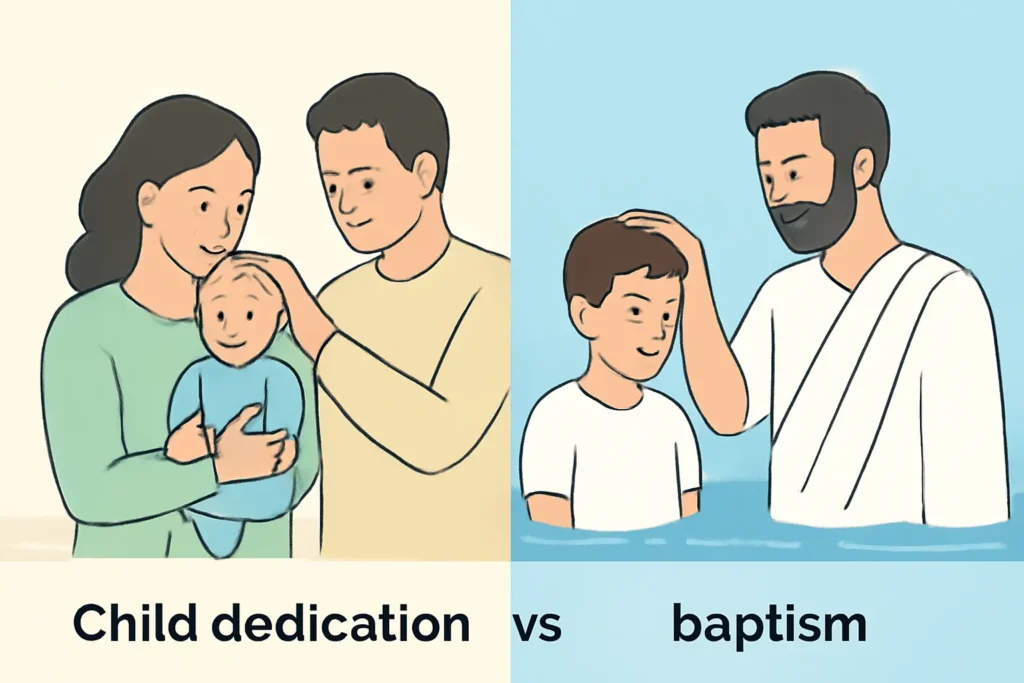
A child dedication is a ceremonial act in which parents present their child to God or to the faith community and publicly commit to raising the child in accordance with certain spiritual values. Often conducted in a worship service, a dedication focuses on parental responsibility, the child’s welfare, and the support role of the church. It does not typically involve the child’s personal conscious profession of faith at the time of the ceremony, especially when the child is very young.
What is baptism (infant baptism or believers’ baptism)?
Baptism is a ritual that involves water and signifies identification with the life, death, and resurrection of Jesus Christ in many Christian traditions. When performed on infants, it is often described as a sign of God’s covenant and a statement about God’s grace extending to the child, with the expectant life of faith resting on the family and community. When performed on older children or adults, baptism is typically associated with a personal profession of faith and a conscious decision to follow Jesus.
The core distinction, then, can be summarized as:
Child dedication: a parental commitment and a public blessing of the child, with an emphasis on upbringing, prayer, and community support.
Baptism: a ritual involving water that affirms God’s grace and the individual’s or family’s faith journey, often framed as an entry into the faith community.
The two rites emerged in different historical contexts and are emphasized differently across Christian traditions. Understanding their origins helps illuminate why they are practiced in certain ways today.
Origins and development of child dedication
The practice of dedicating children has ancient roots in many religious cultures, but within Christianity it became a common pattern in Protestant and evangelical communities as a counterpoint to infant baptism in some traditions. In these contexts, child dedication arose as a practical expression of parental responsibility and community involvement. The rite emphasizes what the parents will commit to teaching, modeling, and guiding their child toward faith and virtue, often with a pledge to raise the child in a biblically informed home.
Baptism has deeper roots in early Christian practice. It is closely tied to the Great Commission and the symbol of cleansing from sin, rebirth, and entry into the body of Christ. Over the centuries, baptism has come to be understood differently depending on the tradition:
In Catholic, Orthodox, and many mainline Protestant churches, baptism is a sacramental sign of grace and a means by which God’s promises are sealed.
In many evangelical and Pentecostal communities, baptism emphasizes personal faith, repentance, and public confession, and is often reserved for those who profess belief.
In some denominations, infant baptism is practiced as a sign of the covenant with God and the community, paralleling the family’s responsibility to raise the child in the faith.
Key differences in practice
While both rites are concerned with the child, faith, and community, the practical elements differ in meaningful ways. The differences can be understood across several dimensions.
Eligibility and participants
Child dedication typically involves the child being dedicated by the parents, often accompanied by the church’s leaders or a special set of prayers. There is usually no requirement of the child’s personal profession of faith at the time of the ceremony, which makes it accessible for very young children.
Baptism often involves the candidate being old enough to profess faith or the child being part of a covenantal sign in infant baptism traditions. In those contexts, the ceremony may include a declaration of faith by the individual (or a commitment by the parents on behalf of the child) and, in some traditions, the baptism itself by immersion or sprinkling, performed by a pastor or ordained minister.
Ritual actions and symbols
In a dedication service, you typically see prayers, scripture readings, a blessing over the child, and commitments by the parents and the congregation to support the upbringing of the child. There is usually no water involved in the central act.
In a baptism service, water plays a central role. The act of immersion or pouring or sprinkling is performed with words that affirm the believer’s faith, Christ’s death and resurrection, and new life in Christ. The ceremony often includes the naming of the child, prayers, and a public declaration of faith or covenant membership.
Promises and commitments
During child dedication, the main commitments are typically: parents’ vow to raise the child in faith and godliness, the church’s role to come alongside the family, and the child’s future invitation into a personal response to God when they reach an age of understanding.
In baptism, commitments focus on accepting God’s grace, repenting of sin, and choosing to identify with Christ and the church. For infants, the promises are made on their behalf, with the expectation that the child will later own the faith as they mature.
Framing within the faith community
Dedication often emphasizes the family as the primary unit responsible for spiritual nurture, with the church serving as a supportive community.
Baptism typically emphasizes the individual’s or family’s covenant with God and citizenship within the body of believers. It can function as an entry rite into church membership, depending on denomination.
Theological implications and meanings
The two rites carry distinct theological emphases, which shape how families and churches interpret their significance.
Grace and covenant in child dedication
In many contexts, child dedication foregrounds God’s grace and parental responsibility. It proclaims that the child is a gift and that the parents promise to shepherd the child toward faith, wisdom, and character. The ceremony often highlights the covenantal language that binds the family to raise the child in a faith community, with the expectation that spiritual formation will take place through prayer, biblical instruction, and example.
Baptism is commonly understood as a visible sign of an inward grace—God’s initiative and an individual response. In traditions that affirm infant baptism, the rite is seen as God’s grace extended to the child, even before the child can respond. In traditions that emphasize believers’ baptism, the rite marks a conscious decision to follow Christ, often after a personal confession of faith.
How communities interpret the relationship between the two
Some communities practice dedication and baptism as separate steps in a child’s spiritual formation: first, a dedication to raise the child, followed later by baptism when the child can profess faith.
Other communities may view dedication and baptism within the same framework as part of the child’s inclusion in the faith family, but they still treat the two rites as distinct acts with different purposes.
Some traditions hold to a strong link between the two, arguing that a child who grows in faith and relationship with God may eventually participate in baptism as a public declaration of that faith.
Practical considerations for families
For parents and guardians, choosing between or combining child dedication and baptism involves practical, pastoral, and communal considerations. Here are some common questions and factors families weigh.
Timeline and readiness
Some families opt for child dedication soon after the child is born, viewing the rite as a commitment to nurture faith from infancy.
Other families plan for baptism when the child is older and can publicly affirm faith, or when the family feels the time is right for a baptism that aligns with the child’s personal understanding.
Denominational expectations
In denominations that practice infant baptism, baptism may be positioned as a non-negotiable rite of entry, while child dedication can be a shared step of parental commitment in addition to baptism.
In churches that favor dedication over infant baptism or where the tradition emphasizes believers’ baptism, families may view dedication as a separate, non-sacramental pledge and then pursue baptism at a later age.
Family and community involvement
A dedication service often invites the congregation to pledge support for the family—mentors, godparents/sponsors, and extended relatives may participate by offering prayers or promising acts of spiritual mentorship.
A baptism ceremony becomes a public witness of faith, and the church community may welcome the newly baptized individual into full membership, depending on the tradition and the age of the candidate.
Parental promises and personal faith
Across traditions, a central consideration is the extent to which parents or guardians vow to influence the child’s spiritual development and the kind of life they hope to model. For families, the choice between dedicating a child or baptizing a child often reflects how they understand faith, grace, and the covenant community.
Ceremony components and liturgy
If you’re preparing for a service, you’ll want clarity about the typical elements involved in child dedication and baptism, as well as the ways they shape worship and community life.
Opening prayers and worship songs, often focused on family, blessing, and gratitude.
A reading from scripture that speaks to parenting, mentorship, and the nurture of faith in children.
A formal declaration by the parents, sometimes framed as a vow to raise the child in a faith-informed home and to seek guidance from the church community.
A blessing of the child by the pastor or elders and a commitment by the congregation to support the family through prayer and practical acts of service.
Optional elements might include the presentation of a child’s Bible, a certificate, or symbolic items such as a candle or a small token of blessing.
What appears in a baptism service
The central water action, whether immersion, sprinkling, or pouring, accompanied by a declaration of faith or covenant language.
A profession of faith (for those who are able), or a parental pledge on behalf of a child, depending on tradition.
Scripture readings, prayers of blessing, and a public welcome into the church community or into full membership.
A symbolic sign of new life in Christ and a reminder of the believer’s identity as part of the body of Christ.
How to plan a service that feels authentic
Consult with your church leadership about the preferred structure and theological framing of dedication or baptism.
Clarify the roles of family members, sponsors or godparents, and the wider congregation in the ceremony and in ongoing spiritual support.
Consider accompanying activities such as a class for parents, a renewal of commitments at a later date, or follow-up conversations about spiritual nurture.
Meaning for the individual, family, and community
The impact of child dedication and baptism extends beyond the moment of the rite. Each practice carries implications for identity, belonging, and daily life.
Identity and belonging
Dedication reinforces the family’s identity as a spiritual unit within a faith community and signals that faith formation will be a collaborative effort between parents, church, and extended family.
Baptism can mark entry into a faith community, signaling public allegiance to Christ and to the church’s mission. In many settings, baptism is a lifelong milestone attached to a sense of belonging within the local and universal church.
Spiritual formation and nurture
With child dedication, the emphasis is on ongoing discipleship: prayer for the child, catechesis for the family, and opportunities for spiritual growth as the child matures.
With baptism, the emphasis is on grace received and the communal responsibility to nurture faith. For older children or adults, baptism often accompanies an intentional step of personal commitment and spiritual growth.
Community life and responsibility
Both rites imply a shared obligation: to support the child’s upbringing, to model faith in daily life, and to cultivate a welcoming environment for the child as they encounter faith, doubt, and questions.
In some communities, baptism serves as a formal invitation to service, leadership, or church membership; dedication ceremonies may emphasize ongoing mentoring, mentoring relationships, and mutual accountability.
Interfaith and non-denominational considerations
People from different faith backgrounds or non-denominational contexts may encounter variations in how these rites are understood and practiced. Here are a few guiding points to consider if you are navigating diverse traditions.
In some faith traditions, there are parallel rituals that acknowledge a child’s welcome into a spiritual family without a formal sacramental sign. If you participate in a context outside mainstream Christianity, seek clarity on what the ritual communicates about faith, grace, and community.
In secular or multifaith settings, you might find citizen- or family-centered ceremonies that honor family values, ethics, and hope for the child’s future, even if they do not include explicit religious language.
Inclusivity and respect for conscience
Many families value a practice that respects parental conscience and the child’s eventual personal decision. When choosing between dedication and baptism in a diverse community, consider what language and symbolism will be meaningful for your family while remaining respectful of others’ convictions.
Common questions and practical answers
Here are some frequently asked questions that couples, families, and individuals often raise when deciding between child dedication and baptism, or when trying to understand what the rites signify.
Is dedication the same as baptism?
In most traditions, dedication and baptism are not the same act. Dedication is typically a pledge by the family and a blessing by the church, focusing on upbringing and community support. Baptism is a rite involving water that signifies grace, cleansing, new life, and incorporation into the faith community. Some churches practice both in sequence, while others emphasize one over the other depending on doctrine.
Can a child be dedicated if the family plans to baptize later?
Yes. In many churches, families choose dedication as the first step and later pursue baptism when the child is able to profess faith or when the family believes the time is right. This approach is common in evangelical and Protestant contexts where the child’s personal decision is valued.
Should a parent skip dedication if they intend to baptize?
Not necessarily. Many families find meaning in both rites and see dedication as a complementary expression of faith commitments. It can provide an immediate public blessing and a sustained program of spiritual nurture within the church community before or alongside baptism.
What about sponsorship or godparents?
In baptismal settings, sponsors or godparents are often named to accompany the child’s spiritual journey and support the family in guiding faith development. In dedication ceremonies, mentors or spiritual guardians may be invited to express prayers and commitments to assist in the child’s upbringing.
How do I choose what’s right for my family?
Consider theological beliefs, church tradition, the child’s age, and your family’s goals for spiritual formation. Discuss with the pastoral staff, reflect on scripture or doctrinal statements within your tradition, and consider the kind of community you want to invite into your child’s life. There is no one-size-fits-all answer; the right choice depends on your context and convictions.
Myths and misconceptions about child dedication and baptism
Misunderstandings can blur the differences between these rites or suggest false equivalences. Here are several common myths, with clarifications.
Myth: Dedication and baptism are interchangeable terms
Reality: They are distinct rites with different purposes, symbols, and theological meanings. Dedication is a pledge by the family and a blessing by the church, while baptism is a water-based act that conveys grace or covenant membership depending on tradition.
Myth: Infants cannot be baptized in any tradition
Reality: Many denominations practice infant baptism, viewing baptism as a sign of God’s grace extended to the child and a covenantal welcome into the church. Other traditions reserve baptism for those who can profess faith. The practice varies by church and doctrinal interpretation.
Myth: One rite guarantees salvation or membership
Reality: Rites of initiation are important symbols, but most Christian traditions teach that salvation and spiritual maturity come through ongoing faith, grace, and discipleship. Baptism or dedication is part of a broader journey of faith, not a magical seal of eternal status on its own.
Myth: Dedication replaces the need for baptism
Reality: In some traditions, dedication may coexist with baptism as complementary steps, while in others, dedication is seen as a separate, non-sacramental commitment. The question is shaped by church doctrine and the family’s beliefs.
Frequently encountered scenarios
To illustrate how these rites function in real life, here are a few common scenarios families encounter and the typical paths taken in different traditions.
Scenario A: A baby is dedicated in a church that practices infant baptism
The ceremony features a prayerful blessing, parental vows, and a congregation’s pledge of support.
Baptism may be scheduled later, or baptism might be welcomed as part of the child’s faith journey when they are old enough to profess faith, depending on the church’s norms.
Scenario B: A child is dedicated in a church that practices believers’ baptism only
The family recognizes the child’s young age as a reason to pledge to raise them in faith, but baptism is not performed at this ceremony.
When the child is older and able to express faith, the family may plan for baptism as a separate event.
Scenario C: An older child or teenager seeks baptism after a period of faith formation
The church often offers a confirmation or baptism class, a personal confession of faith, and a ceremony that includes witnesses from the faith community.
Scenario D: A non-denominational or interfaith family seeking a welcoming rite
The family may opt for a dedication ceremony or a pledge of blessing, followed by participation in a baptism-related tradition if appropriate to their beliefs or in partnership with a sponsoring church.
Practical steps if you’re preparing for either rite
If you’re considering a ceremony for your child, here are practical steps you can take to prepare, plan, and participate in a meaningful way.
Clarify beliefs and expectations
Meet with your church leaders to understand the doctrinal framework for dedication and baptism within that community.
Review any prerequisites, such as classes, interviews, or statements of faith that may be required for baptism or dedication.
Involve family and mentors
Identify sponsors, godparents, or mentors who will participate in the ceremony and support the family in ongoing spiritual nurture.
Discuss roles and commitments, including how the community will assist in daily religious education and practice.
Plan the service details
Choose readings, prayers, and songs that reflect your expectations for the ritual.
Decide on the posture of the rite (for example, a blessing at the front, the offering of a candle, or a symbolic act that resonates with your family’s values).
Prepare for ongoing formation
Develop a plan for spiritual nurture addressing daily routines, family worship, and opportunities for the child to learn about the faith as they grow.
Engage with the church’s youth and family ministries to ensure continuity of care and mentorship.
Summary: choosing the path that reflects your faith story
In the end, the choice between child dedication and baptism is not just about the ceremony itself. It is about how a family and a faith community understand God’s grace, parental responsibility, and the child’s journey of faith. Some families pursue a path that uses both rites in a complementary rhythm, while others emphasize one rite as the primary expression of their beliefs. The most important factor is a thoughtful, sincere approach that honors the child, respects the church’s tradition, and fosters a nurturing environment for faith to grow.








Leave a Reply