Baptism by sprinkling is a form of the Christian rite of initiation that uses water applied to the person’s body in a manner other than immersion. This article explains what baptism by sprinkling means in practice, how it differs from other modes of baptism such as immersion or pouring, and how different Christian traditions understand and perform the rite. We will explore the historical background, scriptural references, theological meanings, and contemporary ecumenical perspectives around sprinkling baptism and related terms like affusion and aspersion.
In common usage, the phrase baptism by sprinkling designates a mode of water baptism where water is sprinkled or lightly showered on the candidate’s head or body, rather than being poured in greater volume or the person being fully immersed in water. You may also encounter the term baptism by aspersion, with “aspersion” deriving from the Latin aspergere, meaning to sprinkle. A closely related term is affusion, which describes the pouring of water over the head. All three terms—sprinkling, aspersion, and affusion—refer to water being applied to the candidate as a sign of initiation, but they differ in technique and, in some traditions, in liturgical emphasis.
In contrast, immersion refers to the baptized person being fully submerged in water, typically in a baptismal pool or font. Some churches regard immersion as the normative or preferred method, while others regularly practice affusion or sprinkling as a faithful and valid expression of the same sacramental action. The question of whether baptism by sprinkling is equivalent in effect to immersion depends on theological interpretation, ecclesial authority, and customary practice within a given tradition.
Scriptural and historical foundations
Old Testament imagery and purification rites
Water as purification appears repeatedly in the Old Testament as a sign of cleansing and renewal. In books such as Leviticus and Numbers, ritual washings accompany purification from ritual uncleanness. While not identical to Christian baptism, these washings laid an ancient symbolic groundwork for the sacred meaning of water as a sign of purification and rebirth.
Psalm and prophetic imagery sometimes speak of sprinkling in a ceremonial sense, foreshadowing the Christian use of water as a means of grace. The language of sprinkling in the Hebrew Bible has fed later Christian reflections on how God’s mercy is poured out and applied to believers.
New Testament usage and theological focus
In the New Testament, baptism is closely associated with the invocation of the Father, Son, and Spirit, and with washing by water as a sign of cleansing from sin. While most New Testament accounts emphasize immersion in many early Christian communities, there are passages that use language of purification and cleansing that later generations understood as fulfilled through baptism, regardless of the precise mode.
Some scriptural passages refer explicitly to sprinkling or purification in the context of ritual acts. For example, Hebrews 9 discusses purification and cleansing by blood and water as a contrast to the greater efficacy of Christ’s sacrifice. This passage has been interpreted in various ways by different traditions regarding the sign and means by which believers are made holy.
In particular, the practice of sprinkling water as part of baptismal rites is documented in several Christian liturgical traditions, especially where communal or practical considerations (such as infant care, crowd size, or weather) led priests to apply water by sprinkling or pouring rather than full immersion.
Practical forms: how sprinkling is performed
Affusion vs. Aspersion vs. Immersion
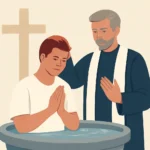
Affusion is the act of pouring water over the head of the candidate, typically from a vessel. This can be done with a single pour or multiple pours and is common in many Catholic, Anglican, Lutheran, and Protestant traditions.
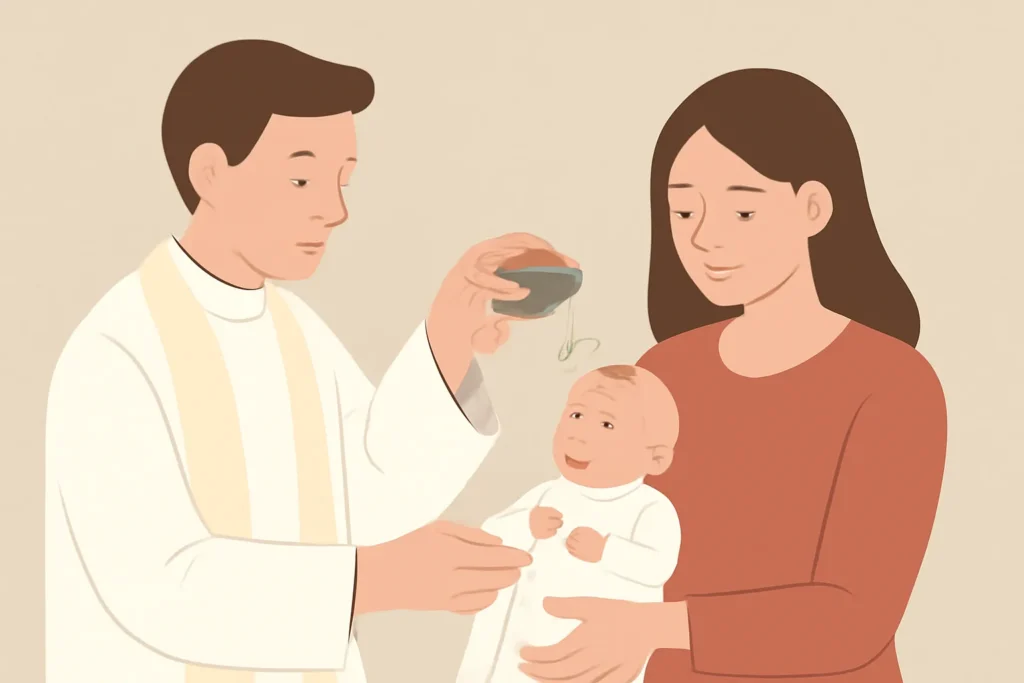
Aspersion (or sprinkling) refers to the sprinkling of water on the candidate using a sprinkler or aspergillum, or simply a quick shower of water on the head. This method is used in some Catholic and Protestant liturgies, especially in modern or practical contexts.
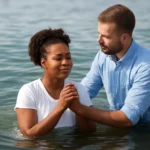
Immersion involves the candidate being fully submerged in water. While this is the primary mode in some traditions (notably many Baptist, Orthodox, and some Pentecostal communities), it is also used in other denominations on occasion or in designated baptismal pools.
In practice, many congregations that practice baptism by sprinkling do so in a manner tailored to circumstances: infants may be anointed with water on the forehead, adults may have water poured or sprinkled on their head, and in some places water is sprinkled as the person begins the baptismal rite. The key theological point across these modes is the sign of the grace of God announced in the sacrament, not the exact physical method alone.
Denominational perspectives on sprinkling baptism
Catholic and Orthodox contexts
Roman Catholicism typically emphasizes affusion (pouring water) for infant baptism and often for adult baptism when immersion is impractical. The lex orandi and rubrics of the Rite of Baptism in the Catholic Church provide for pouring water over the infant’s head three times in the name of the Father, and of the Son, and of the Holy Spirit. While sprinkling is less common as the primary mode, water applied by sprinkling or pouring remains valid if done with the proper form and intention.
Eastern Orthodoxy strongly favors the full sacramental immersion (often triple immersion) in baptism, accompanied by chrismation (anointing with oil). In typical Orthodox practice, less emphasis is placed on sprinkling as the ordinary mode, and immersion is the canonical sign of the entry into the Church. Nevertheless, there can be historical or pastoral exceptions where sprinkling or partial immersion is used due to practical constraints, while the theological meaning remains the same: entrance into the life of Christ and the Church.
Anglican and Protestant perspectives
Anglican and Episcopal churches often employ affusion as the standard method for infant baptism and for adult baptism when immersion is not feasible. The liturgies feature the sign of the cross and the invocation of the Trinity with water being poured over the candidate, sometimes accompanied by a brief sprinkling as a secondary gesture. The Anglican tradition emphasizes the inward grace of baptism and its retention of the apostolic faith, with the mode of water application historically flexible depending on local custom and resources.
Lutheran baptism generally uses pouring (affusion) for infants and adults; some Lutheran communities practice immersion where feasible. The theological emphasis remains on the water as the sign of God’s grace and the promises of Christ, with the ritual form abiding by the liturgical rubrics of the church.
Reformed and Presbyterian traditions typically accept affusion and sometimes sprinkling within their baptismal rites. The key factors are the covenantal context, the promise of grace through faith, and the public declaration of the believer’s belonging to the body of Christ. In many Reformed churches, sprinkling is used more in certain contexts (for example, when baptizing infants in large gatherings) without compromising the theological understanding of baptism.
Baptist, Pentecostal, and other evangelical perspectives
In Baptist and most evangelical churches, baptism by immersion is the normative practice and is often seen as the visible profession of faith by a believer who has made a personal decision for Christ. However, some Baptist and evangelical communities will perform pouring or sprinkling in special circumstances, especially in hospital settings or where immersion is impractical. The theological emphasis remains on the believer’s faith in Christ and the washing away of sin by grace through faith, with the water acting as a symbol of the inner transformation.
Pentecostal churches may use a variety of water application methods depending on the local church’s tradition and the availability of facilities. While immersion is common in Pentecostal circles, sprinkling and pouring are acceptable where necessary, especially in healing or revival contexts that involve public demonstrations of faith and cleansing.
Rituals, symbolism, and liturgical practice
The symbolism of water across the rites
Water in baptism stands for several symbolic meanings that are widely recognized across traditions. In many churches, water represents:
Entrance into the Church as a member of the Body of Christ
Grace given by the Holy Spirit through the sacrament
Whether the water is applied by sprinkling, pouring, or immersion, the liturgical act is followed by the Trinitarian formula: “I baptize you in the name of the Father, and of the Son, and of the Holy Spirit.” The exact wording of the form is essential to Catholic and Orthodox practice, while Protestant communities may have some variation in wording but maintain the same core expression of faith.
Liturgical steps and ceremonial elements
Preparation of the candidate, often with an exhortation on faith, repentance, and the meaning of baptism.
Water application (sprinkling, pouring, or immersion), which is the central outward sign of the rite.
Invocation of the Trinity as part of the baptismal form.
Anointing and blessing in some rites, including chrismation in Orthodox practice or blessing with oil in various Protestant traditions.
Reception into the Church through the baptism, followed by gifts, prayers, and the conferral of the Holy Spirit in some traditions.
Infants versus adults: practical and theological considerations
Why sprinkling or pouring is common for infants
Practical considerations include the logistical convenience of a standing or seated infant, the presence of a large crowd, and the environment of a church that may lack space or time for full immersion. In many cases, pastors find affusion or sprinkler methods to be more efficient during large-occasion baptisms.
Pastoral considerations emphasize the desire to welcome the child into the life of the church as early as possible, without introducing barriers related to water depth or swimming ability.
Theological continuity across many traditions holds that the mode of water application does not alter the essential grace conferred by the sacrament when the baptism is performed with the proper form, intention, and authority.
Adult baptism and personal profession of faith
When baptizing adults who profess faith in Christ, some churches prefer immersion as a symbolic display of dying to the old life and rising to new life. However, many traditions using sprinkling or pouring also affirm the validity of adult baptism when the candidate has faith and the church performs the rite in accordance with its doctrine. In such cases, the immediate spiritual outcomes are understood as the same gift of grace, regardless of the water’s mode.
Theological implications and ecumenical considerations
Across Christian communities, the central question is not simply how water is applied, but what God does in baptism. The body of Christian teaching generally emphasizes the following:
Grace communicated through baptism is a foundational conviction in most traditions, even when there is diversity in practice regarding the method.
Visible sign of faith and incorporation into the covenant community remains a core purpose of baptism, whether performed by sprinkling, pouring, or immersion.
Authority and order matter in ecclesial contexts. The legitimacy of baptism is tied to proper form, intention, and the church’s teaching, rather than to a single uniform ritual across the entire Christian family.
Ecumenical dialogue often centers on questions such as the validity of baptisms performed in other traditions, the continuity of baptism with catechetical instruction, and the unity of the Church in keeping the essential signs of baptism intact. In many cases, churches recognize each other’s baptisms when the proper formula and intent were present, even if the water was applied differently. This pragmatic ecumenism acknowledges the shared belief in baptism as the entry into Christ’s life, while respecting historic differences in practice.
In most traditions that practice baptism, validity is determined by the proper form (the Trinitarian baptismal prayer), the proper matter (water), and the proper minister (an ordained clergy or an authorized minister). If baptism by sprinkling is performed with the Trinitarian formula and water, it is generally regarded as valid in churches that accept sprinkling as a legitimate mode. Some denominations, however, reserve validity to their own method (for example, immersion in certain Baptist circles) and require re-baptism if the correct mode is not observed according to their doctrine. Always check with a particular church’s teaching on the issue.
Can sprinking replace immersion?
In practice, many communities will substitute sprinkling or pouring for immersion due to pastoral, geographical, or logistical reasons. The theological claims about baptism—entry into the life of Christ, cleansing from sin, and the gift of the Holy Spirit—are not inherently tied to immersion in all traditions. Yet some groups hold immersion as the normative or preferred method, linking it symbolically to death and resurrection in a unique way. The decision often reflects a church’s historical lineage and doctrinal emphasis.
What does baptism by sprinkling signify for infants?
For many churches that practice infant baptism with sprinkling or pouring, water is a sign of God’s grace offered to the child, who is brought into the communal life of Christ’s body. The infant receives promises that will be received in faith by the community as the child grows. The sanitary and practical considerations of sprinkling make it a feasible choice for infant baptism in many parishes, while the spiritual significance remains the same: God’s faithfulness and the church’s welcome into the covenant community.
How should one read the scriptural basis for sprinkling or pouring?
Readers should approach scriptural references with attention to both the historical context and the theological aims of the text. While certain early Christian anecdotes emphasize immersion, other passages describe water as a symbol of cleansing and rebirth that can be conveyed through various modalities. Historically, the church has held that the sacrament’s efficacy lies in the divine action through the church, rather than in the physics of how water touches the body. Thus, baptism by sprinkling explained in many traditions as a valid form of entry into the life of faith, provided the rite is conducted with authentic faith and proper holy order.
Pastoral planning should consider the needs of families, health concerns, and logistical constraints. If sprinkling is chosen, ensure the water is clean, the method is respectful, and the rite remains dignified and transfiguring for the candidate and the congregation.
Liturgy and catechesis should accompany baptism by sprinkling with clear teaching about the meaning of baptism, the promises of God, and the responsibilities of belonging to the church. In many traditions, baptism is followed by a period of catechetical instruction to nurture faith.
Ecumenical sensitivity is important in communities with interdenominational families. Explaining why water is applied in a certain way and affirming the shared grace can help foster unity while honoring diverse liturgical heritage.
For those who wish to explore this topic more deeply, many church documents, liturgical manuals, and patristic writings discuss baptism and the variations of water application. Some recommended avenues include:
Liturgical rubrics in the Rite of Baptism for the Catholic Church, which address how water may be applied and how the sacrament is celebrated within the context of the Mass or the rite for infants and adults.
Historical writings of the early Church Fathers on baptism, grace, and the significance of water as a sign of cleansing and new life.
Ecumenical dialogues that address baptism across denominations, especially between traditions that practice immersion and those that practice affusion or sprinkling.
Pastoral handbooks and catechetical resources that explain the meaning of baptism and the diversity of practices in a way that is faithful to each tradition's theology.
In sum, baptism by sprinkling explained involves more than a technical difference in how water is applied. It reflects centuries of theological reflection on the nature of grace, the meanings of water, and the church’s mission to welcome new members into the body of Christ. By considering the historical development, scriptural grounding, and contemporary practice across denominations, readers can gain a nuanced understanding of how sprinkling baptism functions as a legitimate expression of Christian initiation in many communities. Whether seen as a practical adaptation or a normative sacramental practice, baptism by sprinkling remains a meaningful way to signify God’s cleansing mercy and the believer’s incorporation into the life of faith.




Leave a Reply