The Coming of the Messiah: Signs, Prophecies, and What It Means Today
Across millennia, the idea of a transformative moment when a divinely anointed figure steps forward
to heal, judge, and renew the world has shaped religious imagination, inspired
movements of reform, and raised questions about how humans live with hope in difficult times.
Regardless of tradition, the notion of a future advent—often called the Messiah in
Jewish and Christian discourse, or its closest equivalents in other faiths—has functioned as a
powerful lens through which people interpret history, ethics, and destiny.
This article surveys the landscape of expectations surrounding the arrival of the Messiah, often
described through signs, prophecies, and diverse interpretations that continue to influence
contemporary life. We will explore the concept as it appears in Judaism, Christianity, and Islam
(where related eschatological figures recur in a distinctive framework), consider the major signs
associated with the moment of introduction, and discuss what these ideas mean for people today—both
within faith communities and in a broader, pluralistic world.
Varieties of expectation: how different traditions frame the advent
The arc of messianic expectation has many colors. While the core idea remains the advent of a divinely
appointed agent to repair the world, the practical implications, the nature of the bearer, and the
signs that accompany this arrival differ in meaningful ways.
In Judaism: awaiting the Mashiach
In Jewish thought, the term Mashiach (the Hebrew for “Anointed One”) refers to a future
king from the line of David who will bring about an era of peace, rebuild the Temple in Jerusalem,
gather the exiles, and establish universal recognition of the one God. Important themes in this
stream include redemption through national renewal, the reinvigoration of Torah study,
and a transformed world where justice and compassion prevail.
In Christianity: the advent and the Second Coming
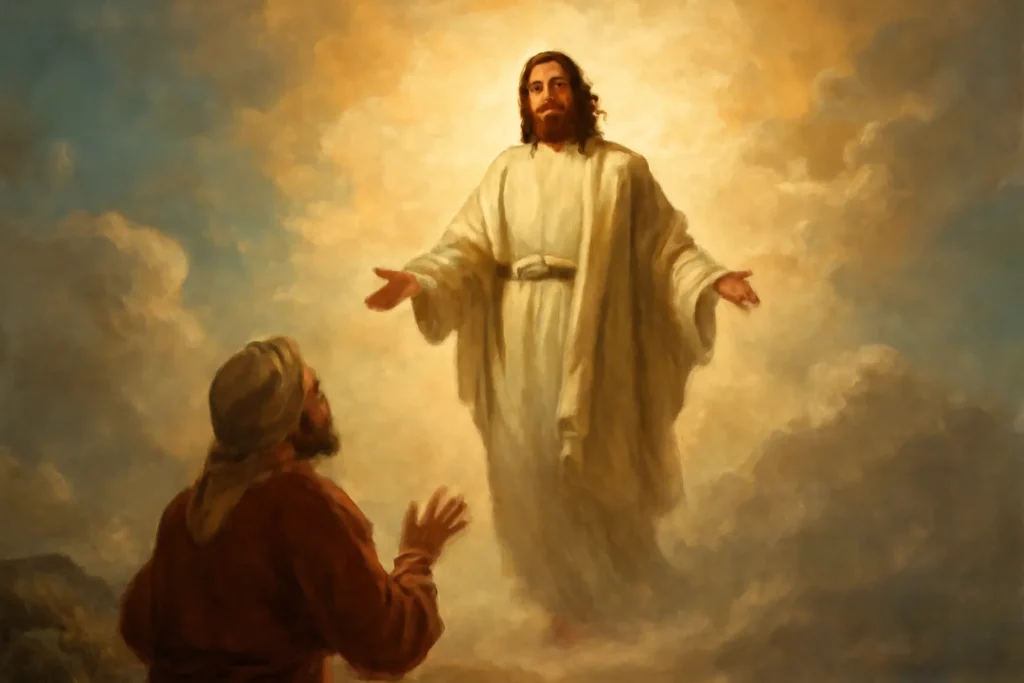
For Christians, the term Messiah is often understood through the person and work of
Jesus of Nazareth, whom they call Christ (the Greek translation of “anointed”).
The central claim is that Jesus embodies the fulfillment of Old Testament prophecies and inaugurates
the Kingdom of God. Key concepts include the First Coming (Jesus’ life, death, and
resurrection) and the anticipated Second Coming, when Jesus would return in glory to set
all things right, judge humanity, and renew creation.
In Islam and related traditions: Isa and the end-time outlook
In Islamic eschatology, the figure associated with the Messiah idea often appears as Isa (Jesus), who is believed to return near the end of time to defeat impersonators of
truth and to aid in restoring justice. Related to this is the appearance of the Mahdi, a
divinely guided leader who prepares the world for the ultimate moral and spiritual victory. Although
these narratives diverge from Jewish and Christian frames, they share a common impulse: to imagine
a pivotal moment when justice and peace will flourish under a divinely
endorsed leader.
Signs and markers: what people look for as indications of the approaching turn
Across traditions, signs associated with the advent of the Messiah or analogous figures are often
described in sweeping, symbolic terms. These signs are not universal predictions in a single
textbook sense; rather, they function as motifs that guide moral behavior and communal hope.
Signs in scriptural and prophetic literature
Restoration and ingathering: a gathering of scattered peoples to their ancestral homelands is often cited as a precursor to the advent.
Rebuilt sanctuaries or renewed worship spaces, sometimes linked to a rebuilt Temple or a transformed center of worship.
Teachings of peace and justice: universal recognition of one God and the flourishing of justice among nations.
Ethical renewal: widespread commitment to mercy, humility, and truthful conduct in daily life.
Global and moral markers
Enduring conflicts brokered by justice: a diminished appetite for conquest and a drive toward peaceful settlement.
Care for the vulnerable: the vulnerable—the poor, the refugees, the disabled—receiving sustained protection.
Ecological harmony: a renewed stewardship of creation, addressing climate and resource fairness.
Interfaith dialogue: sustained cooperation among diverse faith communities as a sign of shared moral progress.
Not all signs are literal forecasts
Many interpreters stress that signs can be metaphorical—pointing not only to events but to
inner transformations: humility replacing arrogance, truth-telling over deception, and generosity replacing
greed. In this sense, the coming of the Messiah can be read as an invitation to shape the present in line with
enduring values, regardless of whether a specific date is envisioned.
Core prophecies and the interpretive tapestry
The ideas surrounding the advent rely on a complex weave of prophecy, texts, and
communal memory. Interpreters debate whether ancient passages should be taken literally or symbolically, whether they point to a single historical moment or to recurring patterns across
time. Here are some of the central strands often discussed in classrooms, houses of study, and pulpit
lectures.
Prophecies in the Hebrew Bible and early Christian writings
The Hebrew Bible includes passages that have historically been interpreted as messianic
prophecies: prophecies about a Davidic heir who will restore the people, bring in an era of
universal peace, and establish justice. In the New Testament, Christians interpret certain passages as
pointing toward Jesus’ life and mission, culminating in the claim that he fulfills these ancient hopes.
The role of covenant fidelity and moral renewal
Across traditions, a recurring theme is fidelity to the covenant—an ongoing commitment to live
ethically, to pursue truth and mercy, and to repair the broken parts of
human society. This emphasis shifts the discussion from a purely geopolitical expectation toward a
holistic vision of transformation that touches daily life, family, work, and civic engagement.
In Islamic thought: Isa and the Mahdi as part of a larger arc
Islamic sources describe a succession of events that culminate in a moment when divine justice is
decisively manifest. The return of Isa and the leadership of the Mahdi are
framed as parts of a broader eschatological drama in which truth overcomes falsehood and mercy governs
human conduct. The emphasis in these accounts is less on worship alone and more on moral reform,
accountability, and the restoration of a just order for all peoples.
Interpretive frameworks: how scholars read these prophecies today
People approach the sources with a spectrum of hermeneutical methods. Some readings are futurist, focusing on a future singular event; others are historicist, seeing
the prophecies as unfolding across eras; still others are preterist, identifying many
prophecies with past events and emphasizing their spiritual meaning rather than a calendar prediction.
Literal interpretation gives primacy to concrete events, physical signs, and explicit
descriptions of a future moment.
Symbolic interpretation treats signs as metaphors about inner transformation and societal change.
Ethical interpretation centers on how communities live out the values heralded by messianic hope—justice, mercy, humility, care for the vulnerable.
Interfaith dialogue emphasizes common ground and recognizes distinct prophetic vocabularies while preserving mutual respect.
A striking feature across scholarly and lay communities is the way future-oriented hope is used to
catalyze present-day ethical action. Even when dates are uncertain, the ethical demands of the
message—bridging divides, resisting oppression, caring for the marginalized—remain stable
anchors for believers and non-believers alike.
Historical cycles and the persistence of hope
The idea of a decisive turning point recurs in many cultures. In some periods, communities experience
heightened expectation, sometimes in response to crisis, persecution, or political disruption. The
pattern often includes three elements: a crisis or sense of impermanence, a surge of community
solidarity and reform, and a reimagining of what governance, worship, and daily life should look
like in a world renewed.
Precrisis awareness: a recognition that the old order is failing or inadequate.
Messianic longing: renewed energy around the possibility of a transformative leader or moment.
Reform and renewal: ethical and theological commitments deepen as communities strive to embody higher ideals.
It is important to note that such cycles do not imply a fixed timetable. Rather, they demonstrate how
people’s longing for a just world can shape institutions, rituals, and social movements long before any
event is believed to occur. In this sense, the coming of the Messiah can be understood as a moral
magnet—pulling communities toward greater integrity even in the absence of precise dates.
What the approaching advent means in contemporary life
For many readers, the idea of a forthcoming era is not about clock-watching but about responsibility—toward one another, toward creation, and toward the shared future of all people.
The following themes illustrate how messianic expectations shape today’s decisions and everyday
actions.
Ethical leadership: insistence on transparency, accountability, and service-oriented leadership that serves the common good.
Social justice: policies and practices aimed at reducing inequality, protecting rights, and building fair systems.
Peace and reconciliation: efforts to resolve conflicts, heal wounds, and cultivate trust across divisions.
Interfaith cooperation: partnerships that promote mutual understanding while honoring distinct beliefs.
Spiritual renewal: communities seeking deeper commitment to compassion, humility, and gratitude in daily life.
The language of a grand finale may give way to a more practical understanding of hope: hope as daily
acts of kindness, as the courage to speak truth in the face of wrong, and as the patient labor of
building better institutions. In this frame, the advent of the Messiah can function as a call to
sustained moral action rather than a single climactic event.
Questions, misconceptions, and careful discernment
In popular discourse, the coming of the Messiah is sometimes treated as a simple forecast, a single
moment stamped with a calendar date. Yet responsible interpretation invites a wider perspective that
recognizes the diversity of voices within each tradition.
Common questions people ask
Is the advent imminent or symbolic? Answer: interpretations vary; some communities expect an imminent event, while others emphasize ongoing preparation and ethical living as the core of messianic hope.
Do different faiths prophesy the same person? Answer: not always the same figure, but many traditions converge on the idea that a divinely guided leader will inaugurate justice and peace.
What counts as a sign? Answer: signs can be prophetic language, communal renewal, or a transformation of social practices, not only a date on a calendar.
What should believers do today? Answer: engage in acts of mercy, study sacred texts with humility, and work for the common good in ways that respect pluralism.
Important cautions against sensationalism
Avoid sensational headlines that claim to know the exact moment of a cosmic event.
Balance hope with responsibility—hope should lead to constructive action, not fear or exclusion.
Respect for diversity—recognize that different communities interpret the idea of a future advent through distinct theological grammars.
Historical awareness—acknowledge how past eras have interpreted signs and avoided equating faith with political manipulation.
Living with hope today: practical pathways for individuals and communities
The enduring appeal of the Messiah narrative lies not merely in what it promises about the future, but
in how it invites people to live with intention in the present. Here are some practical avenues through
which this tradition can shape positive action in ordinary life.
Cultivate ethical discernment: practice asking how choices reflect justice, mercy, and integrity.
Engage across differences: participate in dialogues that bring together people from diverse faiths and
backgrounds to pursue common good projects—care for the vulnerable, environmental stewardship, and
economic justice.
Support the vulnerable: contribute to systems that protect refugees, the poor, and the elderly, recognizing
that care for the marginalized is a universal ethical imperative.
Study with humility: explore sacred texts in community, acknowledging multiple interpretations while
remaining faithful to one’s own tradition.
Promote peace and reconciliation: engage in conflict resolution efforts at local, national, and global
levels, prioritizing nonviolence and restorative practices.
In this sense, the imagery of the Messiah’s advent can serve as a moral compass rather than a calendar.
By framing the coming of the Messiah as a call to justice, compassion, and peace, people in many
traditions discover a shared project: to repair the world through everyday choices and collective
endeavors that reflect the highest ideals of their faiths.
The coming of the Messiah is not a political instrument in itself, but it can become a bridge for
dialogue when approached with intellectual honesty and mutual respect. Interfaith conversations that
acknowledge the sincerity of each tradition’s hopes can reveal liberal, inclusive paths toward shared
human flourishing.
Some practical steps for constructive engagement include community service initiatives that team up
congregations from different backgrounds, education programs about each tradition’s eschatology (in a
non-coercive way), and joint reflections on how to address social injustices that affect all people.
These activities transform the language of the eschaton into concrete acts of mercy and solidarity.
When people share in acts of service, the sense of waiting becomes a sense of participation—already
contributing to the values that many traditions associate with the coming of the Messiah.
Key terms and concepts to remember
The discussion of the advent of the Messiah rests on a vocabulary that can be nuanced and layered.
Here are some anchors to keep in mind, with bolded terms for emphasis.
Messiah (the Anointed One): a designated leader whose arrival marks a renewal of God’s plan for the world.
Mashiach: Hebrew term for Messiah, used in Jewish tradition to speak of an awaited king and redeemer.
Christ: Christian term for the Messiah, emphasizing Jesus as the anointed one and the fulfillment of prophecies.
Advent: the event or period of the Messiah’s coming, understood in different ways across traditions.
Second Coming: Christian expectation of Jesus’ return to complete the work of redemption.
Isa and Mahdi: Islamic figures linked to end-times scenarios, illustrating how different faiths imagine the closing chapters of history.
Eschatology: a field of study about end-times beliefs, including the coming of the Messiah and related events.
Closing reflections: enduring insight from messianic hope
The coming of the Messiah, in its many forms, remains a window into how communities imagine justice,
mercy, and human flourishing. While calendars, timelines, and specific predictions may vary, the
ethical core—care for the vulnerable, commitment to truth, and a longing for peace—unites believers
across traditions. The advent motif invites both tradition-bound devotion and
imaginative engagement with the world as it is and the world as it could become.
In a time of rapid change and deep disagreement, the idea of a future moment when harmony and divine
guidance prevail can be a source of consolation and a call to responsible action. It is
not simply about awaiting a date; it is about cultivating character, fostering
reconciliation, and contributing to a more just and compassionate society here and now. This is the
practical legacy of messianic hope: a way to live with purpose, resilience, and kindness, while
maintaining reverence for the mystery of what lies beyond the present moment.
As readers of many faiths and seekers of universal values consider the coming of the Messiah, they
are invited to hold two posture simultaneously: reverent anticipation for what may come, and active
stewardship of what is present. In that balance—between hope and responsibility—the ancient vision of
a transformed world continues to find fresh expression in contemporary life.





Leave a Reply