The Dancing Women of Shiloh: Celebrating Faith and Joy in the Bible
The Dancing Women of Shiloh: Celebrating Faith and Joy in the Bible
Old Testament Women | Symbolic Figures
The Dancing Women of Shiloh: Celebrating Faith and Joy in the Bible
📅 Approximately 12th century BCE (Late Iron Age) · 📜 Her name’s meaning in Hebrew is uncertain; some suggest it relates to joy or dance, reflecting her role in celebratory worship practices.
ShilohWomen in the BibleWorshipCultural Traditions
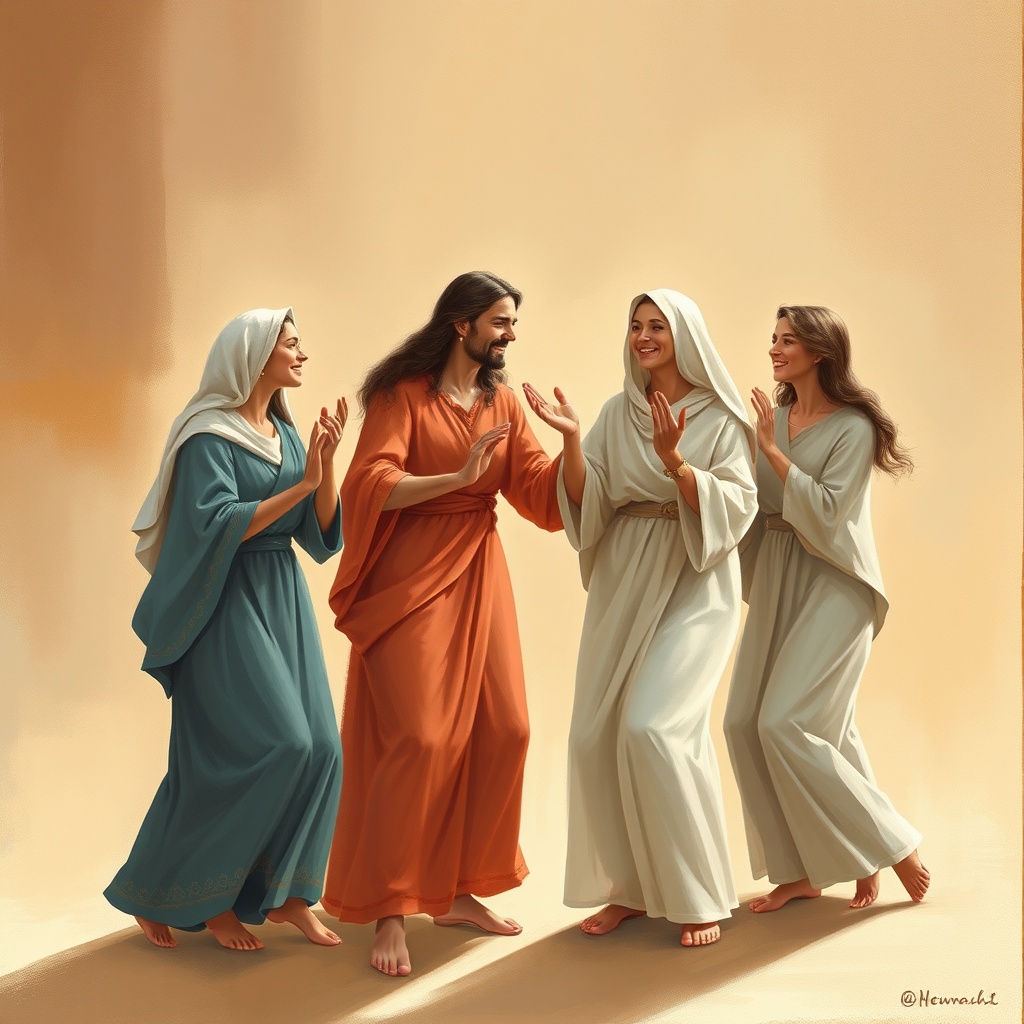
And the daughters of Shiloh came out to dance in the festivals; and the young women from the tribes of Israel went out to dance.— Judges 21:21
The Dancing Women of Shiloh are mentioned in the biblical account in Judges 21. After the civil war among Israel, the remaining tribes sought to find wives for their men. In Shiloh, young women would go out to dance in celebration, and these dances became a strategic way for the tribes to secure wives to prevent extinction. Although unnamed, these women symbolize joy, communal celebration, and participation in religious and cultural traditions. Their role showcases how women actively contributed to the social and spiritual fabric of Israelite society, helping to preserve the tribe’s continuity amidst crises. Their lively dance reflects a collective faith expressed through joy and communal bond, underlining their importance in biblical history and cultural identity.
🏛️ Cultural & Historical Context
In ancient Israel, women often played vital roles in religious festivals and societal cohesion. Celebrations like dance and song were integral parts of worship and social bonding, especially in rural or tribal communities. Women’s participation in such festivities reflected their essential role in maintaining cultural heritage and religious identity. During the Iron Age, Israelite society was patriarchal, but women navigated their roles through communal activities that reinforced social bonds and spiritual unity. The story of the Dancing Women of Shiloh highlights how women’s expressions of joy and participation in religious rites were not only cultural but also crucial for societal stability and continuity amid adversity.
👨👩👧 Family Connections
The woman is unnamed but connected to the town of Shiloh and involved in the story of the Levite's concubine, highlighting her role within the Israelite community and its religious practices.
The Dancing Women of Shiloh exemplify the intersection of worship, community, and divine blessing. Their dance symbolizes rejoicing in God’s provision and faithfulness, reminding believers of the importance of worshiping with joy. Spiritually, they represent the wider biblical theme of joy and gratitude as responses to God's covenant and blessings. Their story underscores that worship is not solely solemn but can be vibrant and expressive. In salvation history, they serve as a reminder that all members of God's people—regardless of gender—participate in praising God, highlighting the importance of communal joy and obedience in faithfulness to God's plans.
📖 Lessons for Today
📖 Lesson 1
Participating joyfully in worship reflects our gratitude for God's blessings and strengthens our community bonds.
Like Miriam the prophetess and Deborah the judge, the Dancing Women of Shiloh exemplify women’s active engagement in faith and community life. Unlike prophetic or judicial roles, their participation is expressive and celebratory, emphasizing joy and communal worship. Their story highlights the diversity of women’s contributions in biblical history, contrasting spiritual leadership with cultural participation, yet all serve God's purposes in shaping Israel’s collective faith.
📜 Scripture References
Reference
Judges 21:19-21
Judges 21:19
❓ Frequently Asked Questions
Are the Dancing Women of Shiloh named in the Bible?
No, the women are unnamed in the biblical account, representing an anonymous community of young women participating in cultural and religious festivities.
What was the purpose of their dance in Shiloh?
The dance served as a joyful celebration and a cultural tradition, providing a strategic opportunity for Israelite tribes to find wives and ensure the continuity of their community.
What can we learn from the Dancing Women of Shiloh today?
Their story encourages believers to worship with joy and participation, emphasizing the importance of community celebrations in expressing faith and unity.
✨ Did You Know?
The dance at Shiloh was not merely entertainment but served a crucial social function—helping to preserve the Israelite tribes' lineage. Linguistically, the Hebrew word related to dance hints at celebration and divine joy, showing how integral joyful worship was to their religious identity.









Leave a Reply