The Women Who Served at the Tabernacle: Key Female Figures in Ancient Worship
The Women Who Served at the Tabernacle: Key Female Figures in Ancient Worship
Old Testament Women | Symbolic Figures
The Women Who Served at the Tabernacle: Key Female Figures in Ancient Worship
📅 Approx. 15th-11th centuries BCE (Exodus through Judges era) · 📜 The names of women who served at the tabernacle often carry meanings related to leadership, beauty, or divine favor, such as Miriam meaning 'bitterness' or 'rebellion' and Deborah meaning 'bee', symbolizing industry and leadership.
Women in the BibleTabernacleBiblical WomenWorshipOld Testament
Sing to the Lord, for he is highly exalted. Both horse and driver he has hurled into the sea. Miriam the prophetess, Aaron’s sister, took a tambourine in her hand, and all the women followed her, with tambourines and dancing.— Exodus 15:21
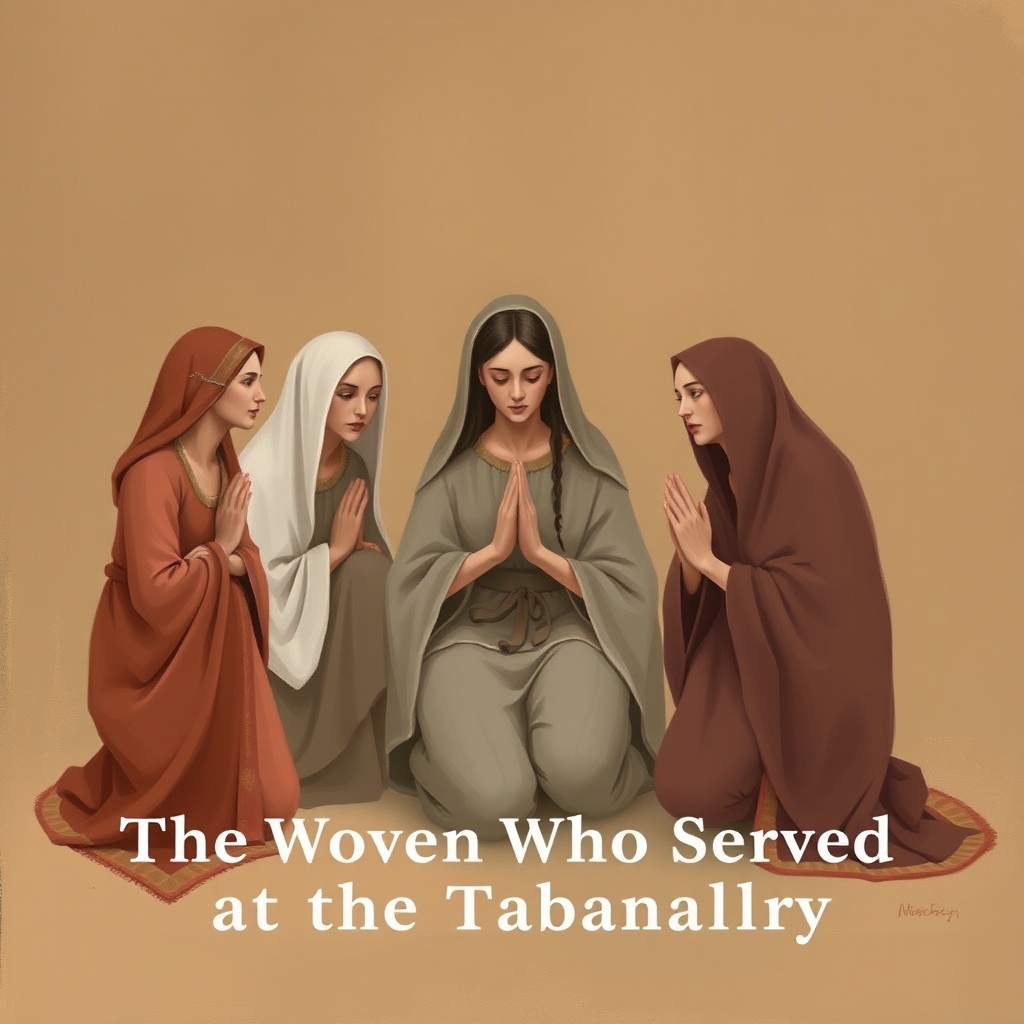
Women played crucial roles in the biblical worship practices at the tabernacle, notably Miriam, the prophetess and sister of Moses, who led women in song after the Exodus (Exodus 15). Deborah emerged later as a prophetess and judge, guiding Israel spiritually and militarily (Judges 4-5), embodying wisdom, leadership, and divine authority. Though specific direct roles at the tabernacle are sparse, these women exemplify spiritual service, prophecy, and leadership in Israel's worship and societal structure. Miriam's leadership symbolizes women's active participation in praise and prophecy, while Deborah's story highlights divine empowerment of women to lead in spiritual and civic authority. Their stories underscore the prominent, divinely ordained roles women held in spiritual life and national leadership, setting biblical precedents of faithfulness and courageous service. Their legacies inspire active female involvement in worship, prophecy, and justice within the faith community.
🏛️ Cultural & Historical Context
In ancient Israel, women’s roles were largely centered around the home; however, during pivotal moments like the Exodus and subsequent periods, women like Miriam and Deborah rose to prominence, demonstrating spiritual leadership and influence. Miriam's role as prophetess and song leader showed that women could participate actively in worship and prophetic arts. Deborah's position as judge and military leader reflected a society that, at times, recognized women’s authority in civic and spiritual matters. These women defied typical gender roles, highlighting God's elevation of women in specific contexts of divine calling, even amid a patriarchal culture. Their leadership emphasized that spiritual service transcended gender boundaries when motivated by divine purpose, inspiring future generations to honor women's contributions in worship and governance.
👨👩👧 Family Connections
Miriam was the sister of Moses and Aaron; Deborah was a prophetess and judge; others may have served in supporting roles but specific family details are limited.
Women serving at the tabernacle and in leadership roles emphasize God's inclusive approach to service and authority in salvation history. Miriam and Deborah embody God's use of women as vessels for divine purpose, illustrating that faithfulness and obedience open avenues for leadership regardless of gender. Their stories reinforce the biblical theme that God's Spirit equips all believers for service, leadership, and prophecy. These women exemplify divine empowerment and serve as models of courageous faith, illustrating God's plan to include women in moments of national and spiritual significance. Their roles affirm the biblical truth that God's kingdom elevates the humble and empowers the called, reinforcing ongoing themes of inclusion and divine authority in worship.
📖 Lessons for Today
📖 Lesson 1
Women have played vital roles in spiritual leadership and service throughout biblical history, encouraging contemporary women to embrace their gifts for God's glory.
Women like Miriam and Deborah connect by exemplifying leadership and prophetic roles, contrasting with women like Ruth or Esther, who demonstrated loyalty and influence through different means. These women underscore the diversity of biblical female roles—prophets, judges, leaders, and supporters—highlighting God's use of women across various spheres of influence within salvation history.
📜 Scripture References
Reference
Exodus 15:20-21
Numbers 12:1-15
Judges 4-5
❓ Frequently Asked Questions
Did women serve at the Tabernacle?
While direct mentions are limited, women like Miriam played prophetic and musical roles in leading worship, indicating their active participation in spiritual life associated with the Tabernacle. Miriam's leadership after the Exodus exemplifies such service.
What was Miriam's role among women?
Miriam was a prophetess and leader of women, leading them in song and praise after crossing the Red Sea (Exodus 15), and encouraging worship and faithfulness.
Was Deborah involved with the Tabernacle?
Deborah was a prophetess and judge who led Israel spiritually and militarily; while not directly involved with the Tabernacle's service, her spiritual leadership reflects the vital role women played in God's plan.
✨ Did You Know?
Miriam is one of the few women explicitly recognized as a prophetess in the Bible, and her name is often inscribed in ancient Jewish liturgical songs. Interestingly, her name means 'rebellion' or 'bitterness,' yet she models divine leadership and worship, highlighting that God's call transcends human labels and expectations.








Leave a Reply