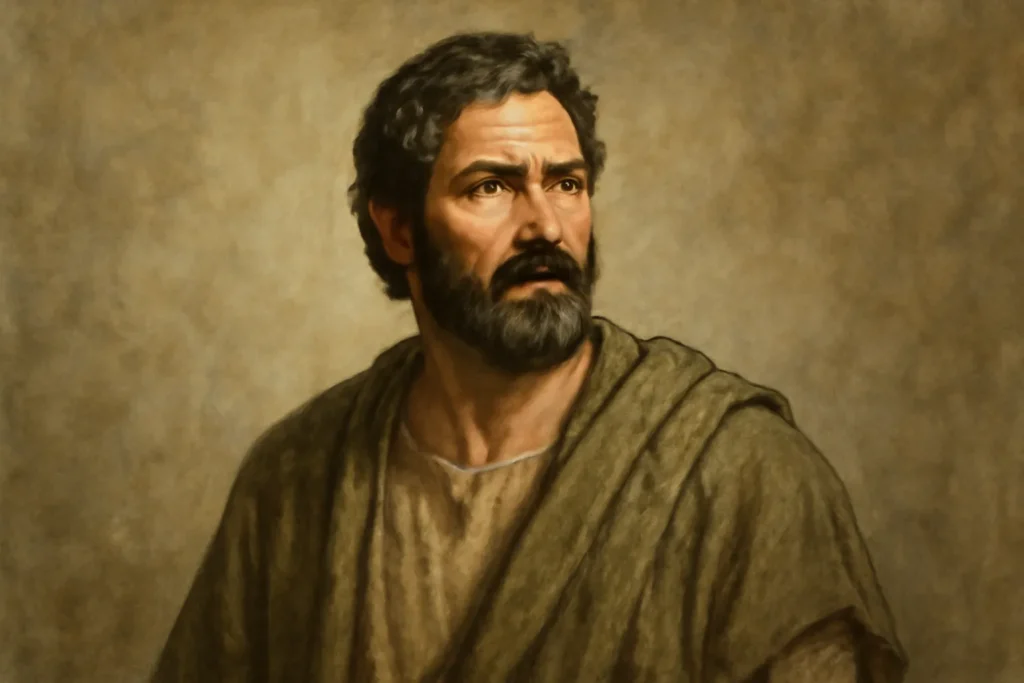
Simon the Disciple is a central figure in early Christian history, known by several names that reflect different identities and roles. In the New Testament, he is most famously called Simon Peter, Peter the Apostle, and Cephas, a Hebrew word meaning “rock.” This constellation of names signals a multifaceted personality: a fisherman from Galilee, a devoted follower of Jesus, a bold leader among the Twelve, and a pivotal figure in shaping the early Christian movement. Throughout biblical texts, the figure sometimes appears with the epithet Simon Bar-Jona, linking him to his father, Jonah (Jona). This article provides a clear guide to the life, ministry, and lasting significance of this early apostle—often rendered as Simon Peter in English translations—while also using variations like the apostle Simon and Simon the fisherman to broaden the semantic field.
The aim here is not to settle every historical debate, but to offer a structured overview that helps readers understand who Simon the Disciple was, how he interacted with Jesus and the early church, and why his example continues to matter for Christian faith, leadership, and interpretation of the gospel.
Names and Epithets: Variations on a Personal Identity
The figure we encounter in the Gospels is known by several names, and each form highlights a dimension of his identity:
Simon (given name) — the simple form that appears in the earliest synergies of his calling.
Peter — the name Jesus gives him, meaning “rock” and signaling a foundational role in the community of believers.
Peter the Apostle — the traditional designation that emphasizes his place among the Twelve sent to proclaim the good news.
Cephas — an Aramaic nickname used in the Gospel of John and in Paul’s letters, also meaning “rock.”
Simon Bar-Jona — “Simon, son of Jonah,” linking him to family lineage and cultural context.
Simon the Disciple and the fisherman — common descriptors that anchor him to his original trade and his formation as a disciple of Jesus.
These variations are not mere stylistic choices. They reflect his evolving role in the narrative, from one of the first followers called by Jesus to a leader entrusted with guiding the infant church. In discussions of biblical history, readers will encounter these names in parallel, reminding us that identity in biblical literature is both personal and communal.
The Call and Early Years: How Simon the Disciple Began His Journey
The commissioning of Simon Peter is a defining moment in the Gospels. Before he becomes a central actor, this fisherman from Galilee is immersed in the ordinary rhythms of his craft, mending nets and awaiting the next catch. The narrative of his call is a dramatic interruption: Jesus crosses paths with the fishermen during a night of futile fishing, and a miraculous catch of fish signals a new direction.
The Call in Luke 5— Jesus steps into Simon’s boat, teaches from it, and then invites him to cast his net once more. The resulting abundance leads Peter to realize his own unworthiness and to a deeper sense of vocation: follow me.
The Call in Matthew 4— along with his brother Andrew, Simon Peter leaves his former life behind to become a “fisher of people.”
Initial Faith and Impulses— Peter’s character is portrayed with both impulsivity and loyalty: quick to answer Jesus’ questions, momentarily bold, yet capable of deep confession and repentance when confronted with truth.
The early years establish the pattern that would accompany the apostle throughout his ministry: a mixture of audacious courage and apprehensive humility, a willingness to be corrected, and an enduring commitment to the person and mission of Jesus.
Peter’s Role Among the Twelve: Leadership and Conflict
Within the circle of the Twelve, the disciple Simon emerges as a natural leader—sometimes outspoken, sometimes uncertain, but consistently present. His leadership is not merely hierarchical; it is pastoral, relational, and doctrinal. The stories show him acting as spokesperson, diplomat, and sometimes a target of correction by Jesus and others.
Confession of Jesus — In Matthew 16, Peter declares Jesus as the Christ, the Son of the living God. This confession becomes a turning point in Jesus’ ministry and in Peter’s own commissioning as a rock upon which the church will be built.
Reception of the “keys” — Jesus grants Peter a distinctive authority, framed as the keys of the kingdom. This imagery has been interpreted in various ways, but it undeniably signals a form of leadership and responsibility within the early church.
Moments of denial and restoration — Perhaps the most human episode is Peter’s denial of Jesus during the Passion, followed by a restoration scene that underscores grace and reconciliation as central to his vocation.
Portraits in the Gospels: The Various Angles on Simon Peter
The Gospels each offer a distinctive lens on Simon Peter, contributing to a composite portrait that emphasizes growth, struggle, and faith. By comparing these perspectives, readers gain a fuller understanding of his character and message.
Matthew’s portrait: bold declarations and implications
In Matthew, Peter’s bold declaration that Jesus is the Messiah echoes with royal and eschatological meaning. The text highlights Peter’s role as a mouthpiece for the disciples, his readiness to name the truth, and his vulnerability to human fear. The scene of the confession leads to the institutional and spiritual implications of leadership within the church.
Mark’s portrayal: urgency and action
In Mark, the pace is brisk, and Simon Peter is often seen as quick to respond to Jesus’ summons. This portrayal emphasizes the dynamic, action-oriented aspect of his discipleship and the urgency of following Jesus in a time of imminent crisis and mission.
Luke’s emphasis: mercy, humility, and divine insight
Luke places a premium on mercy and humility in the life of Simon Peter. The apostle’s failures become occasions for teaching about repentance, grace, and resilience in the face of persecution. Luke’s language often invites readers to identify with Peter’s humanity as they encounter their own moments of doubt and conviction.
John’s focus: intimate moments with Jesus
In John, the bond between Jesus and his disciple is intimate and personal. Peter’s interactions—such as his participation in the last supper and his role in questions about the future of the church—emphasize relational leadership, fidelity, and the ongoing call to serve.
In the Acts of the Apostles: The Birth and Expansion of the Church Through Peter
The book of Acts features Peter the Apostle as a central figure in the dawn of Christian mission. His preaching, miracles, and leadership catalyze the spread of the gospel beyond Jerusalem to Judea, Samaria, and beyond.
On the day of Pentecost, Peter preaches boldly, and the church receives the Holy Spirit in a way that marks a turning point in the movement. The sermon’s call to repentance and baptism results in a dramatic addition to the community of believers.
Miracles and authority
The apostle’s authority is demonstrated through miracles that attest to the power of Jesus’ name. This authority is not merely spectacular; it validates the message he proclaims and invites others into the life of faith.
Gentile inclusion: the vision and the household of Cornelius
A pivotal moment occurs when Peter receives a vision that disrupts traditional boundaries between Jews and Gentiles, leading to the baptism of Cornelius and his household. This event reframes the mission for the entire church and underscores the universal scope of the gospel.
Paul’s interactions with Peter
Paul’s confrontation of Peter in Antioch (Galatians 2:11-14) is a notable moment in early church history. It reveals that even leaders with strong gifts needed accountability and humility, and it highlights the ongoing process of reconciliation and doctrinal clarity within the community.
Theological Significance: What the Life of Simon Peter Teaches About Faith and Leadership
The life and ministry of the apostle Peter offer enduring theological themes that continue to inform Christian thought:
Confession and Christology — The moment when Peter proclaims Jesus as the Christ anchors a key dimension of faith: recognizing who Jesus is and what he represents for humanity.
Leadership under grace — Peter’s leadership is marked by grace, particularly in moments of failure. The restoration of Peter emphasizes the possibility of growth and renewal within faithful service.
Mission and inclusion — The move from Jerusalem to Gentile centers demonstrates that leadership in the early church meant expanding horizons and embracing diverse communities under the same gospel.
Authority and responsibility — The “keys” imagery invites reflection on the nature of spiritual authority: accountability, discernment, and stewardship for the common good of the community.
Peter in Paul and in Tradition: A Meeting Point for Early Christian Identity
The dynamic between Simon Peter and Paul shows how complementary gifts shaped the early church. While Peter provides apostolic leadership in Jerusalem and the broader Jewish-Christian context, Paul embarks on a mission that brings the gospel to new cultural and geographical frontiers. The two figures reflect unity in core doctrine and diversity in method.
In the broader tradition, this apostolic pair is treated with reverence as foundational to the church’s understanding of faith, grace, and mission. Early church fathers and later Christian writers often cited Peter as a foundational pillar who, alongside other apostles, helped to define what it means to follow Jesus in varied contexts.
Legacy and Impact: How the Message of Simon the Disciple Shaped Christian Community
The influence of Simon Peter extends far beyond his lifetime. The early church regarded him as a model of faithful leadership, courageous proclamation, and humble reliance on divine guidance. Some of the most enduring aspects of his legacy include:
Formation of church leadership patterns — The leadership model observed in the life of Peter helped shape emerging structures of teaching, governance, and pastoral care.
Devotional and liturgical influence — Peter’s example informs Christian devotion, sermons, and liturgical reflections about discipleship, confession, and reconciliation.
Patristic and medieval reception — In later centuries, church writers often linked Peter with the concept of apostolic succession and with the idea of a representative bishopric in the church’s governance.
A clear understanding of Simon Peter benefits from brief contrasts with other key disciples:
James and John — The brothers share a close relationship with Jesus, and their mother’s request reveals political and spiritual expectations about leadership in the kingdom.
Andrew — Often presented as the first of the disciples called by Jesus, Andrew is depicted as a connector who brings others to Christ, yet Peter often occupies a more prominent public role.
Philip and Nathanael — These figures illustrate the diversity of responses to Jesus’ invitation and the variety of ways people come to faith within the community.
For readers seeking a thoughtful, sustainable approach to studying Simon Peter and his contributions, several strategies can help:
Read the gospel accounts in parallel — Compare how each Gospel presents Peter to understand the nuances of his character and role.
Explore Acts with a timeline — A chronological reading of Peter’s activities helps map his leadership across Jerusalem, Judea, Samaria, and the broader world.
Consult a variety of translations and commentaries — Different translations reveal subtle theological emphases; scholarly commentaries provide historical and linguistic context.
Note key theological themes — Confession, denial, restoration, mission, and inclusion recur throughout Peter’s story and invite contemporary reflection on faith and ethics.
Engage with resources on Christian tradition — Patristic writings, church history, and modern theological discussions illuminate how Peter’s example has shaped ecclesial identity over centuries.
In pursuing this study, readers should remain mindful of the historical distance between the ancient text and modern interpretation. The aim is to glean enduring lessons about faith, leadership, courage, and grace, as exemplified by Simon Peter, Peter the Apostle, and the figures surrounding him in the witness of the early church.
Conclusion: The Enduring Clarity of Simon the Disciple’s Call
The figure commonly named Simon the Disciple embodies a trajectory from ordinary vocation to extraordinary responsibility in service of the gospel. Through the arc of his life—as Simon Peter, Cephas, and the apostle—readers encounter a model of faith marked by decisive confession, courageous action, and a readiness to be corrected and renewed. Whether one reads the Gospel narratives, the Acts of the Apostles, or the Pauline letters, the story of Simon Peter offers a coherent thread: that followers of Jesus are called to respond in faith, to lead with humility, and to participate in a mission that transcends culture and time. For students of biblical history, theology students, and lay readers alike, the life of this early disciple remains a primary guide to understanding how a single life can influence a movement that changed the world.









Leave a Reply