History of Christianity Timeline: Milestones in Christian History
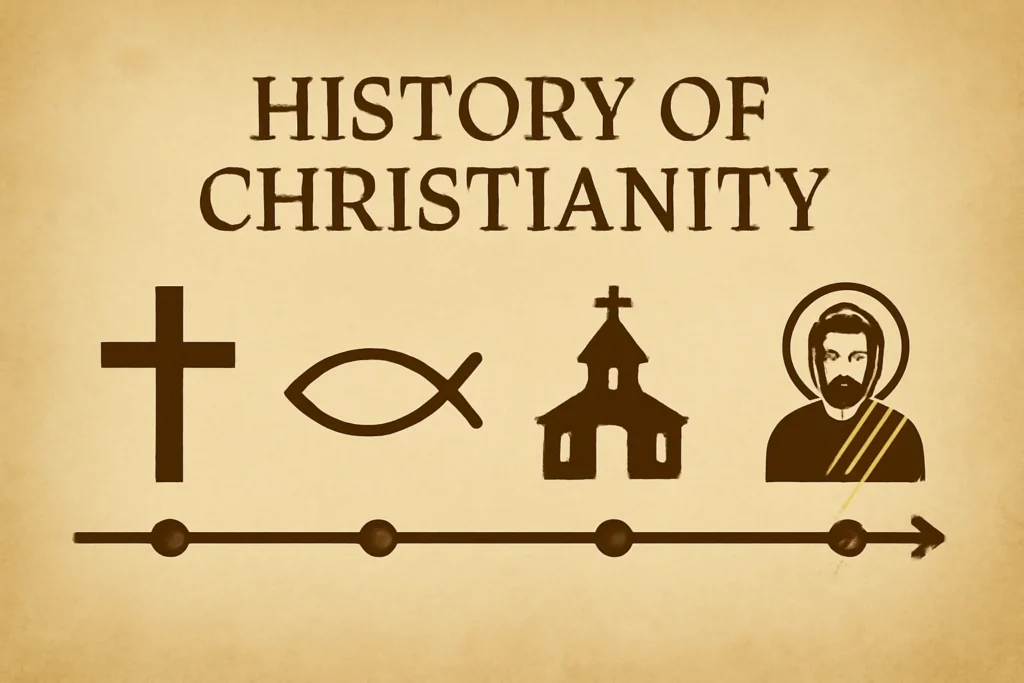
The history of Christianity is a vast and layered narrative that stretches across two millennia and every continent. This article offers a detailed chronology, a comprehensive timeline of Christian milestones that highlights how faith, doctrine, institutions, and cultures interacted to shape a global religion. Readers will encounter a variety of phrasing—“history of Christianity timeline,” “timeline of Christian history,” and “chronology of Christianity”—to reflect the breadth of scholarly and popular treatments of this subject while preserving a cohesive narrative.
Apostolic Era and Early Christian Communities
The roots of the Christian story lie in the life, death, and believed resurrection of Jesus of Nazareth, followed by the formation of early communities that transmitted his teachings. The following milestones trace the beginnings and the rapid spread of the early church.
c. 30–33 CE Pentecost and the birth of the Christian community in Jerusalem; the apostles begin preaching about Jesus as Messiah and Son of God, and baptisms multiply as the church forms a shared life around teaching, fellowship, breaking of bread, and prayer.
c. 33–60 CE Missionary momentum under the apostles, especially Peter and Paul; Paul’s journeys lead to churches in Syria, Asia Minor, Greece, and Rome, widening the circle of Gentile believers and shaping a distinctly mission-focused Christianity.
c. 60–100 CE Emergence of early Christian writings and leadership networks; the Apostolic Fathers (for example, Clement of Rome, Ignatius of Antioch, and Polycarp) offer important early testimonies, church order, and ethics while faith encounters increasing persecution in the Roman Empire.
c. 100–150 CE Writings such as the Didache and early letters circulate; communities begin to articulate a shared sense of what it means to be the "people of God," while debates about church practice, liturgy, and discipline intensify.
c. 140–170 CE The era of Polycarp, Irenaeus, and other early church leaders; the nascent Christian movement begins to distinguish itself from competing sects and to develop a more explicit sense of apostolic succession and doctrinal boundaries.
In this period the Church Fathers and their sources helped stabilize the faith’s identity as they navigated questions of Jesus’ divinity, the nature of salvation, and the relationship between faith and praxis. The history of Christianity timeline here emphasizes the formation of a shared creed and community that could endure persecution and distance.
Key doctrinal developments in the earliest centuries
Emergence of a consensus around monotheism and the revelation of Jesus as the Messiah and Lord.
Debates about the incarnation, the relationship of the Father, Son, and Holy Spirit, and the role of the Holy Spirit in the life of believers.
Rituals of baptism and the Eucharist become central to Christian identity and unity.
Theological Formation and Patristic Era
As Christianity moved from a persecuted minority to a recognizable religious movement within the Roman world, it encountered a wide range of philosophical ideas and cultural contexts. This period, often called the Patristic era, saw the consolidation of doctrine, the establishment of canonical texts, and the creation of a robust Christian intellectual culture.
c. 325 CE The Nicene Creed formalizes core beliefs about the divine nature of Christ and the relationship within the Trinity, establishing a standard against which subsequent heresies would be judged.
c. 325–381 CE The Council of Nicaea (325) and the Council of Constantinople (381) address Christology, Trinitarian theology, and the interpretation of scripture, shaping the orthodox framework for centuries.
4th–5th centuries The Athanasius of Alexandria, Ambrose of Milan, Augustine of Hippo, and other church fathers articulate sophisticated theological syntheses that integrate Scripture, philosophy, and pastoral practice.
c. 367 CE The earliest list of canonical New Testament books appears, signaling a growing consensus about the biblical corpus that would guide faith and practice.
c. 390–430 CE Augustine’s writings crystallize Christian thought on topics such as grace, original sin, and the city of God, influencing Western Christian theology for centuries.
This era of the history of Christianity timeline highlights how doctrinal inquiry, ecclesial organization, and Scriptural interpretation shaped a cohesive Christian tradition that could span diverse cultures and languages. The blend of philosophical engagement and pastoral leadership created a resilient bedrock for later medieval Christianity.
Rise of monastic communities and the guiding rule traditions, such as those of Columban and Benedict, which influence liturgy, devotion, and social service.
Monastic centers become hubs of learning, copying manuscripts, and preserving Christian and classical literature.
Empire, Church, and Medieval Globalization
With the conversion of the Roman Emperor Constantine and the eventual establishment of Christianity as a favored religion within the empire, the Christian church enters a new phase. The following milestones mark the entwining of religious, political, and cultural life in late antiquity and the early medieval period.
313 CE The Edict of Milan grants religious toleration to Christians, opening space for church-building, the public proclamation of faith, and stronger ecclesial institutions.
380 CE The Edict of Thessalonica proclaims Christianity as the official faith of the empire, under the authority of the bishops and their growing hierarchy.
4th–5th centuries The consolidation of episcopal sees, the development of centuries-old roman legal and liturgical practices, and the growth of monastic orders that influence education and social welfare.
c. 500–600 CE The Latin Church and Eastern Churches gradually diverge in language, liturgy, and governance, laying groundwork for long-term cultural differences between East and West.
c. 600–900 CE The expansion of Christianity through missionary activity in the British Isles, Continental Europe, and parts of the Middle East, guided by bishops, missionaries, and monastic networks.
This era of the history of Christianity timeline emphasizes how faith interacted with governance, education, and culture as Christianity became a dominant civilizational ethos in many regions of the world.
Monastic reform and liturgical development
Formation of distinct monastic houses and the spread of the Rule of Saint Benedict across Western Europe, facilitating discipline, learning, and social charity.
Adoption of the Liturgy of the Hours in many communities and the elaboration of canonical hours that structured daily prayer for clergy and laity.
East–West Schism and Medieval Christianity
The history of Christianity timeline records a pivotal rupture that reshaped the Christian world: the East–West Schism of 1054. This split reflected complex theological, political, and cultural tensions and produced distinct trajectories for Catholic and Orthodox traditions.
1054 CE The East–West Schism formalizes differences in practice, theology (such as the Filioque clause), papal authority, and liturgical life, leading to enduring separations between the Roman Catholic Church and the Eastern Orthodox churches.
1095–1291 CE The Crusades mobilize Christian forces across the Mediterranean, aiming to recover or defend Christian territories and pilgrims’ access to sacred sites, while also intensifying conflicts with Muslims and shaping interfaith dynamics.
12th–13th centuries The rise of scholasticism and universities, with figures like Thomas Aquinas synthesizing faith and reason in a way that would influence Western theology for centuries.
Late medieval The growth of religious orders (Dominicans, Franciscans, Augustinians) that contribute to education, missionary work, and care for the poor, while reform movements begin to surface within the church.
In the broader history of Christianity timeline, this era highlights both cultural flourishing and spiritual turmoil, including debates about grace, salvation, and the authority of the papacy, which would later feed into reform movements and the reshaping of church life in Western Christendom.
Scholastic and liturgical innovations
Scholastic method emerges as a method of theological inquiry that uses reason to articulate faith, with notable debates on topics like the nature of grace and sacraments.
Liturgy and ritual life become highly structured, with standardized practices across regions and the creation of devotional cultures centered on the sacraments and saints.
Reformation, Counter-Reformation, and Denominational Diversity
The history of Christianity timeline reaches a dramatic turning point in the 16th century with the Protestant Reformation, a movement that challenged ecclesial authority, reinterpreted Scripture, and catalyzed a complex proliferation of Christian traditions. The late medieval Catholic world would respond with reform efforts, while new churches and communities emerged around the globe.
1517 Martin Luther posts the 95 Theses, initiating a reform conversation about indulgences, authority, and the interpretation of Scripture in the Western church.
1520s–1530s The Protestant Reformation expands with figures such as John Calvin in Geneva and Huldrych Zwingli in Zurich, producing distinct reform movements and confessional statements (for example, the Augsburg Confession of 1530).
1534 Henry VIII’s break with Rome and the establishment of the Church of England exemplify a national reconfiguration of church authority and worship, blending reform impulses with existing political structures.
c. 1520s–1560s The Anabaptists emphasize adult baptism and a radical community ethic, sowing the seeds for later pacifist and Mennonite traditions.
c. 1545–1563 The Council of Trent responds to reform concerns with Catholic institutional reform, clarified doctrine, and renewed emphasis on the role of the clergy and sacraments, becoming the cornerstone of the Counter-Reformation.
This era’s history of Christianity timeline demonstrates how reform movements reshaped not only theology but also church governance, education, and ethics, while missionary expansion and global contacts spread Christianity to new contexts and created a truly global faith community.
Migration, colonization, and the missionary enterprises spread Christian faith to the Americas, Africa, Asia, and Oceania, often blending with local cultures and producing diverse Christian expressions.
Renewed emphasis on bible translation and education, with presses and schools helping to democratize access to Scripture and theological reflection.
Global Expansion, Missionary Movements, and the Christian World Map
From the early modern era onward, the history of Christianity timeline expands beyond Europe as ships, colonies, and missions connect distant peoples. This section highlights how Christian faith took root in new lands and how local expressions shaped global Christianity.
16th–19th centuries European powers establish missionary networks in the Americas, Africa, Asia, and the Pacific; Christian communities begin to form a truly global church with distinct liturgical customs and languages.
16th–18th centuries The Jesuit mission and other orders engage in education, science, and cultural exchange as they seek to translate Christian faith into local vocabularies and social structures.
18th–19th centuries The Great Century of Missionaries accompanies social reforms, abolition movements, and the establishment of schools, clinics, and printing networks that sustain Christian communities in new contexts.
19th–20th centuries The emergence of unique national churches and denominations, along with the rise of Pentecostalism, revival movements, and the expansion of ecumenical networks that connect churches across borders.
In this portion of the history of Christianity timeline, Christianity often encountered and interacted with other faiths, social systems, and political structures. The hybrid forms that arose—ranging from indigenous Christianities to nationalist churches—became a hallmark of the global Christian family today.
Missionary strategies and intercultural dialogue
Contextual theology emerges as scholars and pastors interpret the gospel within local cultures and languages, creating a more accessible Christian message.
Interfaith engagement increases in many regions, with Christians participating in dialogue to promote peace, mutual understanding, and social justice.
Enlightenment, Modernity, and Religion in Public Life
The modern era introduces new challenges and opportunities for the history of Christianity timeline. The rise of secular thought, scientific inquiry, and political liberalism tested traditional authorities while opening space for new religious expressions and civic roles for Christians.
17th–18th centuries The Enlightenment questions church authority and emphasizes reason, individual conscience, and the primacy of Scripture and natural law in some streams of Christian thought.
19th century Reactions to modernity lead to diverse theological movements, including liberal theology, revivalism, and social gospel currents that seek to apply Christian ethics to issues like poverty, labor, and education.
Late 19th–early 20th centuries Biblical criticism, historical study of the Bible, and the emergence of modern missionary societies reflect an ambitious scholarly and ecclesial project to engage the Bible and the world in new ways.
Within this timeline of Christian history, the relationship between faith and reason becomes a central theme. Debates over inerrancy, historical-critical methods, and the interpretation of Scripture pulse through many Christian communities, shaping worship, governance, and daily life.
Society, ethics, and religious liberty
Legal reforms, abolition movements, and social justice initiatives intersect with Christian philanthropy and education, expanding the church’s public role.
Theological debates about sociopolitical engagement, human rights, and religious liberty influence institutions and public policy, both in predominantly Christian societies and in pluralist contexts.
Twentieth Century to Present: Ecumenism, Global South, and Digital Culture
The last two centuries have seen dramatic shifts in where Christians live, how they worship, and how they relate to other faiths and cultures. The modern history of Christianity timeline is characterized by ecumenical efforts, renewed social activism, and technological transformations that reshape Christian life and mission.
1900–1939 The rise of Pentecostalism and the Charismatic Movement broadens experiences of spiritual gifts and worship style, influencing many denominations and new church communities.
1948 The founding of the World Council of Churches fosters ecumenical dialogue and common mission while preserving denominational diversity.
1962–1965 The Second Vatican Council (Vatican II) initiates a Catholic aggiornamento (updating) that opens the church to modern culture, promotes liturgical reforms, and invites dialogue with other faith traditions. This event remains a watershed in the history of Christianity timeline for Catholicism and global ecumenism.
1960s–1980s The Catholic social teaching movement and liberation theology shape how some Christian communities understand justice, economic life, and political engagement.
Late 20th century–present The global South emerges as a major center of Christian growth, with vibrant churches in Africa, Asia, and Latin America contributing to a shifting center of gravity for world Christianity.
In the modern history of Christianity timeline, the church participates in global conversations about human dignity, poverty alleviation, environmental stewardship, and interfaith understanding. The advent of the internet and digital media also changes preaching, education, and community life, enabling new forms of worship, online communities, and remote mission work.
Today, the Christian faith exists in a plurality of expressions, from ancient liturgical traditions to dynamic, contemporary congregations. The history of Christianity timeline in the present era emphasizes growth in diverse contexts, the ongoing work of ecumenical cooperation, and the adoption of new technologies for mission and ministry.
21st century The church navigates globalization, migration, and demographic shifts that place new emphasis on inter-cultural mission, social justice, and pastoral care in diverse communities.
Digital and social media age Online preaching, streaming worship, and digital discipleship programs expand reach and participation, enabling broader access to theological education and spiritual formation.
Interfaith dialogue grows as Christian communities engage with Muslims, Jews, Buddhists, Hindus, and others to promote peace, mutual understanding, and collaborative service projects.
Environmental ethics and social justice Christian communities increasingly articulate a robust ethic of care for creation, economic justice, and human rights as central features of Christian discipleship.
This portion of the history of Christianity timeline illustrates how a faith with ancient roots continues to adapt, respond to contemporary questions, and participate in shaping a more just and compassionate world. The Christian church’s future will likely be marked by continued diversification, new forms of community and worship, and renewed commitments to mission in an interconnected planet.
Current currents in Christian life
Emergent church movements and non-traditional congregations experiment with leadership, governance, and communal life while preserving core theological commitments.
Youth and student ministries, urban missions, and social-justice initiatives become central street-level expressions of Christian witness in many countries.
Recurring Themes in the History of Christianity Timeline
Across the long history of Christianity timeline, certain themes recur, reframing how Christians read Scripture, understand authority, and live out their faith. These themes help explain continuity and change in Christian history:
Persecution to tolerance marks many eras as believers move from conflict with political authorities to negotiated space within civil life.
Ecclesial authority and the question of governance—papal primacy, episcopal oversight, synodal decision-making—shape how churches organize themselves and respond to challenges.
Scripture and tradition—the dynamic tension between textual study, doctrinal development, and the living memory of faith communities.
Doctrinal debates—from Christology and the Trinity to justification by faith and the sacraments, leading to confessional boundaries and ecumenical bridges.
Mission and witness—the church’s outward impulse to proclaim the gospel and serve humanity, often in conversation with other cultures and faiths.
Liturgy and spirituality—the forms of worship, sacred art, music, and devotion that shape believers’ encounter with the divine.
Translation and education—the translation of Scripture into vernacular languages and the expansion of literacy, schools, and universities that carry Christian ideas forward.
Understanding these recurring motifs helps readers appreciate how different eras contribute to a larger, evolving story: a faith that seeks to adapt without losing its core convictions, a church that seeks to reform without losing its identity, and communities that strive to be faithful in changing times.






Leave a Reply