Palm Sunday: The Triumphal Entry and the Start of a Holy Week Timeline
The week known in Christian tradition as the Passion Week or the Holy Week begins with Palm Sunday, a day that marks the public recognition of Jesus as the Messiah by many in Jerusalem. This day sets the tone for a dramatic sequence of events, weaving together themes of triumph, expectation, and the looming shadow of betrayal. In the synoptic Gospels, the Triumphal Entry is presented as a deliberate fulfillment of prophecy and a demonstration of Jesus’ humility. In John’s Gospel, the entry carries its own distinctive emphasis, underscoring the emerging conflict with temple authorities and the crowds’ mixed response. Regardless of the vantage point, Palm Sunday signals the onset of a week that would forever transform the narrative of salvation.
Key moments and context
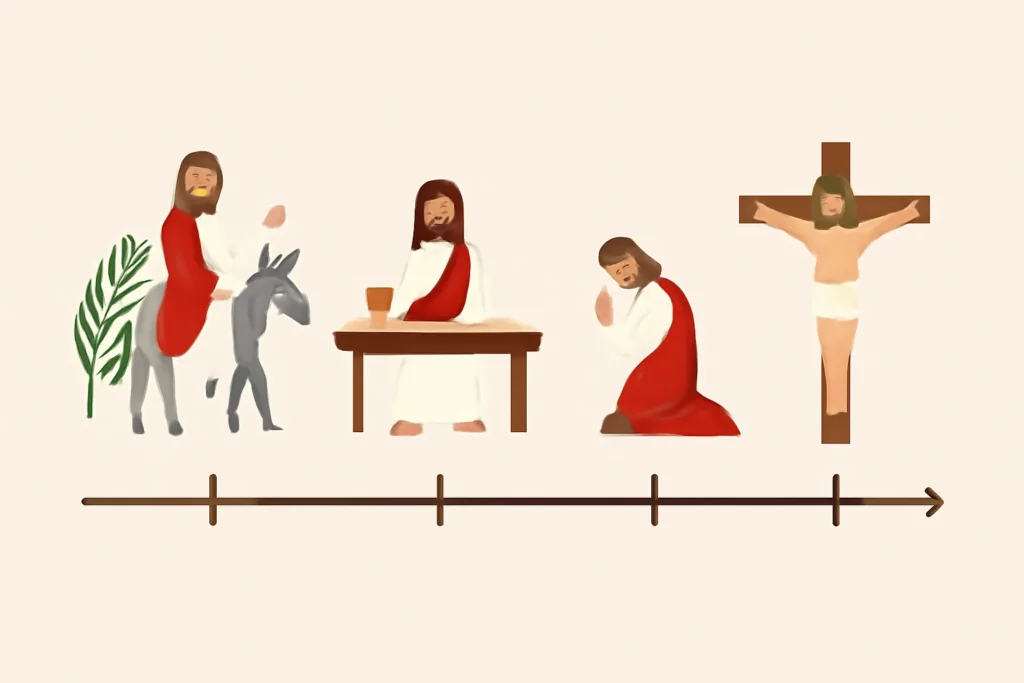
Jesus rides into Jerusalem on a donkey, fulfilling Zechariah’s prophecy and inviting Hosannas from the crowd.
The crowd spreads cloaks and palm branches on the road, a gesture of honor and homage.
Rising tension between Jesus and the temple leadership begins to surface as he teaches in the temple courts.
Within days, observers would shift from celebratory mood to bewilderment and opposition, setting the stage for the confrontations to come.
Monday: Cleansing the Temple, Temple Teachings, and the Figure of Faith
The first full day after Palm Sunday is often called Holy Monday in many liturgical calendars. In the Gospel accounts, Monday features a powerful public act and provocative teachings that intensify the conflict surrounding Jesus’ authority. The day’s emphasis on the sanctity of worship and the misuse of religious space resonates through the era’s critiques of temple corruption, while Jesus speaks about faith, endurance, and the fatherly care of God.
Events and motifs
Cleansing of the Temple: Jesus drives out merchants and money changers, declaring that a house of prayer must not be turned into a den of thieves. This act dramatizes a clear rebuke of commercialism and spiritual manipulation within sacred space.
Curses on deceptive fig trees (as a sign of judgment): The Gospel of Mark and the Gospel of Matthew describe Jesus cursing a fig tree, which, within a few days, becomes a visible sign of judgment against fruitless faith. This symbol invites reflection on spiritual receptivity and the need for spiritual fruitfulness.
Authority questions: Leaders question Jesus’ authority, prompting him to respond with parables and questions that reveal the depth of their hardness of heart and the need for humility in recognizing divine authority.
For students of the timeline of Jesus' last week, Monday’s events illustrate a transition from public acclaim to the mounting plot against him. The narrative emphasizes how Jesus engages with leadership, purifies the sacred space, and teaches lessons about the true nature of worship, faith, and integrity.
Tuesday: Olivet Discourse, Debates, and Prophetic Warnings
On what many traditions call Holy Tuesday, the pace of the week intensifies as Jesus teaches in the temple precincts and publicly answers questions posed by religious leaders. The day is characterized by parables, direct warnings about future judgment, and fresh expositions on the coming kingdom of God. The Olivet Discourse provides a retrospective lens for readers on what to anticipate regarding trials, persecutions, and the ultimate vindication of God's plan.
Parables of warning and instruction about the faithful steward, the ten virgins, and the talents—each parable invites vigilance and preparedness for the coming hour.
Questions about Jesus’ authority continue, giving rise to debates about whether John the Baptist’s ministry, healing works, or messianic identity are recognized by the people and by the religious establishment.
Render to Caesar and greatest commandment conversations surface as authorities seek to constrain Jesus, while he redirects attention to a higher allegiance and love that fulfills the law and prophets.
The day is a study in rhetoric and revelation: Jesus answers with wisdom that disarms some opponents, while others intensify their plots. The timeline of Jesus’ last week through Tuesday highlights the tension between divine truth and human resistance, a conflict that would culminate in a night of betrayal and arrest.
Wednesday: Judas, Betrayal Plans, and the Shadow of Nightfall
By Spy Wednesday in popular liturgical labeling, the events of this day are often marked by the groundwork for the arrest that will soon occur. The canonical gospels provide varying emphases on Wednesday’s happenings, but common threads include heightened intrigue among the religious authorities and the beginnings of a plan that would leverage Judas Iscariot’s role. The day serves as a bridge between the public ministry of Jesus and the nocturnal events that follow.
Traditions and focal points
Judas’ agreement to betray Jesus is a key strand in the narrative, with the price of betrayal debated and set by the chief priests or those who manage the temple economy.
The religious leadership intensifies its watchfulness, seeking a way to capture Jesus without provoking a public riot during Passover preparations.
While not uniformly described in the same way across all Gospels, the day is often read as a moment when complicity with injustice becomes clearer, foreshadowing the trial and crucifixion that lie ahead.
For students of the chronology, Wednesday’s emphasis on betrayal, secrecy, and the looming arrest helps explain the rapid escalation that leads to the Last Supper and the events of the following days. The timeline of Jesus last week during this day foregrounds the moral drama of trust and treachery that threads through Holy Week.
Thursday: The Last Supper, Foot Washing, Gethsemane, and the Arrest
The layout of Holy Thursday centers on the intimate, defining moments of the final Passover meal Jesus shares with his disciples. The night gathers together ceremonial symbolism—the Last Supper, the institution of the Eucharist, and a radical example of service through foot washing. After the meal, Jesus moves to the Garden of Gethsemane, where he prays in anguish and submits to the Father’s will, yet the hour of arrest and betrayal unfolds in the darkness.
Key sequence of events
The Last Supper: Jesus defines the new covenant with bread and wine, foretelling his body and blood given for many. He instructs the disciples to remember him whenever they partake in these elements.
Foot washing: In an act of servanthood, Jesus washes the disciples’ feet, teaching that leadership in his kingdom is marked by humility and service to others.
Teaching in the farewell discourse: Jesus speaks words of comfort, promises, and the coming Advocate—the Holy Spirit—who will guide, convict, and empower the followers after his departure.
Garden of Gethsemane: Jesus prays with intense sincerity, expecting the cup of suffering to pass, yet yielding to the Father’s will: not my will, but yours be done.
Betrayal and arrest: Judas arrives with a contingent of soldiers and guards, and Jesus is arrested at night amid the watch of the remaining apostles who flee or deny him.
The Thursday components reveal the paradox at the center of the Passion narrative: the humility of a servant-king who sacrifices himself, and the human frailty that resists the call to discipleship. The timeline of Jesus last week is especially vivid here, as the night brings both intimate fellowship and the onset of public trial.
Friday: Trials, Crucifixion, and Burial
Friday is the day most readers associate with the crucifixion. The sequence includes a succession of trials before various authorities, a verdict of condemnation, and a crucifixion that becomes the focal point of Christian symbolism and theology. Many traditions remember this day as Good Friday, a somber reminder of sacrifice, forgiveness, and the scope of God’s love for humanity. The events unfold in a way that underscores the cost of sin and the depth of divine mercy.
Early trials: Jesus stands before the Sanhedrin, then before Pilate, and later Herod, facing questions about authority, kingship, and truth.
Condemnation to death by crucifixion occurs under the pressure of crowds and political factions, despite Pilate’s initial hesitations or attempts to release Jesus.
Crucifixion on Calvary: Jesus is crucified between two criminals, fulfilling prophetic expectations and bearing the weight of human sin as described in the Gospel accounts.
Death and burial: Jesus yields his spirit, "It is finished," and is taken down from the cross for burial in a new tomb prepared by Joseph of Arimathea and by Nicodemus. The Sabbath is approaching, adding a sense of solemn rest to the events of the day.
The timeline of Jesus last week on Good Friday presents a narrative of suffering, faithfulness, and the weight of redemption. The events invite reflection on the nature of atonement, the fulfillment of prophecy, and the deep significance of Jesus’ voluntary surrender.
Saturday: Sabbath Rest, Tomb Security, and Silent Expectation
Saturday in Holy Week is traditionally a day of Sabbath rest and quiet reflection. The narrative emphasizes the silence that follows the dramatic events of Friday. In many Gospel accounts, the tomb is secured, guards are posted, and the community awaits what God will yet reveal. The stillness of the day invites believers to contemplate the meaning of Jesus’ death, the anticipation of resurrection, and the transformation that faith experiences in the wake of apparent defeat.
Scenes of stillness and preparation
Preparation of spices by some of the women, who would later return at dawn to anoint Jesus’ body, signaling a shift from death to the expectation of life.
Tomb sealing and guards: The authorities seek to ensure that the body remains undisturbed, but the plan of God moves beyond human strategy.
Disciples’ fear and confusion: The close companions of Jesus withdraw or hide, wrestling with questions about what comes next and how to interpret the events that have unfolded.
The portrayal of Saturday as a day of stillness does not diminish its importance; rather, it heightens the expectancy for the dawn when the narrative would take a radical turn. The timeline of Jesus’ last week includes this pause, acknowledging that the narrative of life, death, and resurrection unfolds in moments of quiet before the dramatic reversal of the tomb.
Sunday: The Resurrection, the Empty Tomb, and Appearances
The climactic conclusion of the timeline of Jesus’ last week is found on Sunday, the day of resurrection. Early in the morning, followers discover the empty tomb, and the news triggers a sequence of appearances that transform fear into faith and confusion into proclamation. The Sunday accounts vary in emphasis across Matthew, Mark, Luke, and John, yet all converge on the central claim: Jesus is alive, the fallen world is being renewed, and the message of the apostles moves forward with power.
Resurrection morning and post-resurrection appearances
Women at the tomb discover that the stone has been rolled away and that the tomb is empty, receiving directions to tell the disciples and Peter about the risen Lord.
Appearance to Mary Magdalene and subsequent encounters with the apostles, including the beloved disciple who reaches the tomb first and the others who confirm the report of resurrection.
Road to Emmaus: Cleopas and a companion encounter the risen Jesus on the road, and though not immediately recognized, they come to see him in the breaking of bread after a revelation in scripture.
Appearances to the disciples in the upper room, where Jesus offers peace, commissions them for mission, and breathes the Holy Spirit, bestowing authority and courage to carry the message to all nations.
Thomas’ doubt and confession: “My Lord and my God” emerges when Thomas experiences the risen Christ and is invited to touch the wounds, leading to a pivotal confession of faith.
The resurrection narratives are the culmination of the week’s timeline, revealing the victory of life over death and inaugurating a new era for the followers of Jesus. The timeline of Jesus’ last week thus closes with a series of encounters that transform fear into mission, despair into hope, and private grief into public mission for the proclamation of the gospel.
Putting the Last Week in a Broader Context
While this day-by-day account concentrates on specific moments from Palm Sunday to the Resurrection, it also invites readers to reflect on the broader theological themes that tie the events together. These themes include fulfillment of prophecy, divine sovereignty, humble service, and the call to discipleship. Across the four canonical Gospels, the last week is presented with varying details and emphases, but a common thread emerges: God’s plan of salvation unfolds through acts of mercy, sacrifice, and resurrection power that redefine human existence.
Comparative Perspectives: Gospels, Narratives, and Harmonizing the Timeline
For readers seeking a comprehensive understanding, it can be helpful to note how the timeline of Jesus last week is portrayed across Matthew, Mark, Luke, and John. Each Gospel writer highlights different events and offers unique emphases, yet they agree on the sequence in broad strokes: public entry, temple activity, teaching, betrayal, arrest, trials, crucifixion, burial, and ultimately resurrection. Scholars and students often compare the accounts to harmonize the details and to appreciate each Gospel’s distinctive contribution to the overall message of Holy Week.
How the variations contribute to the overall picture
Triumphal entry and crowd responses are presented in a way that foregrounds Jesus’ royal identity and his peaceful mission.
Temple cleansing is emphasized in Mark and Matthew as a dramatic repudiation of corrupt practices, while John emphasizes theological conversations that reveal the deeper conflict with the authorities.
Last Supper narratives highlight the institution of the Eucharist and the new covenant, with John’s account offering extended teaching on the new commandment and love rather than a straightforward communion depiction.
Gethsemane and arrest underscore Jesus’ obedience and suffering, a hinge point that leads into the trials and crucifixion described in all four Gospels.
Resurrection appearances provide overlapping but distinct post-resurrection encounters that strengthen the disciples’ faith and commission them for mission.
The comprehensive day-by-day mapping of the final week helps readers appreciate the narrative arc: from public acclamation to private agony, from temple politics to spiritual conflict, from human fear to divine hope, and from death to life. The timeline of Jesus last week therefore functions not only as a chronology but as a theological roadmap for understanding the events that Christians commemorate during Holy Week and celebrate on Easter Sunday.
Why the Last Week Remains Relevant Today
Beyond the historical and theological dimensions, the timeline of Jesus’ last week speaks to universal human questions about authority, justice, mercy, and meaning. The week invites readers to consider the nature of true leadership—leadership marked by service, humility, and sacrifice. It also challenges believers to examine how they respond to divine invitations, how they participate in a faith that is lived out in deeds, not just words.
In the end, the last week of Jesus’ life culminates in a proclamation that continues to shape millions of lives: God’s love conquers death, and through the resurrection, humanity is offered the possibility of new life, renewed purpose, and a restored relationship with the Creator. Across centuries and cultures, the events of Palm Sunday through Easter Sunday remain a source of inspiration, conviction, and hope for those who seek to follow Jesus.
This article has presented a detailed, day-by-day overview of the timeline of Jesus’ last week, weaving together the major events, key locations, and central theological themes. Whether you approach the text as a scholar, a student of faith, or a curious reader, the sequence invites you to walk with Jesus through the last days of his earthly ministry and to contemplate the extraordinary implications of his life, death, and resurrection.






Leave a Reply