If you have read Daniel and Ezra closely, you may wonder why the Bible mentions King Darius in more than one setting. Is the ruler who threw Daniel into the lions’ den the same king who supported the rebuilding of Jerusalem’s temple?
The short answer is probably not. The Bible uses the name Darius for more than one ruler, and the identity of Darius the Mede in Daniel remains debated. Other passages clearly place a Persian king named Darius in the period when the Jewish exiles were returning and rebuilding the temple.
The name Darius is connected with several biblical passages, but the references do not necessarily describe one man. The main figures are these:
Darius the Mede: He appears in Daniel 5, Daniel 6, and Daniel 9. He received the kingdom after Babylon fell and appointed Daniel as one of the empire’s administrators.
Darius I, also called Darius the Great: He ruled the Persian Empire from approximately 522 to 486 BC. Ezra, Haggai, and Zechariah describe events during his reign.
Darius II, often called Darius Nothus: He may be the “Darius the Persian” mentioned in Nehemiah 12:22, although the identification is not certain.
These references belong to different historical settings. Daniel’s Darius the Mede appears at the transition from Babylonian rule to a new empire, while Darius I appears during the later Persian period when the temple in Jerusalem was being rebuilt.
The main distinction: Do not automatically treat every biblical reference to Darius as the same king. Daniel’s Darius the Mede and the Persian Darius connected with the temple rebuilding are presented in different contexts.
How Darius fits into the fall of Babylon
Daniel 5 describes a royal feast held by Belshazzar, the Babylonian ruler. During the feast, a mysterious hand writes a message on the wall, and Daniel explains that Babylon’s kingdom has been judged and will be given to the Medes and Persians.
That same night, Babylon falls. Daniel 5:30-31 says that Belshazzar is killed and that Darius the Mede receives the kingdom. The wording has led to considerable discussion because the wider historical record identifies Cyrus the Persian as the conqueror who established Persian control over Babylon.
Daniel does not give Darius the Mede a long biography. Instead, the narrative immediately focuses on his administration. He is described as being about sixty-two years old, and he organizes the kingdom with 120 satraps under three administrators, one of whom is Daniel.
The story presents Darius as a ruler who recognizes Daniel’s ability. Daniel 6 says that Daniel distinguishes himself from the other administrators, and Darius considers placing him over the entire kingdom. That decision creates resentment among the officials who search for a legal charge against Daniel.
What Daniel says about Darius the Mede
Daniel 6 gives the most detailed account of this king. The officials cannot find evidence of corruption in Daniel’s work, so they target his faith. They persuade Darius to issue a law forbidding anyone from praying to a god or person other than the king for thirty days.
Darius signs the decree, apparently without realizing that it is designed to trap Daniel. Daniel continues his regular practice of praying toward Jerusalem. When the officials report him, the king is distressed because he wants to rescue Daniel, but the law cannot be changed under the rule described in the chapter.
Daniel is placed in a den of lions. Darius spends a troubled night and comes early the next morning to ask whether Daniel’s God has saved him. Daniel answers that God sent an angel to shut the lions’ mouths. The king then has Daniel removed and issues a proclamation honoring Daniel’s God throughout his realm.
The narrative emphasizes several qualities in Darius:
He values Daniel’s integrity: The king sees that Daniel is trustworthy and does not exploit his office.
He is vulnerable to manipulation: The officials use flattery and legal procedure to draw him into a trap.
He regrets an unjust decision: Darius understands that the law has been used against Daniel and tries to find a way to save him.
He acknowledges God’s power: After Daniel’s rescue, the king publicly praises the God who delivers and rules forever.
Daniel 6 is not simply a story about a miracle involving lions. It also explores the tension between human authority and divine authority. Darius has real political power, but his own decree restricts him. Daniel, by contrast, remains steady because his loyalty to God does not depend on changing political circumstances.
Why Daniel’s Darius the Mede is difficult to identify
The identity of Darius the Mede is one of the more discussed historical questions in the book of Daniel. The Bible calls him a Mede, places him after Babylon’s fall, and presents him as ruling the kingdom before or alongside the rise of Persian power. The surviving historical sources do not provide a simple, universally accepted match for every detail.
Several explanations have been proposed. One possibility is that Darius the Mede was another name or title for a known ruler. Some interpreters have connected him with Gubaru, a governor associated with the conquest of Babylon, although the available evidence does not establish that identification with certainty.
Another proposal links him with Cyaxares II, a figure known from the writings of the Greek historian Xenophon. Some readers understand Daniel’s account as reflecting a Median ruler who held authority during the transition to Persian rule. Others question whether the historical evidence for that figure is sufficient.
A further approach treats “Darius” as a title, designation, or throne name rather than a personal name. The ancient world often used royal titles in ways that do not line up neatly with modern naming conventions. Even so, the exact explanation remains debated among scholars.
These questions should be handled carefully. It is possible to affirm what Daniel’s text says about Darius the Mede’s role in the story without claiming that every historical detail has been resolved. The central point of the account is that God remains sovereign during the transfer of power from Babylon to the Medes and Persians.
How Darius I appears in Ezra
The Darius connected with Ezra is generally understood to be Darius I of Persia. He ruled after Cambyses II and the brief reigns associated with the Persian succession crisis. His reign is usually dated from approximately 522 to 486 BC.
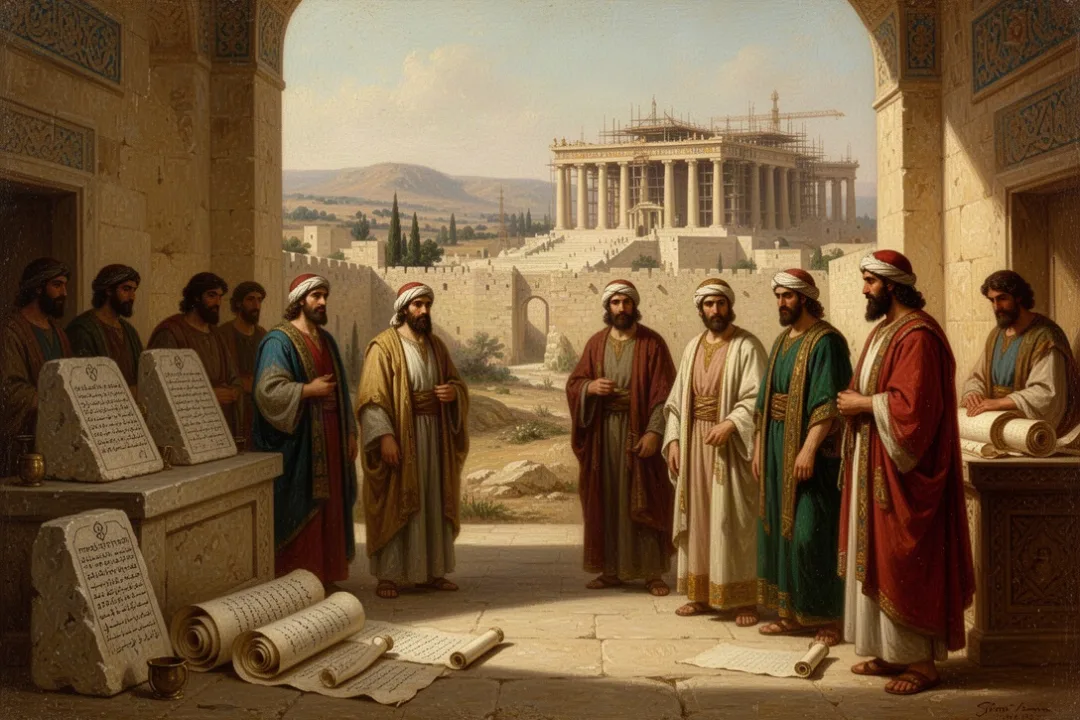
Ezra 4 describes opposition to the rebuilding of Jerusalem. Local opponents send accusations to Persian kings, and the work is eventually stopped. The temple project later resumes during the second year of Darius’s reign, after the prophets Haggai and Zechariah encourage the Jewish community and its leaders.
Ezra 5 says that the governor Tattenai questions the Jews about their authority to rebuild. The Jewish elders explain that the temple had originally been built by the former king of Babylon but was destroyed after the people were taken into exile. They also ask that the Persian archives be searched to confirm the earlier decree.
Darius orders a search of the royal records. According to Ezra 6, the decree of Cyrus is found, and Darius commands that the rebuilding continue. He also orders the provincial authorities to provide support rather than interfere.
This episode shows Darius I functioning as an imperial administrator and guarantor of an earlier policy. He does not begin the temple restoration himself. Instead, he confirms Cyrus’s authorization and enforces it throughout the region.
What Darius did for the temple in Jerusalem
Ezra 6 records several provisions in Darius’s order. The local governor is told not to obstruct the work, and the expenses are to be paid from the royal treasury from the taxes collected in the area. The order also provides animals, wheat, salt, wine, and oil for the sacrifices requested by the priests.
The decree goes beyond practical funding. Darius warns against altering the order and says that anyone who interferes with the temple project will face serious punishment. In the biblical narrative, this official intervention allows the builders to finish the temple during the sixth year of Darius’s reign.
The temple is then dedicated with sacrifices, and the people observe Passover. Ezra 6 presents this as a major turning point:
The rebuilding receives legal protection from the Persian government.
The temple is completed despite earlier opposition and delays.
Worship is restored according to the instructions given to the priests.
The returned community celebrates Passover as a renewed people in Jerusalem.
Darius’s role is significant because the project depends not only on local faithfulness but also on the political decision to uphold the earlier decree. The biblical account shows that an imperial ruler can become an instrument in the preservation of Israel’s worship, even though he does not belong to Israel’s covenant community.
Read Ezra 6 with Ezra 1: Cyrus authorizes the return and rebuilding, while Darius confirms and enforces the earlier order after the records are located. The two kings serve different roles in the same restoration story.
What Haggai says during Darius’s reign
The prophet Haggai dates his messages precisely to the second year of Darius. Haggai 1:1 names Darius and identifies Zerubbabel as governor of Judah and Joshua as high priest. These details place the prophecy in the period when the temple project had stalled.
Haggai challenges the people because they have built and furnished their own houses while the temple remains unfinished. His message is not merely a criticism of architecture. He argues that the community’s priorities have become disordered: the people are attending to private concerns while neglecting the house associated with God’s presence and worship.
The people respond to Haggai’s message. Zerubbabel, Joshua, and the remnant of the people begin work on the temple. Haggai then encourages them not to be afraid and assures them that God is with them.
Later messages address the discouragement of those who remember the former temple. Haggai 2 tells the people to be strong and continue working, even if the new building appears less impressive. The prophet places the work within a larger promise about God’s presence and future action among the nations.
Darius is not the subject of Haggai’s prophecy, but his reign supplies the historical setting. The date reminds readers that the temple restoration took place under Persian authority, during a real period of political transition and local uncertainty.
What Zechariah says during Darius’s reign
Zechariah also dates his early visions to the reign of Darius. Zechariah 1:1 places the opening message in the eighth month of Darius’s second year, and Zechariah 1:7 dates another vision to the eleventh month of that year.
Like Haggai, Zechariah calls the people back to God and supports the rebuilding of the temple. His visions, however, use more symbolic imagery. They include horsemen, horns, craftsmen, a measuring line, a lampstand, olive trees, and other images that communicate God’s concern for Jerusalem and his purposes for the restored community.
Zechariah’s message gives special attention to Zerubbabel and Joshua. Zerubbabel is the governor responsible for the civic leadership of Judah, while Joshua serves as high priest. Zechariah 3 focuses on Joshua’s cleansing and restoration, and Zechariah 4 encourages Zerubbabel by emphasizing that the temple will be completed not by military force or human strength but by God’s Spirit.
The prophet’s references to Darius help anchor these visions in the same historical period as Haggai’s preaching. They also show that the rebuilding project involved more than construction. It raised questions about leadership, holiness, national identity, worship, and the future of Jerusalem.
How Darius differs from Cyrus in the restoration story
Cyrus is the Persian king most directly associated with the initial return from exile. Ezra 1 describes his decree permitting exiled Jews to return to Jerusalem and rebuild the temple. He also returns temple vessels that had been taken from Jerusalem by Nebuchadnezzar.
Darius appears later. When opposition interrupts the work, the community appeals to the Persian administration. Darius’s officials search the archives, find the decree of Cyrus, and instruct the builders to continue.
The roles can be separated this way:
Cyrus opens the way: He authorizes the return and the beginning of the temple restoration.
Opposition causes delay: Local accusations and administrative action halt the work for a period.
Haggai and Zechariah call the people to act: Their preaching renews the community’s commitment.
Darius confirms the legal record: He locates Cyrus’s decree and orders the project to proceed.
The temple is completed: The restored community dedicates it and resumes its worship practices.
This sequence explains why Darius matters even though Cyrus began the process. The later king’s decision protects the community from local interference and makes the earlier authorization effective again.
Is the Darius in Nehemiah a different king?
Nehemiah 12:22 refers to records of priests and Levites being kept during the days of Eliashib, Joiada, Johanan, and Jaddua, “in the reign of Darius the Persian.” Many interpreters identify this Darius as Darius II, who ruled Persia from approximately 423 to 404 BC.
This reference occurs later than the events surrounding Darius I. It is also different from Daniel’s description of Darius the Mede. The wording “Darius the Persian” may distinguish this king from the Median Darius in Daniel.
The identification is not completely certain because the chronology of Nehemiah’s priestly succession and the final form of the priestly records are subjects of scholarly discussion. Some readers have proposed other Persian kings or different ways of understanding the passage. The text itself gives only a brief reference, so it should not be used to create a detailed biography.
What can be said with reasonable confidence is that Nehemiah 12:22 may preserve a later Persian-period reference and therefore should not be casually merged with the Darius of Daniel or the Darius who supported the temple rebuilding in Ezra.
What the name Darius means in the biblical setting
Darius is a Persian royal name commonly understood to carry a meaning related to possessing or maintaining goodness, though the exact linguistic explanation can vary. In the Bible, the name is less important than the titles and settings attached to each ruler.
Daniel calls one figure Darius the Mede. Ezra, Haggai, and Zechariah refer to Darius in connection with Persian imperial rule. Nehemiah says “Darius the Persian.” These descriptions help readers distinguish the figures, even when modern readers do not have enough information to identify every person with certainty.
The biblical writers also use royal reigns to date events. Instead of giving only a modern-style year, they identify the king and the year of his reign. This dating method connects prophecy, administration, and worship to a recognizable political framework.
Lessons from the different biblical accounts
The passages about Darius offer several connected lessons, but they should arise from the actual narratives rather than from assumptions about Persian history.
Faithfulness can remain steady under political pressure. Daniel continues to pray even when a royal decree targets his practice.
Human rulers are not ultimate. Darius can command officials, but he cannot control every consequence of his own law or preserve his kingdom forever.
God’s purposes can continue through changing governments. Babylon falls, Persia rises, and the restoration of worship proceeds through imperial decisions.
Integrity matters in public responsibility. Daniel’s enemies cannot find corruption in his administration, which makes his faithfulness visible in both private devotion and public work.
Restoration requires action. Haggai and Zechariah do not encourage passive hope; they call the community to rebuild, worship, and live as a renewed people.
These themes connect the stories without erasing their differences. Daniel’s deliverance emphasizes trust in God under threat, while Ezra emphasizes the protection of the temple project. Haggai and Zechariah focus on spiritual renewal and the meaning of rebuilding. Nehemiah’s brief reference belongs to a later administrative setting.
How to study references to King Darius in the Bible
When you encounter the name Darius, begin by checking the surrounding passage. The biblical book, royal title, events, and neighboring names usually provide more information than the name alone.
Identify the book: Daniel, Ezra, Haggai, Zechariah, and Nehemiah do not use the name in exactly the same setting.
Read the full chapter: The surrounding events reveal whether Darius is connected with Babylon’s fall, Daniel’s trial, temple rebuilding, prophetic visions, or priestly records.
Observe the title: “Darius the Mede” and “Darius the Persian” are not interchangeable descriptions.
Check the reign year: Haggai and Zechariah place their messages in specific years of Darius’s reign.
Separate certainty from interpretation: The text may clearly describe a king’s role while leaving his exact historical identity debated.
This approach prevents two common mistakes: treating every Darius as one man and assuming that an unresolved identification makes the biblical account meaningless. The passages provide substantial information about the actions and significance of these rulers even where historical reconstruction remains incomplete.
What King Darius means for understanding the Bible
King Darius is not one single biblical character with one single role. The name belongs to a group of Persian-period references that span the fall of Babylon, Daniel’s service in a new administration, the rebuilding of the temple, the preaching of Haggai and Zechariah, and perhaps a later priestly record.
Darius the Mede belongs to Daniel’s account of God’s sovereignty during the collapse of Babylon and Daniel’s deliverance from the lions. Darius I appears in the restoration narrative as the Persian ruler who confirms Cyrus’s decree and protects the rebuilding of the temple. A possible Darius II appears in Nehemiah’s later chronological note.
Reading these passages carefully means respecting both their shared setting and their differences. The name Darius points to changing empires, but the biblical emphasis remains consistent: political power shifts, human decrees have limits, and God’s purposes continue through history.
Frequently asked questions
Was Darius the Mede the same person as Darius I?
Most interpreters distinguish them. Darius I was a well-attested Persian ruler who reigned approximately from 522 to 486 BC, while Darius the Mede appears in Daniel during Babylon’s fall. Several identifications have been proposed for the Median figure, but no explanation has gained universal agreement. The Bible itself gives different titles and contexts for the two rulers.
Did King Darius build the second temple?
Darius I did not begin the temple project; Cyrus authorized the return and rebuilding. When the work was challenged, Darius ordered the Persian archives searched, confirmed Cyrus’s decree, and required local officials to stop interfering. He also authorized financial and material support, allowing the Jewish community to complete and dedicate the temple.
Why was Daniel thrown into the lions’ den?
Officials who envied Daniel persuaded Darius to approve a temporary law restricting prayer to the king. Daniel continued praying to God, so his enemies reported him. Darius regretted signing the decree but felt bound by the law and ordered Daniel into the lions’ den. Daniel was later rescued, and Darius honored Daniel’s God.
Which Darius is mentioned in Haggai and Zechariah?
These prophets refer to Darius during the period when the Jerusalem temple was being rebuilt. The king is generally identified as Darius I of Persia, who ruled from approximately 522 to 486 BC. Haggai and Zechariah date their messages by his reign and address Zerubbabel, Joshua, and the returned Jewish community.










Leave a Reply