Lot's Daughters: A Complex Female Figure in the Bible
Lot's Daughters: A Complex Female Figure in the Bible
Old Testament Women | Deuterocanonical Women | Symbolic Figures
Lot's Daughters: A Complex Female Figure in the Bible
📅 Ancient Near Eastern period, approximately 18th to 16th century BCE · 📜 Her name is not explicitly given in the Bible; however, 'Daughters of Lot' are identified by their relationship rather than a personal name, symbolizing their collective role.
Lot's DaughtersGenesiswomen in the Biblemoral lessonssalvation history
Genesis 19:36-38 (NIV): 'So both of Lot’s daughters became pregnant by their father. The firstborn gave birth to a son and named him Moab; he is the father of the Moabites of today. The younger also had a son and she named him Ben-Ammi; he is the father of the Ammonites of today.'— Genesis 19:36-38
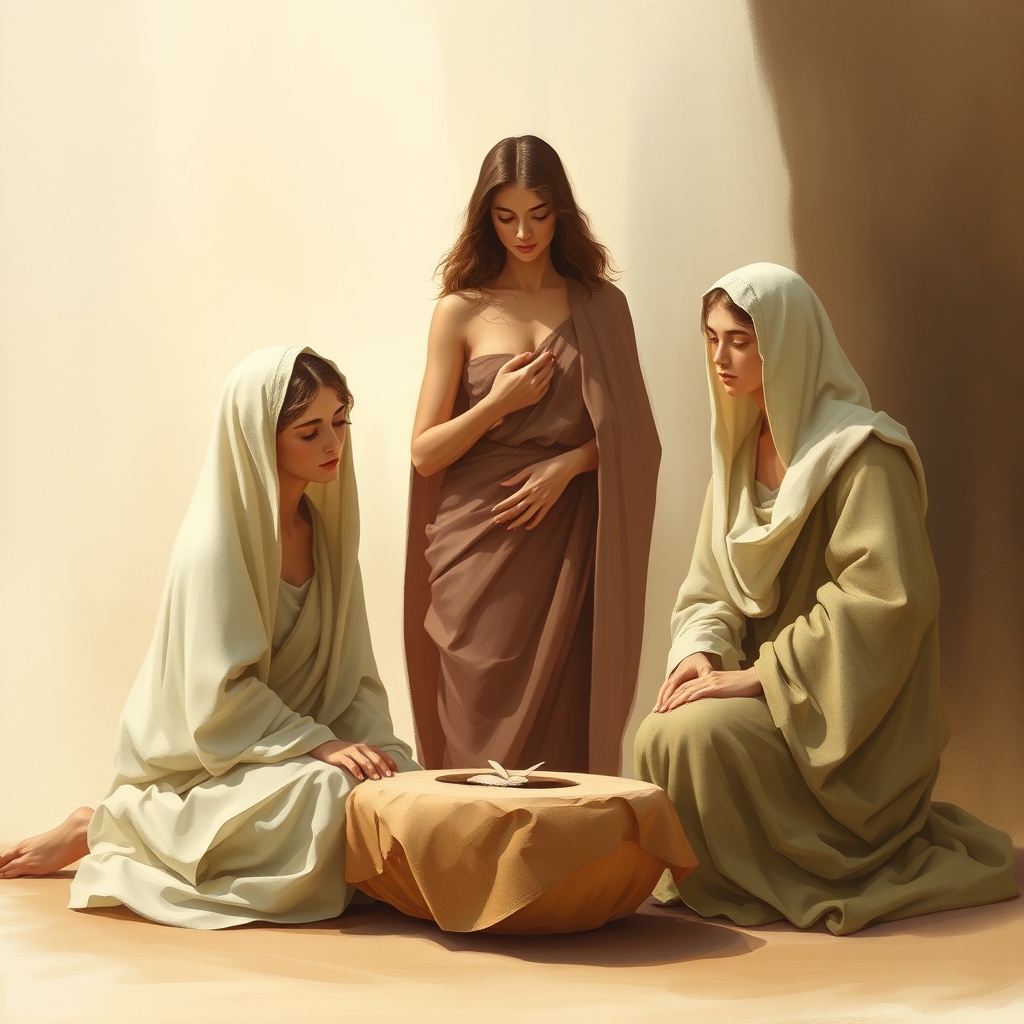
Lot's Daughters are notable for their controversial decision to preserve their family line through unconventional means after the destruction of Sodom and Gomorrah. Fearing extinction, they intentionally intoxicate their father, Lot, to conceive children—Moab and Ben-Ammi—who become ancestors of the Moabites and Ammonites. Their story raises complex questions about moral boundaries, survival, and divine justice. While their actions are morally questionable, some interpret their intent as a desperate effort to ensure their family’s continuation. Their narrative underscores themes of human frailty, societal collapse, and the unintended consequences of survival instincts in a fallen world. Marked by moral ambiguity, their story offers insights into the complexities faced by women amidst catastrophic events and divine judgment.
🏛️ Cultural & Historical Context
In ancient Near Eastern societies, women’s roles were primarily centered around family and procreation. During times of crisis or chaos, women often had limited options but were crucial in maintaining lineage. The story of Lot's Daughters reflects a cultural backdrop where survival sometimes led to morally complex decisions. Their actions challenge modern notions of morality but also highlight the desperation faced by women during societal collapse. Such stories reveal the tensions between divine law, survival instincts, and societal norms of the time, emphasizing the nuanced roles women played amidst upheaval and changing moral landscapes.
👨👩👧 Family Connections
Daughters of Lot; their mother is not named; Lot is their father; they have no mentioned siblings or spouses in the biblical account.
The story of Lot's Daughters underscores themes of human vulnerability, divine justice, and the consequences of moral compromise. They serve as a reminder that divine grace interacts with human failure, illustrating how even flawed decisions can shape salvation history—through their sons, Moab and Ben-Ammi, the story links to the broader narrative of God's ongoing relationship with Israel and its neighbors. Their story, therefore, provokes reflection on divine sovereignty, mercy, and the complex morality faced in a fallen world. It challenges believers to consider God's permissive will in human brokenness and the importance of repentance and faithfulness in salvation history.
📖 Lessons for Today
📖 Lesson 1
Desperate circumstances can force impossible choices; but God's grace can still work through human error to fulfill His purposes.
Lot's Daughters contrast with women like Sarah or Ruth, who exemplify faith and obedience. While figures like Sarah demonstrate trust in God's promise, Lot's Daughters reveal the desperate measures taken in crisis, highlighting the varying responses of women in biblical narratives. Their story adds complexity to understanding women's roles and moral choices, illustrating that circumstances influence decisions and divine purposes can emerge from flawed human actions.
📜 Scripture References
Reference
Genesis 19:30-38
❓ Frequently Asked Questions
Why did Lot's Daughters decide to seduce their father?
They believed all human life had been destroyed in Sodom's destruction and feared extinction; their actions were a desperate attempt to preserve their family line (Genesis 19:30-38).
Are Lot's Daughters condemned for their actions?
The biblical text does not explicitly condemn them but presents their story as morally complex, reflecting human desperation during times of chaos.
What is the significance of their sons, Moab and Ben-Ammi?
Their sons become forefathers of the Moabites and Ammonites, peoples often in conflict with Israel, illustrating how human decisions can have lasting historical consequences.
✨ Did You Know?
The story of Lot's Daughters is one of the few biblical stories involving necrophilia and incest, reflecting the dire circumstances they faced. Linguistically, the names Moab and Ben-Ammi mean 'from my father' and 'son of my kin,' emphasizing the complex and taboo origins of their descendants.







Leave a Reply