What the Lutheran view of baptism is: a covenant act rooted in Scripture
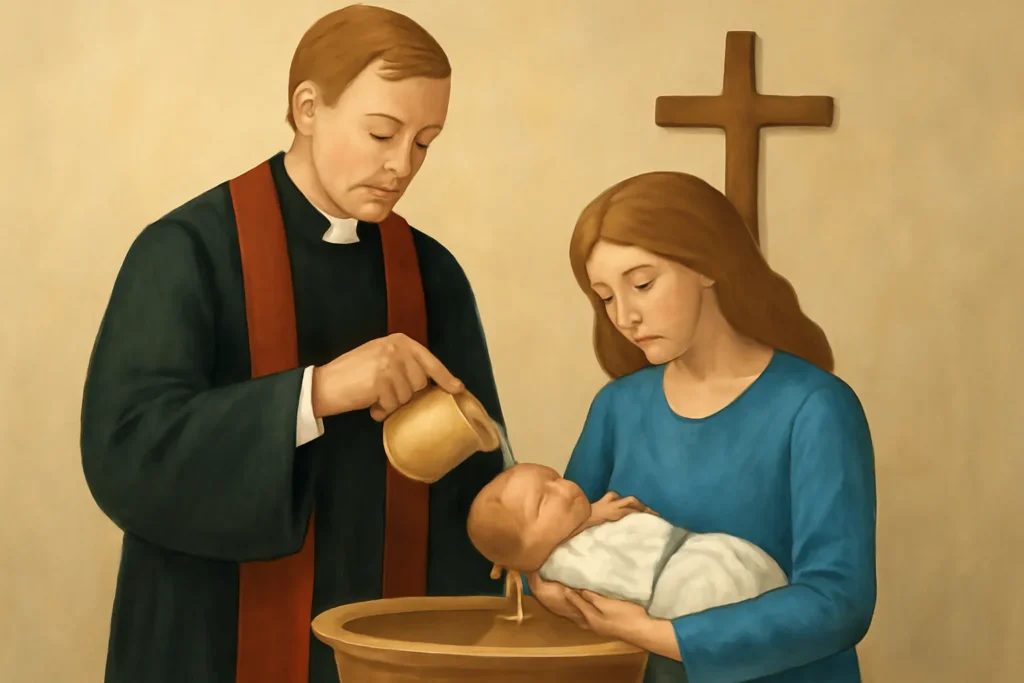
In Lutheran theology, baptism is far more than a symbolic ritual or a personal declaration of faith. It represents God's gracious gift—a sacrament that communicates divine grace, unites the recipient with Christ, and marks the believer as a full member of the church community. The Lutheran understanding rests on a foundational principle: water combined with God's Word delivers the very promises that God has attached to this sacrament. In other words, baptism functions as a means of grace that Christ himself instituted, a channel through which the Holy Spirit actively works to create faith, grant forgiveness, and bestow the gift of new life.
This conviction can be expressed through several interconnected theological claims. First, baptism serves as both an instructional act and a seal of the gospel message. Second, it is administered to both infants and adults, reflecting a broad understanding of God's covenant promise. Third—and this is crucial—the power of baptism does not depend solely on the recipient's announced faith at the moment of the rite, but rather on God's promise that is bound to the water and the Word. Across all Lutheran confessions, these ideas weave together into a coherent theological vision: baptism is never merely a dry ceremony, but rather a constellation of divine promises attached to water invoked in the name of the Triune God.
The following sections explore these claims in detail, offering both lay readers and theology students a comprehensive understanding of the Lutheran view of baptism and how it continues to shape Christian life and practice.
Scriptural foundations and the language of the Lutheran stance
Lutherans anchor their understanding of baptism firmly in biblical witness, drawing especially from passages where Jesus commands the sacrament and the apostles explain its theological significance. The most foundational reference is the Great Commission found in Matthew 28:19–20, where Christ instructs his disciples to baptize all nations in the name of the Father, and of the Son, and of the Holy Spirit. This triune formula is not incidental to Lutheran thinking—it establishes that baptism is embedded within the fullness of God's self-revelation and the gospel's core message. When a person is baptized in these three names, they are claimed by the entire Trinity, not merely symbolically but as a real incorporation into God's covenant people.
Another passage that holds particular weight in Lutheran interpretation is Titus 3:5-6, which speaks to the very mechanics of what baptism accomplishes. The apostle Paul writes that God "saved us, not because of righteous things we had done, but because of his mercy. He saved us through the washing of rebirth and renewal by the Holy Spirit." Notice the language here: salvation arrives through the washing—the baptismal water is not a mere memorial of something that happened elsewhere, but an active vehicle of divine grace. For Lutherans, this passage confirms that baptism is a genuine means through which God's saving work reaches us, not a human work or expression of faith, but God's action toward us.
Additional scriptural anchors appear throughout the New Testament. Romans 6:3-4 describes being baptized into Christ's death and resurrection, suggesting that baptism inaugurates a radical new identity and life orientation. First Peter 3:21 affirms that "baptism now saves you"—a statement that Lutheran theology takes with full seriousness, understanding that God really does work salvation through the sacrament. First Corinthians 12:13 emphasizes that "we were all baptized by one Spirit into one body," underscoring baptism's role in creating the church as a unified community.
What ties these passages together in Lutheran thought is the conviction that baptism is God's action, not primarily our action or decision. The water and the Word accomplish something real because God promises it, because Christ instituted it, and because the Holy Spirit activates it. This biblical foundation explains why Lutherans resist reducing baptism to mere symbolism or to a human gesture of faith, and why they view it as a sacrament—a visible word, a sign and seal of God's grace.
The efficacy of baptism: how it works and what it delivers
A question naturally arises: if baptism is truly a means of grace, what exactly does it accomplish, and how does that accomplishment happen? Lutheran theology offers a clear, if nuanced, answer grounded in both Scripture and the church's lived experience.
First, baptism brings forgiveness of sins. The waters of baptism wash away the guilt and stain of original sin and any actual sins committed before baptism. This is not a figure of speech in Lutheran understanding—it is a real event. Just as water cleanses the body from physical dirt, the baptismal waters, joined with God's Word, cleanse the soul from sin. An infant baptized into Christ is born anew, freed from the inherited condemnation that would otherwise separate them from God.
Second, baptism creates or strengthens faith. While Lutherans acknowledge that baptism is not dependent on the recipient's faith for its validity, they equally affirm that the Holy Spirit uses baptism to awaken, form, or deepen faith. For infants, who cannot yet believe on their own, baptism plants the seed of faith and opens the pathway for the Spirit to nurture that faith through the child's growth. For adults, baptism is often the culmination of a journey toward faith, sealing and confirming the faith that has already begun to germinate.
Third, baptism incorporates the person into the body of Christ, the church. To be baptized is to be claimed as a member of God's covenant community. This is not a private transaction between the soul and God; it is a public, communal event that establishes the baptized person's membership in the church. With that membership come both privileges (access to the church's worship, teaching, and sacraments) and responsibilities (a call to grow in faith, serve others, and live according to Christ's teaching).
How does baptism accomplish all this? Lutheran confessions point to the combination of three essential elements: water, God's Word, and divine promise. The water itself has no power; it is ordinary H₂O. But when God's Word—the triune formula and the promises of Scripture—are spoken over the water and the person is immersed or sprinkled with it, the water becomes a vehicle of grace. It is not magic or superstition; rather, it is God's choosing to bind his promise to a physical element, making the invisible grace visible and tangible. The efficacy rests entirely on God's promise, not on the worthiness of the one administering baptism, the faith of the recipient (though faith is not irrelevant), or the precise method used.
Infant baptism in Lutheran understanding
One of the most distinctive features of Lutheran baptismal theology is its firm commitment to infant baptism—the practice of baptizing children of believing parents, even before they can consciously confess faith. This practice flows directly from Lutheran convictions about how grace works.
If baptism is God's action and gift rather than human achievement, then there is no theological reason to withhold it from infants. The infant cannot yet speak words of faith, but that is precisely the point: baptism does not depend on the child's performance or understanding. God's promise stands regardless. Lutherans note that in the Old Testament, covenant membership (through circumcision) was administered to male infants as a matter of course, without waiting for personal faith. The New Testament practices baptism without explicit prohibition of infants, and the New Testament pattern of baptizing entire households (see Acts 16:33-34, where the Philippian jailer and his household are baptized) suggests that infants were included.
In Lutheran thought, baptism is the Christian circumcision, marking entrance into God's covenant people. Parents who bring their children for baptism are acting as covenant representatives, just as ancient Israel's parents represented their children in the covenant. The church, too, plays a role: the congregation promises to support the baptized child's growth in faith through instruction, example, and prayer. The child later confirms this baptism through confirmation (or profession of faith), when they can personally embrace the promises made on their behalf.
This understanding addresses a common concern: what happens if an infant grows up and rejects faith? Lutherans teach that baptism is real and permanent—it cannot be "undone"—but it does not force faith or guarantee salvation if the baptized person persistently refuses to believe and repent. Baptism is God's offer of grace; the individual must, at some point, receive that grace by faith. However, the objective reality of baptism—the promise God made over that child—remains true and available throughout their life.
Baptism and ongoing Christian life
Baptism is not a one-time event consigned to infancy or conversion and then forgotten. In Lutheran theology, baptism shapes and sustains the entire Christian life.
Daily, believers are called to remember and return to their baptism. Martin Luther himself emphasized this: each day, the Christian may recall the waters of baptism and the promises sealed there—the death of sin, the resurrection to new life, the claim of Christ, the indwelling of the Holy Spirit. This "return to baptism" is not a physical re-entry into baptismal water, but a spiritual re-orientation toward the grace received there. When temptation strikes, when guilt arises, when faith wavers, the baptized person can appeal to the objective reality of baptism: I am baptized. God has claimed me. I belong to Christ.
This is one reason why Lutheran piety has historically emphasized the sign of the cross at baptism and the practice of making the sign of the cross with holy water as a daily reminder. The sign is not superstitious; it is a mnemonic aid that calls to mind the baptismal covenant and God's promises. In times of struggle, the baptized person can touch their forehead, lips, and heart with the sign of the cross and remember: you are marked with the sign of Christ forever.
Moreover, baptism establishes the context for all other Christian practice. Confirmation, when youth publicly affirm their baptism, flows from it. Holy Communion is a sacrament for the baptized. Prayer, Bible study, worship, service, and moral living all unfold within the framework that baptism establishes—that we belong to Christ, that we have died to sin and risen to new life, that we are part of God's covenant people.
Lutheran baptism in conversation with other traditions
To clarify the Lutheran position, it is helpful to note where it differs from other Christian approaches to baptism.
Compared to reformed traditions (such as some Presbyterian or congregationalist churches), Lutherans affirm a stronger understanding of baptism's efficacy. Where some reformed theologians view baptism primarily as a sign and seal of faith that the believer already possesses, Lutherans see baptism as an active means through which God conveys grace and creates faith. This difference becomes especially clear in the question of infant baptism and whether grace is imparted through the sacrament or merely signified by it.
Compared to many evangelical and fundamentalist churches, which practice believer's baptism (baptism only after a conscious personal faith decision), Lutherans maintain that baptism is not contingent on the recipient's prior faith. This does not mean Lutheran theology devalues faith; rather, it holds that baptism and faith are distinct (though related) gifts of the Holy Spirit. Baptism can precede faith, plant the seeds of faith, and sustain faith across a lifetime.
Compared to Roman Catholicism, Lutheran and Catholic theology share a strong affirmation that baptism is a means of grace and that it imparts real spiritual benefit. However, Lutherans understand the effects and scope of baptism somewhat differently and reject certain Catholic developments (such as the doctrine of purgatory) that affect how baptism's cleansing of sin is understood.
Conclusion: baptism as the gift that keeps giving
The Lutheran view of baptism can be summarized as follows: baptism is God's covenant act, not a human achievement. Rooted in Scripture and Christ's own command, it is a sacrament—a visible sign and seal of God's promises. Through the combination of water, God's Word, and divine promise, baptism conveys grace, forgives sins, awakens or strengthens faith, and incorporates the baptized into the body of Christ. It is effective because God promises it, not because of the worthiness of those involved. It is available to all—infants and adults alike—because it rests on God's generosity, not human readiness. And it shapes not merely a moment but a lifetime: daily, the baptized person can return to those waters, recall those promises, and draw strength from the covenant God established there.
In this way, baptism is far from a dry ceremony or a quaint tradition. It is a living, dynamic reality—the beginning and sustaining foundation of Christian identity and hope.











Leave a Reply