Baptism and Salvation Debate: Key Theologies and Perspectives
Baptism is one of the oldest and most debated rites in Christian history, and it sits at the crossroads of theology, ecclesiology, and soteriology. At stake in the conversation are questions about what baptism communicates about salvation, who should be baptized and when, what physical actions convey spiritual grace, and how faith, grace, and works interact in the life of a believer. This article surveys the major strands of thought across traditions, highlighting how each understanding interprets the relationship between baptism and salvation, and how those interpretations shape worship, church life, and personal discipleship.
Foundations of the debate: baptism’s meaning and salvation’s means
To approach the subject with clarity, it helps to distinguish two overlapping questions: the intrinsic nature of baptism (what the rite itself communicates and accomplishes) and the nature of salvation (how one receives God’s grace and is brought into eternal life). Across traditions, three broad questions recur:
Is baptism merely a public profession of faith, or a means by which grace is imparted?
Should infants be baptized, or only those who consciously profess faith?
What is the relation between faith, grace, and works in the process of salvation?
Historically, two poles have often been emphasized. On one side, some traditions hold that baptism is a means of grace through which God communicates spiritual regeneration and cleansing. On the other side, some traditions insist that salvation comes by faith alone, with baptism serving as a powerful sign and command, but not a prerequisite for eternal life. Between these extremes lie varied positions that treat baptism as a sign, seal, or instrument of grace in different ways and with differing implications for assurance, ecclesial membership, and the life of faith.
The Catholic and Orthodox perspectives: baptism as central to salvation
The Catholic sacramental view: baptism as the gateway
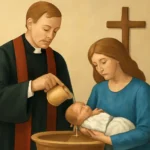
Within the Catholic Church, baptism is understood as a sacrament and a means of grace by which one is incorporated into Christ and into the visible Church. The catechetical formula often summarized as "baptism saves" reflects a conviction that the sacrament conveys divine grace ex opere operato, especially when the proper form, matter, and intention are present. In Catholic theology, the usual mode for infant baptism is pouring or immersion with water, accompanied by the invocations of the Trinity and the reception of the Spirit. The implications are:
Infant baptism is permitted and encouraged, because the grace of God precedes personal decision and is available to the child as part of the corporate life of the Church.
There is a belief in original sin and the need for cleansing from that condition through the grace conferred in baptism.
The sacramental process often includes subsequent steps—confirmation (in many rites)—that mature the recipient in the life of faith and participation in the church’s mission.
In Catholic pedagogy, salvation is not simply a one-time verdict; it is a living process that begins in baptism and continues through the life of faith, the sacraments, and ongoing conversion. Baptism is thus both the admission and the sign of the new life in Christ, shaping one’s identity within the Church and the people of God.
The Orthodox understanding: baptism as synergistic transformation and theosis
The Eastern Orthodox tradition emphasizes baptism as the start of a transformative journey rather than a solitary legal declaration. In Orthodox theology, baptism is part of a three-stage initiation into the life of the Church, typically followed by chrismation (anointing with oil) and the Eucharist. The Orthodox insist that salvation is a process of theosis (divinization), wherein humans are progressively united with God through grace working in cooperation with human freedom. Key features include:
Baptism is typically by radical immersion (often a triple immersion) and is understood as the actual washing away of sin and the incorporation into Christ’s death and resurrection.
The rite finds its power in the liturgical community and in the Holy Spirit’s ongoing work within the baptized person.
Infant baptism is normative in the Orthodox Church, with the church community and family supporting the child’s growth in faith as the person matures.
In Orthodox thought, baptism is not a solitary moment; it is the beginning of a lifelong journey shaped by the practices of the Church, prayer, confession, and participation in the mysteries (sacraments). The emphasis is less on whether baptism alone regenerates, and more on how baptism situates a person within the divine economy of salvation and the communion of saints.
Protestant and Reformation reflections: varied routes to grace and faith
During the Reformation, diverse groups reinterpreted baptism through the lens of Scripture, often challenging or refining existing Catholic understandings. Three dominant trajectories emerged: Lutheran, Reformed, and Anabaptist/Baptist traditions, each with distinctive claims about baptism, salvation, and faith.
Lutheran perspective: baptism as grace connected to justification
The Lutheran tradition affirms baptism as a powerful means of grace through which God imparts faith and forgiveness. Luther argued that faith receives what baptism accomplishes, meaning that individuals are declared righteous precisely because God works through the sacrament. Important points include:
Infant baptism is valid and normative, based on God’s faithfulness and the promise to believers and their children.
Justification remains by faith alone (sola fide), but baptism is an instrument by which God creates and sustains faith in the baptized.
Aside from insight into repentance and forgiveness, baptism also marks entrance into the church, the community of believers who live out their new life in Christ.
In everyday practice, Lutheran communities celebrate infant baptism and emphasize catechesis, communal nurture, and the assurance that God’s promises are secure in the baptismal life.
Reformed and covenantal theology: baptism as sign and seal
In Reformed and Presbyterian contexts, baptism is understood through a covenantal lens. It is viewed as the sign and seal of God’s gracious covenant, paralleling the Old Testament circumcision as a sign of inclusion within God’s people. Important ideas include:
Infant baptism is common, grounded in the belief that children are within the covenant community and thereby eligible for the sign of initiation.
Baptism conveys grace, but not in a magical sense; it is empowered by the Holy Spirit and should be followed by personal faith and perseverance in grace.
The reformers emphasize the authority of Scripture and the centrality of faith, while acknowledging that God’s promises are enacted through the covenant sign.
In practice, Reformed churches often stress the continuity between baptism and the ongoing life of faith, with catechesis and the means of grace (Word, sacrament, prayer) forming a holistic path for the believer and the household.
Baptist and Anabaptist emphases: believer’s baptism and the centrality of faith
Both the Baptist and Anabaptist movements highlighted a return to New Testament practice and a skepticism about infant baptism as the entry point to church life. Core features include:
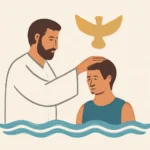
Believer’s baptism—only those who can consciously confess faith are baptized; baptism follows a personal profession of faith.
Immersion as a typical mode—symbolizing death to sin and resurrection to new life, though some groups practice pouring or sprinkling in certain contexts.
Baptism as an ordinance, not a sacrament: it communicates obedience and allegiance to Christ, but it does not by itself confer salvation; faith in Christ is the decisive factor for salvation.
In this view, salvation is received through a personal trust in Christ, and baptism is a powerful public declaration of that inward belief. Communities with this emphasis often expect a conversion experience prior to baptism and maintain a strong emphasis on local church discipline and accountability.
Pentecostal and Charismatic voices: baptism, Spirit, and ongoing grace
Baptism in water and baptism in the Spirit
Within Pentecostal and Charismatic circles, there is a distinctive emphasis on a sequence in which baptism in water is complemented or followed by a separate, transformative experience often described as baptism in the Holy Spirit. This trajectory is seen as complementary to, but not always identical with, salvation. Notable themes include:
Salvation is united with personal repentance and faith, but Spirit-empowerment becomes a crucial catalyst for holy living and dynamic service.
Water baptism remains an important public confession, obedience to Christ, and corporate identification with the body of believers.
Spirit baptism is viewed as empowering gifts for mission, proclamation, and spiritual fruit, with ongoing manifestations such as prophecy and tongues in some traditions.
For many Pentecostals, the proper order is faith, repentance, baptism in water, and then Spirit-empowered living as the Christian is filled with grace to witness and serve.
Other voices and contemporary ecumenical conversations
Beyond the classic streams, there are a range of Christian groups with distinct takes on baptism and salvation. While their exact soteriological claims vary, several recurring themes arise in dialogue and practice:
Some churches emphasize covenant inclusion, arguing that baptism is a sign of inclusion within God’s people, even if personal faith is not fully explicit at the time of baptism.
Others stress the personal, conscious profession of faith, insisting that individuals must respond to the Gospel with a repentant heart before baptism is meaningful.
There is growing ecumenical interest in harmonizing practice with baptismal formation—preparation, instruction, and ongoing catechesis as essential components of the baptismal journey.
Contemporary discussions often address the role of infant dedication ceremonies, the inclusion of infants in God’s covenant, and the appropriate expectations for parental and church responsibilities in nurturing faith.
In ecumenical dialogues, theologians frequently explore how different baptisms relate to justification, sanctification, and eternal life, seeking to identify shared convictions while acknowledging legitimate differences about how grace is communicated and sustained in the life of a believer.
Baptism’s role in salvation: how the debate plays out in practice
Across traditions, the practical implications of the baptism-salvation debate influence church life in concrete ways. Here are several representative outcomes that reflect the diversity of positions:
Church membership and catechesis: Some traditions require baptism as the entry into church membership or as part of a larger process of instruction and confession of faith. Others allow a more symbolic or optional approach, tying baptism to adult faith commitments without making it the gate for community belonging.
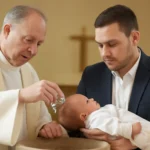
Infant care and family ministry: In churches that practice infant baptism, there is often a strong emphasis on family discipleship, ongoing nurture, and the belief that God’s promises extend to the child even before personal faith is articulated.
Respect for conscience and agency: In traditions that emphasize believer’s baptism, there is a heightened regard for personal decision and the autonomy of faith, which can influence expectations about baptismal readiness and public testimony.
Creedal and liturgical rhythm: The liturgical calendar, confirmation, and catechetical instruction can reflect the belief that baptism initiates a lifelong journey of growth, repentance, and worship rather than serving as a singular, unrepeatable event.
Key terms and concepts to understand the debate
To engage this topic well, certain terms deserve emphasis. Here are definitions and contrasts that frequently surface in discourse around baptism and salvation:
Baptismal regeneration: A view that baptism itself conveys or initiates regeneration and salvific grace. This phrase is most associated with traditional Catholic and some Orthodox reflections, though it is debated within those traditions as well.
Means of grace: A category used in Catholic, Lutheran, and Reformed theology to describe practices (like baptism and the Eucharist) through which God, by the Spirit, communicates grace to believers.
Justification by faith: The belief that one is declared righteous before God on the basis of faith in Christ, not by works alone. Debates about how baptism relates to justification have varied historically by tradition.
Sign and seal: A phrase used in Reformed theology to describe baptism as a visible sign of the covenant and a seal verifying God’s promises to the baptized person.
Faith and works: A longstanding discussion about how human response (faith and obedience) interacts with God’s grace in salvation. Baptism enters this discourse as a tangible act of obedience, belonging to the life of faith.
Infant baptism vs believer’s baptism: The debate about whether infants may and should be baptized and whether baptism should be restricted to those who can consciously confess faith.
Historical milestones that shaped the discourse
Several historical developments significantly shaped how Christians think about the connection between baptism and salvation:
Early Church practice: Baptism was commonly administered to those who professed faith and often included infant baptism in various communities, with catechetical preparation for new converts.
Patristic elaborations: Early theologians debated the degree to which baptism conveyed grace, the role of the Holy Spirit, and the necessity of faith for receiving the benefits of baptism.
Medieval and Tridentine refinements: Catholic theologians and councils in the medieval era and after the Reformation (notably the Council of Trent) clarified the sacramental framework and the relation between faith, grace, and baptism.
Reformation rediscoveries: Luther, Calvin, Zwingli, and Anabaptist voices emphasized Scripture, the primacy of faith, and the variety of baptismal practice, leading to enduring differences among Protestant traditions.
Modern debates and ecumenism: Contemporary dialogues explore the diversity of baptismal theology, with an eye toward shared mission, unity, and respectful disagreement on matters of doctrine and practice.
Choosing a framework for today: implications for individuals and churches
When a community or a person wrestles with baptism and salvation, several practical questions guide decisions and practices:
What is the church’s witness? How does baptism communicate the gospel to the surrounding world, and how does it witness to God’s faithfulness to his promises?
What about infants? Should families pursue infant baptism, parental vows, or dedicated infant rites, and how does this relate to later personal profession of faith?
What is expected of new believers? Is baptism a prerequisite for church membership, or a powerful sign of a decision already made to follow Christ?
How should baptism shape discipleship? How are catechesis, confirmation, and spiritual formation integrated with baptism to foster lifelong growth in grace?
How do we handle exceptions and diversity? In multicultural or interdenominational contexts, how do churches honor honest differences while maintaining doctrinal integrity?
In practical terms, many churches adopt a hybrid approach that honors historical convictions while prioritizing pastoral sensitivity. For example, a church might practice infant baptism within a covenantal framework while offering robust adult baptism classes that foreground personal faith and life transformation. Others maintain believer’s baptism as the primary mode, with careful catechesis and community support that still welcomes children into the life of faith through later steps like confirmation and catechetical instruction. The overarching aim is to present a coherent gospel narrative where baptism serves as a meaningful sign of God’s action in a person’s life and the church’s life together.
Common questions people ask about baptism and salvation
The short answer in most traditions is nuanced. For many Catholic, Orthodox, Lutheran, and Reformed communities, baptism is not merely symbolic but a real conveyance of grace that works together with faith. For Baptist and Anabaptist circles, baptism is a meaningful public testimony of faith and obedience—signifying what God has already done in a person’s heart, but not itself producing salvation. Across the spectrum, the consensus is that trust in Christ is essential, and baptism is connected to that trust in ways that align with each tradition’s anthropology of sin, grace, and human response.
Infant baptism remains a live point of debate. Proponents of infant baptism argue that infants belong to the covenant community and can receive God’s grace in anticipation of a later profession of faith. Opponents insist that baptism should follow a conscious personal decision to believe in Christ. Many churches navigate this by combining a practice of infant baptism with a robust program of parents’ and sponsors’ vows, followed by later catechesis and confirmation for the young person when they can affirm their own faith.
Is immersion required?
Among some traditions, immersion is preferred or required as the mode of baptism (for example, many Baptists and some Pentecostal groups). Others permit pouring or even sprinkling, particularly in cases of infants, disability, or logistical constraints. The symbolic meaning—identifying with Christ’s death, burial, and resurrection—remains the central motif in most discussions, even when the exact physical method varies.
How do different traditions discuss faith and works?
The interplay between faith and works is central to the debate. Most traditions today affirm that faith is the decisive factor in salvation, but they understand faith in relation to baptism as a crucial fruit of faith—an obedient response to God’s call, a public commitment, and a marker of belonging to Christ’s body. Some traditions emphasize that grace is received through baptism in a manner that deepens faith, while others insist that grace precedes baptism and that baptism does not function as a merit or a guarantee of salvation on its own.
Putting it all together: toward an informed, gracious dialogue
Readers are encouraged to explore the baptism and salvation conversation with humility and curiosity. The rich diversity of Christian thought on this topic reflects a shared conviction about God’s grace and a common desire to honor Christ and his atoning work. Key takeaways include:
Respect for scripture as the primary authority shaping beliefs about baptism and salvation. Different communities read biblical passages through distinct theological lenses, leading to varied conclusions about the efficacy and meaning of baptism.
Recognition of tradition and historical practice as a guide to what Christian communities have historically believed and practiced, while not suppressing reform or critique when necessary.
Pastoral care and the wellbeing of believers and their families, including vulnerable infants and new converts, should remain a central concern as churches navigate baptismal practices.
Ecclesial unity and mission as shared goals. Despite doctrinal differences, many Christian communities emphasize the need to bear witness to the Gospel through shared acts of love, service, and grace-filled community life.
As churches continue to read Scripture, reflect on tradition, and respond to the movement of the Holy Spirit, the debate over baptism and salvation remains vibrant. Whether viewed as a means of grace, a sign and seal, or primarily a public confession of faith, baptism continues to shape how Christians live out their identity in Christ and participate in the mission of the Church in the world today.









Leave a Reply