Persecuted Scripture: A Comprehensive Guide to Suppressed Sacred Texts and Their Impact on Faith
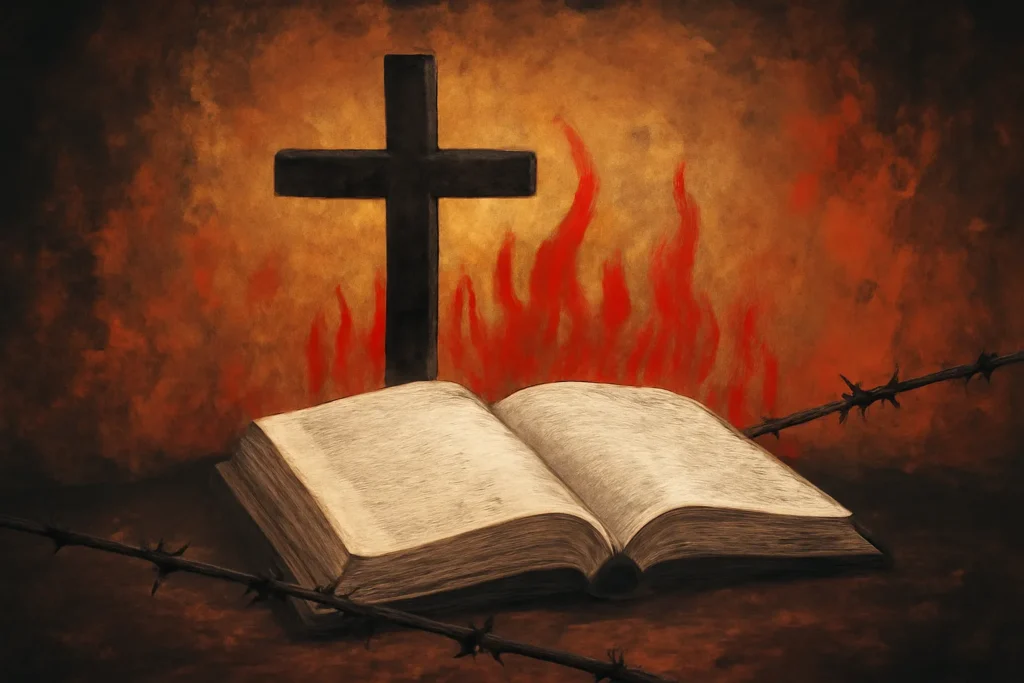
The landscape of sacred literature is not a single, uninterrupted archive. Across centuries and cultures, many writings have faced suppression, censorship, or deliberate marginalization by authorities who sought to define what counts as orthodoxy and what does not. This article offers a thorough examination of persecuted scripture—texts that were marginalized, banned, or kept from broader circulation—and explores how their suppression shaped belief, practice, and identity within faith communities. By tracing patterns, examining notable examples, and considering modern responses, we can gain a deeper understanding of how sacred words travel, resist, and endure.
What counts as persecuted scripture?
The term persecuted scripture encompasses a range of situations in which sacred writings were hindered from public distribution or official recognition. Key dimensions include:
Canonical debates: Writings disputed or excluded from the authoritative canon by religious authorities.
Suppression by political power: Texts banned or confiscated due to their potential challenge to political or doctrinal authority.
Regional or sectarian restrictions: Writings circulated within particular communities but remained inaccessible to outsiders or suppressed in the wider church or state apparatus.
Aesthetic or doctrinal politesse: Texts associated with controversial interpretations—such as Gnostic, matriarchal, or apocalyptic voices—being marginalized to preserve a favored reading of faith.
Throughout history, the fate of a manuscript often reflects broader tensions—between innovation and tradition, between local practice and centralized authority, and between the needs of communities for spiritual nourishment and the demands of political unity. The study of persecuted scripture invites readers to consider not only the content of a text but also the social and institutional forces that determine whose voices are heard and whose are silenced.
While the specifics vary across traditions and eras, several recurring patterns emerge in the suppression of sacred texts:
Canon formation and consolidation often involved debate, pressure, and reclassification of texts as heretical or inappropriate for liturgy.
Political power frequently used religious authority to control literature that could threaten state-approved doctrine or social order.
Regional variations mean that a document considered sacred in one community might be dismissed or banned in another, leading to a patchwork of canons and apocrypha.
Textual transmission challenges—scribal practices, manuscript loss, and deliberate redaction—complicate the history of suppressed scriptures and may blur lines between legitimate copying and erasure.
These patterns helped shape the fate of many writings that scholars today classify as apocryphal, pseudepigraphal, gnostic, or non-canonical. The term “persecuted” itself can be applied to texts that were physically hidden, restricted, or intellectually sidelined, even if not always subjected to direct persecution in the most aggressive sense.
To understand the scope of suppressed scripture, it helps to categorize by tradition and by the nature of suppression. The following sections highlight well-known categories and representative examples, along with their impact on faith communities.
Gnostic gospels and related writings
During late antiquity, a diverse stream of Christian thought coexisted with a dominant orthodox narrative. Gnostic gospels and accompanying works often presented cosmologies, Christologies, and moral visions at odds with emerging church consensus. These texts were variously preserved in scrolls and codices and later condemned as heretical by church authorities. Their suppression was both theological and institutional, reinforcing a canonical framework while marginalizing alternative interpretive streams.
Representative examples include the Gospel of Thomas (a sayings gospel that emphasizes secret knowledge), the Gospel of Mary (which highlights Mary Magdalene and the role of women in leadership), and the Gospel of Judas (which recasts Judas Iscariot’s role in a controversial light). The suppression of these texts did not end their influence; instead, it shaped a broader interest in early Christian diversity, fueling modern scholarship and debates about what constitutes “orthodox” belief.
Impact on faith communities:
Encouraged a broader sense of religious possibility in early Christian contexts, even as authorities sought to restrict dissent.
Fostered later curiosity about women’s leadership and perspectives within early Christianity.
Inspired modern readers to reexamine traditional narratives with fresh questions about authority, authority structures, and the nature of revelation.
Apocrypha, pseudepigrapha, and early Christian apocalyptic literature
Beyond the Gnostic corpus, many apocryphal acts and epistles circulated broadly in antiquity, often attributed to famous biblical figures but written by unknown authors. These texts could be contextualized for devotional use, but were often rejected from the canonical Bible. Some apocryphal writings offered vivid visions of the end times, heavenly journeys, or apostolic adventures that did not align with the canonical narratives.
Examples include narrative expansions on the lives of apostles, infancy gospels that elaborate on Jesus’ early years, and apocalyptic writings that described final judgments. Suppression of these works sometimes came through formal canon lists, sometimes through ecclesial patristic critique, and sometimes through broader cultural mechanisms that favored a particular doctrinal formation.
Impact on faith communities:
Provided a cautionary note about the diversity of early Christian imagination, stressing the need for discernment in scriptural selection.
Raised questions about how communities interpret revelation, authority, and tradition across generations.
Texts preserved within regional or sectarian traditions
Across the world, certain sacred writings were cherished in specific communities but remained unknown or neglected outside those circles. For example, some Jewish sects preserved works that were prized within their own liturgical life but did not gain wider acceptance in Rabbinic or later Christian contexts. Conversely, in early Islam, hadith collections and exegetical writings developed through schools that sometimes faced suppression or tension with hegemonic authorities, depending on the political climate and doctrinal priorities of the era.
Impact on faith communities:
Strengthened the sense of identity within particular groups, while complicating intergroup dialogue and mutual recognition.
Encouraged ongoing textual exploration in regions with rich manuscript cultures and dynamic scriptoriums, fueling cross-cultural exchange in later centuries.
The 20th and 21st centuries brought dramatic shifts in how the world encounters persecuted scripture. New discoveries, better critical methods, and more open archives allowed scholars and lay readers to engage with previously restricted bodies of text. Several landmark moments illustrate this recovery process and its consequences for faith, scholarship, and public discourse.
The Nag Hammadi Library and the broader gnosis revival
In 1945, a cache of early Christian texts was discovered near Nag Hammadi in Egypt. The Nag Hammadi Library comprises a collection of Gnostic writings, including the Gospel of Truth, the Gospel of Philip, and the First Apocalypse of James, among others. This discovery opened a window onto a vibrant, diverse, and contested field of early Christian thought that had largely operated in the margins of historical memory.
Impact on faith communities and scholarship:
Expanded the spectrum of early Christian doctrine, including alternative Christologies, cosmologies, and soteriologies.
Prompted reconsideration of how doctrinal boundaries are drawn and how authority is exercised over sacred literature.
Inspired readers to explore how secrecy, initiation, and spirituality intersected within ancient communities.
The Dead Sea Scrolls and the improvisation of tradition
Discovered in the Qumran caves near the Dead Sea, the scrolls dating from the 3rd century BCE to the 1st century CE offered unprecedented access to Jewish scriptural interpretation, liturgical practices, and sectarian life. Although not all texts were “persecuted” in the same sense as controversial Christian writings, the early discovery faced a period of restricted access and selective publication, which shaped how scholars and the public perceived the diversity of Second Temple Judaism.
Impact on faith communities:
Revealed that the biblical text existed in broader, sometimes divergent, interpretive traditions within Judaism itself.
Underlined the idea that canon formation was contingent and contested, rather than a linear, monolithic process.
Modern critical edition and digital access
As scholarship matured, critical editions, translations, and digital archives made persecuted and contested texts more accessible. This democratization of access has had several consequences:
Scholars and lay readers alike can compare variants across manuscripts, gaining insight into how texts evolved over time.
Fewer barriers exist to studying non-canonical writings, enabling broader conversations about faith, authority, and diversity of belief.
Religious communities engage with these writings not only as curiosities but as sources for spiritual reflection, ethical debate, and historical understanding.
The influence of persecuted scripture on contemporary faith communities is complex and multifaceted. It spans doctrinal formation, devotional life, ethics, and even interfaith dialogue. Some of the most significant effects include:
Hermeneutical pluralism: Encountering diverse texts cultivates interpretive openness, as communities learn to examine multiple voices within a tradition.
Historical awareness: Awareness of suppression motivates critical engagement with history, textual transmission, and the human factors that shape belief systems.
Ethical reflection: Texts that emphasize marginalized perspectives—women’s voices, minority groups, or apostolic minorities—push communities to re-evaluate leadership structures and inclusion.
Liturgical imagination: In some settings, suppressed or non-canonical writings are used liturgically or devotionally to enrich prayer, reflection, and spiritual formation.
However, there are also cautionary notes. Not every non-canonical text holds equal historical value, and the rediscovery of persecuted scriptures can provoke conflicts over authority, tradition, and community boundaries. The responsible approach balances curiosity with critical discernment, recognizing that even revered texts bear the imprint of their historical contexts.
For today’s readers, engaging with suppressed scriptures invites both inspiration and humility. It invites believers to explore how their faith emerged, how communities have preserved or revised beliefs, and how sacred words continue to speak in new ways. Some practical implications include:
Engaged reading: Interpreting texts side-by-side—canon and non-canon—can reveal how language, culture, and power shape spiritual narratives.
Community discernment: Faith communities may adopt processes of communal discernment when engaging with disputed or controversial writings, ensuring that authority is exercised with accountability.
Historical literacy: Education about canonical formation and suppression helps believers understand their own faith story within a broader human story.
Interfaith empathy: Recognizing similar patterns of suppression in different traditions fosters dialogue and mutual respect among diverse religious communities.
Crucially, the study of persecuted scripture is not about sensationalism; it is about learning how sacred literature contributes to moral imagination, spiritual longing, and communal resilience under pressure. When readers encounter texts that challenge prevailing norms, they are urged to approach with reverence, rigorous scholarship, and a commitment to truth-seeking.
Engaging with persecuted scripture requires careful, respectful methods. Below are recommended approaches that scholars, students, and curious readers can adopt.
Textual criticism: Compare manuscripts, note variants, and assess transmission histories to understand how a text changed over time.
Historical contextualization: Situate writings within their political, social, and religious environments to grasp why they emerged and why they were contested.
Reception history: Track how later communities received, edited, or reframed the writings in question.
Ethical reflection: Consider how access to suppressed texts affects contemporary faith communities and what responsibilities come with reading controversial material.
Important scholarly attitudes include patience, humility, and openness to multiple interpretations, while maintaining rigorous standards for evidence and argumentation. Readers should also recognize their own biases and seek out diverse perspectives to avoid oversimplification of complex historical processes.
There is no shortage of debates when it comes to persecuted scripture. Some of the most persistent questions include:
How should communities treat non-canonical texts? Should they be read as spiritually formative, historical sources, or merely curiosities?
What criteria justify suppression or inclusion? How do doctrinal, pastoral, and ethical concerns weigh against scholarly curiosity?
Can suppressed texts contribute to ecumenical dialogue? In what ways might they illuminate shared concerns or divergent paths across faith traditions?
What are the risks of romanticizing persecution? How can readers avoid conflating suppression with spiritual authenticity?
These debates are not merely academic. They influence how communities teach, worship, and engage with the broader religious landscape. A thoughtful approach to persecuted scripture acknowledges both the legitimate concerns that lead to suppression and the enduring human impulse to seek truth, meaning, and connection through sacred words.
To illustrate how suppressed scriptures function in practice, consider several concise case studies that highlight a range of contexts and outcomes.
Case study 1: The Gospel of Mary and the Marginalization of Women’s Voices
In a patriarchal historical context, the portrayal of Mary Magdalene and other female figures in early Christian debates sparked ongoing controversy. The Gospel of Mary, among other texts, offered leadership and spiritual insight attributed to a female apostolic voice. Suppression or marginalization of such writings can be interpreted as an attempt to reinforce male-dominated ecclesial structures. Yet, the very existence and later rediscovery of these writings supply evidence of a more plural early Christian imagination and provide a resource for contemporary discussions about gender, leadership, and inclusion.
Case study 2: The Apocalypse and the Language of Judgment
Apocalyptic literature, with its intense symbolic imagery and expectations of imminent judgements, provoked fear and resistance in many communities. Texts framed as revelations about the end of the world often faced suppression because they destabilized established systems, raised questions about timing, or challenged the authority of prevailing authorities. Their suppression or cautious handling in some eras underscores how fear of social disruption can shape the boundaries between sacred texts and their reception.
Case study 3: Regional Apocrypha in Jewish and Christian Traditions
In different regions, communities preserved apocryphal writings that reflected local sensitivities and liturgical needs. Some of these works eventually receded from mainstream use but continued to function as a coherent part of local devotional culture. The durability of such texts demonstrates how sacred literature can persist beyond canonical status, continuing to inform moral imagination and ritual life in specific contexts.
Persecuted scripture is not merely a curiosity about how belief systems excluded certain voices. It is a narrative about how faith communities wrestle with memory, authority, and the ethical use of power. Studying suppressed sacred texts invites readers to explore the complexity of spiritual heritage, the resilience of communities under pressure, and the enduring hunger for voices that speak to the deepest concerns of human life—meaning, justice, hope, and devotion.
As readers, scholars, and faith practitioners, we can honor the past by approaching persecuted scriptures with intellectual honesty and spiritual care. We can recognize their role in expanding our understanding of tradition, while also acknowledging the legitimate concerns that led authorities to classify certain writings as problematic. The result is a richer, more nuanced picture of religious history—one that invites ongoing dialogue, ethical reflection, and reverent curiosity about the many words by which humanity seeks to discern the sacred.
For educators, students, clergy, and lay readers who wish to explore these texts respectfully, here are practical steps to undertake a meaningful study:
Define your aims: Clarify whether your goal is historical understanding, devotional reading, or theological critique.
Identify sources: Use reliable critical editions, scholarly introductions, and reputable translations to ground your study.
Compare perspectives: Read canonical and non-canonical texts side by side to discern similarities and tensions in themes, ethics, and imagery.
Engage with communities: Dialogue with diverse faith communities to understand how different groups interpret and value specific texts.
Practice ethical care: Treat the material with respect, avoiding sensationalism while acknowledging historical realities.
By embracing a careful, informed approach to persecuted scripture, readers can contribute to a more nuanced understanding of faith that honors tradition while remaining open to new insights. Whether one approaches these texts as historical artifacts, devotional resources, or catalysts for ethical reflection, they remain part of the living conversation about what scripture means in the modern world.









Leave a Reply