Orthodox Christian Bible: A Comprehensive Guide to Its History, Texts, and Interpretations
The Orthodox Christian Bible is not a single fixed book, but a sacred library shaped by a rich history of communities, languages, and theological reflection. In Eastern Orthodox and Oriental Orthodox traditions, the Scriptures are understood within the larger framework of Sacred Tradition and the life of the Church. This guide surveys the essential facets of the Orthodox Bible—its historical development, canonical structure, textual witnesses, liturgical role, and interpretive methods—to help readers grasp how Orthodox Christians read, study, and live by the Holy Scriptures.
Foundations of the Orthodox Bible
From the earliest Christian communities, the Church has treated certain writings as authoritative for faith and practice. In Orthodoxy, the Bible does not stand alone; it is held together with the Apostolic Tradition, the teaching of the Church Fathers, ecumenical councils, and liturgical life. The result is a broad, living canon and a holistic approach to interpretation. The key foundations include:
Apostolic witness and patristic interpretation as the bedrock of authority.
Development of a standard canon through ancient practice in the early church, especially in communities that used the Greek or Syriac memorials of Scripture.
The role of liturgical reading and worship in shaping how the Bible is distributed, understood, and remembered.
Over the centuries, Orthodox communities across the Mediterranean, the Near East, Africa, and beyond have preserved and transmitted the Scriptures in a variety of languages. Yet they share a common core: the Bible is read within the Church’s life, not merely studied as an isolated text. The interplay between Scripture and the Church’s Tradition is central to Orthodox hermeneutics, where the Holy Spirit is believed to guide faithful interpretation through the consensus of the Fathers and the ongoing life of the Eucharist and the sacraments.
Canon and Texts
The Orthodox canon, its scope, and its textual traditions differ in some particulars from Western Christian canons. The most stable and widely recognized features are:
New Testament: The Orthodox Church recognizes the same 27 books as the broader Christian tradition, including the Gospels, the Acts, the Epistles, and Revelation (apocalypse) in the canonical order commonly used today.
Old Testament: The Orthodox Old Testament is built largely on the Septuagint (LXX) Greek translation and includes several books not found in the Hebrew Masoretic Text or in most Protestant canons. This larger collection is commonly referred to as the Deuterocanon or apocryphal books in other traditions.
Deuterocanonical/Apocryphal books: Texts such as Tobit, Judith, Wisdom of Solomon, Wisdom of Sirach (Ecclesiasticus), Baruch with the Letter of Jeremiah, additions to Esther and Daniel, and related works are typically included in the Orthodox canon or considered part of the scriptural tradition in many jurisdictions. Some Orthodox churches also include additional literature in the wider scriptural ecosystem, reflecting the Greek-speaking and regional canons.
Psalter and related writings: The Psalms and other poetic and wisdom literature are central to Orthodox worship and daily life. Psalms are used extensively in daily prayer and in the divine services.
Variations among jurisdictions: While the core NT is universal, the precise Old Testament contents can vary slightly between national churches (Greek, Russian, Serbian, Coptic, Ethiopian, etc.). The Russian, Greek, Romanian, and other Orthodox traditions typically share the broad Septuagint-based collection, with local textual editions and inclusions reflecting historical practice.
Old Testament in Orthodoxy
The Orthodox Old Testament is expansive. In practice, the most commonly accepted outline for many Orthodox churches includes:
The Pentateuch (Genesis–Deuteronomy) and the remaining books of the Historical and Wisdom literature traditionally found in Greek editions.
Prophetic books and the Major and Minor Prophets, included in a Greek-based arrangement.
Deuterocanonical writings such as Tobit, Judith, Wisdom of Solomon, Wisdom of Sirach, Baruch, and the Letter of Jeremiah, as well as additions to Esther and Daniel in some versions.
In some Orthodox canons, additional deuterocanonical or regional writings may be noted as part of the broader scriptural tradition.
It is important to recognize that the Orthodox Old Testament is intimately tied to the Septuagint, the ancient Greek translation of Hebrew scriptures. The LXX was widely used throughout the early Christian centuries and remained the primary source for the New Testament authors and early Christian theologians. Consequently, many Old Testament quotations in the New Testament align with the Septuagint’s wording, which sometimes differs from the Hebrew Masoretic Text. This Septuagint orientation continues to shape Orthodox Bible translations and readings today.
New Testament in Orthodoxy
The New Testament portion of the Orthodox Bible mirrors the canonical collection recognized broadly by Christian churches: the four Gospels, the Acts of the Apostles, the Epistles of Paul and other apostolic authors, and the Book of Revelation. The Orthodox tradition emphasizes apostolic authorship and the ordinance of bishops in maintaining the integrity of the New Testament text. While the textual history of the NT includes diverse manuscript witnesses, the Orthodox Church upholds the general consensus of the early church regarding the 27 canonical books and their essential content.
Orthodox Christians possess a robust confidence in the textual history of Scripture, tempered by a reverence for the patristic tradition and the Church’s liturgical memory. Key points include:
Septuagint-based OT transmission in Greek-speaking churches and in translations used by Slavic churches (e.g., Church Slavonic, Russian, Bulgarian).
Greek manuscript witnesses such as Codex Sinaiticus and Codex Vaticanus are studied in scholarly circles, but the Church’s practice prioritizes liturgical usage and patristic quotations.
In many locales, Church Slavonic and vernacular languages (Greek, Russian, Romanian, Serbian, Arabic, Ethiopian, Coptic, etc.) provide the Bible to the faithful through translations that preserve the Orthodox interpretive lens.
Patristic citations and early ecumenical commemorations guide how specific passages are understood in the Orthodox hurry of worship and teaching.
Because textual histories are complex, Orthodox biblical studies emphasize tradition and reception alongside critical scholarship. The aim is to honor the authority entrusted to the Church while acknowledging historical developments in the manuscript record and in languages.
The Role of the Septuagint and Greek Bible
Among Orthodox Christians, the Septuagint (LXX) holds a privileged position for the Old Testament. Several factors explain this:
Historically, the early Christian world in the Mediterranean basin used the Greek language widely; the LXX provided a bridge between Jewish scripture and Christian interpretation in Greek-speaking communities.
Quotations by New Testament authors often reflect the Septuagint’s wording and ordering, which has shaped their theological readings and liturgical symbolism.
For this reason, Orthodox editions of the Bible in many languages preserve the LXX-based order and include deuterocanonical books that appear in the Greek translation.
The Greek biblical tradition also informs the liturgical lectionaries and the way Scripture is proclaimed during worship. The language of the LXX is therefore not just linguistic heritage; it is a living channel through which the faithful encounter the Bible in the sacred services, prayers, and hymns of the Church.
Interpretive Traditions: How Orthodoxy Reads Scripture
Orthodox biblical interpretation rests on a dynamic interplay between Scripture, Tradition, and the life of the Church. Key features of Orthodox hermeneutics include:
Patristic exegesis: The Church Fathers—Cappadocian Fathers, Origen, Cyril of Alexandria, John Chrysostom, Gregory of Nyssa, and many others—are central to how Scripture is read and taught. Their readings are not merely historical artifacts; they continue to inform contemporary preaching and catechesis.
Typology and typological reading: The Bible is interpreted as a narrative in which types in the Old Testament prefigure and illuminate the revelation of Christ in the New Testament. This typological approach is woven into hagiography, liturgy, and homiletics.
Spiritual sense: In addition to the literal sense, Orthodoxy emphasizes the moral (ethico-ascetic) sense and the anagogical sense—reading Scripture with an eye toward eternal realities, heavenly Jerusalem, and eschatological fulfillment.
Liturgical exegesis: Scripture is interpreted through the framework of liturgical life—readings in the Divine Liturgy, vespers, and matins are chosen to illuminate feasts, seasons, and the life of the Church calendar.
Tradition as the context for interpretation: The Bible is read within the ongoing life of the Church, under the guidance of bishops and in communion with the consensus of the Fathers. No isolated interpretation replaces the communal discernment of the Church.
Because of this approach, Orthodox readers often encounter Scripture as theology in action—not only as a collection of propositions but as living testimony shaping prayer, ethics, and liturgical devotion. The interpretive tradition also respects the distinction between essential doctrines revealed in Scripture and nonessential details that can be approached through the broader tradition and the Church’s magisterium of councils and elders.
In Orthodoxy, the Bible is deeply embedded in worship and daily practice. Its influence can be seen in:
Liturgy: Scriptural readings are integrated into the Divine Liturgy, Vespers, Matins, and the various hours of prayer. The readings are carefully scheduled to illuminate feasts, saints’ days, and the seasons of the Church year.
Saints and feasts: Biblical events and personages are commemorated within the calendar, allowing Scripture to come alive through the stories of Christ, the Apostles, and the saints.
Personal devotion: Orthodox Christians are encouraged to study Scripture privately, make use of lectionaries, and read Scripture alongside patristic writings and homilies to deepen spiritual growth.
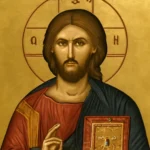
Icons and Scripture: The Bible interacts with other elements of sacred art and ritual, helping believers contemplate divine mysteries through biblical narratives and iconography.
Translations oriented toward liturgical use often accompany the canonical text with cross-references, marginal notes, and theological commentary that reflect Orthodox understanding. The aim is to make Scripture approachable within the life of faith, not to isolate it as a purely academic text.
Translations and Modern Accessibility
Today, Orthodox Christians access the Bible in a wide variety of languages, while maintaining fidelity to the Septuagint basis for the Old Testament and the traditional 27-book New Testament. Important facets include:
Greco-Latin and Slavic translations: Greek Orthodox editions, Church Slavonic, Russian, Bulgarian, Serbian, Romanian, and other Slavic languages carry canonical books in forms that align with Orthodox reading and liturgical practice.
Indigenous languages: The spread of Orthodoxy into Africa, the Middle East, and Asia has produced translations in languages such as Arabic, Ethiopian, Georgian, Armenian, and others, each maintaining the Orthodox approach to Scripture and Tradition.
Modern study Bibles: Several modern study Bibles are designed specifically for Orthodox readers, including notes on patristic interpretations, church calendar references, and cross-references to liturgical readings.
Church publications: National churches often publish official or semi-official editions for catechesis and liturgical reading, ensuring consistency with local practice and doctrine.
Some popular modern editions emphasize a dual footing: a faithful rendering of the Septuagint-based OT alongside the canonical 27-book NT, with organizational features that reflect Orthodox theology and worship. While translations vary by tradition, the overarching aim remains clear: to bring the Scriptures into the life of the Church in a way that fosters faith, worship, and spiritual formation.
Contemporary Challenges and Ecumenical Dialogue
As Christianity engages in global dialogues, Orthodox churches face questions about the Bible’s authority, interpretation, and relationship to Tradition.
Authority and inspiration: Orthodox Christians affirm that the Bible is inspired by the Holy Spirit and is authoritative in faith and practice. The exact mechanism for determining canonical status resides in the life of the Church and the consensus of the Fathers rather than in simply a secular process of canonization.
Tradition vs. textual criticism: Modern scholars may point to variations between manuscripts or textual variants. In Orthodoxy, such scholarly findings are weighed against the living tradition, the liturgical use, and the interpretive consensus of the Fathers and bishops.
Ecumenical engagement: The Orthodox approach to Scripture remains robust in ecumenical contexts, where shared readings are common, but differences in canon and interpretation are acknowledged and discussed with charity and clarity.
Digital access: The availability of digital text and online commentaries is transforming how believers encounter Scripture, while raising questions about the role of community and reverential reading in a connected age.
Despite challenges, the Orthodox Bible tradition continues to emphasize the unity of Scripture with the Church’s worship, sacraments, and mission. This integrative approach helps maintain a coherent sense of biblical theology that informs everyday life while sustaining a living link to the ancient Church.
Practical Guide for Readers
Whether you are a student, a seeker, or a lifelong believer, here are practical steps for engaging with the Orthodox Bible in a meaningful way:
Begin with the liturgical calendar: Read Scripture in the context of feast days and seasonal cycles to see how the Bible is woven into worship and memory.
Use a parallel or study edition: A Bible that presents the Old Testament (Septuagint-based) alongside the New Testament with notes on patristic interpretation can be especially helpful.
Consult the Fathers: When questions arise, turn to patristic readings and homilies for illumination on difficult passages and for the development of a spiritual sense.
Embrace typology and spiritual sense: Practice reading the text not only for historical background but for how it points toward Christ, the Church, and the kingdom of God.
Attend liturgy and catechesis: Engaging with the Bible through the church’s services and formal teaching helps align personal study with communal understanding.
Respect diversity within unity: Appreciate the canonical varieties among Orthodox churches while recognizing a shared core of Scripture and interpretation rooted in the same apostolic faith.
By following these practices, readers can cultivate a robust, historically informed, and spiritually fruitful engagement with the Orthodox Christian Bible—the sacred Scriptures that have guided the life of the Church for two millennia and continue to shape faith today.
Conclusion: The Orthodox Bible as Sacred Memory and Sacred Tradition
The Orthodox Christian Bible stands at the intersection of history, language, worship, and theology. Its canon reflects a commitment to a broader collection of scriptures rooted in the Septuagint and a venerable tradition of patristic interpretation. Its texts are transmitted through dynamic manuscript culture and diverse translations that keep pace with communities across continents. Its interpretations arise from a living Orthodox hermeneutic that honors Scripture as living testimony, not only as a book of ancient writings. And its liturgical life ensures that the Bible remains a reader’s own prayer, a bishop’s instruction, and a believer’s ongoing encounter with God.
In sum, the Orthodox Bible—in its breadth of books, its adherence to the Septuagint, its patristic and liturgical shaping, and its contemporary translations—offers a comprehensive vision of how Scripture can animate faith, form conscience, and guide worship within the rich tapestry of Eastern and Oriental Christian traditions. Whether you approach it as a scholarly discipline, a devotional companion, or a foundational element of communal life, the Orthodox Bible invites readers into a living conversation with the biblical past and a faithful participation in the Church’s present.







Leave a Reply