How Bible Written: A Guide to How the Bible Was Composed
How Bible Written: A Guide to How the Bible Was Composed
How Bible Written: a guide to how the Bible was composed is a story of centuries, cultures, languages, and communities working with memory, myth, law, prophecy, poetry, and history. This article offers an in-depth look at the ways the Bible came together, how its many parts were produced and gathered, and how modern readers encounter it today.
The Bible did not spring from a single moment of invention. Instead, it grew out of oral traditions that circulated stories, laws, songs, and teachings among ancient communities. Over time, these oral materials were captured in written form, edited, and reinterpreted by successive generations. The transition from speaking aloud to writing down sacred memory often occurred in response to social change—alliances, exile, conquest, and the needs of communities to preserve identity and covenant. This process helps explain why the Bible is a library rather than a single book with a uniform voice.
Ancient Near Eastern context: Many biblical forms echo neighboring traditions, including law codes, annalistic histories, and prophetic oracles that were later reinterpreted in the Hebrew and Greek languages.
Slow codification: Some books show signs of multiple layers of revision, update, or addition as communities reauthored passages to address new circumstances.
Composite authorship: Authors ranged from prophets and sages to scribes and redactors who wove together diverse strands into coherent collections.
Languages and Script Traditions
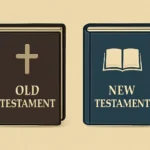
The composition of the Bible is inseparable from the languages in which its texts were first produced and transmitted. The core materials came from Hebrew and Aramaic texts of the Old Testament (or Hebrew Bible), with select portions in Greek for the New Testament. Later centuries saw translations that shaped the Bible for new audiences and new theological contexts.
Hebrew and Aramaic Texts
Most of the Old Testament material originated in Hebrew, with a few parts in Aramaic (chiefly in Daniel and Ezra). The Hebrew Bible reflects a long process of writing, preserving, and editing representation of Israelite faith, law, and history. Scribes and scholars in ancient communities copied scrolls and codices with careful attention to accuracy, often consulting multiple exemplars to resolve discrepancies.
Greek Texts in the New Testament Era
By the time the New Testament was composed, Greek had become the common language of the broader Mediterranean world. The New Testament books—gospels, letters, and apocalyptic writings—were written in Koine Greek and circulated among early Christian communities. Greek allowed ideas to travel across linguistic boundaries, while later Christians translated these texts into other languages, broadening their reach and shaping interpretations.
The actual act of composition involved a mix of composition, collection, editing, and transmission. No single author wrote the Bible in a single sitting; rather, textual units were produced, preserved, and reshaped within communities over long periods. The result is a diverse anthology with multiple voices, genres, and theological emphases.
Composition and Compilation
Early material often emerged as independent pieces—laws in a legal code, prophetic oracles, historical chronicles, poetry, and wisdom literature. Some books began as standalone texts and were later compiled with related writings to address a shared theme or purpose. For example, the Books of Samuel and Kings present historical narratives that later editors arranged to tell a larger story about the rise and fall of Israel and Judah. Other texts grew through the addition of later material that reframed earlier episodes in light of new circumstances.
Redaction and Theological Framing
Redactors—editors who gathered, revised, and harmonized material—played a crucial role. They did not simply “copy”; they shape the meaning by arranging order, emphasizing certain motifs, and integrating theological themes. Redaction criticism studies these shaping processes to understand how a text’s final form communicates its intended message. In many cases, redactors added clarifying glosses, harmonizations, and interpretive notes that guide readers toward particular understandings of Israel’s covenant with God.
Genres at Work
The Bible contains a range of literary genres, including law codes, narratives, poetry, prophetic oracles, apocalyptic literature, and epistolary correspondence. Each genre uses language and structure in distinct ways to convey meaning. Reading across genres invites readers to consider how a poem about trust in God might illuminate a narrative about exile, or how a prophetic call speaks to communities wrestling with power and justice.
Formation of Canons
As texts multiplied, communities faced the question: which writings should be considered authoritative for faith, worship, and teaching? The answer was not instantaneous but gradual, leading to varied canons across different religious traditions. Canon formation reflects decisions about inspiration, authority, and the role of sacred texts within communal life.
Different Canonical Traditions
Different religious communities settled on different collections of writings for their scriptures. Broadly speaking, there are:
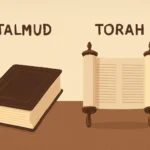
Hebrew Bible (Tanakh) for Jewish communities, organized into the Torah (Law), Nevi’im (Prophets), and Ketuvim (Writings).
Old Testament canons in various Christian traditions, which differ in the arrangement and inclusion of certain books accepted in some circles but not in others.
New Testament canon for Christian communities, generally recognizing the core set of four gospels, the Acts of the Apostles, Paul and other letters, and an Apocalypse, though the exact list and order can vary by tradition.
Deuterocanonical and Apocryphal Materials
In some traditions, certain writings are included as deuterocanonical (second canon) or as apocryphal works. The Catholic and Orthodox traditions retain additional books in the Old Testament that are not found in the Protestant canon. These books illuminate historical, wisdom, and devotional themes, yet they are distinguished from the primary canonical texts in other communities. The concept of canonicity—what belongs in scripture—reflects faith communities’ discernment about inspiration, authority, and perennial relevance.
The journey from ancient manuscripts to modern Bibles involved layers of transmission, translation, and standardization. Each stage introduced opportunities for variation, correction, and interpretation. Examining this history helps readers understand why different Bibles present the same stories with subtle or substantial differences.
Key Manuscript Traditions
Several manuscript traditions have been central to the Bible’s transmission:
Masoretic Text (MT): The authoritative Hebrew text established by medieval Jewish scribes known as the Masoretes, which became the basis for most Hebrew Bible editions used by Jews and Protestants.
Septuagint (LXX): A Greek translation of Hebrew scriptures produced in the ancient Mediterranean world; it was widely used in the early Christian church and influenced later translations.
Samaritan Pentateuch: A version of the Torah maintained by the Samaritan community with some variant readings that offer important textual clues.
Dead Sea Scrolls: A treasure trove of manuscripts from the Second Temple period, including biblical and non-biblical writings, which illuminate textual variation and ancient Hebrew language usage.
Textual Criticism and Textual Traditions
Textual criticism is the scholarly discipline that studies textual variants to determine the most likely original wording of a text. By comparing manuscripts, editors can identify patterns of transmission, understand how scribes might have altered wording, and offer critical editions that reflect scholarly consensus on the earliest attainable form of a text. This work often results in footnotes, apparatuses, and alternative readings in modern editions.
Translation and Global Reach
Translation is another crucial phase in how the Bible came to be read around the world. As communities learned different languages and developed literacy, translators faced choices about how to render ancient concepts into contemporary speech while preserving textual integrity.
Latin translations such as the Vulgate became the standard Bible in Western Europe for many centuries.
Vernacular translations—into languages like English, German, Spanish, Chinese, Swahili, and many others—made the Bible accessible to broad audiences and spurred cultures of reading and interpretation.
Dynamic equivalence and formal equivalence translation approaches describe different strategies for balancing literal rendering with readable, natural language.
How the Bible was written shapes how readers approach it today. Modern readers can engage with the text through multiple lenses—historical, literary, theological, and devotional. Each approach highlights different facets of the text and raises distinct questions about meaning, context, and application.
Historical-Critical and Text-Critical Methods
Historical-critical methods seek to understand the historical context, authorship, and original situation of biblical texts. Textual criticism focuses on the transmission history and tries to reconstruct the most probable original wording. Together, these methods help readers distinguish what the text meant in its own time from how it might speak in a modern setting.
Literary and Theological Readings
Other scholars and readers emphasize the Bible as literary art—its narratives, poetry, and rhetoric—while also emphasizing theological themes such as covenant, justice, mercy, and divine presence. Reading across genres invites nuanced interpretations: a prophetic oracle may be read as a call to justice in history and as a symbol of ongoing hope for readers in later eras.
Understandings about the Bible’s composition sometimes give rise to misconceptions. Clarifying these helps readers appreciate the complexity and diversity of its formation.
Myth: One author wrote the Bible. In reality, the Bible is a collection produced by many authors, editors, and communities over a wide span of time.
Myth: The canon was universally fixed in a single council. Canon formation was a gradual, contested process that varied by tradition and region.
Myth: Translations are always identical to the original. Translations inevitably reflect interpretive choices and linguistic shifts; critical editions strive to present the best possible reconstruction of the original texts.
Myth: The Bible is a single book with a uniform voice. It is a diverse library containing multiple voices, genres, and theological perspectives.
Important Milestones in the Bible’s Writing History
To grasp how the Bible came to be, it helps to recognize some pivotal moments and developments that shaped its text and reach.
Chronicle of tradition: Oral traditions circulated before being committed to writing, preserving laws, stories, and song lines.
Emergence of written texts: Early writings began to appear in scroll form, with scribes copying and preserving material across generations.
Editorial shaping: Redactors integrated, reordered, and harmonized material to reflect evolving beliefs and covenantal consciousness.
Textual transmission: Copyists maintained integrity while introducing minor scribal variants, which later scholars would study.
Standardization and canons: Communities recognized certain writings as authoritative, forming canons that guided worship and teaching.
Translation and global reading: As languages spread, translations opened sacred texts to new audiences, transforming how people relate to the Bible.
The Bible as a Living Document for Readers Today
Even after centuries of study, the Bible remains a living document in the sense that it continues to speak to new readers in changing contexts. Its composition history invites readers to approach the text with humility, curiosity, and critical discernment. By recognizing the Bible’s plurality—of authors, languages, genres, and communities—readers can appreciate its richness and complexity while discovering enduring truths that resonate across cultures and eras.
In practice, engaging with the Bible’s history helps readers avoid anachronistic readings and encourages responsible interpretation. It also deepens appreciation for the ways communities have preserved and transformed sacred memory. As a literary and religious archive, the Bible offers insights into the questions that human communities have wrestled with for thousands of years: questions about origin, identity, justice, suffering, hope, and the relationship between humans and the divine.
Conclusion: The Bible’s Composition as a Corridor of Time
The story of how the Bible was written is really a story about communities in conversation across time. Earliest voices laid groundwork in oral forms; later writers, scribes, editors, and redactors shaped those materials into a collection that could sustain worship, instruction, and imagination for generations. The textual history—from the Masoretic Text and the Septuagint to modern critical editions and translations—demonstrates a continuous effort to preserve meaning while making the text accessible to readers in every era. The Bible’s composition thus stands as a record of human faithfulness, curiosity, and the enduring search for meaning in the face of life’s complexities. By exploring its origins, readers gain a richer understanding of the Bible as a dynamic, multi-voiced library rather than a single, monolithic document.







Leave a Reply