How Did the Bible Get Put Together? A Comprehensive Guide to Its Formation, Canon, and Manuscripts
The question “how did the Bible come to be the collection we know today?” invites a long and nuanced journey. It is not a single act but a complex process spanning many centuries, continents, languages, and communities. This guide offers a thorough overview of how the biblical books were written, collected, recognized, and transmitted, from ancient scrolls to modern editions. We will explore the formation of the Hebrew Bible (often called the Old Testament in Christian traditions), the New Testament, the development of canons across different Christian traditions, and the crucial role of manuscripts and textual criticism in shaping what readers see today.
The big picture: why the Bible is not a single book, but a library
At its core, the Bible is a library of sacred writings produced by many authors over a broad span of time. It contains poetry, law, history, wisdom, prophecy, letters, and apocalyptic visions. The books were written in different languages (primarily Hebrew, with a portion in Aramaic, and the Greek of the New Testament) and circulated in diverse communities with evolving needs. The “assembly” of these writings into a canonical collection happened gradually as communities discerned which texts most accurately reflect their beliefs, traditions, and recognized authorities. The result is a multi-tradition story in which no single council or momentual decision has sole control, but rather a series of conversations, recognitions, and editorial processes across centuries.
Origins and formation of the Hebrew Bible (Old Testament)
From oral traditions to written form
Many of the biblical books began as oral traditions that were eventually committed to writing. Narratives about patriarchs, early Israelite history, prophetic oracles, and wisdom sayings circulated among communities before a written form existed. Over time, scribes collected, edited, and layered these materials. In the Hebrew Bible, we encounter a diverse array of literary genres, including:
Law codes and statutes (for example, portions of the Pentateuch)
Narrative history chronicling the people of Israel and Judah
Prophetic writings that call for fidelity to God and critique social injustice
Wisdom literature such as proverbs, job-like dialogues, and reflections on the human condition
As these materials circulated, communities began to recognize certain texts as authoritative for faith and practice. This sense of authority did not emerge all at once; it evolved through debates, use in worship, and reflection on who spoke with divine authority. Through this long process, the core body of literature that many scholars call the Hebrew Bible or Tanakh took shape in a form that later Jewish communities would continue to preserve and transmit.
Canon and the Masoretic text
Two terms deserve emphasis here: canonical status and the Masoretic Text.
Canonical status refers to when a text is regarded as binding for faith and practice within a community. For the Hebrew Bible, this status was not granted by a single moment but affirmed over time through usage, authority structures, and communal acceptance.
The Masoretic Text is the traditional Hebrew text of the Jewish Bible as established by Jewish scribes (the Masoretes) between the 7th and 10th centuries CE. It includes vowel pointing and marginal notes that preserve pronunciation and interpretation.
In addition to the Masoretic Text, much ancient Hebrew material survives in fragments and scrolls from other periods, including some that are older than the Masoretic arrangement. This leads to a critical distinction in biblical studies: the Masoretic tradition versus the Septuagint (the Greek translation of the Hebrew Scriptures) and other witnesses. Each tradition contributes important textual variations and insights into how the canon was read and understood in different communities.
Septuagint and the Greek tradition
In the Hellenistic world, Jewish communities in places like Alexandria produced a Greek translation of the Hebrew scriptures known as the Septuagint (often abbreviated LXX). This translation was widely used by early Christians and became the basis for many scriptural readings in the Greek-speaking world. The Septuagint is particularly significant for two reasons:
It includes some books that are not present in the later Hebrew canon, such as parts later labeled as deuterocanonical or apocryphal by various traditions.
It preserves older Greek-language textual witnesses to the Old Testament and often reflects a slightly different text than the Masoretic version.
The existence of the Septuagint helps explain why early Christians often relied on Greek Scripture in their communities and how debates about canonicity could diverge between Jewish and Christian circles.
Dead Sea Scrolls and the diversity of ancient manuscripts
Discovered in the 20th century near Qumran, the Dead Sea Scrolls include biblical manuscripts (and non-biblical texts) dating from the 3rd century BCE to the 1st century CE. These scrolls reveal that:
There was a broader range of textual forms in circulation in the Second Temple period than the later Masoretic Text would suggest.
Different communities maintained slightly different readings and collections of sacred writings.
Some books appear in a form that resembles later canonical shapes, while others show variants that did not survive in the standard Hebrew Bible.
In sum, the formation of the Hebrew Bible involved a long arc from oral tradition to written collection, with textual witnesses in Hebrew and Greek shaping how the canon was understood in different eras and communities.
The New Testament: from letters to a connected collection
Origins of Christian writings
The New Testament did not spring into being fully formed; it emerged from early Christian communities that produced a variety of writings intended to proclaim, interpret, and apply the life, death, and resurrection of Jesus. The principal categories include:
Gospels: narratives about Jesus’ life and teaching (the four canonical Gospels are Matthew, Mark, Luke, and John).
Acts: a historical narrative about the early Christian movement and the apostolic mission.
Epistles (letters): correspondence addressing theology, ethics, and church life, attributed to apostles or early leaders (notably Paul, but also others like Peter, James, John, Jude).
Apocalypse (the Book of Revelation): prophetic and visionary literature aimed at encouraging faith amidst trial.
The composition of these texts occurred in a milieu of Christian worship, teaching, and community life across the Mediterranean world, and their authorship was often linked to apostolic authority or to close associates of the apostles.
Acceptance, use, and circulation
As early Christian communities gathered to worship and teach, certain writings gained prominence through:
Apostolic witness or association with those who had direct contact with Jesus or with early church leaders.
Liturgical use: writings read aloud in worship services and catechesis.
hortatory or doctrinal clarity: texts that clearly taught core beliefs and helped communities resolve controversies.
Over time, some writings were used widely and others less so. This did not become a formal “canon” overnight but evolved through recognition by communities across regions such as Asia Minor, Greece, and Rome. Several early milestones illustrate this process:
Muratorian Fragment (late 2nd century): one of the earliest surviving lists of New Testament books, indicating broad but not universal consensus.
Eusebius of Caesarea (early 4th century) quotes and discusses scriptural usage and lists that reflect the growing sense of a recognized collection.
Athanasius (AD 367) lists 27 books in his Festal Letter, a widely cited marker for the canonical New Testament in the Western church.
What kinds of writings made the cut?
The canonical New Testament is commonly grouped into four main categories:
Gospels (narrative accounts of Jesus’ life and message)
Historical Acts (accounts of the spread of early Christianity)
Pauline and Other Epistles (letters addressing theology, ethics, and church life)
Apocalyptic Revelation (visions concerning eschatology and divine judgment)
There was significant debate about some texts, with some writings occasionally circulating in particular communities but not achieving universal acceptance. Over several centuries, a broad consensus formed around a core collection that matched the needs and beliefs of the majority of Christian communities across the empire.
How did the canon form across traditions?
Different Christian canons: Catholic, Protestant, Orthodox, and others
Though the New Testament books are common to most Christian traditions today, the boundaries and order of the canon were not identical everywhere. The major divisions are:
Catholic canon: includes the same 27 books of the New Testament as most Protestant Bibles, but also recognizes a broader Old Testament canon in the form of the Deuterocanonical books (also called the Apocrypha in some traditions). The Catholic canon was formalized in the Latin Vulgate era and reaffirmed in Church councils in the early medieval period.
Protestant canon: typically aligns with the 27 New Testament books but specifies a shorter Old Testament with the deuterocanonical books treated as non-canonical for Protestants.
Orthodox canon: varies among Orthodox traditions but generally includes additional books in the Old Testament and sometimes treats certain apocryphal works differently in the New Testament sense. The Orthodox tradition emphasizes the continuity of Ruth, Tobit, Judith, Wisdom of Solomon, Sirach, Baruch, and other writings in its broader canon.
Other ancient communities: Ethiopian and other Christian communities sometimes include different or additional texts, reflecting diverse ecclesial histories and languages (for example, the Ethiopian Orthodox Church retains additional books in its Old Testament canon).
The term Deuterocanon refers to books in the Catholic and Orthodox canons that are not found in most Jewish or Protestant Hebrew Scriptures. In Protestant contexts, these texts are often labeled Apocrypha and typically not treated as binding canonical scripture for faith and practice. The distinctions among canons illustrate that the Bible’s final shape is as much about theological and communal decisions as about text transmission.
Dates, councils, and turning points
Several key moments and authorities shaped the canon’s formation across centuries:
The gradual recognition of certain texts as apostolic or closely linked to apostles, tempered by usage in worship and teaching.
Formal councils and synods in the later antique and early medieval world that acknowledged lists of books, often aligning with already-accepted scriptures in many churches.
Athanasian and Jerome’s translations (the latter translating Bible texts into Latin and settling matters of textual variation through Latin tradition), which helped standardize what many Western churches accepted.
The rise of a standardized Latin Bible (the Vulgate) and its long influence on Western Christian practice.
It’s important to recognize that a fixed list of books did not appear in one moment but emerged through a process that valued tradition, authority, and the lived faith of communities. The result is a canon that different faith communities continue to interpret in light of their theological and historical contexts.
Manuscripts and textual transmission: how the text traveled through time
What is a manuscript, and why does it matter?
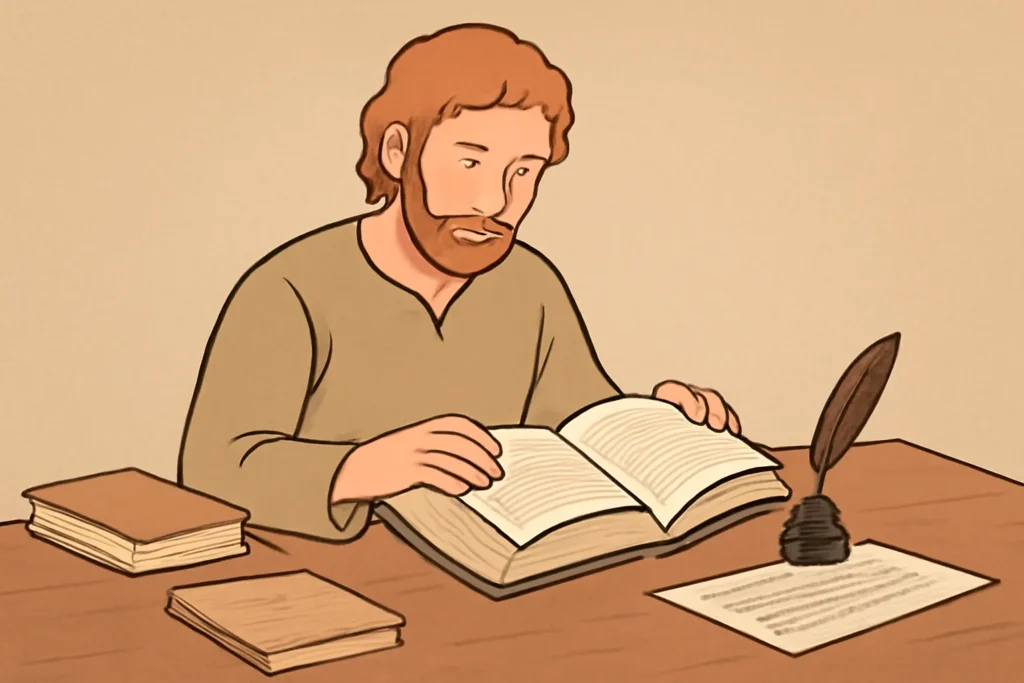
A manuscript is any handwritten copy of a text. Before the invention of printing, every Bible copy was a manuscript. The way a text was copied—carefully or carelessly, with deliberate edits or accidental errors—had a direct impact on how readers understood the Bible centuries later. In biblical studies, scholars study manuscript families, textual variants (differences among copies), and the history of how texts were transmitted across different regions and languages.
Key textual witnesses and what they tell us
Masoretic Text (Hebrew): the standard Hebrew Bible for Judaism and for most traditional Jewish and Protestant readings.
Septuagint (Greek): the Greek translation of Hebrew scriptures, widely used by early Christians and still important for textual comparison.
Dead Sea Scrolls (various Hebrew manuscripts): dates ranging from the 3rd century BCE to the 1st century CE, offering a window into ancient textual diversity.
Papyri and uncial manuscripts (Greek New Testament fragments and codices): early copies that help reconstruct the wording and order of the New Testament writings.
Transmission practices: scribes, scribal culture, and textual variation
Ancient scribes were essential to preserving and transmitting sacred texts. They faced practical challenges—hand copying was slow, the risk of mistakes was real, and the desire to correct or harmonize readings sometimes led to deliberate alterations. Scribal practices included:
Habitual errors (phonetic, visual, or homophonic mistakes) that repeated across manuscripts
Marginal notes (glosses and commentary) that sometimes influenced later editors
Copyist corrections that attempted to harmonize variants or align a text with a preferred reading
Accents, vowels, and diacritical marks added by later Masoretes to preserve pronunciation and interpretation
Textual criticism is the scholarly discipline that studies these witnesses—comparing manuscripts, assessing variants, and trying to reconstruct the most probable original wording. This practice helps readers understand where differences come from and why certain readings are preferred in modern editions.
Important manuscript discoveries and their impact
The Dead Sea Scrolls prompted re-evaluation of the Hebrew Bible’s textual history, showing that certain books existed in multiple textual forms in antiquity.
The Chester Beatty Papyri and Nash Papyrus (early Christian manuscripts) illuminate how the New Testament texts were circulated and used in worship from very early on.
The Codex Vaticanus and Codex Sinaiticus (4th century CE copies) provide highly valuable snapshots of the Greek New Testament text and the broader Christian biblical corpus of that era.
The road to a standardized form: milestones in the canon’s development
Early lists and usage patterns
Even before final lists were formalized, early Christian communities often used a core group of scriptures known as scriptural authoritative texts. The breadth of acceptable writings varied from place to place, and individual communities sometimes prized different works for apostolic authorship, theological coherence, or liturgical use.
formal statements and lists
Across the centuries, several resources aided the consolidation of the biblical corpus:
Early patristic writers (church fathers) who cited certain books and argued for their authority.
Liturgy and catechesis that repeatedly engaged with a stable set of texts.
Century-spanning debates about whether particular works should be read publicly or privately, and whether they should be treated as canonical.
Standard translations (Latin in the West; Greek in the East) that reinforced a common text for communities in a given language.
Consolidation across major Christian traditions
Ultimately, the New Testament canon achieved a broad consensus in the Western and Eastern churches, with differences in the Old Testament canon (e.g., inclusion of the deuterocanonical books in Catholic and Orthodox traditions but not in Protestant ones). The outcome is a family of canons that shares a core of material while preserving distinct traditions and reading practices.
Manuscripts, translations, and modern editions: how the Bible is read today
From manuscripts to printed Bibles
The invention of printing (the Gutenberg press in the 15th century) transformed the Bible from a luxury manuscript to a widely accessible book. Print editions standardized texts for broader communities, but editors and translators still faced the task of selecting readings from the manuscript evidence. The result is a chain of textual decisions that shape how faith communities read and understand scripture today.
Textual criticism in the modern era
Scholars examine multiple witnesses—a collection of ancient manuscripts, ancient translations, and early versions—to determine the most probable original wording of biblical texts. This approach helps ministries, teachers, and readers engage with the Bible critically and faithfully in the modern era.
Popular translation philosophies
Formal equivalence translations aim to preserve exact wording and form (word-for-word), as in some editions of the King James Version or the New American Standard Bible.
Dynamic equivalence translations prioritize readability and conveying meaning in contemporary language, while retaining original sense, as in the New International Version or the New Living Translation.
Paraphrase renders the text as natural, idiomatic language that emphasizes accessibility and reader experience, as in The Message.
Different traditions prefer different translation approaches, often reflecting theological goals, linguistic heritage, and the intended audience. Regardless of approach, modern translations rely on the best available manuscript evidence and rigorous scholarly methods to produce accessible and reliable texts for study and devotion alike.
One of the most important takeaways is to recognize that the Bible is not a single, monolithic book but a diverse library with a shared heritage. Its formation involved:
Communal discernment about which texts best represent the faith and teaching of communities.
Transmission networks—scribes, translators, and scholars who passed along and refined texts across generations.
Editorial and translation decisions that shape how we encounter the text in a given language or edition.
Appreciating the textual history
For readers, understanding the Bible’s textual history invites careful reading. It invites questions such as:
How do different translations affect my understanding of a passage?
What is the significance of reading a text against its Hebrew, Greek, or Aramaic background?
How do textual variants influence doctrinal or liturgical interpretations?
Engaging with these themes can deepen both intellectual understanding and spiritual formation, helping readers appreciate the Bible’s ancient roots and its ongoing life in contemporary faith communities.
Key terms and concepts to keep in mind
Canon — the recognized collection of books considered authoritative for faith and worship in a particular tradition.
Masoretic Text — the traditional Hebrew text of the Jewish Bible established by Masoretes with vowel pointing and cantillation marks.
Septuagint — the Greek translation of Hebrew Scriptures, influential in early Christian communities.
Deuterocanon — books considered canonical in Catholic and Orthodox traditions but not in most Protestant traditions.
Apocrypha — books included in some canons or editions and generally treated as non-canonical in Protestant contexts.
Manuscript — a handwritten copy of a biblical text used in the transmission of the scriptures.
Textual criticism — scholarly study of manuscript variations to reconstruct the most likely original text.
Codex — a book-form manuscript of the Bible (as opposed to a scroll), such as Codex Sinaiticus or Codex Vaticanus.
Frequently asked questions about biblical formation
No. The Bible’s formation occurred over centuries, through a process of writing, collecting, and recognizing authoritative texts in different communities and languages. The New Testament formed within the first few centuries CE, while the Old Testament/Hebrew Bible took shape long before, with canonical refinements continuing into late antiquity and the medieval period in various traditions.
Why do some Bibles include more books in the Old Testament?
Because different religious traditions affirm different canons for the Old Testament. Catholic and Orthodox Bibles include books that are not found in the Hebrew Bible in their canon, while Protestant Bibles typically omit those deuterocanonical books from the Old Testament. Ethiopian and other Christian communities may include additional writings in their Old Testament canon.
What role do modern translations play in understanding the Bible?
Modern translations aim to faithfully convey ancient texts to contemporary readers. They rely on the manuscript evidence available and employ scholarly methods to render texts accurately while remaining readable. Readers should be aware that translation choices can affect nuance, emphasis, and interpretation.
Conclusion: the Bible as a living library shaped by history and faith
The question of how the Bible got put together reveals a story of sustained faith, careful scholarship, and communal memory. It is a history of diverse texts gathered into families, debated among teachers and communities, translated into multiple languages, and preserved by scribes who labored to keep the words with as much precision and reverence as possible. A modern reader engaging with the Bible—whether for study, worship, or curiosity—stands in a long line of readers who have asked the same questions: Which books belong here? How should we read them? How do the ancient texts meet the needs of today?
As you explore the Bible’s formation, you encounter a remarkable example of how a sacred library evolves while remaining anchored in a shared sense of reverence, tradition, and purpose. This
complex legacy—not a single act but a continuing conversation—invites readers to approach the text with both critical understanding and humble openness to its enduring message.
Appendix: quick references to important terms and milestones
: the collection of Jewish sacred writings that Christians often refer to as the Old Testament.
: the collection of Christian writings about Jesus and the early church.
Masoretes: Jewish scribes who standardized the Hebrew text with vowels and cantillation.
Septuagint: Greek translation of Hebrew Scriptures used by early Christians.
Deuterocanon/Apocrypha: terms for certain books whose canonical status varies by tradition.
Codex Sinaiticus, Codex Vaticanus: two of the most important ancient manuscript witnesses to the Greek New Testament and the Septuagint system in antiquity.
Muratorian Fragment: an early list of New Testament books reflecting evolving consensus.
Athanasius and his Festal Letter: a landmark early list of 27 New Testament books.








Leave a Reply