Introduction: How Do We Understand the Bible’s Formation?
The question how was the Bible compiled touches on history, language, culture, and faith. This ancient collection did not appear all at once, but emerged over many centuries through processes of writing, copying, evaluating, and recognizing certain texts as authoritative. The result is not a single, monolithic document, but a layered corpus shaped by diverse communities, traditions, and conversations about what counts as sacred revelation. In this article, we will trace the broad arc of the formation of the biblical canon, from the earliest writings through the major milestones of canon lists, and toward the translations and manuscript traditions that carried the Bible into the many forms it has today.
Origins and Early Texts: The Roots of the Bible
To understand how the Bible came together, it helps to distinguish its two major components: the Old Testament (also called the Hebrew Bible in Jewish tradition) and the New Testament (early Christian writings). Each part has its own history of composition, collection, and recognition. The Old Testament grew out of Jewish religious life and sacred writings that circulated in Hebrew (and Aramaic) communities. The New Testament emerged from the experiences, preaching, and letters of early Christian communities who believed that Jesus of Nazareth fulfilled the biblical story and breathed new life into its meanings.
Old Testament Foundations: Texts, Traditions, and Early Collections
The Hebrew Bible: Canonical Foundations and Structure
In Jewish tradition, the Bible is often referred to as the Tanakh, an acronym based on its three sections: the Torah (Law), the Nevi'im (Prophets), and the Ketuvim (Writings). Over centuries, these writings were composed, copied, and circulated in communities that valued them for faith, law, and memory. The process of determining which books would belong in the canon was gradual and multifaceted, not a single moment of decision.
The Torah and the Law: Core Texts
The first five books—Genesis, Exodus, Leviticus, Numbers, and Deuteronomy—form the heart of the Torah, the foundational law and narrative for the people of Israel. These books likely circulated in oral and written forms long before they achieved the status of sacred scripture for a broader community. The emergence of a recognized collection of five books helped anchor a shared religious identity and a common moral code.
Prophets and Writings: Expanding the Canon
Beyond the Torah, the books of the Prophets (former and latter prophets) and the Writings were collected into larger groupings. The prophets provided voices that interpreted Israel’s history and urged fidelity to God’s covenant, while the Writings included poetry, wisdom literature, and narratives that reflected a wide range of religious experience. The question of which books should be included in these sections varied among Jewish communities, and the final shape of the canon only emerged over time, with some books gaining authoritative status more quickly than others.
The Septuagint: Greek Translation and the Diaspora
The Septuagint (LXX) is the ancient Greek translation of Hebrew scriptures that became widely used in the Hellenistic world and within early Christian circles. It sometimes included books that the later Hebrew canon did not, as well as translations of the Hebrew text that differed in order and emphasis. The Septuagint played a crucial role in the formation of Christian scripture and in shaping how early Christians understood the Hebrew Bible. The existence and circulation of the LXX contributed to debates about canonicity that would surface in later centuries.
New Testament Emergence: Writings from the Early Christian Communities
Context and Community: The World of the Early Church
In the first century CE, communities scattered across the Mediterranean world encountered the message about Jesus, interpreted through preaching, letters, and (in some cases) accounts of his life. Early Christians wrote gospels, letters, and apocalyptic or symbolic works in response to local needs, persecutions, and theological reflection. These writings circulated among churches, sometimes with little explicit editorial oversight, and they were evaluated by communities for their faith-communicating power, apostolic connection, and usefulness for worship and teaching.
The gospels (four canonical accounts of Jesus’ life and teachings) became central to early Christian identity. In addition, the Epistles or letters—letters attributed to Paul and others—offered instruction, exhortation, and doctrinal clarification for diverse church communities. The Acts of the Apostles and other early Christian writings provided historical narrative and theological reflection on the spread of the Christian faith. Not every text was treated the same way in every community, but over time a core group of writings emerged that would be regarded as especially authoritative.
Criteria of Canonicity: How Texts Gained Authority
As early Christians considered which writings should be regarded as authoritative, several common criteria emerged. While the emphasis varied somewhat by region and tradition, most communities looked for texts that demonstrated:
Apostolic authorship or close connection to an apostle or to a trusted associate of an apostle.
Orthodox teaching aligned with the apostolic witness and the community’s faith about Jesus Christ and salvation.
Wide and enduring use in liturgy and teaching across multiple Christian communities.
Consistency with the broader apostolic tradition and the churches’ interpretive framework.
These criteria helped distinguish texts that were repeatedly read in worship or catechesis from those that were read only in isolated contexts. Over several generations, many early writings fell into obscurity, while a smaller number gained broad recognition as canonical.
Key Milestones in Canon Formation: From Fragmentary Lists to Contested Authority
Early Collections and the Muratorian Fragment
One of the earliest surviving “lists of books” from the Christian tradition is the Muratorian Fragment, a late 2nd-century document that provides a snapshot of the canon as it was being shaped in the Western church. Though not identical to the final New Testament, the fragment shows that Christians were already organizing and recognizing certain writings as authoritative. It also reveals variations in the scope of accepted writings across communities, a reminder that canon formation was a negotiated process rather than a fixed decree.
Councils, Synods, and Ecclesial Endorsement
From the 4th century onward, a series of regional councils and episcopal synods began to articulate more formal canons. The most influential moments include recognitions in North Africa and Rome, where church leaders affirmed the core list of New Testament writings. Although the councils did not create the New Testament canon from scratch (the process had been underway for centuries), their declarations helped standardize which books should be read in churches, taught in catechesis, and used for doctrinal formation.
Regional Variations: East-to-West Differences
Throughout the Christian world, there were differences in the exact boundaries of the canon, especially between Western (Latin-speaking) and Eastern (Greek-speaking) churches. Some texts that enjoyed broader acceptance in one region might have stood on the edge of inclusion in another. The eventual convergence toward a widely accepted canon in many traditions, but with ongoing reverence for certain deuterocanonical books in Catholic and Orthodox settings, illustrates how canon formation is both a universal and a locally nuanced process.
Textual Transmission: How the Bible Reached Readers Across Time
From Scrolls to Codices: The Technology of Transmission
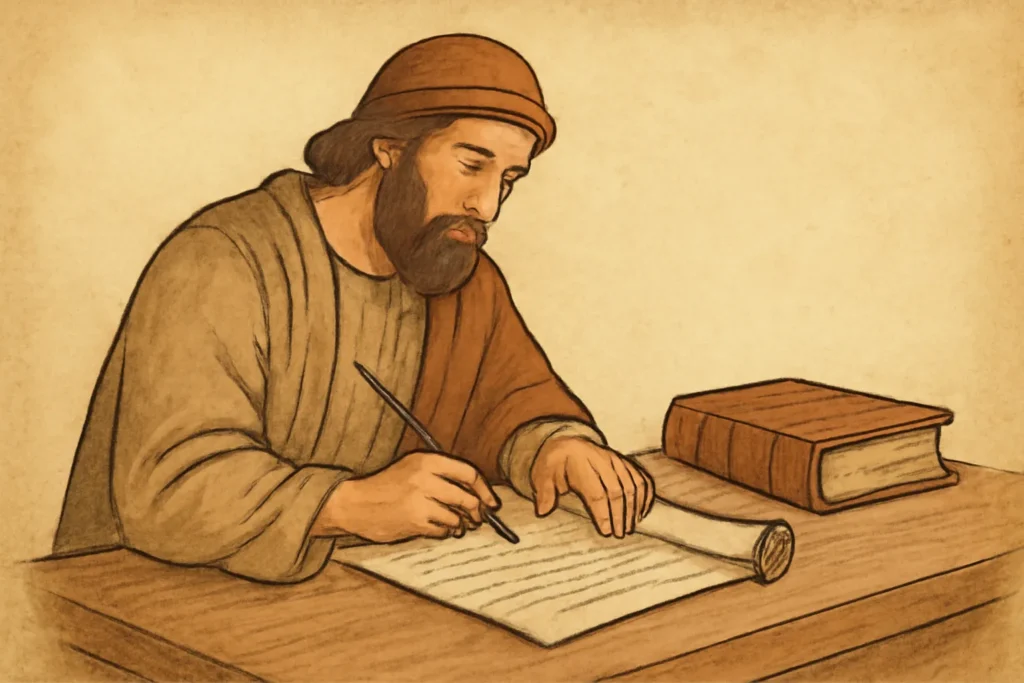
Ancient manuscripts were copied by hand, and the medium shaped how texts circulated. Scrolls gave way to codices (compact book-like formats), enabling easier comparison of texts, pagination, and cross-referencing. Scribal practices varied by region and culture, leading to deliberate textual decisions in copies—such as marginal notes, concordances, and standardized spellings—that influenced how the Bible was read and interpreted in different communities.
Masoretic Text and the Hebrew Bible
In the medieval Jewish tradition, the Masoretic Text became the authoritative Hebrew text of the Tanakh. Masoretes added vowel points, cantillation marks, and precise diacritical notes to preserve pronunciation, interpretation, and the canonical shape of the text. The Masoretic work played a significant role in shaping later translations and scholarly understandings of the Old Testament, even as some textual variants continued to be studied and debated by scholars.
Septuagint, Vulgate, and Global Translations
As Christian communities spoke Greek, Latin, Coptic, Syriac, and other languages, translations proliferated. The Septuagint served as the basis for many Christian Old Testament references in the early church. The Latin Vulgate, translated by Jerome in the late 4th century, became the standard text in Western Christianity for centuries. Later, translations into vernacular languages—such as English, German, and many others—made the Bible accessible to wider audiences and influenced theological reflection and reform movements.
Manuscript Traditions: Variants and Preservation
Textual variation is a known feature of ancient manuscripts. While most core narratives and doctrinal affirmations remained stable, small differences in wording, order, or inclusion of certain verses exist across manuscripts. Modern scholars study these variations to reconstruct probable original texts, understand the transmission history, and appreciate how communities engaged with the texts over time. The existence of copies with different readings reminds readers that the Bible’s formation was an ongoing, living process rather than a single, pristine moment.
From Collection to Canon: How Bible Readers Today Can Understand the Process
To appreciate how the Bible was compiled in the sense of assembling a trustworthy collection, it helps to map out the major phases. Below is a concise overview of the typical trajectory from ancient writing to a recognized canon:
Composition and circulation of individual writings in various communities.
Sharing and use in liturgy, catechesis, and private study, which demonstrated their value and authority.
Evaluation by communities based on criteria such as authorship, doctrinal coherence, and widespread acceptance.
Collections formed as churches grouped writings by genre (gospels, epistles, etc.) and as lists solidified in particular regions.
Coding and dissemination through ecclesiastical endorsements, synods, and translation efforts that standardized what counted as Scripture in different traditions.
In practice, the canon is not a finite book but a dynamic archive that reflects a long history of communal discernment. It remains shaped by faith communities as they continue to read, interpret, and reapply the texts in light of new questions and concerns.
Translations and Global Reach: How the Bible Became a World Text
Translations that Multiply Access and Influence
From the early centuries, translations broadened the Bible’s reach. The Septuagint was essential for Greek-speaking Christians; the Latin Vulgate served as the standard Bible for the Latin-speaking world; later, the reformation-era vernacular translations empowered lay readership and reshaped Christian practice in many regions. Each translation project involved choices about textual bases, linguistic idiom, and interpretive notes, all of which could influence how readers understood key doctrines and stories.
Translations affect language for doctrine, liturgy, and everyday faith. For example, differences in how key terms are rendered—such as terms for sin, faith, righteousness, and covenant—can subtly shape theological emphases. The process of translation also invites ongoing scholarly engagement with textual criticism, philology, and historical context, which, in turn, informs teaching, preaching, and personal devotion.
The Bible in History and Culture: How Compilation Shapes Belief and Practice
Liturgical Roles and Doctrinal Development
Across Christian and Jewish communities, the scriptural canon has informed worship and creedal formulations for centuries. Readings from the Bible have governed seasons, celebrations, and rituals, while doctrinal statements emerged in response to questions raised by the texts themselves. This interdependence—between the books chosen, how they are read, and how belief is articulated—illustrates the lasting influence of the compilation process on faith life.
Regional Traditions and Sacred Heritage
Regional traditions reflect how different communities connected with particular books as authoritative. In some settings, deuterocanonical books (those included in Catholic and Orthodox canons but not in the Protestant canon) were cherished for wisdom and liturgical value. In other communities, a leaner canon highlighted a different balance of texts. These variations do not negate the shared trust in a revealed Word, but they reveal how culture and history shape the formation and reception of sacred writings.
Common Myths and Realities About the Bible’s Compilation
Myth: The Bible was completed in a single council. Reality: The canon emerged gradually through centuries of use, debate, and regional agreements.
Myth: All books were universally accepted from the start. Reality: Some books faced widespread recognition earlier than others, and regional differences persisted for a time.
Myth: Canonization erased all textual variation. Reality: Manuscript variations exist, and textual criticism helps us understand the transmission history.
Myth: The Bible’s formation was purely political. Reality: While imperial influence mattered in historical moments, communal discernment, faith, and theological reflection were central to canon formation.
Conclusion: The Ongoing Story of Canonicity and Scripture
Understanding how the Bible was compiled invites us into a long conversation that spans languages, cultures, and centuries. The canon did not descend from on high as a finished, unchanging document; rather, it emerged through the steady work of communities who listened to the sacred texts, interrogated their meaning in new contexts, and sought to preserve what could best guide faith and life. From the earliest scrolls to modern translations, the Bible’s formation reflects a shared pursuit of truth, memory, and community that continues today. As readers in the twenty-first century, we engage with this history not as passive recipients but as active participants in a living conversation about what counts as sacred writing, how it should be read, and how it should shape our moral imagination and spiritual practice.
Further Reflections: Keeping the Conversation Open
In the end, the question of how the Bible was compiled is also a question about how communities discern, preserve, and pass on what they consider sacred truth. It is a historical inquiry with living implications for faith, study, and culture, reminding readers that the Bible’s authority rests not only in ancient manuscripts but in ongoing interpretation, daily practice, and shared witness across generations.







Leave a Reply