River God Book: Complete Guide, Summary, and Analysis
River God Book: Complete Guide, Summary, and Analysis
River God is a landmark entry in Wilbur Smith’s expansive Egyptian series, weaving a sweeping epic set in ancient Egypt along the life-giving Nile and the brutal politics of a royal court. This article offers a complete guide to the work, including a thorough summary, a detailed analysis of its themes and characters, and practical notes for readers who want to study or teach the River God novel as a piece of historical fiction. Throughout, you’ll find variations on the title—“River God book,” “this river god tale,” “the River-God saga”—to reflect the way readers refer to the volume in conversation and criticism.
The River God narrative unfolds as an intricately plotted historical fiction work that blends meticulous world-building with character-driven drama. Although the precise dynastic details are part of a broader fictional universe, the setting remains unmistakably Ancient Egypt: grand temples, ceremonial rites, and the constant struggle for power behind palace walls. The book centers on two core figures who embody opposite ends of the spectrum in this world: a genius slave-physician named Taita and the noblewoman Lostris, whose lineage and marriage propel a century-spanning saga of ambition, loyalty, love, and war. The interplay between personal loyalties and political ambition drives the plot, turning a family saga into a sweeping epic about empire, technology, and the human cost of power.
Key points to understand about the river-god story as a literary work:
It is both a thriller-like adventure and a mythic-historical saga.
It foregrounds innovation and knowledge (medicine, engineering, strategy) as sources of power in a world governed by charisma and force.
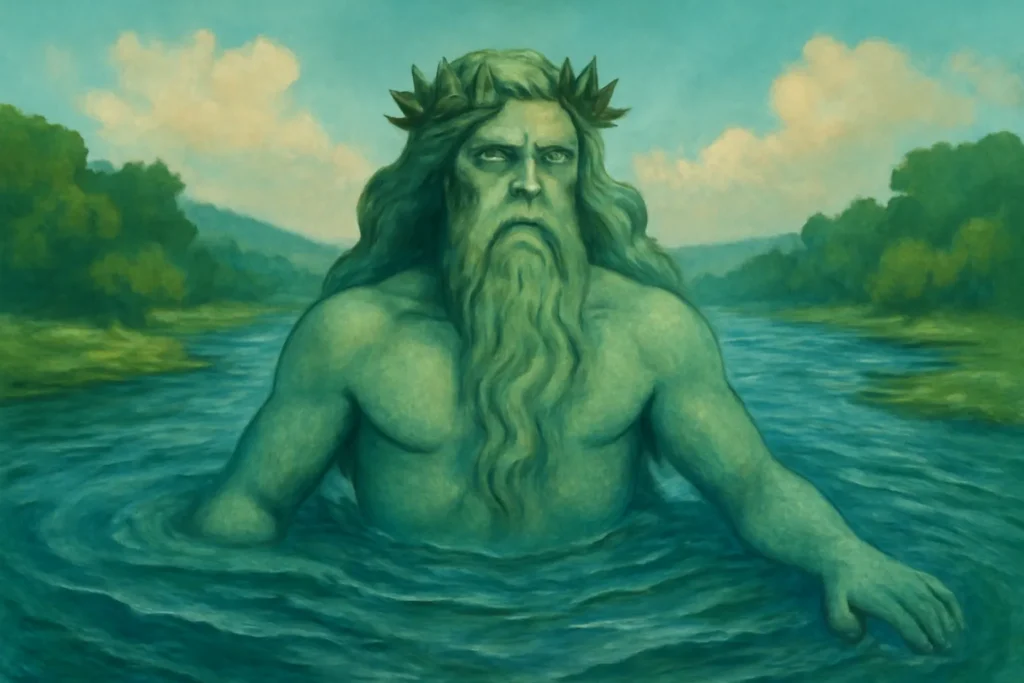
The Nile itself functions as a living character, sustaining life while shaping political fortunes and the rhythms of conquest.
What begins as a personal alliance between two people broadens into a multi-generational epic about the rise and fall of dynasties, cities, and entire civilizations.
Plot Summary (River God)
Act I: Beginnings and Bonding
The narrative opens with the introduction of Taita, an extraordinary physician, inventor, and spy who is enslaved in an era of great temple powers and royal intrigue. His intellect and skills make him indispensable to the royal household, and his bond with Lostris, a young noblewoman destined for a pivotal role in Egypt’s political life, becomes the emotional and strategic fulcrum of the story. In a culture where authority flows from the crown and the gods, Taita’s path from bondage to professional influence is a key thread that drives the opening acts. Simultaneously, Lostris’ education, beauty, and political acumen mark her as a future leader capable of steering events, even as she navigates the expectations placed upon her by custom and kin.
Act II: Intrigue, War, and Empire-Building
As the River God narrative advances, court intrigue intensifies. Taita’s knowledge—of medicine, engineering, and human nature—gives him leverage, while Lostris’ personal charisma and strategic mind catalyze alliances and confrontations that shape the north-south balance of power. The epic unfolds through a series of military campaigns, diplomatic maneuverings, religious ceremonies, and betrayals that test loyalty and resolve. Temples, palaces, and cemeteries become stages for high-stakes political theater, where the line between friend and foe is continually shifting. The book explores the costs of ambition—on individuals, families, and the great monuments that symbolize an empire’s reach and fragility.
Act III: Legacy, Loss, and Continuity
In the climactic arcs, the intertwined destinies of Taita and Lostris culminate in decisions that reverberate through generations. The river’s currents carry both wisdom and peril, and the tale turns on choices about power: when to use it, who should wield it, and what moral price must be paid for the project of empire. The ending offers a mixture of triumph and tragedy, leaving readers with a sense of the cyclical nature of history—how civilizations rise, endure, and eventually yield to new horizons, all under the inexorable pull of the Nile.
While the novel features a broad cast, two figures anchor the story and embody its central tensions:
Taita — A brilliant slave who serves as physician, engineer, spy, and cunning adviser. His intellectual versatility and moral ambiguity invite readers to weigh the value of knowledge against the moral complexities of power. He embodies a recurring Smith archetype: the underdog who uses intellect and resourcefulness to influence history from the shadows.
Lostris — A noblewoman whose lineage and marriage position her at the heart of the royal court’s ambitions. She is portrayed as both regal and resolute, capable of leadership and fierce loyalty. Lostris’ character provides a lens through which the reader can explore questions of agency, gender, and the burdens placed on those who rule or are married into power.
Beyond these two, the River God book features a spectrum of figures—warriors, priests, courtiers, and scribes—each contributing to the texture of a civilization in motion. The interplay among these characters highlights broader themes such as:
The tension between individual cunning and institutional power.
The way knowledge and science can outmaneuver brute force in the long arc of history.
The moral ambiguities that arise when noble goals require morally questionable means.
Themes and Analysis
Power, Leadership, and the Cost of Empire
One of the strongest throughlines in the river-god tale is the examination of leadership—the risks that accompany centralization of power and the price paid by those who seek to build or preserve an empire. The narrative suggests that effective leadership depends as much on strategic foresight and humane governance as on military prowess or religious sanction. The river serves as both sustenance and allegory for political authority: it nourishes life and prosperity, yet its floods can obliterate where power has become brittle or disconnected from the people.
Knowledge as Power: Medicine, Engineering, and Strategy
Taita is the embodiment of how scientific knowledge and practical ingenuity can alter the course of events. From advances in medical practices to clever engineering solutions that unlock strategic advantages, the novel elevates intellectual gifts as legitimate and essential forms of power. This theme resonates with readers who appreciate how characters who understand the world—its physiology, its geography, and its calendars—can outmaneuver those who rely solely on force or ritual.
Fate, Prophecy, and Free Will
In a narrative that leans on mythic resonance and historical texture, questions of fate versus agency recur. The river’s inevitability mirrors the sense that dynastic cycles are larger than any single ruler or strategist. Yet the protagonists’ choices—particularly those of Lostris and Taita—illustrate a counterpoint: individuals who shape their own destinies within the constraints of social order and divine omens. The tension between predetermined fate and deliberate action provides much of the novel’s moral and emotional tension.
Romance and devotion sit alongside political calculus, offering a human center to the epic. The relationship between Lostris and Taita, while defined by trust and mutual dependence, also tests loyalties across generations. The theme of betrayal—whether by close allies, family, or political factions—adds a Shakespearean undertone to an Egyptian epic, reminding readers that personal bonds can be the most fragile and consequential of all currencies in an empire’s economy.
Religion, Myth, and Cultural Imagery
The River God book makes frequent use of religious ritual and myth to frame the action. Gods, temple rites, and symbolic imagery enrich the texture of the narrative, giving the historical setting a layer of symbolic meaning. This spiritual dimension encourages readers to consider how belief systems stabilize societies, legitimize rulers, and provide common ground for diverse factions within a large polity.
Setting, Context, and World-Building
The Egyptian setting is not merely a backdrop; it is a living force that shapes narrative possibilities. The banks of the Nile act as lifelines for agriculture, commerce, and travel, while cities such as Thebes and other urban centers become theaters of diplomacy, espionage, and ceremonial display. The climate and geography influence military campaigns, resource distribution, and social hierarchies, making the river a central agent in the drama of empire-building. The author’s world-building emphasizes sensory detail—the heat of the sun on temple stones, the scent of incense in processions, the clang of weapons, and the textures of papyrus and linen—inviting readers to experience a fully realized historical milieu.
Narrative Style and Structure
The River God book employs a multi-voice narrative approach that allows readers to experience events from different angles, while still maintaining a strong focus on Taita and Lostris. Smith’s prose blends brisk, action-oriented sequences with lyrical descriptions of landscape and ritual. The rhythm shifts between intense, high-stakes scenes and slower, reflective passages that probe the questions of ethics and memory. The use of foreshadowing and prophetic motifs creates a sense of inevitability, even as characters attempt to bend the future to their will. Readers who enjoy historical fiction with literary depth often cite this balance as a key strength of the River God tale.
The River God and the Egyptian Series: Placement and Continuity
River God is the cornerstone of Wilbur Smith’s Egyptian trilogy (often read as a connected cycle with The Seventh Scroll and the Eye of the Sun, among others). As the opening volume, it introduces the essential dynamic between Taita and Lostris, and it establishes the broader world in which later installments take place. The subsequent books expand the scope—continuing to explore themes of empire, civilization, and the human facets of historical transformation—while maintaining recognizably Smithian motifs: daring escapades, high-stakes politics, and vividly drawn landscapes. For readers who plan to traverse the full sequence, River God provides critical backstory and thematic seeds that pay off in later volumes.
Historical Context and Realism in the River God Narrative
Though fictional, the River God novel engages with an intensive sense of historical realism. Smith’s attention to period detail—from architectural forms and temple layouts to social customs and court etiquette—helps anchor readers in the ancient world. At the same time, the plot remains rooted in character psychology and dramatic necessity, using historical atmosphere to intensify conflict rather than to deliver a documentary account. This blend of historical ambiance and narrative propulsion is a hallmark of the book’s approach to historical fiction: it invites both immersion in a past civilization and engagement with enduring questions about power, ethics, and human resilience.
Readers who study the River God book from a literary perspective will notice several enduring devices at work:
Symbolism—The Nile, temples, and sacred symbols recur as emblems of life, authority, and the limits of human control.
Foreshadowing—Hints about the future affect present decisions, enhancing the tension between knowledge and fate.
Character Arcs—Two central figures, Taita and Lostris, undergo transformations that illuminate the text’s moral arc from vulnerability to capable agency.
World-Building through Detail—The author uses concrete details of food, attire, architecture, and ritual to create a palpable sense of the epoch.
Reception and Impact
Since its publication, the River God book has circulated widely among fans of historical fiction and Wilbur Smith’s broader readership. Critics and readers often praise its ambitious scope, its memorable central partnership, and its capacity to blend action with contemplative passages about power and destiny. Some readers approach the work as a gateway into the larger Egyptian saga, while others appreciate its standalone value as a richly imagined historical adventure. The novel’s enduring appeal lies in its combination of fierce adventure and philosophical inquiry, offering both page-turning excitement and thoughtful questions about leadership, memory, and the human costs of empire.
Comparisons Within the Egyptian Series
For those exploring the entire cycle, River God serves as a touchstone for recurring concerns and motifs. In comparison with later installments, this first volume tends to foreground the personal, intimate stakes of Taita and Lostris before expanding outward to the broader dynastic shifts that come to characterize later books. The evolution across installments typically tracks a widening of geographic scope, deeper examinations of religious and political institutions, and an escalation of narrative complexity as generations pass. If you’re reading the series in order, River God provides essential context for understanding the attitudes toward power and knowledge that recur in subsequent volumes.
Study Tips for Readers and Educators
Track the relationships between Taita and Lostris as a lens for examining how intelligence and loyalty influence political outcomes.
Make note of recurring symbolic motifs (the Nile, temples, sacred rites) and consider what they signify about authority, life, and mortality.
Compare the portrayal of knowledge vs. power in this River God tale with other historical fictions you encounter in the same course or reading track.
Use the book’s multi-voiced perspective to discuss how narrative reliability shifts when following different characters. Consider who tells the story and why.
Explore the relationship between mythic elements and historical realism to understand the author’s approach to blending legend with record-like detail.
Frequently Asked Questions (FAQs)
What is the River God about? It is a historical fiction epic set in ancient Egypt that follows the intertwined fates of a brilliant slave-healer, Taita, and a noblewoman named Lostris, within a world of palace intrigue and Nile-driven civilization.
Who are the main protagonists? The central figures are Taita, a master physician and polymath, and Lostris, a noblewoman whose life and marriage place her at the heart of royal power.
Is River God a standalone novel? It is the first book in a broader Egyptian series; while it can be read on its own, it invites comparison with other volumes that expand the saga of Egypt’s dynastic and imperial history.
What themes stand out? Power and leadership, knowledge versus tradition, fate and free will, loyalty and betrayal, and the role of myth and religion in shaping political life.
How should I read this book in an academic context? Consider it as both a history-informed narrative and a meditation on the human dimensions of empire-building. Analyze character arcs, motifs, and the interplay between realism and myth.
Whether you approach the River God book as a gripping adventure or as a richly textured study of power and civilization, it offers a compelling synthesis of action, intellect, and emotion. The River God tale invites readers to contemplate how individuals can shape the course of history, even within systems designed to confine and control them. It also reminds us that the Nile’s ancient currents carry not just ships and merchants, but ideas, innovations, and destinies that define an era. For fans of historical fiction, this Egyptian epic provides both a vivid window into a distant world and a resonant mirror of contemporary concerns about leadership, science, and moral responsibility.
In sum, the River God book stands as a keystone in Wilbur Smith’s Egypt-centered corpus. Through the dynamic partnership of Taita and Lostris, the novel blends battlefield drama with intimate questions about what it means to govern a people—and what it costs to remember them once the sands shift and a new age begins. Whether you are reading for pleasure, teaching a class, or crafting a comparative study of historical fiction, this work offers abundant material to explore, discuss, and revisit. The river, as it runs through the narrative, remains a powerful emblem of life, danger, and the inexorable flow of history.







Leave a Reply