Shema is one of the most central declarations in Judaism. In Hebrew, it is a compact word that means "hear" or "listen," but in practice it signals an affirmation of faith, a pledge of allegiance to the one God, and a lifestyle of education and observance. This article explores Shema in Hebrew from three angles: its meaning, its text, and its pronunciation. We will look at how the term is used, how the verses are read, and how communities around the world encounter this ancient formula in daily life and liturgy.
The word שְׁמַע (Sh’má) opens the opening line of the Shema, and it invites listeners to hear with attention and obedience. In Biblical Hebrew, hearing is not merely a passive sense perception; it is intimately tied to response, compliance, and commitment. The immediate context of the Sh’má is a call to recognize the unity of God (monotheism) and to respond with love, devotion, and action.
The phrase “שֶׁמַע יִשְׂרָאֵל” is frequently translated as "Hear, O Israel" or more dynamically as "Listen, Israel." In practice, Judaism teaches that faith is not merely a matter of belief but of living in a certain way: worshiping the One God, loving God completely, and transmitting that commitment to the next generation. For many readers, the Sh’má embodies the central commandment to live a life oriented toward God.
Beyond its theological content, the Sh’má also serves as a pivot for Jewish law and practice. The verses that follow articulate two major themes:
Loving God wholeheartedly: devotion is expressed with the heart, soul, and strength.
Teaching and translation into daily life: parents are urged to teach the words to their children, to talk about them in daily routines, and to bind the phrases on the hands and between the eyes so that the divine command remains present in ordinary acts.
The Shema is often paired with two other verses in its liturgical life: the command to teach the words to one’s children (to impart Jewish identity across generations) and the ritual practice of inscribing certain verses as reminders in daily life (via tefillin, mezuzot, and wooden doorposts). For many Jewish communities, the Shema is not just a phrase to recite; it is a framework for ethics, education, and ritual.
Text of the Shema
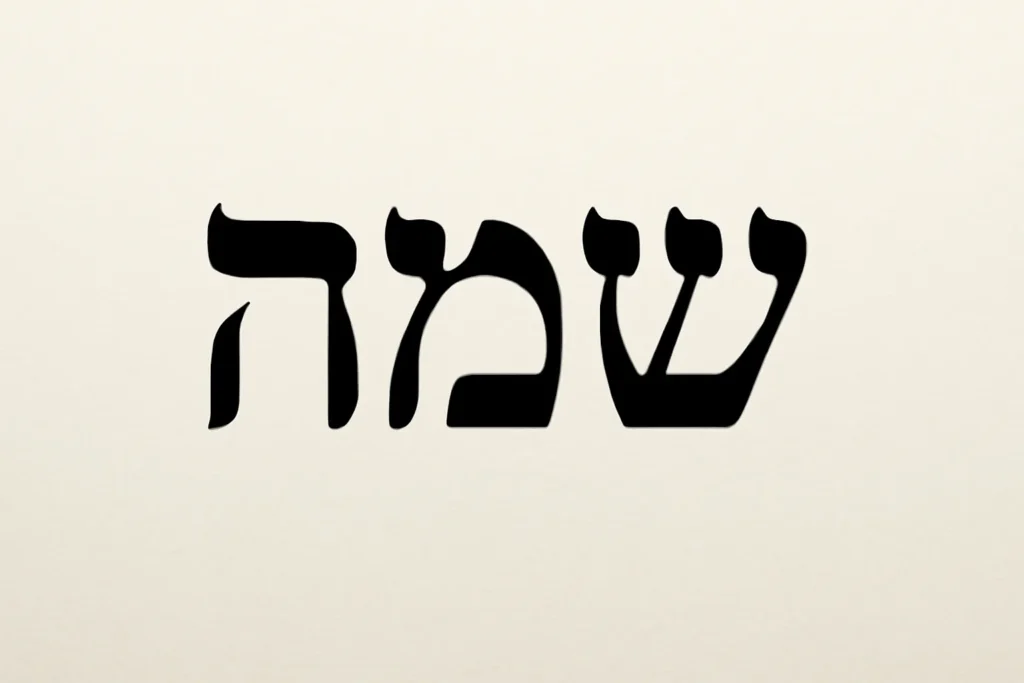
The core formula Sh’má Yisra'el is the opening declaration of faith. In its traditional Hebrew form with niqqud (vowels) and cantillation marks, it reads as follows:
The following verses form the classic Shema passage in Deuteronomy 6:4–9, and they are central to the liturgical and everyday life of many Jews. The most commonly cited arrangement includes three sections from the Torah:
Ve’ahavta—the call to love God with all one’s heart, soul, and strength. In Hebrew: וְאָהַבְתָּ אֵת יְהוָה אֱלֹהֶיךָ בְּכָל-לְבָבְךָ וּבְכָל-נַפְשְׁךָ וּבְכָל-מֹאֳדֶךָ.
Vehaya—the command to keep these words on the heart and to teach them to children; to speak of them at home and on the road; to bind them as a sign on the hand and to place them between the eyes; and to write them on the doorposts of the house. In Hebrew: וְהָיוּ הַדְּבָרִים הָאֵלֶּה אֲשֶׁר-אַֽנֹכִי מְצַוְּךָ הַיּוֹם עַל-לְבָבֶךָ, וְשִׁנַּנְתָּם לְבָנֶיךָ וְדִבַּרְתָּ בָּם בְּשִׁבְתְּךָ בְבֵיתֶךָ וּבְלֶכְתְּךָ בְדֶרֶךְ וּבְשָׁכְבְּךָ וּבְקוּמֶךָ.
K'shartan / Ot and Totafot—the instruction to bind the words as signs on the hand and to place frontlets between the eyes, and to write them on the doorposts. In Hebrew: וְקוֹשַׁרְתָּם לְאֹת עַל-יָדֶךָ וְהָיוּ לְטֹטָפֹת בֵּין-עֵינֶיךָ; וְכָתַבְתָּם עַל-מְגִלֹת יְדֶךָ.
A close look at these lines shows the integration of doctrine and daily habit: belief is not separate from action. The syntax and cadence of the verses have been preserved across generations, and they have become a template for how Jewish households think about education, family life, and the practice of faith.
Notes on the full text
The Shema as a scriptural unit is traditionally read in two major Torah portions in most communities: Deuteronomy 6:4–9 and Deuteronomy 11:13–21, together with the preceding verses that culminate in the affirmation of the one God. The section Ve’ahavta (Deuteronomy 6:5) is often memorized as part of the daily routine, and the cantillation marks (trope) used when these verses are read in the synagogue give the lines a musical architecture that aids memorization.
In many editions liturgical readers will find the Shema starting with “שמע ישראל” and ending with “בכל מאודך” or with the full sequence including the subsequent verses that address teaching children, wearing tefillin, and writing on doorposts. Some modern editions present the three sections grouped together for study or for daily recitation, while others separate them as distinct verses for liturgical use.
Pronunciation and cantillation
The Sh’má is pronounced with attention to syllable stress and vowel quality, and in most Jewish communities the ta’amim (cantillation marks) guide the musical ascent and descent of the reading. For readers who are not fluent in Torah cantillation, pronunciation can be described in a few practical steps.
Sh'má begins with the syllable sh as in shop, followed by má with a short /a/ sound. The second syllable drops the stress slightly, creating the natural cadence of Biblical Hebrew.
The name Yisra'el uses a two-syllable pattern: Yee-srah-EL, with emphasis on the last syllable. The Hebrew vowels guide the vowels: יִשְׂרָאֵל is typically pronounced with a short i in the first syllable, a sheva under the ש and a long a under the אֵל.
Adonai as the divine name is often pronounced a-doh-nye in many readings; however, in many communities the name is whispered or replaced by Hashem in everyday speech and vocalized readings to avoid mispronunciation in casual settings.
The section Ve’ahavta continues with the imperative verbs: ve-ahavta (“and you shall love”), et Meant as a direct object marker.
For those studying pronunciation, here are a few practical tips:
Consonants in Hebrew often have a fixed value; pay attention to final consonants, which in Biblical Hebrew sometimes carry additional phonetic nuance (like final t or k).
Vowels — niqqud (vowel marks) are helpful for learners. In unpointed (ktiv) Hebrew, you rely on context and tradition to supply the vowels. Most readers use a pointed text (with niqqud) in formal settings.
Trope — cantillation marks shape prosody and meaning. While you can read the words without cantillation, the cantillation helps convey syntax and emphasis and is essential for synagogue chanting.
The Shema sits at a crossroads in Jewish theology. It is a direct declaration of the oneness of God, setting the theological tone for the entire Jewish tradition. The prologue “Sh’má Yisra’el” is often seen as the opening to a broader scriptural conversation about covenant, law, and the daily memory of God’s presence.
Scholars and commentators have noted several features:
Monotheism as a lived, daily practice rather than a mere doctrinal statement. The verse that follows emphasizes loving God with the heart, soul, and strength, linking creed to ethical action.
The intergenerational dimension: parents are told to teach the words to their children. The home becomes a classroom of faith where learning and daily life intersect.
Ritual life through mezuzot and tefillin. The verses about binding on the hand and between the eyes are understood as foundational images for these ritual objects, which contain parchment scrolls with verses from the Torah.
Usage in daily life and liturgy
Across Jewish communities, the Shema is recited at specific times and in particular contexts:
Shacharit (morning prayer): the Shema, or parts of it, is recited as part of the morning liturgy in many traditions.
Ma’ariv (evening prayer): the Shema is also included in the evening service in many communities, emphasizing the continuity of the day and the constant memory of God.
Mezuzah and Tefillin: the verses of the Shema appear on the parchment scrolls placed in a mezuzah on the doorpost and in the tefillin worn by observant men (and by some women) during weekday morning prayers.
Torah study and education: the Shema is frequently memorized by children and studied as a core text during lessons on faith, identity, and the commandments.
The Shema’s presence in daily life reflects a broader Jewish ethos: belief is expressed not only through belief statements but through daily actions, households, and the rhythms of prayer. The repeated recitation—twice daily in many communities—serves as a rhythm that marks time and invites reflection on the kind of relationship one has with God.
Variations and semantic breadth
The concept of Shema expands beyond the single phrase. In Hebrew and Jewish literature, related terms appear to describe similar acts of listening and belief:
Shma (alternative transliteration): some texts drop the vowel markers and spell it as Shma, keeping the consonantal shape intact. This variation highlights the root letters and is common in English-language scholarship and transliterations.
Sh'ma Yisrael and Shma Israel are parallel transliterations used in different communities; both refer to the same line and meaning.
Echod (one): the term echad in the line Adonai Echad emphasizes the oneness of God. The semantic breadth here ranges from numeric unity to the indivisible unity of God in Jewish theology.
Baruch Hashem and Adonai vs. YHVH in scriptural quoting reflect variations in how the divine name is treated in speech and writing across communities. Readers often substitute Hashem in spoken language to honor tradition and avoid mispronunciation.
Different Jewish communities bring distinctive musical and interpretive flavors to the Shema:
Ashkenazi chant possibilities emphasize a particular cantillation and cadence, with melodies passed down through communities and synagogues.
Sephardi and Mizrahi traditions may employ different melodic lines and emphasize certain cantillation notes that reflect their own liturgical heritage.
In Modern Hebrew usage, the Shema remains a foundational phrase in education, law, and public prayer—an anchor in both communal and private life.
Theological reflections and cross-cultural resonance
The Shema’s insistence on the unity of God resonates beyond Jewish contexts. For Christians and Muslims, monotheistic language in the ancient Near East has served as a point of contact and dialogue, though interpretations differ about the nature of God, revelation, and covenant. Within Judaism, the Shema’s formula—when read aloud—creates a shared moment of memory, allegiance, and responsibility. It is both a doctrinal statement and a pedagogy for living a life of ethical action and spiritual mindfulness.
Readers often have practical questions about how to engage with the Shema in modern life. Here are a few frequently asked questions and concise explanations.
Why is the Shema recited twice daily? The practice reflects a covenantal rhythm: God’s unity and love are kept in the forefront of the day as people begin the day (Shacharit) and end the day (Ma’ariv). It is a discipline of memory and devotion, linking morning and evening prayers to an awareness of God in all activities.
What is the significance of the “bind them on your hand” and “between your eyes” verses? They symbolize actions (hand) and memory or attention (between the eyes). In practice, they are linked to the tefillin, which contain Torah verses on parchments worn during weekday morning prayers.
Are there different textual versions? The essential text is stable, but there are textual variants in the medieval and modern printed editions, as well as differences in whether the full three-part paragraph is included in daily recitation or studied as a separate unit. Community customs can shape which verses are emphasized in daily practice.
Glossary of key terms
The following list highlights important Hebrew terms that frequently appear in discussions of the Shema:
Sh'ma (שְׁמַע): hear, listen; the opening verb of the Shema.
Yisra'el (יִשְׂרָאֵל): Israel; often used to refer to the people and the land in this context.
Adonai (אֲדֹנָי): a traditional vocalization for the Tetragrammaton, YKVH; in reading, many say Hashem instead to avoid pronouncing the divine name.
Eloheinu (אֱלֹהֵינוּ): our God.
Echad (אֶחָד): one, united, singular; emphasizes oneness of God in Jewish theology.
Ve’ahavta (וְאָהַבְתָּ): and you shall love.
V’ahavta et Adonai Elohecha: the focal instruction to love God with all one’s heart, soul, and strength.
Variations by community and translation
Across communities and languages, the Shema has been rendered with nuance while preserving its core meaning. Here are a few representative variations:
English translations: The English “Hear, O Israel: the Lord is our God, the Lord is one” is a faithful rendering of the opening line, while subsequent lines are translated to convey the same call to love, teach, and remember God in daily life.
Modern Hebrew renderings: In contemporary Hebrew prayer books, the text is presented with modern punctuation and typographical conventions, but the meaning remains the same. The cantillation marks are sometimes simplified for study purposes while preserved in liturgical books that are chanted in the synagogue.
Liturgical variants: Some communities include the full three-part passage, while others recite selected verses as part of the morning and evening services. The mezuzah and tefillin traditions reflect the verse about writing and binding the words to our hands and between the eyes.
Conclusion — not as a heading, but as a closing reflection
The Shema is more than a sentence to memorize; it is a doorway into a comprehensive vision of Jewish life. It gathers belief, education, prayer, and ritual into a single, daily practice. By reciting the words, Jews reaffirm a covenantal relationship with the God of Israel, commit to educating the next generation, and participate in a tradition that has shaped philosophical, ethical, and communal life for millennia. Whether approached as a liturgical refrain, a theological declaration, or a practical command to teach and remember, the Shema remains a living, breathing core of Jewish identity.
Further resources for study
Those who wish to explore the Shema in greater depth may consult traditional and contemporary scholarship, including:
Printed Chumash editions with parashot and cantillation notes for Deuteronomy 6:4–9 and 11:13–21.
Commentaries on Devarim (Deuteronomy) that discuss the theology of one God and the command to teach, such as classic rabbinic sources and modern scholarly work.
Aggregated resources on Jewish liturgy that explain the structure of the morning and evening services and the role of the Shema within them.
If you’d like, I can provide an expanded set of resources, including a transliteration guide, a more precise line-by-line Hebrew text (with cantillation marks), or audio references to common melodies used for the Sh’má in various communities.








Leave a Reply