What Is Inside the Mezuzah? A Complete Guide to Mezuzah Scrolls, Contents, and Jewish Tradition
What Is Inside the Mezuzah? A Complete Guide to Mezuzah Scrolls, Contents, and Jewish Tradition
Every mezuzah is a compact fusion of text, ritual, and craftsmanship. Inside a small protective case on a doorway lies more than a parchment—it's a scroll that carries essential portions of the Torah, written with care and intention. This guide explains what is inside the mezuzah, why those contents matter, and how Jewish tradition treats the scrolls, the cases that hold them, and the ritual of affixing them to doorposts.
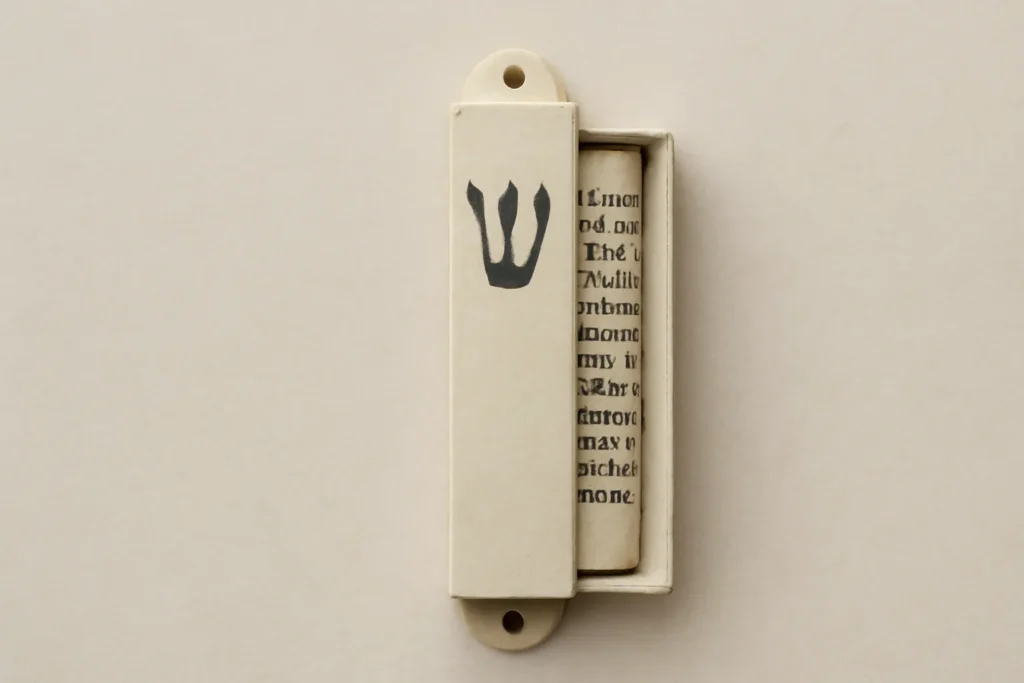
At the heart of the mezuzah are two things: the parchment scroll, known in Hebrew as klaf, and the case that protects it. The scroll is a carefully prepared piece of parchment on which sacred Hebrew text is written. The case, or batim (plural of bat, meaning “house” or “container”), is the outer shell that keeps the scroll safe and makes the mezuzah easy to affix to a doorpost. Together, the parchment inside and the box outside form a tangible link between scripture and daily life, a daily reminder of the covenant and the responsibilities of home and family.
The parchment: klaf and the scroll inside
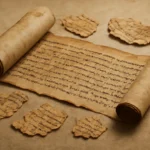
The interior of the mezuzah houses a kosher parchment on which two specific Torah passages are inscribed. These passages are the Shema (Deuteronomy 6:4–9) and a second portion from Deuteronomy 11:13–21. The parchment is written in Ktav Ashuri, the traditional square Hebrew script used for Torah scrolls and other sacred writings. The process requires a trained scribe, or sofer, who follows strict halachic rules to ensure the text is perfect and{" "}kosher for ritual use.
First portion: the Shema. This begins with the famous declaration, “Sh’ma Yisrael Adonai Eloheinu Adonai echad” (Hear, O Israel: the Lord is our God, the Lord is One). The text continues with commands to love God wholeheartedly, to teach these words to one's children, and to keep them close—binding them on the hand and placing them as frontlets between the eyes, as well as writing them on the doorposts of the house and on gates.
Second portion: the divine instruction to dwell in obedience. The selected verses from Deuteronomy 11:13–21 emphasize the rewards of fidelity to God’s commandments, the warning against idolatry, and the injunction to inscribe these words on the doorposts so they would be remembered in daily life and in every generation.
Two-part structure. In most mezuzot, the two passages are written on a single parchment that is folded or rolled so the entire scroll can fit inside the case. The scrolling arrangement is designed to present the text in readable form when the scroll is opened or unrolled slightly for inspection, yet compact enough to reside inside a small container on the doorpost.
Textual integrity. The letters must be perfect and unaltered. A single broken line, missing stroke, or stray mark can render the scroll non-kosher. This is why the writing is performed by an experienced sofer under specific conditions, and the finished klaf is carefully inspected before it is placed into the mezuzah case.
The writing process: the sofer and the craft of a kosher scroll
The creation of a mezuzah scroll is as much a ritual as an art. A sofer writes the text with a traditional quill or reed and special ink on prepared parchment. Each letter is crafted with precision, and certain letters or groups of letters require care not to become ambiguous. The process includes:
Preparation of the parchment. The hide must be properly treated to create a smooth, durable surface suitable for legible writing for generations.
Ink and script. The ink is designed to be dark and lasting, and the script is a standardized Hebrew font used in Torah scrolls (often referred to as Ktav Ashuri in the context of sacred writing).
Division of the text. The text is arranged so the two passages appear in a readable order on the scroll, often with careful spacing between the sections to indicate their distinct parts.
Quality checks. After the writing, the scribe checks each stroke and letter for accuracy and completeness. If any letter is defective, the scroll may be invalidated and must be rewritten.
Sanctified handling. The name of God (the Tetragrammaton) appears within the Shema portion and must be treated with reverence during the writing. The scribe follows specific halachic rules governing the writing of sacred names and phrases, including how to pause and resume the work and how to store the parchment until it is placed inside the mezuzah case.
The outer container: the mezuzah case and its role
The mezuza case (also called the batim in some traditions) serves as a protective housing for the klaf. The exterior is not merely decorative; it acts as a safeguard against moisture, temperature changes, and handling. The case is usually made to fit the scroll securely and to allow the scroll to be easily inspected or replaced when needed.
The shin and other symbols on the case
A distinctive feature of many mezuzah cases is the letter Shin (ש) prominently displayed on the exterior. In Ashkenazi practice, the Shin is often fashioned with three prongs, resembling a stylized “Sh” and symbolizing the Hebrew word Shaddai, a name associated with God. In some traditions the Shin may be present on one or more sides or on the top of the case, serving as a hint that a sacred scroll lies within. While the appearance of the case varies widely—wood, metal, ceramic, or bone—its purpose remains the same: to house a kosher scroll and to mark the doorway with a reminder of the covenant.
Mezuzot come in a range of styles and materials, from simple wooden boxes to ornate metal envelopes. Some homes place a single mezuzah on each doorpost of the entryway, while others place mezuzot on every interior room door as well. In homes with double doors, it is common to place a mezuzah on each leaf, sometimes sharing a casing, sometimes with two separate scrolls. The choice of case and placement is influenced by tradition, personal preference, and communal custom, but the inner contents—the klaf with its two Torah portions—remain the same in each kosher scroll.
What the texts mean in daily life
The two passages inside the mezuzah are not only historical records; they are living statements of faith with a direct connection to daily routines and the rhythm of a home. The passages emphasize two core ideas:
Affection for God and obedience to the commandments. The Shema proclaims the unity of God and commands love and devotion with every aspect of life—mind, heart, and action. This is not a philosophical position alone; it is a call to live with intentional awareness of the divine presence in the household and beyond.
Reminder of moral obligation at home. By instructing the faithful to bind words on the hand and to place them on doorposts, the text makes a literal and symbolic bridge between private space and public life. The mezuzah becomes a recurring prompt to study, teach, and act according to the commandments.
In daily practice, the mezuzah is a way to honor the home as a place of ethical and spiritual activity. It invites residents and visitors to pause, reflect, and consider the responsibilities that accompany belonging to a people with a long tradition of covenantal living.
Over time, a mezuzah scroll may be inspected by a professional sofer or by a knowledgeable member of a community who is familiar with the signs of wear or damage. The goal of inspection is to ensure the text is still legible and the parchment remains undamaged. If the parchment shows signs of humidity, mold, fading ink, or tearing, it is typically replaced with a new, kosher klaf. Regular checks are part of maintaining the integrity of the mitzvah.
Care and handling tips
Keep the scroll dry. Moisture can warp parchment and cause ink to blur, which endangers the scrolled text.
Avoid direct sun and extreme temperatures. Prolonged exposure can degrade parchment and ink.
Inspect the case, not just the text. A damaged outer case can expose the parchment to moisture or dust, so check for cracks and leaks.
Replace when necessary. If the scroll becomes illegible or the parchment shows significant wear, a new klaf should be prepared and inserted by a qualified scribe.
Respect the process. Replacing a scroll is not merely a mechanical act; it is part of maintaining the sanctity of the mitzvah and the text it contains.
The mezuzah is a centuries-old practice that connects generations through a tangible object. Several elements help explain why the contents have endured with such continuity:
Textual stability. The two Torah passages chosen for the mezuzah have a special status: they encapsulate central commands and the Shema’s articulation of God’s unity. The permanence of these texts reinforces a sense of continuity across generations and communities.
Halakhic clarity. The rules governing what counts as a kosher scroll are well defined in rabbinic jurisprudence. This clarity helps ensure that, despite regional customs and artistic variations in case design, the interior text remains consistent and valid for the mitzvah.
Symbolic reach. A doorpost is a threshold—between spaces, between the private and public, between the sacred and the ordinary. Placing the mezuzah at this boundary makes the text’s content a living presence within the home, not a relic on a shelf.
Craftsmanship and reverence. The role of the sofer and the ritual surrounding the creation of the scroll reflect a deep reverence for the written word and for the divine name contained in the text. This reverence sustains the practice as a meaningful, ongoing expression of Jewish identity.
While the core contents remain constant, the practice around mezuzahs shows variation in several ways that reflect diversity within Jewish life:
Double scrolls and multiple leaves. In homes with multiple doorways or doors with two leaves, some people place separate scrolls for each door or leaf. Each scroll contains the standard two passages, but the casing and installation may differ to suit the space and the door frame.
Different case aesthetics. The outer case can be simple or highly decorative, with carvings, inlays, or metalwork. In some communities, the case may be inscribed with additional blessings or symbols that carry personal or communal significance, while always preserving the integrity of the inner text.
Regional and communal customs. Depending on Ashkenazi, Sephardi, or Mizrahi traditions, there can be subtle differences in text layout, where the scroll is placed (some prefer a winding arrangement, others a stacked arrangement), and how the Shin is depicted on the case.
Second scroll in certain spaces. Some households place mezuzah scrolls on interior doors beyond the main entry, treating these interior spaces as part of the ritual landscape of the home—always in keeping with halakhic guidance and community norms.
Choosing, installing, and maintaining mezuzot involves practical steps as well as adherence to tradition. Here are guidelines that many families find helpful:
Choose a kosher scroll. If you’re purchasing a mezuzah, ensure the klaf is written by a qualified sofer and that a reputable rabbi or expert has verified its kosher status.
Check for proper placement. The mezuzah should be affixed on the right-hand doorpost as you enter the room or house, typically at an upper third height, according to local custom. There are variations, so it’s wise to follow the norms of your community or your family tradition.
Respect the appropriate cadence. Some people perform a brief blessing when affixing a mezuzah; others do not, depending on communal custom. If a blessing is said, it is typically: “Blessed are You, Lord our God, King of the Universe, who has sanctified us with His commandments and commanded us to affix the mezuzah.”
Care for the scroll and case. Keep the case clean and dry, check the parchment regularly, and replace the scroll if it shows wear or illegibility as noted by a qualified sofer.
Learn and observe local practice. Practices around mezuzahs vary between communities (A shul community, a family home, or a communal building), so it helps to learn and follow the guidelines of your local rabbi or community leaders.
What exactly is inside the mezuzah?
Inside the mezuzah is a parchment scroll (klaf) containing two Torah passages, written by a sofer in a kosher script, and folded or rolled to fit inside a protective case (the batim). The exterior case bears a Shin or other symbolic marks and serves to protect and display the scroll.
Are both passages always included?
Yes. The standard mezuzah contains the two passages from Deuteronomy: the Shema (Deuteronomy 6:4–9) and the Deuteronomy 11:13–21 passage. Some traditions discuss variations in spacing or layout, but the two portions are universally recognized as the content of the mezuzah.
A kosher mezuzah scroll requires a kosher klaf written by a qualified sofer on proper parchment, with the text entirely legible and free of mistakes. The name of God appearing within the text is treated with special reverence, and all halakhic requirements for script, ink, and margins must be satisfied. If any of these conditions fail, the scroll is considered non-kosher and must be rewritten.
Can there be more than one scroll in a single mezuzah?
Generally, a mezuzah holds a single scroll. However, for doors with multiple leaves, some homes put a separate mezuzah on each leaf, each with its own scroll. In rare cases, a larger or custom case may accommodate two scrolls for practical or ceremonial reasons, but such arrangements still follow the underlying rule: the content of each scroll remains the two Torah passages.
Is there anything else inside the mezuzah besides the klaf?
Inside a standard mezuzah there is typically nothing else of textual value beyond the klaf. The inner chamber of the case is designed to contain only the parchment. Some decorative mezuzah cases may include small compartments for moisture indicators, or tiny spaces for a note from the maker, but these are optional and separate from the sacred text.
The mezuzah stands at the threshold between private life and the larger world, yet its interior holds a private, intimate message: the Shema’s declaration of God’s unity, paired with the call to love and obey. The two Torah portions chosen for the scroll crystallize a guiding ethos: to bind courage and devotion to daily life, to teach and share these words with family and neighbors, and to remember God’s presence wherever you go. The parchment inside the case is more than a list of words; it is an invitation to live with awareness, responsibility, and care for the home and those who dwell within it. In that sense, what is inside the mezuzah is both a text and a practice—an ancient script that remains alive in modern doors, a small object with a big vocation.
Whether you are studying Jewish ritual, preparing for a life event, or simply exploring how sacred texts travel from scroll to doorway, understanding the contents of the mezuzah reveals how tradition shapes everyday life. It is a reminder that a home is not only a shelter, but a locus of memory, law, and faith—and that inside that small protective case lies a powerful, enduring conversation between past and present.









Leave a Reply