Conservative Movement Judaism: an overview of key concepts and history
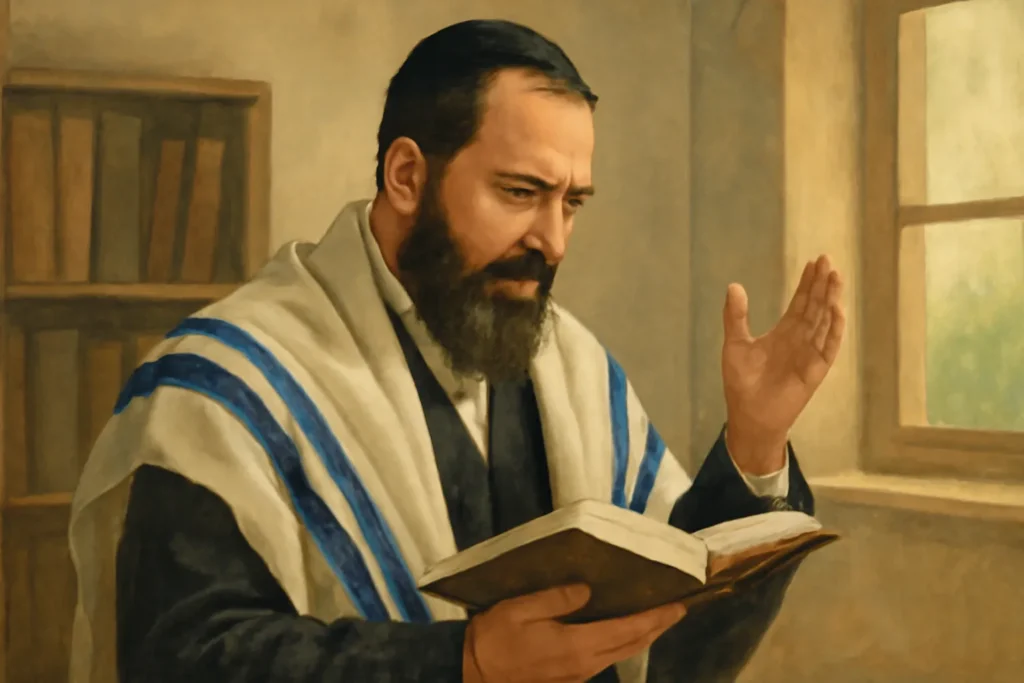
The Conservative Movement Judaism, often called Conservative Judaism in the United States and Masorti Judaism in many parts of the world, stands as a distinctive approach within modern Jewish life. It seeks a middle path between strict traditionalism and radical reform, grounding its outlook in the conviction that halakhah (Jewish law) is living and adaptable, capable of guiding ethical living and communal responsibility while remaining responsive to contemporary knowledge, circumstances, and questions of pluralism. This tradition emphasizes continuity with the past, serious study of Jewish texts, and a structured rabbinic leadership that helps interpret tradition for today.
Across communities, the Conservative approach manifests in shared institutions, a common set of liturgical expressions, and a philosophy of practice that leans toward meticulous adherence to tradition coupled with a willingness to refine practices through thoughtful scholarship. As a result, Conservative Judaism has taken on a distinct vocabulary—evolving halakhah, rabbinic authority, citizenship within modern secular society, and a robust sense of ethics in action.
Origins and historical development
Early roots: 19th-century Europe and the emergence of Positive-Historical Judaism
The seeds of Conservative Judaism can be traced to a complex set of debates in German-speaking lands during the 19th century. In reaction to rapid modernization, some scholars and rabbis argued that Jewish law should be interpreted through the lens of historical study and careful application, rather than lifted wholesale from prior centuries. The term Positive-Historical Judaism describes this stance: a commitment to the enduring Jewish tradition, interpreted through methodologies that respect both tradition and historical critique.
Key figures in this early phase argued that continuity must be complemented by responsible reform—not a wholesale break with the past, but an orderly process of reconsidering how to live as Jews in a changing world. This approach laid the intellectual groundwork for a more formal movement that would later gain shape in North America.
American articulation: institutional consolidation and the birth of a distinct movement
The United States became the crucible where the ideas of historical criticism and tradition met the practicalities of diasporic Jewish life. As congregations sought a stance that could honor tradition without sacrificing moral and intellectual integrity, a new organization emerged. The critical turning point came with the establishment of what would become the Conservative movement in the United States—an organized attempt to harmonize Orthodox fidelity to Halakhah with a Reform openness to change in practice and interpretation.
Central to this American trajectory was the founding of the Jewish Theological Seminary of America (JTS) in 1886 under the leadership of Rabbi Solomon Schechter. JTS became the intellectual home for the movement, fostering a scholarly approach to Jewish law, liturgy, and philosophy. The rabbinic leadership trained at JTS would later shape the movement’s approach to halakhic interpretation, education, and communal life.
Another pivotal institution was the Rabbinical Assembly, the professional association of Conservative rabbis. Alongside synagogues and day schools, this rabbinate would guide the movement’s standards, ordination practices, and public policy. In parallel, congregational networks such as the United Synagogue of America (the movement’s major synagogue umbrella) provided the organizational infrastructure necessary to sustain a coherent approach to Jewish practice across many communities.
Over the course of the 20th and into the 21st century, several milestones marked the evolution of Masorti identity in the broader Jewish world. Notable developments include:
Codifying halakhic interpretation as a process that includes the rabbinic court and scholarship, rather than a fixed set of rules.
Institutional reform of prayer and study to balance tradition with modern sensibilities, especially in areas of gender equality and inclusive language.
Transfers of leadership from Europe to North America and back, with a robust exchange of ideas that strengthened the global Masorti network.
Growth of a global movement under the umbrella of Masorti Judaism and related organizations, linking communities in North America, Europe, Africa, and the Middle East.
Core concepts and worldview
At the heart of Conservative Judaism is a belief in dynamic continuity: the idea that Judaism’s legal and ritual framework can grow through serious study, ethical reflection, and communal discernment. This outlook synthesizes reverence for inherited tradition with a commitment to respond to new circumstances—whether they arise from social change, scientific insight, or changes in the Jewish community’s own needs.
The evolving halakhah: law that grows with the people
A central concept is evolving halakhah, the belief that Jewish law is not static. Rabbinic authorities examine new situations—civil law developments, medical advances, digital communication, and evolving family structures—and determine how to apply traditional principles in ways that preserve core Jewish values. This approach does not reject the authority of tradition; rather, it seeks wisdom in the chain of tradition while permitting adaptation when necessary for ethical and communal well-being.
Tradition, science, and modern inquiry
Members of the Conservative camp typically embrace a rigorous engagement with historical and textual scholarship—from biblical criticism to Talmudic study and the commentaries of later sages. Rather than viewing scholarship as a threat to faith, the movement treats it as a resource for understanding how Jewish law has operated in different times and places. This synergy of faith and intellect informs decisions about ritual practice, education, and communal life.
Authority and communal discernment
Unlike certain more rigid forms of orthodoxy, the Conservative framework emphasizes a collective process of discernment guided by the rabbinic leadership and the community’s own needs. The rabbinic leadership—rabbis and scholars—serve as interpreters of tradition, not as solitary arbiters. The process typically involves consultation with competent halakhic authorities, consideration of precedent, and engagement with lay leaders, educators, and congregants.
Ethical focus and social responsibility
Ethical concerns—the treatment of others, social justice, human dignity, and responsibility toward the vulnerable—form a constant throughline in Conservative thought. While the precise religious rituals may vary by community, there is broad consensus that Judaism obligates adherents to work toward repair of the world (tikkun olam) and to build communities that embody justice, compassion, and fairness.
Practice, liturgy, and ritual life
The practical expression of Conservative Judaism involves a balanced approach to worship, life-cycle events, and daily observance. Communities aim to preserve the beauty and solemnity of Jewish ritual while ensuring that those practices remain meaningful in contemporary life.
Prayer, liturgy, and language
Liturgical life within the Conservative movement often uses carefully crafted prayer books that reflect a respect for tradition and the inclusion of modern sensibilities. Early on, Conservative liturgy emphasized Hebrew with parallel translations and some gender-inclusive language in certain editions. Over time, major prayer book projects—such as Siddur Sim Shalom and later Mishkan Tefillah—sought to balance fidelity to tradition with accessibility and inclusivity. The movement regularly revises texts to reflect contemporary sensibilities while preserving the cadence, emphasis, and structure that generations of worshippers have found meaningful.
Kashrut, Shabbat, and daily life
In matters of kashrut and Shabbat observance, Conservative communities often pursue a middle path that values careful observance without becoming a source of division. While many synagogues maintain strict standards in kitchens, supervision, and dietary practice, others allow particular leniencies or accommodations when they align with broader communal welfare and ethical considerations. Sabbath practice typically honors the sanctity of the day, with rules governing work and rest that aim to preserve dignity, safety, and contemplation.
The Conservative movement places strong emphasis on meaningful life-cycle rites—brit milah, simchat bat, bar/bat mitzvah, weddings, and funerals—conducted within a framework that respects halakhic principles and communal norms. The approach to conversion, or giyur, is a notable example of evolution in practice: Conservative authorities typically require a serious, supervised process that includes immersion in a ritual bath (mikveh) and a willingness to commit to Jewish life, certified by a careful beit din (rabbinic court). This approach aims for integrity in conversion and acceptance by the broader Jewish community.
Education and study as religious life
Education—both in childhood and adult life—is a core pillar. Schools, synagogues, and community programs prioritize Hebrew literacy, Torah study, Talmud, and ethical instruction. The idea is that learning is not a separate activity but a central form of worship and living Jewishly. By encouraging critical study and respectful debate, Conservative communities cultivate informed lay leadership and a robust sense of Jewish identity.
Gender, inclusivity, and social justice within the movement
The Conservative Movement Judaism has been a leading force in expanding inclusion within Jewish religious life. This progress has not been uniform across all communities, but it has established a framework in which women and LGBTQ individuals can participate fully in worship, study, and leadership.
Women’s leadership and ordination
A watershed development in the movement was the formal ordination of women as rabbis and cantors. In the late 20th century, the Rabbinical Assembly and the association of scholars and educators supported the expansion of roles for women in religious leadership. By the mid-1980s, pioneering women such as the first female Conservative rabbis illustrated a broader commitment to gender equality. The contemporary landscape includes women serving as rabbis, cantors, educators, and communal leaders, reflecting the movement’s ongoing evolution toward inclusive practice.
LGBTQ inclusion and family diversity
The Conservative movement has increasingly embraced inclusive policies toward LGBTQ Jews and nontraditional family structures. Policies vary by synagogue and region, but the broader trend has been toward recognizing and supporting LGBTQ-inclusive life-cycle rites, prayers, and leadership opportunities. This shift aligns with the movement’s ethic of justice, dignity, and equal participation in communal life.
Education, advocacy, and social action
Beyond ritual life, Conservative Judaism places a strong emphasis on ethics and social action. Schools and congregations often organize programs addressing poverty, immigrants’ rights, racial justice, interfaith dialogue, and broader civic responsibilities. The goal is to translate Jewish values into concrete acts of compassion and public service, reflecting the movement’s conviction that faith calls people to repair the world (tikkun olam) in practical ways.
Institutions, leadership, and structures
The governance and identity of the Conservative Movement Judaism are shaped by a network of institutions that support education, ritual life, and rabbinic leadership. If you are seeking to understand how this approach functions on the ground, the following components are central.
Jewish Theological Seminary of America (JTS) — the flagship academic center for Conservative scholarship, training rabbis, and producing theological resources.
Rabbinical Assembly (RA) — the professional association of Conservative rabbis, responsible for ordination standards, jurisprudence, and professional conduct.
Central Conference of American Rabbis (CCAR) — the major rabbinic corps responsible for liturgical reform, ethical guidance, and spiritual leadership; often in dialogue with congregations and lay leaders.
United Synagogue for Conservative Judaism (USCJ) — the network of Conservative synagogues, representing the movement at the congregational level and coordinating shared services and programs.
Globally, the movement is connected through the broader Masorti movement, an international family of communities that share a common philosophy despite local variations. In Israel, the Masorti movement (often called Masorti Judaism there) operates alongside other streams and participates in debates about religious pluralism, state-synagogue relations, and Jewish inclusion in the public sphere.
Global reach: Masorti Judaism and international dimensions
The Conservative approach is not confined to North America. Masorti Judaism provides a global frame for dozens of communities across Europe, Africa, and the Middle East, and it engages with a worldwide audience through conferences, educational programs, and shared texts. The World Masorti Movement coordinates the exchange of ideas, supports rabbinic leadership, and helps communities implement consistent standards in areas such as conversion, marriage, and ritual practice.
In Israel and beyond, Masorti Judaism participates in ongoing conversations about religious pluralism, the relationship between rabbinic authority and public life, and the balance between halakhic tradition and modern civil norms. This international dimension enriches discussions about how to adapt Jewish law to new technologies, new family forms, and new ethical concerns without eroding core commitments to Jewish identity and communal responsibility.
Key texts, resources, and scholarly resources
The Conservative movement’s intellectual and liturgical life rests on a web of texts, prayer books, and responsive scholarship. Foundational sources include classic rabbinic literature, medieval and early modern legal codes, and contemporary commentaries that reflect modern moral and historical insights.
Torah and Talmud study as ongoing intellectual practice within synagogues and schools.
Prayer books such as Siddur Sim Shalom and Mishkan Tefillah, which balance traditional Hebrew liturgy with inclusive language and contemporary sensibilities.
Responsible conversion guidance, shaped by beit din processes that emphasize ethics, study, and commitment to Jewish life.
Academic journals and commentaries from rabbinic scholars and lay educators that engage with historical-critical methods, ethics, and pastoral care.
The synthesis of traditional study and modern scholarship helps members understand how Jewish law has developed across generations and how it can continue to evolve in response to new ethical and social questions. This approach invites learners and leaders to participate in a living dialogue about what it means to be Jewish in a rapidly changing world.
Contemporary debates and future directions
As a dynamic stream within modern Judaism, Conservativism—Masorti Judaism—faces ongoing conversations about how to respond to shifting demographics, political realities, and cultural expectations. Several themes characterize current discussions.
Gender and leadership continues to shape synagogue life, with ongoing participation of women and LGBTQ individuals in leadership roles and ritual functions across many communities.
Conversion standards remain a topic of debate, balancing accessibility with rigorous adherence to halakhic norms to ensure that conversions are meaningful and recognized within the broader Jewish world.
Liturgy and language evolve to reflect inclusive language, gender sensitivity, and the needs of diverse congregants, while maintaining the aesthetic and spiritual cadence of traditional services.
Interfaith and pluralism discussions address the place of Conservative communities within multi-faith societies and the responsibilities of Jewish life in pluralistic public spaces.
Education for the 21st century focuses on Hebrew fluency, Talmud study, and values-based education that equips students to navigate complex ethical issues with knowledge and compassion.
The future of Masorti Judaism likely includes a continuation of institutional collaboration across continents, greater visibility of inclusive practices, and an ongoing effort to articulate a coherent ethical program that resonates with both traditionalists and younger generations seeking meaningful, justice-oriented Jewish living.
Key figures and touchstones in the Conservative movement
Across decades, several leaders and scholars have shaped the movement’s direction. While individual contributions vary, certain touchstones help readers understand the current landscape.
Solomon Schechter—founder of the Jewish Theological Seminary of America, whose synthesis of traditional study with modern scholarship became a defining hallmark.
Rabbinic Assembly and CCAR leadership—guiding the practical and doctrinal development of the rabbinate and congregational life.
First women rabbis in Conservative Judaism—pioneers who demonstrated the movement’s commitment to expanding leadership opportunities for women.
Liturgical innovators—authors and editors of prayer books that seek to balance tradition with inclusive language and contemporary sensibilities.
The articulation of the Conservative movement’s values is the product of ongoing dialogue among scholars, clergy, lay leaders, and students. This collaborative ethos is central to how the movement builds communities that are both rooted in history and responsive to modern life.








Leave a Reply