List of Hebrew Months: Names, Order, and Meanings in the Hebrew Calendar
List of Hebrew Months: Names, Order, and Meanings in the Hebrew Calendar
In the Hebrew calendar, the year unfolds through a cycle of months that blend ancient Near Eastern origins with Jewish religious life. Each month carries a name with a particular meaning and history, and the order of the months can be viewed from two complementary perspectives: the religious year (which begins with Nisan) and the civil year (which begins with Tishrei). This article collects the complete list of Hebrew months, explains their order in both frameworks, and delves into the origins and meanings behind the month names. It also highlights major holidays and seasonal associations tied to each month, helping readers understand how the months function within Jewish timekeeping and cultural practice.
Two fundamental ways to order the months in the Hebrew calendar
Different traditions and practical calendars emphasize different starting points. Here are the two primary viewpoints you will encounter when reading calendars or studying the months.
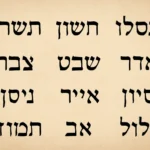
Religious or ecclesiastical year (Nisan starts the year) – In this framing, the month sequence begins with Nisan and continues through Adar (and, in leap years, Adar I and Adar II). This order is closely tied to the rhythm of major festivals such as Passover and Shavuot, which shape the liturgical year. The typical order is:
Nisan ( ניסן )
Iyar ( אייר )
Sivan ( סיון )
Tammuz ( תמוז )
Av ( אב )
Elul ( אלול )
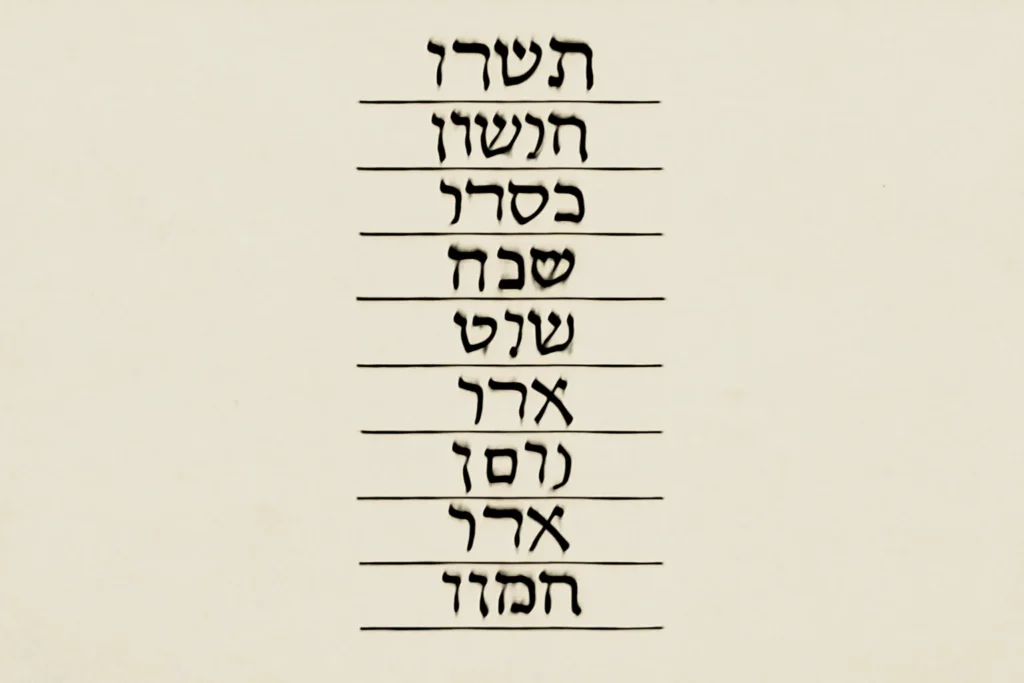
Tishrei ( תשרי )
Cheshvan ( מרחשון )
Kislev ( כסלו )
Tevet ( טבת )
Shevat ( שבט )
Adar ( אדר ) – in leap years, Adar I (אדר א) and Adar II (אדר ב)
Civil or solar-anchored year (Tishrei starts the year) – In secular or civil usage, the year commonly begins in Tishrei, aligning with the fall holiday season of Rosh Hashanah and Yom Kippur. In a leap year, the calendar inserts Adar I before Adar II, but the order still emphasizes the sequence that runs from Tishrei through Elul. The civil order typically appears as:
Tishrei
Cheshvan
Kislev
Tevet
Shevat
Adar (or Adar I in leap years)
Adar II (only in leap years)
Nisan
Iyar
Sivan
Tammuz
Av
Elul
Names of the Hebrew months: origins, meanings, and key observances
The twelve (or thirteen in leap years) Hebrew month names have roots in the ancient Mesopotamian calendar system, with adaptations in the Hebrew language over centuries. In this section, each month is presented with its Hebrew spelling, a succinct meaning or origin, its typical season or timing, and the major festivals or observances associated with it. Where helpful, we note special features of that month (for example, how Mar-Cheshvan and Kislev affect year length or how Adar II arises in leap years).
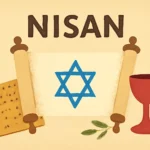
Nisan ( ניסן ) — meaning and origin: the month’s name comes from the Babylonian Nisānu, commonly linked to spring and renewal, and it has long been associated with the festival of Passover. Season and timing: early spring in the northern hemisphere; aligns with the agricultural cycle in the land of Israel. Major observances: Pesach (Passover) begins in Nisan, and the counting of the Omer starts during this period. Notes: Nisan is the first month of the ecclesiastical year; its placement emphasizes redemption and liberation themes that recur in the biblical narrative.
Iyar ( אייר ) — origin ties to the Babylonian month Ayāru, with several scholars noting an association with the moon or with the warmth of late winter to early spring. Season: late winter to early spring. Major observances: not a major festival month, but it is central to the ongoing Omer count, which continues from the second day of Passover through Shavuot. Notes: Iyar often serves as the bridge month, linking the festival cycle of Nisan to the summer harvest period in the calendar’s rhythm.
Sivan ( סיון ) — origin from the Babylonian month Siwan; the name is deeply connected to the festival of Shavuot. Season: spring into early summer. Major observances: Shavuot, the festival of the giving of the Torah. Notes: Sivan marks the culmination of the Omer period and the transition from spring to early summer, with agricultural and liturgical tones merging in the celebrations.
Tammuz ( תמוז ) — origin from the Babylonian month Tam(m)uzi; the month is historically linked to the long summer season in the region. Season: midsummer into early summer. Major observances: a minor fast is observed on 17 Tammuz, marking a historical breach in the walls of Jerusalem. Notes: Tammuz often represents the transition into the hottest portion of the year in Israel, with religious themes of reflection beginning to surface ahead of the fall festivals.
Av ( אב ) — origin from the ancient Semitic word for “father” or a similar root; in practice, the month is associated with intense heat and the solemnity of late-year mourning. Season: midsummer. Major observances: Tisha B’Av (9 Av), a major fast commemorating the destructions of the Temples; this month also contains the festive withdrawal of some weeks of mourning and the pre-festival mood that leads into Elul. Notes: Av is a pivot point in the calendar’s emotional arc, moving from mourning toward preparation for the new year in Tishrei.
Elul ( אלול ) — origin often linked with repentance; in popular lore, Elul is tied to the practice of personal introspection. Season: late summer to early autumn. Major observances: the month is known for the spiritual preparation leading into the High Holy Days (Rosh Hashanah and Yom Kippur); some traditions use the acrostic phrase Ani Ledodi Vedodi Li (I am my beloved’s, and my beloved is mine) as a symbolic focus during Elul. Notes: Elul serves as a time of reflection, ethical accounting, and readiness for the new year.
Tishrei ( תשרי ) — origin of the name is debated, but the month is central to the civil year because it contains many of the year’s major holidays. Season: early autumn. Major observances: Rosh Hashanah, Yom Kippur, Sukkot, Shemini Atzeret, and Simchat Torah. Notes: Tishrei is often described as the “head” of the year in Jewish tradition, setting the spiritual and liturgical tempo for the months that follow.
Cheshvan ( מרחשון ) — origin linked to the geometric name for “month of elephants” in some ancient calendars; in Hebrew, its more common form is Cheshvan; in some circles, it’s also called Mar-Cheshvan (מר מרחשון) meaning “bitter Cheshvan.” Season: autumn to early winter. Major observances: Cheshvan often carries no fixed holidays, but its length can influence the overall calendar year. Notes: Cheshvan is special because it is one of the two months that vary in length depending on whether the year is common or leap.
Kislev ( כסלו ) — origin likely from the Babylonian month Kislimu; this month is famous for Hanukkah in many years. Season: autumn to early winter. Major observances: Hanukkah (dates vary with the lunar cycle). Notes: Kislev often completes the structure of the calendar’s year and, together with Cheshvan, helps determine whether the year is deficient, regular, or complete in length.
Tevet ( טבת ) — origin from the Babylonian month Teṭatu; Season: late autumn to early winter. Major observances: a minor fast on 10 Tevet, marking the siege of Jerusalem. Notes: Tevet sits between Kislev and Shevat and acts as a bridge in the late-year liturgical sequence.
Shevat ( שבט ) — origin connected to the number eleven in the old Babylonian-turned-Hebrew counting system. Season: winter into early spring. Major observances: Tu BiShvat, the New Year for Trees, celebrated as an agricultural and ecological milestone. Notes: Shevat marks the beginning of the return of daylight and new growth in many climates, which is echoed in its environmental symbolism.
Adar ( אדר ) — origin from the Babylonian month Adar; in non-leap years, Adar is the month that follows Shevat and precedes Nisan. Season: late winter. Major observances: Purim, a festive holiday. Notes: In leap years, the calendar adds Adar I and Adar II; Purim occurs in Adar II in leap years, while Adar I serves as the intercalary month. The presence of Adar I and Adar II is a defining feature of the leap-year cycle in the Hebrew calendar.
Adar I ( אדר א ) — origin and season mirror Adar, but Adar I is a distinct month added in leap years. Major observances: Purim is typically observed in Adar II, so Adar I serves as the intercalary month rather than a festival month. Notes: In leap years, Adar I has its own length and sits between Shevat and Adar II. This placement ensures the lunar-solar alignment remains consistent with agricultural and ceremonial timing.
Adar II ( אדר ב ) — origin and season mirror Adar, but Adar II is the month in which Purim is celebrated in leap years. Major observances: Purim (on its customary date in Adar II in leap years). Notes: Adar II is always the last Adar before Nisan in leap years, preserving the continuity of the festival calendar.
Note on month lengths: most Hebrew months alternate between 29 and 30 days, but the exact length of Cheshvan and Kislev can vary with the type of year (deficient, regular, or complete). In common years, the year can be 353, 354, or 355 days long; in leap years, it can be 383, 384, or 385 days long. This variability is what gives the Hebrew calendar its characteristic flexibility, enabling it to stay in sync with both the lunar months and the solar seasons.
When length and leap years matter: Mar-Cheshvan, Kislev, and the year type
The months Cheshvan and Kislev play a special role in determining the overall length of the year. Because these two months can vary in length, they are at the heart of whether a given year is deficient (short), regular, or complete (long). A short year might have only 353 or 354 days, a complete year can reach 385 days in a leap cycle. The presence of Adar I and Adar II in leap years adds complexity but keeps the lunar cycle aligned with the solar seasons. This intricate interplay is one of the reasons why the Hebrew calendar is described as lunisolar: it uses lunar months but periodically adjusts with an extra month to keep in step with the solar year.
Practical notes on the meanings and ceremonial associations of each month
Beyond the bare names and order, each month carries a texture of festivals, fasts, and seasonal signals that shape Jewish life. Here are some highlight features to connect the names with living practice.
Nisan anchors liberation symbolism in Jewish memory through Passover, and it initiates a season devoted to redemption and renewal. The Omer counting begins in this period in many traditions, linking Nisan to the weeks leading to Shavuot.
Iyar serves as a bridge month where the ongoing cycle of counting and preparation continues, with fewer fixed holidays and more emphasis on the progression toward Shavuot.
Sivan centers the climate of divine revelation around Shavuot, commemorating the giving of the Torah at Sinai. The month’s name is often linked to springs of knowledge and the culmination of spring’s renewal.
Tammuz and Av are part of a period in which the calendar recalls historical sieges and losses, culminating in Tisha B’Av and a mood of introspection before the high holy days of Tishrei. These months frame a spiritual arc from lament to hope.
Elul is widely seen as a season of personal preparation, when individuals engage in introspection and teshuvah, setting the stage for the new year’s renewal in Tishrei.
Tishrei is the centerpiece of the civil calendar, hosting the sweeping series of sacred days: Rosh Hashanah, Yom Kippur, Sukkot, Shemini Atzeret, and Simchat Torah. This cluster gives Tishrei a unique power to set the tone for the year ahead.
Cheshvan and Kislev—the year’s length is often determined in these months; Kislev’s proximity to Hanukkah adds festive resonance in many years, while Cheshvan’s variability can signal whether the year is shorter or longer than average.
Tevet and Shevat carry the transition from autumn and early winter into late winter and early spring, with Tevet hosting a fast and Tu BiShvat signaling ecological renewal.
Adar (and the leap-year pair Adar I and Adar II) centers around the Purim narrative and liturgical joy, with Purim’s date shifting in leap years to Adar II. This cluster of months showcases how the calendar blends memory, festival, and seasonal change.
Adar and leap years: how the calendar handles an extra month
Leap years in the Hebrew calendar insert an extra month, Adar I, before Adar II. This adjustment keeps the lunar months aligned with the solar year and ensures that agricultural and seasonal holidays fall in their appropriate seasons. In practice:
In non-leap years, the order ends with Adar and then moves to Nisan in the ecclesiastical cycle.
In leap years, the sequence includes Adar I (a full-length month) followed by Adar II, and then Nisan begins the next cycle. Purim is celebrated in Adar II in leap years.
Understanding this leap-month structure helps explain why some calendars show a thirteen-month year occasionally and how the months line up with the seasons from year to year. The leap-year cycle is a deliberate design to preserve the alignment of lunar months with agricultural and climatic patterns in the Land of Israel and in Jewish liturgical practice around the world.
Whether you are studying Jewish history, planning a calendar, or simply learning Hebrew month names, these practical notes can help you navigate the system with ease.
Two starting points are common: begin with Nisan for a religious year, or begin with Tishrei for a civil year. Depending on the context, you may see one order or the other.
Seasonal awareness matters: while some months are strongly tied to specific holidays, others are primarily markers in the yearly cycle, guiding study, fasting, and liturgical rites.
Month lengths vary: most months alternate 29 and 30 days, but Cheshvan and Kislev determine whether the year is deficient, regular, or complete. In leap years, Adar I and Adar II add a third layer to the sequencing of days.
Holiday clustering can shift planning: many major holidays cluster in the autumnal Tishrei cycle, while Passover and Shavuot anchor the spring cycle. Knowing the order helps in planning study, travel, or synagogue events around these clusters.
Why are some month names named after festivals?
The naming tradition blends ancient lunar-month designations from Mesopotamia with Jewish religious life. Many months took on associations with festivals that overtook or complemented the original calendar signals, so you will see Nisan linked to Passover and Sivan linked to Shavuot. This fusion of chronology and ceremonial life is part of what makes the Hebrew calendar distinctive.
What is the difference between the ecclesiastical year and the civil year?
The ecclesiastical year begins with Nisan and moves through the months in a sequence that mirrors the cycle of biblical holidays. The civil year begins with Tishrei and runs through Elul. Both orders share the same month names, but they place emphasis on different cycles—one focused on redemption and festival, the other on the agricultural and daily life rhythm that begins anew in the fall.
How does leap year affect the list of months?
In a leap year, the Hebrew calendar adds Adar I and then continues with Adar II before Nisan. Purim occurs in Adar II in leap years, while Adar I serves as the intercalary month. This extra month ensures that seasonal holidays align with the correct times of year, maintaining harmony between lunar months and solar seasons.
The list of Hebrew months is more than a roster of names. It is a compact atlas of the Jewish year, revealing how time is measured, what festivals punctuate the days, and how the rhythm of the year moves from autumnal beginnings to springtime renewal. The month names carry ancient echoes from Mesopotamia, Hebrew linguistic evolution, and centuries of liturgical practice. The two ways of ordering the year—religious and civil—offer complementary ways to read the calendar, ensuring that both sacred memory and practical life stay in sync with the cycles of the moon and the sun.
For anyone studying Jewish history, planning a calendar, or simply learning Hebrew month names, the complete list below provides a quick reference to the names, order, and meanings that shape the rhythm of the Hebrew year:
Cheshvan — year-length variability, often shorter or longer depending on year type.
Kislev — Hanukkah, the transition toward winter’s end.
Tevet — fast of the Tenth, bridge to Tu BiShvat.
Shevat — Tu BiShvat, trees and renewal.
Adar — Purim, regular-year form; leap-year variant includes Adar I and Adar II.
Adar I — leap-year intercalary month (when present).
Adar II — leap-year month housing Purim in leap years.
With this understanding, you can read a Hebrew calendar with greater depth, appreciating not only when events happen, but also why the months carry particular names and why their order matters for liturgical life, agricultural cycles, and the overall rhythm of Jewish time.







Leave a Reply