The shepherd’s rod and staff in Psalm 23 are images of God’s care. The rod suggests protection and authority, while the staff suggests guidance and support. Together, they express confidence that God can guard, correct, rescue, and lead his people.
Psalm 23 does not present a shepherd as passive or distant. The shepherd watches the flock, finds pasture and water, retrieves wandering sheep, confronts predators, and keeps the animals moving toward safety. When David says that the rod and staff comfort him, he is describing confidence in God’s active presence, even while walking through a dangerous valley.
Ancient shepherds commonly carried tools that served different purposes. The exact design and use could vary by region, period, and shepherd, so the Bible’s imagery should not be reduced to a rigid equipment diagram. Still, the rod and staff generally point to two related but distinct functions.
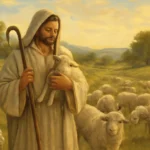
A shepherd’s rod was a sturdy, relatively short implement. It could help defend the flock from predators or attackers, and it could also be used to inspect sheep. In the biblical world, a shepherd’s rod could symbolize strength, authority, and judgment.
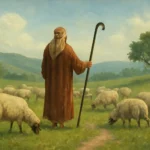
The staff was generally longer and could provide balance while walking over uneven ground. A curved end could help the shepherd guide or retrieve a sheep. The staff therefore brings to mind direction, rescue, and personal care.
Rod: protection, authority, examination, and the ability to confront danger.
Staff: guidance, support, rescue, and help along a difficult path.
Together: a complete picture of a shepherd who both guards the flock and leads it.
These categories overlap. A staff could be used defensively, and a rod could help manage the flock. The point of Psalm 23 is not to assign every possible task to one object. The paired images communicate that God’s care is strong as well as gentle.
Core meaning: The rod and staff comfort the psalmist because God is not merely watching from a distance. He is present, capable of defending his people, and willing to guide them personally.
Why Psalm 23 mentions both the rod and staff
Psalm 23 uses a shepherd metaphor to describe a relationship of trust. The Lord is portrayed as the one who provides food, water, rest, direction, and protection. By the time the psalm reaches the line about the rod and staff, the reader has already seen that the shepherd’s care includes both provision and responsibility.
The two tools add balance to the picture. A shepherd without a rod might be unable to defend the flock. A shepherd without a staff might struggle to guide or retrieve it. Psalm 23 presents God as both guardian and guide, not as one or the other.
The wording also matters emotionally. The psalmist says these tools “comfort” him, but the comfort does not come from the objects themselves. A rod could be intimidating, and a staff could signal that the sheep need correction or rescue. The comfort comes from knowing who carries them and why.
For a sheep, safety depends on the shepherd’s attention and skill. In the same way, the psalmist’s security rests in God’s character. The rod and staff are visible reminders of God’s faithful care, especially when circumstances do not feel safe.
What the rod symbolizes in the Bible
The Bible often uses a rod as a symbol of authority and power. A ruler might hold a scepter or rod as a sign of the right to govern. A shepherd’s rod, however, applies that authority in the setting of a vulnerable flock. In Psalm 23, the image is not mainly about domination; it is about responsible protection.
The rod can also represent discipline. Proverbs uses rod imagery in passages about correction and parental responsibility. Those passages should not be used to justify cruelty or abuse. Biblical discipline is meant to address wrongdoing and form wisdom, while abuse seeks control, causes harm, and violates the dignity of the person being harmed.
Elsewhere in Scripture, a rod may represent God’s judgment or the instrument through which he confronts evil. The image can therefore carry a serious edge. God’s protection is not sentimental. The shepherd’s work may involve resisting threats, exposing danger, and turning the flock away from a destructive path.
That meaning helps explain why the rod can be comforting. A helpless observer might offer sympathy but no defense. The shepherd carries something that represents the ability to act. The psalmist trusts that God can deal with forces that he cannot overcome alone.
The rod as protection rather than permission for harm
Readers sometimes interpret the rod as proof that harsh treatment is inherently spiritual. That conclusion does not fit the wider shepherd image. A faithful shepherd protects vulnerable animals; he does not injure them for personal satisfaction or use authority as an excuse for cruelty.
When applied to human relationships, the rod should point first to responsible protection, moral seriousness, and wise correction. It should never be used to excuse domestic violence, child abuse, coercion, or spiritual manipulation. Any interpretation that makes the vulnerable less safe has missed the shepherd’s purpose.
What the staff symbolizes in Psalm 23
The staff emphasizes the shepherd’s close involvement with the flock. A long staff could help a shepherd walk through rough terrain, reach toward a sheep, or redirect an animal that was moving toward danger. Its image is therefore closely connected with guidance and support.
Sheep are not usually presented in the Bible as naturally independent navigators. They can wander, become separated, and enter risky places. The staff represents the shepherd’s willingness to intervene personally rather than simply call out instructions from far away.
The staff can also suggest comfort during weakness. A shepherd who leans on a staff may be traveling through difficult ground, and a person who needs support is not failing by using one. In Psalm 23, God’s presence gives the psalmist strength to continue through the valley, even when the path remains frightening.
This is why the staff is more than a symbol of direction. It can represent rescue from isolation. The shepherd notices the sheep that has strayed, reaches for it, and brings it back toward the flock. That picture speaks to people who feel lost, confused, or unable to find their way without help.
How the rod and staff relate to the dark valley
Psalm 23 moves from green pastures and quiet waters to a valley associated with deep darkness and the threat of death. The presence of danger does not mean the shepherd has abandoned the flock. The shepherd may be leading the sheep through a valley because that route is necessary to reach another pasture or because the terrain is part of the journey.
The rod and staff matter most when the surroundings are uncertain. In a peaceful field, a sheep may notice the shepherd’s provision. In a dark valley, the sheep needs to trust the shepherd’s presence and protection. The tools assure the psalmist that danger is real but not ultimate.
The psalm does not promise that faithful people will avoid every frightening place. Instead, it presents a God who accompanies them there. The central comfort is not a guarantee of an easy route; it is the conviction that God is with his people and has not lost control.
The shepherd metaphor also changes the way fear is understood. Fear may still be felt, but it no longer has to dictate the person’s response. The psalmist can keep walking because the shepherd is near, alert, and equipped to defend the flock.
Psalm 23:4 presents courage as confidence in the shepherd’s presence, not denial that the valley is dangerous.
How guidance and correction work together
Protection and guidance cannot be separated completely. A shepherd protects sheep partly by directing them away from cliffs, poisonous plants, deep water, and predators. In the same way, God’s guidance may involve redirection when a person’s chosen path is harmful.
Correction can feel uncomfortable because it challenges a preferred plan. Yet the shepherd image frames correction as an act aimed at preserving life and restoring direction. The purpose is not humiliation. It is to keep the sheep with the flock and moving toward a place of nourishment.
This does not mean every setback or hardship should automatically be labeled divine punishment. Human beings have limited knowledge, and suffering can arise from many causes. Psalm 23 invites trust in God’s care without giving permission to make confident claims about the hidden reason for every painful event.
Wise spiritual guidance should therefore produce humility. If you believe you are being corrected, consider whether the change leads toward truth, justice, repentance, and love. Claims of divine authority that demand secrecy, unquestioning obedience, or harm to others should be treated with serious caution.
Rod and staff imagery throughout Scripture
Psalm 23 is the best-known passage connecting the rod and staff with comfort, but shepherd imagery appears throughout the Bible. Leaders are sometimes described as shepherds, and God is portrayed as caring for Israel as a shepherd cares for sheep. These passages broaden the meaning beyond one individual’s private experience.
In Genesis, Jacob reflects on God as the one who shepherded him throughout his life. In the prophetic books, Israel’s leaders are judged according to whether they cared for the people or exploited them. Ezekiel 34 contrasts negligent shepherds with God’s promise to seek, feed, heal, and strengthen the scattered sheep.
Other passages use a shepherd’s rod to convey authority or judgment. Psalm 2 uses rod imagery in connection with royal rule, while Micah 7 presents God as shepherding his people with a rod. These references show why readers should consider context rather than assign one fixed meaning to every mention of a rod.
The New Testament continues the shepherd theme in its descriptions of Jesus. Jesus speaks of himself as the good shepherd in John 10, emphasizing knowledge, care, and willingness to protect the sheep. First Peter 5 presents church leaders as shepherds who must serve willingly and avoid domineering over those entrusted to them.
These connections make the imagery especially meaningful for Christian readers. The shepherd’s authority is expected to be exercised through care, sacrifice, truth, and service. Leadership that crushes the vulnerable contradicts the character of the shepherd described in Scripture.
What “comfort” means in the original setting
Modern readers often associate comfort with calm feelings or the removal of difficulty. In Psalm 23, comfort is stronger than that. It includes security, reassurance, and confidence in the shepherd’s ability to handle danger.
A shepherd’s tools could comfort the flock indirectly. Their presence showed that the shepherd was prepared. A sheep might not understand every decision, but the shepherd’s nearness and familiar care could signal that it was not abandoned.
The psalmist’s comfort also has a relational foundation. The person trusts the Lord because of who the Lord is, not because the person has mastered every circumstance. The rod and staff symbolize a relationship in which God’s strength compensates for human vulnerability.
That kind of comfort can coexist with grief, anxiety, and unanswered questions. Faith does not require pretending that the valley is pleasant. It means refusing to treat fear as proof that God is absent.
How to apply the rod and staff to daily life
Psalm 23 can shape practical habits without turning every ordinary event into a hidden message. The rod invites you to consider where you need protection and where you may need to resist harmful influences. The staff invites you to consider where you need direction, support, or the humility to accept correction.
These questions can help you reflect:
Where do you need wise protection rather than isolation?
Are you ignoring a danger that a trusted, mature person has helped you recognize?
Where might you need guidance before making a major decision?
Have you confused independence with refusing necessary support?
Does the guidance you receive produce truth, safety, humility, and love?
The imagery can also influence the way you lead others. Parents, pastors, teachers, managers, and caregivers may all exercise responsibility over people who depend on them. The shepherd model calls for protective leadership, not domination.
Good leadership notices vulnerability, sets clear boundaries, corrects fairly, and makes room for restoration. It does not use fear to make people compliant. If you have authority, the rod and staff should remind you that authority exists for the good of those entrusted to you.
Practical test: A genuinely shepherd-like form of authority makes people safer, wiser, and more capable of living faithfully. Control, intimidation, and exploitation are not evidence of biblical shepherding.
Common mistakes when interpreting the rod and staff
The symbols are memorable, but several common assumptions can make their meaning less accurate. Keeping the historical setting and the full psalm in view helps prevent one-sided interpretations.
Making the rod only a symbol of punishment. In Psalm 23, the rod is connected with comfort and protection, not merely correction. Limiting it to punishment leaves out the shepherd’s defensive role.
Making the staff only a symbol of kindness. The staff can represent gentle support, but it also redirects a wandering sheep. Guidance may require a firm change of course.
Assuming every shepherd used tools in exactly the same way. Ancient practices varied. The central message comes from the biblical metaphor, not from an overly precise reconstruction of equipment.
Using the passage to promise a trouble-free life. Psalm 23 includes a dark valley. God’s presence does not mean that every danger disappears immediately.
Calling every hardship divine correction. The psalm teaches trust, not certainty about the hidden cause of each painful experience.
Applying authority without accountability. Shepherd imagery does not give leaders permission to control or abuse people. Biblical authority is measured by care for the vulnerable.
Another mistake is separating the symbols too sharply. The rod and staff are a poetic pair, so their meanings overlap. The main idea is the shepherd’s complete care: defense when threats arise, direction when the way is unclear, and support when the journey is difficult.
How the imagery can shape prayer
The rod and staff provide a simple structure for prayer. You might ask God to protect you from dangers you can see and from dangers you have not recognized. You might also ask for the humility to accept wise guidance instead of insisting on a path that is leading you away from health or faithfulness.
A prayer shaped by the staff can include requests for clarity, patience, and support. It can acknowledge confusion without treating confusion as failure. The shepherd image allows you to say, in effect, that you need direction and trust God to provide it through Scripture, prayer, wise counsel, and circumstances.
A prayer shaped by the rod can include courage to confront wrongdoing. Protection is not always passive. At times it means setting a boundary, reporting abuse, leaving a dangerous environment, or seeking help from qualified people. Trusting God does not require you to remain in preventable danger.
The two images together encourage a balanced faith. You can ask for God’s defense while also examining your own choices. You can seek guidance while taking responsible action. You can receive correction without surrendering your judgment to an unsafe person.
Why the shepherd metaphor still speaks clearly
Many modern readers have never watched a flock move through open country, yet the basic human concerns in Psalm 23 remain familiar. People still face uncertainty, vulnerability, grief, bad decisions, hostile forces, and the need for trustworthy guidance. The shepherd’s tools give those concerns a concrete form.
The rod and staff also correct two incomplete pictures of God. One picture imagines God as powerful but remote. Another imagines God as gentle but unable to confront evil. Psalm 23 holds both together: God is strong enough to protect and close enough to guide.
That balance matters in personal faith and community life. People need compassion, but they also need boundaries. They need freedom, but they also need wisdom. They need leaders who can act decisively, but those leaders must remain accountable to the purpose of protecting and serving others.
In Psalm 23, the rod and staff are not decorative details. They are signs of a shepherd whose presence changes how the psalmist faces danger. The message is that God’s care includes provision, direction, correction, defense, and companionship—not only when the path is peaceful, but also when it leads through the valley.
Frequently asked questions
Are the rod and staff the same object in Psalm 23?
They are generally understood as two related shepherding tools, although ancient tools and their uses could overlap. The rod commonly suggests a shorter defensive or authoritative implement, while the staff suggests a longer tool for support, direction, or rescue. The poetic pairing matters more than drawing an exact technical boundary between them.
Does the rod in Psalm 23 mean God will punish believers?
Not primarily. In this psalm, the rod is part of a comforting picture of protection and competent care. Biblical rod imagery can include discipline or judgment in other contexts, but Psalm 23 focuses on the shepherd’s presence and ability to defend the flock. It should never be used to justify abuse or cruelty.
What does the staff mean when someone feels spiritually lost?
The staff can represent God’s guidance and willingness to support someone who lacks clarity. That guidance may come through prayer, Scripture, wise counsel, or a needed change of direction. Feeling lost does not mean you have been abandoned; it may be a reason to seek help, slow down, and reconsider your path.
How can Psalm 23 help someone facing fear?
Psalm 23 does not deny danger or promise that every difficult situation will disappear. It offers a different foundation for courage: the conviction that God remains present and attentive in the dark valley. Reflecting on the shepherd’s protection and guidance can help you take wise practical steps without allowing fear to define your entire response.








Leave a Reply