The birth of John the Baptist: Meaning and Bible story
The birth of John the Baptist: Meaning and Bible story
When a long-awaited answer finally arrives, you may wonder why it took so long and what the answer means for everything that comes next. The birth of John the Baptist raises both questions. His arrival brought joy to an aging, childless couple, but it also marked the beginning of a much larger story: John would prepare people to recognize and receive Jesus.
The account appears mainly in Luke 1. It introduces John’s parents, Zechariah and Elizabeth, describes the angel Gabriel’s announcement, explains the unusual choice of the child’s name, and records the prophecy spoken by Zechariah after his speech was restored. John’s birth is not presented as an isolated family event. It is a sign that God’s promises are moving toward fulfillment.
John was born to Zechariah and Elizabeth, a Jewish couple from the priestly and Aaronic family lines. Zechariah served as a priest, while Elizabeth was also connected with the priestly heritage. Luke describes them as faithful people who tried to live according to God’s commands.
Their situation carried a deep personal sorrow. Elizabeth had been unable to have children, and both she and Zechariah were advanced in age. In their culture, childlessness could bring social shame and painful assumptions, even when no fault existed. Luke presents their faithfulness alongside their disappointment, showing that devotion does not prevent a person from experiencing grief or unanswered prayer.
Zechariah belonged to a priestly division that served at the temple in Jerusalem. During one period of service, he was chosen to enter the sanctuary and burn incense. This was a serious and honorable responsibility, performed while worshipers prayed outside. The setting matters because the announcement about John comes in the middle of ordinary religious duty, not during a public royal ceremony.
As Zechariah served, the angel Gabriel appeared beside the incense altar. Zechariah was frightened, but Gabriel told him not to fear. The angel announced that his prayer had been heard and that Elizabeth would have a son. The child would bring joy to his parents and to many others, and his life would have a distinctive purpose from the beginning.
Gabriel also described John’s calling. He would not be shaped by the usual measures of status, wealth, or political power. Instead, he would be set apart for God, marked by the Spirit, and given a mission connected with the people of Israel. His work would turn hearts back toward God and prepare a people for the Lord.
A central detail: Luke connects John’s birth with both personal mercy and public mission. Elizabeth receives the child she longed for, while the wider community receives a prophet who will prepare the way for Jesus.
Why Zechariah struggled to believe the announcement
Zechariah asked how he could know that Gabriel’s promise would happen. His question reflected the obvious circumstances: he and Elizabeth were old, and Elizabeth had been unable to conceive. The announcement sounded impossible by ordinary human standards, much like other biblical stories in which God acts through an unexpected birth.
Gabriel identified himself as one who stands in God’s presence and had been sent to speak this good news. Because Zechariah did not accept the message with trust, Gabriel told him that he would be unable to speak until the promise was fulfilled. The temporary silence functioned as both a sign and a form of discipline.
Outside, the worshipers noticed that Zechariah was taking longer than expected. When he finally came out, he could not speak to them. He tried to communicate with gestures, and they understood that he had experienced something unusual inside the sanctuary.
Zechariah completed his time of service and returned home. Soon afterward, Elizabeth became pregnant. Luke says that she kept herself secluded for five months and recognized the pregnancy as God’s act of kindness. Her response contrasts with the uncertainty of the announcement’s first moment: she understood her child as an answer to a long period of disgrace and sorrow.
The story does not treat Zechariah’s silence as the main point. The sign directs attention to God’s reliability. The promise is fulfilled even when the people receiving it struggle to imagine how it could happen. John’s birth demonstrates that divine purposes are not limited by age, social expectations, or circumstances that appear permanently fixed.
Readers often compare this story with the birth announcements surrounding Isaac and other important biblical figures. Those comparisons can be helpful, but John’s story has its own emphasis. His parents are righteous, his birth is miraculous, and his calling is tied directly to the arrival of the Messiah. John is important not because he replaces Jesus, but because he points beyond himself.
How John’s birth connects with Jesus’ birth
Luke places John’s birth story beside the announcement of Jesus’ conception. Gabriel visits Mary after first announcing John’s coming to Zechariah. Elizabeth is already six months pregnant when Mary visits her, creating a direct connection between the two families before either child is born.
When Mary enters Elizabeth’s home and greets her, the unborn John responds by moving in the womb. Elizabeth is filled with the Holy Spirit and recognizes the significance of Mary’s child. Luke presents this moment as the first response of John to Jesus: even before birth, John’s role is to identify the presence of the one who is greater.
Mary then praises God for showing mercy, bringing down human pride, and helping Israel according to his promises. Her song connects the events in her life and Elizabeth’s life with God’s long history of faithfulness. The two pregnancies are not random miracles. Together, they announce that God is acting on behalf of his people.
John’s position in the story is therefore distinctive. He is a forerunner, meaning someone who comes before another person to announce that person’s arrival and prepare the way. His ministry will call people to repentance, which means turning away from sin and returning to faithful obedience to God.
Luke also links John to the prophetic language associated with Elijah. Gabriel says that John will go before the Lord in the spirit and power of Elijah. This does not mean John is literally Elijah returned from the dead. It means that John will have a similar prophetic force, courage, and concern for restoring people to God.
The connection can be understood through several themes:
Promise: John’s birth fulfills the angel’s announcement to Zechariah.
Preparation: John will ready people to receive the Lord’s coming.
Repentance: His preaching will call people to change their lives.
Continuity: His ministry stands within Israel’s prophetic tradition.
Fulfillment: His arrival signals that God’s promises are reaching a decisive stage.
John is not the center of the Christian message, but his importance is substantial. He serves as a bridge between the prophetic hopes of Israel and the public ministry of Jesus. His birth announces that the waiting period is ending and that God’s saving work is about to be revealed openly.
Why the child was named John
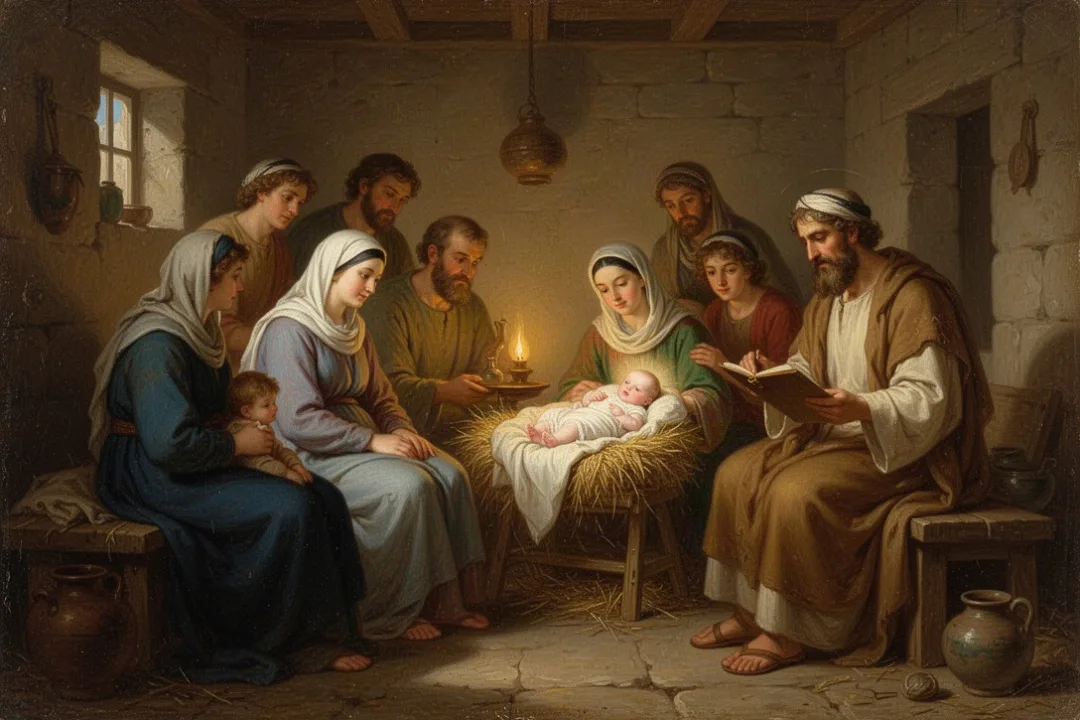
When Elizabeth gave birth, relatives and neighbors celebrated with her. They expected the child to receive a family name, probably one connected with Zechariah’s relatives. Instead, Elizabeth said that the baby would be named John.
The relatives objected because no one in the immediate family appeared to have that name. They then turned to Zechariah, who still could not speak. He asked for a writing tablet and wrote that the child’s name was John. At that moment, his speech returned.
The name was not chosen according to family custom because it had already been given by God through Gabriel. The event emphasizes that John’s identity and mission come from God rather than from inherited expectations. His life will not simply continue the family’s priestly pattern, even though he is born into a priestly household.
As soon as Zechariah could speak, he praised God. The neighbors became afraid, and people throughout the surrounding region discussed what had happened. Those who heard the story wondered what the child would become, because God’s hand was clearly with him.
The naming scene also shows the relationship between obedience and restoration. Zechariah’s ability to speak returns after he follows the instruction about the child’s name. His first words are not complaints about his silence or explanations of his experience. They are praise and prophecy.
For families reading this account, the scene can feel especially meaningful. A child may carry family history, but parents cannot completely determine that child’s future. John’s name reminds readers that every person has a dignity and calling that cannot be reduced to family reputation, social expectations, or inherited status.
What Zechariah’s prophecy says about John’s mission
Luke records Zechariah’s praise in a passage often called the Benedictus, after its opening word in Latin tradition. The prophecy begins by blessing the God of Israel for visiting and redeeming his people. It then connects the coming salvation with God’s covenant promises to Abraham and the royal line of David.
The first part of the prophecy focuses mainly on God’s work through the coming Messiah. Zechariah speaks of rescue from enemies, mercy, covenant faithfulness, and the possibility of serving God without fear. The passage uses the language of Israel’s Scriptures and presents Jesus’ arrival as the continuation of God’s promises rather than a separate plan.
The final part turns directly to the infant John. Zechariah calls him a prophet of the Most High. John will go before the Lord to prepare his ways and give people knowledge of salvation through the forgiveness of their sins.
Luke uses an image of light rising for people who live in darkness. The prophecy presents God’s mercy as guiding people toward peace. John’s work is part of that guidance, but John himself is not the light. He is the messenger who helps people recognize where the light is coming from.
John’s message will later become clear in the wilderness. He will call people to repentance and baptize those who respond. His baptism does not make him the source of forgiveness; instead, it serves as a public sign that people are turning back to God and preparing for the one who follows him.
The prophecy gives John’s role several dimensions:
Prophetic: He speaks God’s message rather than offering merely personal opinions.
Preparatory: He gets people ready for the Lord’s appearance.
Pastoral: He helps people understand salvation as forgiveness and restored relationship with God.
Historical: He stands within the story of Israel’s covenant and prophetic hope.
Christ-centered: His work directs attention toward Jesus instead of himself.
This last point is essential. John’s greatness lies in his faithfulness to a task that is larger than his own reputation. He does not gather followers so they will admire him permanently. He calls them to repentance and then directs them toward Jesus.
What the birth of John the Baptist means for readers today
The birth of John the Baptist offers a picture of hope for people who have waited a long time for change. Zechariah and Elizabeth are not portrayed as carefree or untouched by disappointment. Their story acknowledges the pain of delayed hopes while showing that their lives remain significant in God’s purposes.
It also challenges the assumption that quiet faithfulness has been overlooked. Zechariah is serving in the temple, Elizabeth is living faithfully, and neither appears to be seeking public attention. Yet their household becomes the setting for a major turning point in salvation history.
The story gives a realistic account of doubt as well. Zechariah struggles to believe the promise, and the narrative does not pretend that faith always means immediate emotional certainty. His experience shows that doubt has consequences, but it also shows that failure does not cancel God’s purpose. He is restored and given the opportunity to respond with praise.
John’s life further teaches that preparation is meaningful work. Some people are called to announce, serve, teach, or make a path clearer for someone else. Such work may not receive the same attention as the event that follows, but it can be essential. John’s ministry matters because he faithfully prepares people for Jesus.
The account also warns against measuring people only by conventional expectations. John is born into a priestly family, but his ministry will take him into the wilderness rather than a settled religious career. He will dress simply, speak plainly, and confront sin among ordinary people and powerful rulers. His authority comes from his calling, not from comfort or social approval.
Practical reflection: John’s story invites you to ask where repentance, patience, and faithful preparation belong in your own life. His message is not to build a personal platform, but to turn attention toward God’s work.
Finally, the birth story directs attention to the character of God. God hears prayer, keeps promises, shows mercy, and works through people who seem unlikely to occupy a central place in history. The birth of John is both a gift to his parents and a signal to the world that the promised Savior is near.
Frequently asked questions
Where is the birth of John the Baptist recorded in the Bible?
The birth is recorded in Luke 1:5–80, especially the sections describing Gabriel’s announcement, Elizabeth’s pregnancy, John’s birth, his naming, and Zechariah’s prophecy. The Gospel of Matthew mentions John’s ministry later but does not provide a separate account of his birth. Luke gives the fullest narrative and connects John’s arrival with Jesus’ birth.
Why did Zechariah become unable to speak?
According to Luke 1, Zechariah could not speak after questioning Gabriel’s announcement that Elizabeth would have a son. His silence served as a sign and a corrective response to his hesitation. He began speaking again after John was born and Zechariah confirmed that the child’s name was John, just as the angel had instructed.
What does John the Baptist’s name mean?
John comes from a Hebrew name commonly understood to mean that God is gracious or has shown favor. The name highlights the mercy surrounding his birth after Elizabeth’s long childlessness. It was also significant because God assigned the name, showing that John’s identity and mission were not determined only by family custom.
How was John the Baptist related to Jesus?
Luke presents John and Jesus as relatives through their mothers, Elizabeth and Mary. John was born before Jesus and served as his forerunner. His preaching called people to repentance and prepared them for Jesus’ public ministry. John consistently held a secondary role, directing people toward the one he believed was greater than himself.










Leave a Reply