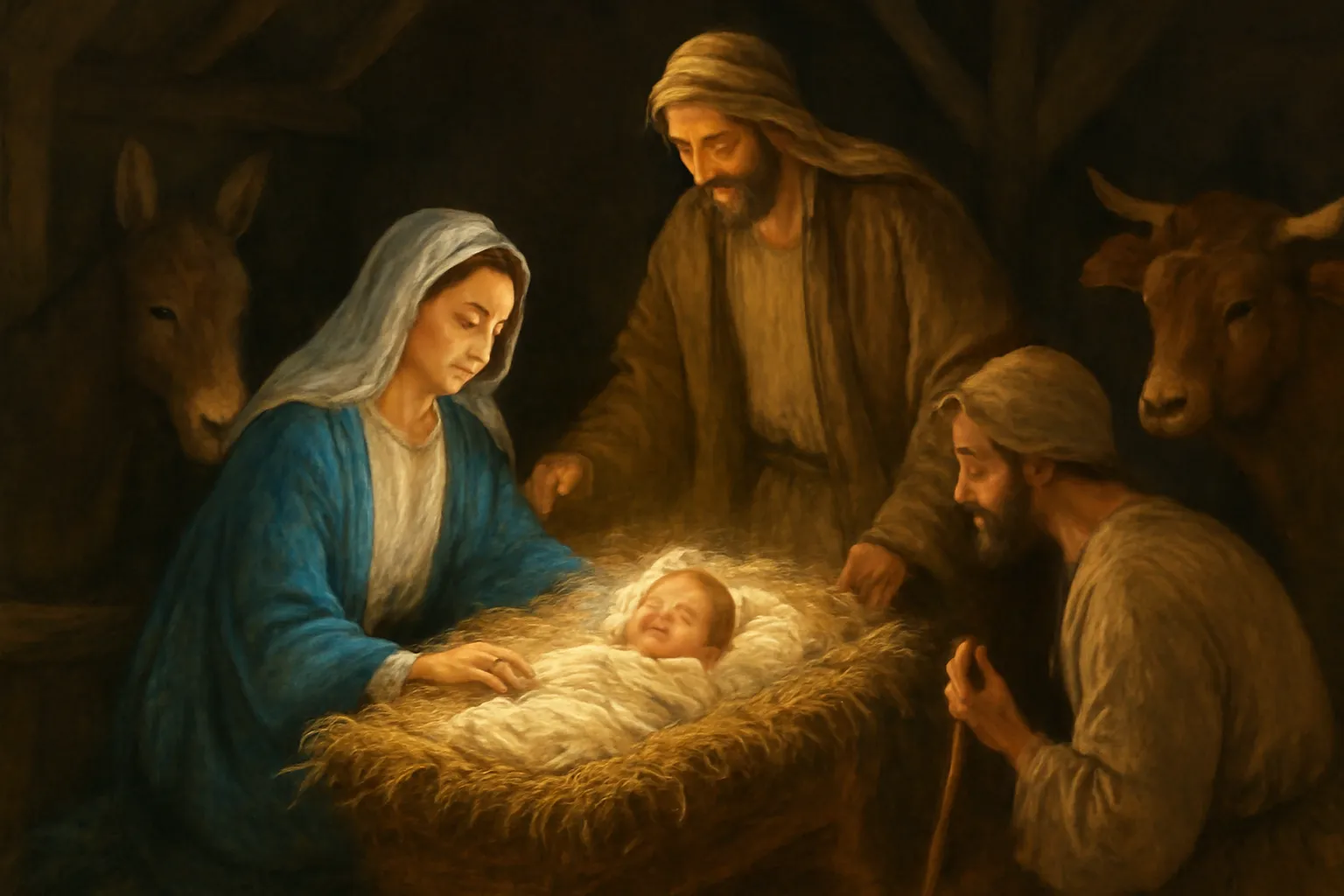
The Jesus birth story, often called the Nativity or the birth narrative, sits at the heart of the Christian calendar and Christian imagination. It is more than a single sequence of events; it is a collection of moments that seekers have read, sung, painted, and preached for two millennia. In this overview we explore the nativity account across its primary witnesses, examine the historical context, unpack the theological themes, and consider how different Christian traditions understand and celebrate the birth of the Christ Child.
Because the birth of Jesus is presented in distinct ways in the canonical Gospels, this article uses the language of variety and unity: two complementary birth narratives that together form a fuller picture of the events surrounding Jesus’ arrival in Bethlehem and his mission begun as a child. The aim here is educational clarity and historical caution, while also honoring the rich symbolism and devotional life that the Nativity story has inspired across cultures.
Two Foundational Narratives: Matthew and Luke
In the New Testament, the primary accounts of Jesus’ birth come from two different Gospel witnesses, each with its own emphasis and audience. Together they shape the church’s understanding of the birth of Jesus as a turning point in the saga of salvation.
Matthew’s Nativity Account
Matthew presents the birth narrative in a way that foregrounds Joseph’s experience, royal lineage, and the fulfillment of prophecy. Key features include:
The genealogy linking Jesus to King David and the Abram/Sarah lineage, underscoring Jesus’ messianic identity.
The dream guidance given to Joseph, encouraging him to take Mary as his wife and to name the child Jesus, or Joshua in Hebrew, meaning “the Lord saves”.
The announcement that Jesus’ birth occurs within the context of Herod the Great’s rule and the political complexities of Roman-occupied Judea.
The visitation of the Magi from the East, who follow a guiding star to honor the Christ Child, and the subsequent danger to the child’s life prompting the family to seek safety in Egypt.
From Matthew’s perspective, the nativity story becomes a drama about divine intervention amid human power struggles, and about how Gentile (non-Jewish) figures participate in recognizing Jesus as king. This account emphasizes obedience, dream-interpretation, and the continuity of salvation history with the prophetic tradition.
Luke’s Nativity Account
Luke tells the birth story with a different set of focal points—angelic announcements, the annunciation to Mary, and the experiences of common people such as shepherds. Prominent elements include:
The Annunciation to Mary, where the angel Gabriel announces that she will conceive the Messiah by the Holy Spirit, and Mary’s exemplary response of faith.
Elizabeth’s greeting and the depiction of John the Baptist as a prelude to Jesus, highlighting the sense of a larger divine plan unfolding in real time.
A viaje to Bethlehem for a census, the humble setting in a stable, and the birth in a manger, signaling that the Incarnation occurs in a modest, accessible place.
The presentation of Jesus in the Temple, accompanied by the elderly prophets Simeon and Anna, who recognize the child’s significance for Israel and the nations.
Luke’s nativity narrative stresses humble circumstances, joyful praise, and the inclusion of the marginalized—shepherds, the powerless, and those who listen for God’s word in ordinary life. The emphasis is on invitation, mercy, and the realization of God’s promises through the life of the child Jesus.
Annunciation to Mary and the Foundations of the Birth Narrative
The Annunciation: Gabriel’s Message
The first moments of the birth story begin with the heavenly announcement. In Luke 1, the archangel Gabriel appears to Mary with the message that she, a virgin engaged to Joseph, will conceive the Holy Spirit-borne Son. The words spoken to Mary, such as “do not be afraid,” and “you have found favor with God,” set the tone for a narrative rooted in divine initiative and human trust.
Mary’s Fiat and the Magnificat
Mary’s response, often summarized as a faithful yes, is a theological hinge in the story. Her canticle, the Magnificat, pronounces God’s mercy and the lifting up of the humble. Her words, “my spirit rejoices in God my Savior,” frame the birth narrative within a broader view of salvation history and social reversal—the powerful brought low, the lowly exalted.
The Journey, the Birth, and the Stable Setting
The journey to Bethlehem and the events surrounding the birth convey a sense of historical plausibility while carrying deep symbolic weight. The Bethlehem setting is not incidental; it fulfills prophecy and grounds the story in a real place with significance for the Jewish people.
The Bethlehem Context
The Gospel writers situate Jesus’ birth within the context of a Roman census, a common and practical explanation for travel and census-driven demographic shifts. This event places the family in Bethlehem, the city of David, where the Messiah’s origin would be expected by prophetic imagination.
The Manger and the Night Sky
Luke’s birth narrative emphasizes the humble setting: Jesus lying in a manger, wrapped in swaddling clothes, surrounded by animals. The imagery resonates with themes of poverty and accessibility, inviting all to contemplate the arrival of God among the lowly. The nightly setting also frames the first terrestrial witnesses—the shepherds—who are among the first to receive the divine message and respond with praise and wonder.
Shepherds, Angels, and the Proclamation to the Fields
The encounter with the shepherds is a distinctive and powerful element of Luke’s nativity story. It presents the birth of Jesus as good news for ordinary people and demonstrates the reach of divine revelation beyond elite circles.
The Angelic Choir and the Heavenly Announcement
An orthodox and enduring image in Christian art and hymnody is the chorus of angels declaring peace on earth to those whom God favors. The shepherds hear the news, verify the events by visiting the stable, and return to their fields telling others what they have seen and heard.
Shepherds as the First Witnesses
The portrayal of shepherds as the first human witnesses underscores a central message: the birth of Jesus is not only for the powerful or learned but for all people—especially those who live in the margins. It is a reminder that God’s work often happens through those who are overlooked by major institutions.
The Visit of the Magi and the Escape to Egypt: Matthew’s Expansion of the Nativity
Matthew’s account expands the narrative with a different cast of characters and a different sequence of events. The arrival of the Magi and the subsequent flight to Egypt add geopolitical dimensions and connect the birth of Jesus with ongoing threads of prophecy and salvation history.
The Magi, the Star, and Worship
The Magi are travelers from the East who follow a guiding star and bring precious gifts—gold, frankincense, and myrrh—to honor the newborn King of the Jews. Their presence signals Jesus’ significance beyond a single community and foreshadows a mission that will touch Gentiles and nations.
The Flight to Egypt and Fulfillment of Prophecy
In response to Herod’s murderous decree, the family flees to Egypt, returning only after Herod’s death. This episode is framed as the fulfillment of prophecy and as a safeguard that preserves the child’s life to fulfill his role in the plan of God for humanity.
Key Figures and Roles in the Nativity Narrative
Understanding who plays what role in the birth story helps readers appreciate both the human and divine dimensions of the events surrounding Jesus’ birth.
Mary: central figure in Luke’s account, whose faith and responsiveness anchor the human response to God’s invitation.
Joseph: a righteous man who trusts God’s plan and protects Mary and Jesus, providing leadership and stability in uncertain times.
Elizabeth and Zachariah: relatives who recognize the significance of God’s acts and affirm the young couple’s calling.
Angels (Gabriel and others): messengers who reveal divine purpose and direct human action in unexpected ways.
The shepherds: emblematic witnesses who demonstrate that the news of Christ’s birth is good news for ordinary people.
The Magi: symbolic visitors representing the wider world’s recognition of Jesus’ importance and kingship.
Herod the Great: antagonist whose fear and political calculation catalyze the early pursuit to protect the infant and shape subsequent events.
Jesus: the central figure whose presence inaugurates a new era and who will grow into a teacher, healer, and savior in the Christian imagination.
Across the birth narratives, several enduring theological themes emerge. These themes have shaped Christian worship, doctrine, and devotion for centuries.
Incarnation and God-With-Us
At the core of the Christology of Christmas is the belief that God becomes human in the person of Jesus. The title Emmanuel, meaning “God with us”, captures this central mystery: the divine enters human history in a humble, accessible form.
Fulfillment of Prophecy
Both Matthew and Luke frame the birth narrative as the realization of prophetic expectations within Judaism, while simultaneously extending their reach to the Gentile world. The Messianic expectation is linked to Davidic lineage, shepherd imagery, and the universal scope of salvation.
Humility, Poverty, and Access
The imagery of a stable and a manger emphasizes that God’s most profound acts often occur in places of hardship and vulnerability. This humility invites a response of awe and service from people of varied backgrounds, demonstrating that the nativity is not reserved for the powerful alone.
Divine Disclosure and Human Response
The narratives repeatedly show how God discloses his plan to chosen individuals (Mary, Joseph) and how they respond with faith, obedience, and courage. The story also highlights communal reactions: shepherds share the message, wise men worship, and rulers react with fear and caution.
Historical Context and Scholarly Perspectives
Historians and theologians examine the birth stories with an eye to historical context, literary form, and theological aims. The narratives are not simply records of events; they are crafted to convey belief about who Jesus is and why his arrival matters.
Historical Plausibility and Constraints
Scholars discuss how the gospel authors may have used historical settings (Nazareth, Bethlehem, Jerusalem) and common cultural practices (censuses, temple rites) to anchor the narrative in a tangible world. At the same time, they acknowledge that the Gospel writers also employ symbolic storytelling to convey theological truths beyond a strictly factual timeline.
Literary Devices and Thematic Unity
Both accounts use motifs such as light versus darkness, journey versus homecoming, and worship versus doubt to weave a cohesive message about Jesus’ identity and mission. The pericope structure (short biblical passages) in Luke and Matthew allows for compact narratives that still invite deep reflection.
Variations Across Christian Traditions
Different Christian traditions—Catholic, Orthodox, Protestant, and Anglican communities—interpret and celebrate the nativity in distinctive ways, while sharing core beliefs about the birth story. These variations reflect liturgical calendars, devotional practices, and artistic expressions that have evolved over centuries.
Liturgical Celebrations
Christmas Eve and Christmas Day observances, including nativity plays, carols, and liturgies that recount the birth of Jesus.
Advent preparations, which culminate in the celebration of the Incarnation and the opening of the Christmas season.
Feast days such as the Annunciation (March 25) and the Presentation in the Temple (February 2) in some traditions, which complement the birth narrative with early moments in Jesus’ life.
Art, Iconography, and Music
From medieval nativity scenes to Renaissance paintings, art interprets the birth story with rich symbolism: the star over the stable, the adoration of the shepherds, the gifts of the Magi, and the Holy Family’s quiet resolve. In music, carols and liturgical hymns retell and reimagine the birth narrative to invite contemplation, worship, and joyful celebration.
Frequently Asked Questions and Common Misconceptions
Readers often bring questions about dates, details, and the relationships between the different accounts. Here are concise answers to some of the most common inquiries.
Did the Magi visit Jesus at his birth?
The Magi appear in Matthew’s birth narrative, but not in Luke’s. They visit after Jesus’ birth, following a star, and bring gifts to honor the Christ Child. This sequence suggests a wider recognition of Jesus’ significance beyond Israel and foreshadows his role in the broader human story.
Was Jesus really born in a stable?
The Gospel accounts describe a stable or a setting where an animal shelter is plausible because there was no room in the inn. The exact geographical and architectural details are not the central point; the emphasis is on the humble circumstances of the birth and the accessibility of the divine to all people.
What is the significance of the shepherds and the angels?
The shepherds and the angelic proclamation symbolize that the news of Jesus’ birth is good news for all people, especially those who are poor or marginalized. The response of the shepherds—praising God and spreading the word—models a posture of worship and testimony.
Nativity in Home, Church, and Community Life
The Jesus birth story transcends textual study; it shapes how communities live out faith, hospitality, and charity. From family traditions around Christmas trees to church-led nativity plays and charitable initiatives, the nativity narrative invites reflection on light in darkness, hope in distress, and peace among nations.
Family Traditions and Devotion
Reading Scripture passages from Luke 2 and Matthew 1–2 during Advent or Christmas celebrations.
Setting up a nativity scene as a visual reminder of the birth narrative and its ongoing meaning.
Sharing meals, songs, and prayers that center on the child who is called Emmanuel.
In congregations, sermons may explore themes such as trust, obedience, and anticipation—as well as the paradox of a king who enters the world in poverty. Education programs often include historical context, textual analysis, and devotional practices that invite personal and communal response to the birth event.
Concluding Reflections: The Enduring Significance of the Nativity
The Jesus birth story is more than a historical narrative; it is a living invitation to encounter the mystery of God taking human form. Across its two canonical witnesses, the nativity offers a multi-faceted proclamation: that the divine is near, that salvation begins in the most unlikely places, and that people from diverse backgrounds can become part of God’s story.
In a world often marked by fear, violence, and division, the nativity narrative calls for a posture of humility, generosity, and worship. It invites us to consider how we respond to the Christ Child in our own time—whether with adoration like the shepherds, faithful obedience like Mary and Joseph, or awe and curiosity like the Magi.
Glossary of Key Terms
To aid understanding, here is a concise glossary of terms frequently used in discussing the birth story.
Nativity: the birth of Jesus; the event celebrated at Christmas in Christian tradition.
Incarnation: the belief that God became human in Jesus Christ.
Emmanuel: a name meaning “God with us”.
Annunciation: the angelic announcement to Mary about conceive of the Messiah.
Messiah / Christ: the anointed one, the savior anticipated in Jewish and Christian tradition.
Bethlehem: the birthplace of Jesus, known as the City of David.
Herod the Great: the Roman-appointed king who sought to kill the infant Jesus.
Magi: wise travelers from the East who bring gifts and worship Jesus after his birth.

 Por Laura Jara