Jesus Born Bible Verse: Top Bible Verses About Jesus' Birth
Jesus Born Bible Verse: Top Bible Verses About Jesus' Birth
This article explores Jesus born bible verse themes and highlights the birth of Jesus through a curated selection of top Bible verses about Jesus' birth. Whether you are studying the nativity narratives, preparing for a Christmas devotional, or simply seeking the biblical anchors for the birth story, these passages offer a coherent tapestry: prophecies about the virgin birth, angelic announcements, the nativity accounts in Matthew and Luke, wise men and shepherds, and the early recognition of Jesus as the promised Messiah. Throughout, we use variations of the phrase Jesus born bible verse to show how the Bible speaks about the moment when God’s Son entered human history, and we will present the verses in a way that supports reflection, teaching, or personal study.
The birth verses of Jesus form the foundation of Christmas theology and Christian doctrine. They connect a long tapestry of prophecy with the concrete events surrounding Jesus’ advent. These passages teach about divine initiative, human humility, and the hope of salvation offered to all people. For students and readers, the birth of Christ passages reveal four enduring themes: anticipation and prophecy; the miraculous announcement of Jesus’ conception; the humble nativity in Bethlehem; and the manifestation of Jesus as the Savior and Lord to the world. The following sections gather and explain the most influential verses that are frequently cited under headings like birth of Jesus verse, Christ’s nativity verse, or birth narrative in the Bible.
Key Prophecies and Early Promises: The Foundation for Jesus’ Birth
Before the Gospels tell the story of Jesus’ birth, the Bible lays a groundwork of expectation. These references are often categorized as prophecies or guiding promises about the Messiah who would be born of a virgin and come from Bethlehem. They provide a theological frame for the nativity accounts that follow. Here are some frequently cited verses that scholars and readers consider essential to understanding the virgin birth and the kingly mission of Jesus.
Isaiah 7:14 — This verse is a cornerstone for the doctrine of the virgin birth: “Therefore the Lord himself shall give you a sign: Behold, a virgin shall conceive, and bear a son, and shall call his name Immanuel.” This prophecy is often referenced in discussions of the birth of Jesus and the name Immanuel (“God with us”). In many Christmas meditations, this verse is read as a prelude to the gospel narrative, signaling that God’s redemptive plan begins within human history.
Micah 5:2 — A prophecy about Bethlehem as the place of the ruler’s birth: “But thou, Bethlehem Ephratah, though thou be little among the thousands of Judah, yet out of thee shall he come forth unto me that is to be ruler in Israel.” This Bethlehem prophecy anchors the location of Jesus’ birth and helps readers connect the nativity to the lineage and promises given to Israel.
Matthew 1:23 (fulfillment of prophecy) — The Gospel author cites Isaiah’s language to show that Jesus’ birth fulfills the divine plan: “Behold, a virgin shall be with child, and shall bring forth a son, and they shall call his name Emmanuel.” This verse appears in the birth narrative in the Gospel of Matthew, reinforcing the divine incarnation and the title Emmanuel, meaning “God with us.”
Annunciation and the Conception: Mary’s News and the Holy Spirit
The advent of Jesus begins in a personal encounter: God’s plan announced to Mary, a young woman chosen to participate in the mystery of the virgin birth. The chapters describing the Annunciation reveal both awe and obedience as Mary is invited to carry the Son of God. These passages are central to the understanding of the birth of Christ and the identity of Jesus as the Son of the Highest.
Luke 1:26-38 — The Announcement to Mary
In Luke’s account, the angel Gabriel greets Mary and reveals that she will conceive a son by the Holy Spirit and that he will be called the Son of the Highest. The verse includes the angel’s declaration about the child’s divine vocation and the human response of faith. While the exact wording varies among translations, the essential message is consistent: a miraculous conception, a child named Jesus, and divine purposes fulfilled in human history. A compact excerpt from the passage conveys the sense of calling and destiny:
“And, behold, thou shalt conceive in thy womb, and bring forth a son, and shall call his name JESUS.” (Luke 1:31, KJV)
Readers often reflect on the phrases fulfilled promises and humble obedience in Mary’s response. The scene emphasizes that the birth narrative begins with faith within ordinary life, a hallmark of many jesus born bible verse discussions.
The Nativity Narratives: Luke and Matthew
The birth of Jesus is recorded in two complementary gospel narratives: Luke’s detailed account of the shepherds and the angelic chorus, and Matthew’s emphasis on legal lineage, dream guidance for Joseph, and the visit of the Magi. Together, these narratives provide a rich portrait of the nativity and the significance of Jesus’ entry into the world.
Luke 2:1-20 — The Nativity in the Fields and Manger Scene
Luke’s narrative situates Jesus’ birth in a real historical setting—the decree of Caesar Augustus, the journey to Bethlehem, and the humble place where the newborn rests. The famous verse that describes the moment of birth in a stable and the shepherds’ visitation is central to the Jesus born bible verse canon. A representative quotation from the passage is often cited in devotional readings:
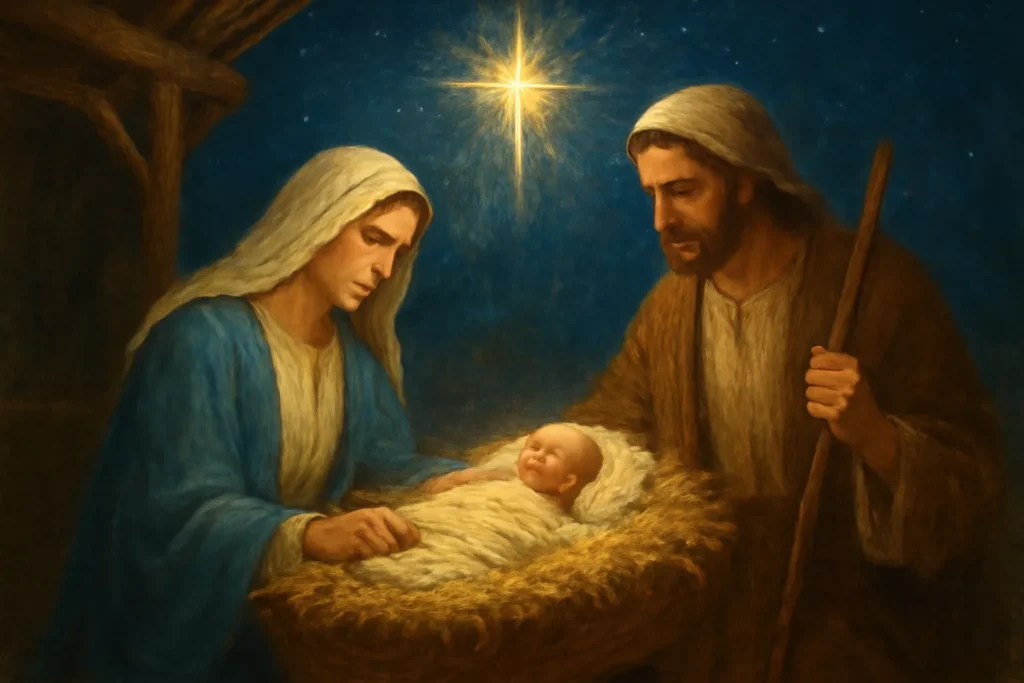
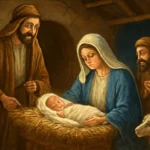
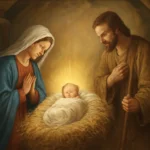
“And she brought forth her firstborn son, and wrapped him in swaddling clothes, and laid him in a manger.” (Luke 2:7, KJV)
The shepherds’ proclamation—“Glory to God in the highest, and on earth peace, good will toward men” (Luke 2:14, KJV)—frames the event as a proclamation of peace and divine favor for all people. Luke’s nativity emphasizes the accessibility of the birth—the Messiah comes to humble shepherds first, underscoring the theme that the birth of Jesus is good news for all classes of society.
Matthew 1:18-25 — The Birth of Jesus in Bethlehem through Joseph’s Perspective
Matthew’s version highlights the legal and human dimensions surrounding the birth. The chapter explains how Mary’s pregnancy was conceived by the Holy Spirit, and how an angel reassures Joseph not to fear taking Mary as his wife. The key moment occurs when the angel tells Joseph the child’s name and mission: Jesus, for he will save his people from their sins. The fulfillment statement anchors Jesus in the lineage of David and the promise of a kingly destiny.
A verse frequently cited in this section captures the divine purpose and name:
“Behold, a virgin shall be with child, and shall bring forth a son, and they shall call his name Emmanuel.” (Matthew 1:23, KJV)
Another narrative thread in Matthew focuses on the dream guidance for Joseph, which protects the sacred plan and emphasizes the obedience required to participate in God’s redemptive work. The birth of Christ in Matthew’s Gospel is thus a synthesis of prophecy, human responsibility, and divine intervention.
Angels, Shepherds, and the First Adoration
The announcement of Jesus’ birth was accompanied by celestial and human recognition. The angelic chorus announced peace and the good news, and shepherds became the first witnesses to this miraculous event. The theological significance of these moments lies in how they reveal the nature of Jesus as both Lord and Savior, and how the events invite humble reception by those who hear the good news.
Luke 2:10-11 — The angel’s message to the shepherds: “For unto you is born this day in the city of David a Savior, which is Christ the Lord.” The announcement identifies Jesus as the long-awaited Messiah who brings salvation to humanity.
Luke 2:14 — The chorus: “Glory to God in the highest, and on earth peace, good will toward men.” This line reframes the birth as a cosmic event with cosmic peace and a message of divine grace.
Luke 2:15-20 — The shepherds’ response: they go to Bethlehem, verify what has been told, and then spread the word. The shepherds’ witness underlines a pattern in Jesus birth verses where the humble are invited to participate in God’s redemptive plan.
The Magi: Gentiles Recognize the King
Another component of the early recognition of Jesus comes from the visit of the Magi, often called the wisemen, who travel from the East to honor the newborn King. While their journey occurs after the birth, it is intimately tied to the nativity narrative and to the broader theme that Jesus’ birth is the turning point for all nations, not just Israel.
Matthew 2:1-2 — The Magi arrive in Jerusalem seeking the newborn King: “Where is he that is born king of the Jews? for we have seen his star in the east, and are come to worship him.” This moment expands the scope of salvation to Gentiles and demonstrates the universality of Jesus’ reign.
Matthew 2:11 — They find Jesus with Mary and worship him, presenting gifts. The act of worship emphasizes the recognition of Jesus’ divine kingship from the outset.
Observations from Simeon and Anna: Early Witnesses at Presentation
In Luke 2, we also meet two senior figures who encounter Jesus in the temple and prophesy about his role in God’s redemptive plan. Their testimonies add a prophetic frame to the birth narrative and show how Jesus would become a light to revelation for Gentiles and to glory for Israel.
Simeon’s Song: Luke 2:25-32
Simeon, described as a righteous and devout man, encounters Jesus at the temple and declares that he has seen the salvation prepared in the sight of all people. In the KJV phrasing, Simeon addresses Mary and speaks of the child as a light for revelation to the Gentiles and as a glory for Israel. This passage is often quoted in discussions of the birth of Jesus and its significance for both Jews and Gentiles.
Anna’s Praise: Luke 2:36-38
Anna, a prophetess, recognizes the significance of the child and continues to speak about him to all who were looking for redemption in Jerusalem. Her presence underscores the sense that the birth of Jesus is not just a private event but a public unveiling of God’s salvation for all people.
The Logos Made Flesh: John 1:14 and the Theological Reach of the Nativity
Beyond the narrative accounts, the birth of Jesus is echoed in the prologue of the Gospel of John, which emphasizes that the Word became flesh and dwelt among humanity. This verse extends the nativity discussion into the broader theological domain, showing how Jesus is the eternal Son who takes on human nature for the purpose of redemption. While not a birth narrative in the same sense as Luke or Matthew, John 1:14 is considered a foundational text for understanding the incarnation, which undergirds the entire Christ’s nativity discourse.
From the KJV, you may recall the line:
“And the Word was made flesh, and dwelt among us.” (John 1:14, KJV)
Additional Context: Bethlehem, Virgin Birth, and the Messiah
Several verses are frequently cited together to convey the broader theological frame around Jesus’ birth. They are often used in sermons, Christmas devotionals, and Bible studies to emphasize the arrival of the Savior and the fulfillment of ancient promises. In this section, you’ll find a concise synthesis of the most cited birth verses that connect prophecy, nativity, and the identity of Jesus as the Messiah.
Isaiah 9:6 (messianic title and divine attributes) — While not a birth narrative per se, this verse presents the child as a ruler endowed with peace and justice, which readers connect to the birth of Jesus as the incarnate Son of God.
Luke 2:12 — The sign to the shepherds: “This shall be a sign unto you; You will find the babe wrapped in swaddling clothes, lying in a manger.” The imagery here reinforces the humble circumstances of the birth of Jesus.
How these Verses Help in Worship, Teaching, and Personal Growth
Reading and reflecting on the birth verses about Jesus invites believers into worship, gratitude, and mission. Here are practical ways these passages can be engaged in daily life, study groups, and church teaching:
Devotional reflection: Use short verses (e.g., Luke 2:11, Matthew 1:23, John 1:14) as daily meditations that orient your heart toward the mystery of the incarnation.
Thematic studies: Organize a study on the nativity narratives by comparing Luke’s shepherds with Matthew’s Magi, highlighting how both accounts reveal Jesus as Savior for all nations.
Sermon outlines: Build sermon arcs around themes such as prophecy fulfilled (Isaiah 7:14, Micah 5:2), obedience and faith (Mary’s response; Joseph’s dreams), and the universal scope of Jesus’ birth (Magi, Simeon, Anna).
Sabbath and seasonal use: Use these passages in Advent plans to prepare the heart for Christmas and to reflect on what the.incarnation means for personal faith and social outreach.
Top Variants of the Theme: Phrases and Keywords
In secular and religious discussions alike, you’ll encounter a variety of phrasings that refer to the same core events. Here are some commonly used variants of the central theme “Jesus born Bible verse,” along with suggested angles for study or reading:
Birth of Jesus verse — Focus on the moment of birth and the conditions surrounding it.
Jesus’ nativity verse — Emphasize the accounts in Matthew and Luke and the theological significance of incarnation.
Virgin birth verse — Include prophecy and annunciation passages that emphasize miraculous conception.
Emmanuel verses — Reflect on the name meaning “God with us” and its implications for God’s presence in human history.
Messiah birth verses — Tie the birth narratives to the expectation of the coming king and Savior for all nations.
If you want to craft a personal or group devotional centered on the birth passages, here is simple guidance to help you structure your sessions:
Choose core verses from Luke 1, Luke 2, Matthew 1-2, Isaiah 7:14, Micah 5:2, and John 1:14. Use a mix of prophecy, annunciation, and nativity passages to show the arc from expectation to fulfillment.
Read and reflect — Read the verse slowly, note keywords, and reflect on how the verse speaks to God’s character, Jesus’ identity, and human response.
Ask guiding questions — What does this verse reveal about God’s plan? How does Jesus’ birth redefine grace, peace, and salvation? What is the response required of believers?
Pray and respond — End with a prayer that thanks God for sending Jesus, and consider a practical act of witness or service inspired by the passages.
Across the birth narratives in the Gospels, the prophecies in the Hebrew Scriptures, and the Johannine reflection on the incarnation, the Jesus born bible verse suite presents a coherent and compelling story: God’s plan unfolds in history, a virgin conceives, the Messiah is born in Bethlehem, angels declare peace on earth, wise men bow before a king, shepherds testify to good news, and the Word becomes flesh to dwell among us. Whether you call this a nascent narrative or a living theology, these passages invite readers to marvel at the mystery of Christmas and to respond with worship, gratitude, and mission. The variety of birth verses used in sermons, studies, and personal devotion reflects the breadth of biblical revelation about the Saviour who was born to save the world from sin and to bring the light of God’s presence into human history.






Leave a Reply