Water baptism meaning: What it represents and why it matters
Water baptism meaning: What it represents and why it matters
If you are considering baptism, you may be asking a simple but significant question: What does getting baptized in water actually mean? In Christian practice, water baptism is a visible act that represents a person’s response to Jesus Christ. It points to faith, repentance, cleansing, death to an old way of life, and beginning a new life with God.
Baptism does not mean that water itself has magical power. Its meaning comes from the faith and commitment it expresses, as well as the Christian beliefs connected with Jesus’ death, burial, and resurrection. The person being baptized is making a public identification with Christ and joining the community of believers.
Christians explain the timing and effect of baptism in different ways. Some baptize infants, while others baptize people who personally profess faith. Some churches usually immerse a person, while others pour or sprinkle water. Despite these differences, water baptism commonly centers on belonging to Jesus and living as his disciple.
The word baptism is connected with the idea of washing or immersing in water, but Christian baptism carries a deeper symbolic meaning. It presents an outward picture of an inward response to God. A person may enter the water as a public confession of faith and come out with a renewed sense of identity and purpose.
Water baptism commonly communicates several related truths:
Faith in Jesus: The person identifies with Jesus Christ and trusts him as Lord and Savior.
Repentance: Baptism expresses a turning away from sin and a desire to follow God’s direction.
New life: Going beneath the water and rising again symbolize death to an old life and resurrection to a new one.
Public commitment: Baptism allows friends, family, and the church to witness a person’s profession of faith.
Belonging: The baptized person identifies with the Christian community and accepts the call to live as a disciple.
These meanings are not separate messages competing with one another. They fit together. A Christian is not simply performing a religious ceremony but responding to God with trust, repentance, and willingness to follow.
The New Testament connects baptism closely with Jesus’ command to make disciples and baptize them in the name of the Father, Son, and Holy Spirit, recorded in Matthew 28:19. That command helps explain why baptism is more than a private spiritual experience. It is also a public act of discipleship carried out in relationship with the church.
Core meaning: Water baptism is a visible sign of faith in Jesus and a public identification with his death, burial, resurrection, and people.
Baptism also reflects the pattern of Jesus’ own life. Jesus was baptized by John in the Jordan River, as described in Matthew 3:13–17, even though Christians understand him to be without sin. His baptism marked the beginning of his public ministry and demonstrated willing obedience to God. For Christians, following this example can make baptism an act of obedience and identification, not an attempt to earn God’s approval.
How water represents cleansing, death, and new life
Water naturally suggests washing and cleansing. In Christian symbolism, baptism can represent the forgiveness and cleansing associated with repentance and faith. The water does not function as a substitute for sincere trust in God. Instead, it gives a physical form to the spiritual reality the believer is professing.
Several New Testament passages connect baptism with the idea of leaving an old life behind. Romans 6:3–5 compares baptism with being united with Jesus in his death and resurrection. The passage presents baptism as a picture of dying to sin and rising to live differently. This does not mean a baptized person becomes incapable of sin. It means the person’s direction, allegiance, and identity have changed.
Going under the water can symbolize burial. Coming out can symbolize resurrection and a new beginning. That symbolism is especially clear when a church practices full immersion, although Christians who use pouring or sprinkling still understand the water as representing cleansing and new life.
The image of new life includes more than a moment at a baptism service. A person who is baptized is making a commitment to continue growing in faith, learning Jesus’ teachings, receiving correction, serving others, and turning back to God when they fail. Baptism is therefore a starting point for a life of discipleship, not a finish line.
Christian baptism can also express freedom from an old identity. Someone may have been known primarily by past mistakes, destructive habits, shame, or fear. Baptism does not erase personal history or remove every consequence of past actions, but it declares that the person’s deepest identity is now found in relationship with Christ rather than in former behavior.
That declaration should be understood carefully. Baptism is not a promise that life will immediately become easy. It does not guarantee the end of temptation, grief, conflict, or uncertainty. It represents a new allegiance and a new direction, supported by God’s grace and the help of the Christian community.
Why Christians disagree about baptism and salvation
One of the most common questions about baptism is whether it is necessary for salvation. Christians answer this differently because they interpret biblical passages and the relationship between faith, grace, and church practices in different ways.
Many evangelical and Protestant churches teach that salvation is received by God’s grace through faith in Jesus, not earned by completing a ceremony. They often describe baptism as an important act of obedience that follows conversion. In this view, a person is not saved because water has been applied but is baptized because that person has trusted Christ and wants to obey him.
Other Christian traditions regard baptism as a sacrament through which God gives grace and brings a person into the church. These traditions may teach that baptism is ordinarily connected with forgiveness, new birth, or entrance into the covenant community. They do not necessarily describe baptism as a human achievement; rather, they emphasize God’s action through the sacrament.
Some passages in Acts connect baptism with repentance, forgiveness, and receiving the Holy Spirit. Other passages emphasize faith in Christ and God’s grace. Churches weigh these passages differently and develop their teachings within broader traditions. A careful explanation should acknowledge these differences rather than pretending every Christian group defines baptism in exactly the same way.
Even among churches that place different theological weight on baptism, many agree on several points:
Baptism is closely associated with becoming a Christian and entering the life of discipleship.
It should not be treated as a superstition or a mechanical ritual.
It points beyond the water to Jesus Christ and God’s saving work.
It connects the individual believer with a gathered Christian community.
Its meaning should be supported by a life of faith, repentance, and love.
If you are unsure what a particular church teaches, ask its pastor or leadership team to explain the church’s view of baptism, salvation, and membership. This is especially helpful if you were baptized in another tradition or are deciding whether a second baptism would be appropriate.
Ask before scheduling: Find out what the church believes baptism means, who may receive it, how it is administered, and whether it is connected with membership or a profession of faith.
A person should also avoid treating baptism as a way to impress other people or remove anxiety through a single emotional moment. The ceremony can be deeply meaningful, but Christian faith is not sustained by the ceremony alone. The lasting question is whether the person is genuinely turning toward Christ and becoming part of a community that helps them follow him.
What different baptism practices mean
Churches use several methods of administering water baptism. The three most common are immersion, pouring, and sprinkling. Each practice has historical and theological reasons behind it, and Christians within each tradition may view their practice as faithful to Scripture and church history.
Immersion beneath the water
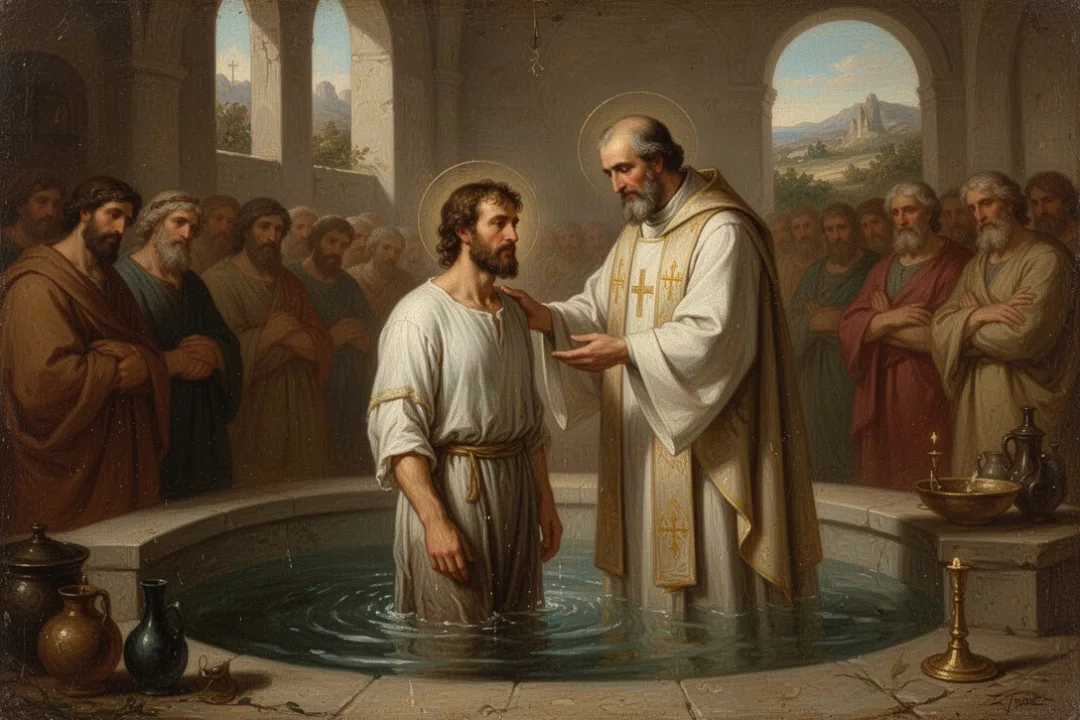
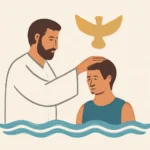
Immersion involves placing the person fully under the water and then raising them out again. Many churches prefer this method because it gives a clear visual representation of burial and resurrection. The movement makes the symbolism of Romans 6 especially easy to see: the old life is pictured as buried, and the new life is pictured as raised.
Immersion may take place in a baptismal pool, a river, a lake, or another suitable body of water. The location does not create the meaning. What matters is the person’s profession, the church’s practice, and the Christian significance attached to the act.
Pouring water over the head
In baptism by pouring, water is placed over the person’s head, often three times or in connection with the name of the Father, Son, and Holy Spirit. This method can emphasize God’s grace being given to the person and can be practical when full immersion is difficult or unavailable.
Pouring does not prevent a church from teaching that baptism represents cleansing, belonging, and new life. The amount of water is not the only factor in determining the meaning of the ceremony.
Sprinkling with water
Sprinkling involves applying a smaller amount of water to the head. Some churches use this practice for infants, children, or adults. It may reflect a tradition that places strong emphasis on covenant membership, God’s initiative, and the symbolic cleansing associated with water.
Christians who prefer immersion may consider it the clearest biblical picture, while Christians who practice sprinkling or pouring may believe those methods faithfully express the purpose of baptism. These differences can be significant, but they do not automatically mean that every person baptized by another method lacks genuine Christian faith.
The method can affect the symbolism, yet the central question remains: What is the person professing? A baptism performed with water but disconnected from faith, repentance, or the church’s understanding may not communicate the same thing as a baptism undertaken as a sincere commitment to follow Jesus.
Who should be baptized, and when
Churches differ about who should receive baptism. Some baptize people who can personally confess faith in Jesus. This is often called believer’s baptism. Other churches baptize infants as part of their understanding of the covenant community, then expect those children to affirm the faith personally later through confirmation or another public profession.
Churches that practice believer’s baptism usually look for a credible profession of faith rather than perfect knowledge or flawless behavior. A person does not need to understand every Christian doctrine before being baptized. However, the person should have a basic understanding of who Jesus is, what baptism represents, and the commitment being made.
For children and teenagers, parents, pastors, and church leaders often discuss the child’s understanding and willingness. The goal should not be to pressure a child because friends are being baptized or because relatives expect it. A thoughtful conversation can help determine whether the child is expressing personal faith or simply responding to excitement and social influence.
Adults may also feel uncertain because they were baptized as infants, baptized in another church, or baptized before they understood the meaning. The best response depends on the church tradition involved. Some churches regard an earlier baptism as fully valid and encourage the person to reaffirm faith publicly. Others may recommend baptism after a personal profession of faith.
If you are thinking about baptism, consider these questions:
Do I trust Jesus and want to follow him, rather than merely participate in a ceremony?
Do I understand baptism as a public expression of faith and commitment?
Am I willing to turn away from patterns that conflict with the life Jesus teaches?
Have I spoken honestly with a pastor or mature Christian about my questions?
Am I prepared to keep growing within a local Christian community?
These questions are not a test of perfection. Baptism does not require you to have every doubt resolved or every habit corrected. It does call for honest faith and a willing direction. Christians understand growth as an ongoing process, and baptism marks the beginning or public affirmation of that process.
What happens during and after a baptism service
A baptism service may include singing, prayer, a short explanation of baptism, a personal testimony, and a declaration of faith. The person may be asked questions about belief in Jesus or willingness to follow him. The exact wording varies by church, but the purpose is generally to make the commitment clear to the congregation.
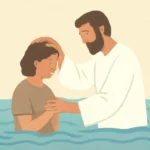
In an immersion service, a pastor or church leader typically helps the person into the water, says a baptismal statement, lowers the person briefly beneath the surface, and raises them again. Safety, privacy, accessibility, and comfort should be handled with care. A person who cannot safely be immersed can discuss another method with church leaders.
After baptism, many churches welcome the person into membership or a more formal pattern of participation. This may involve joining a small group, taking communion according to the church’s practice, serving in ministry, attending Christian education, or meeting regularly with a mentor.
The most meaningful response after baptism is not simply preserving photographs or remembering the event. It is allowing the commitment to shape ordinary choices. That includes how you treat family members, handle money, respond to conflict, use authority, care for vulnerable people, and seek forgiveness. Public faith should become practical faith.
When a baptized Christian fails, baptism does not mean the person must pretend nothing happened. Christian communities generally encourage confession, repentance, accountability, and restoration. The symbolism of new life includes continuing to return to God and receiving grace rather than hiding behind a public ceremony.
Baptism also creates a responsibility for the church. The congregation is not merely an audience for a memorable event. It is called to teach, encourage, correct, welcome, and support the baptized person. A strong church treats baptism as the beginning of deeper community, not as a graduation from spiritual care.
For that reason, the meaning of water baptism reaches beyond the day it happens. It identifies a person with Jesus, gives visible expression to faith, and points toward a lifelong pattern of following, serving, repenting, and growing. The water is temporary, but the commitment it represents is intended to shape the whole of life.
Frequently asked questions
Does water baptism wash away sins physically?
No. Water does not physically remove sin or work as a magical substance. Baptism symbolizes the cleansing, forgiveness, and new relationship with God that Christians associate with repentance and faith in Jesus. Different traditions explain the spiritual effect of baptism differently, but Christians generally agree that its meaning points beyond the water to God’s saving work.
Can someone be a Christian without being baptized?
Churches answer this question differently. Many teach that a person is saved through faith in Jesus and should then be baptized as an act of obedience. Other traditions view baptism as an essential sacramental part of entering Christian life. If you have not been baptized, speaking with a pastor can clarify your church’s teaching and help you consider your next step.
Is being baptized a second time wrong?
There is no single answer across Christian traditions. Some churches recognize an earlier baptism and recommend reaffirming your faith instead of repeating the ceremony. Others may baptize someone who was baptized as an infant or in a setting that did not match their beliefs. Discuss the circumstances with church leaders before deciding.
What should I wear and bring to a baptism?
Ask the church about its practical guidelines first. For immersion, people commonly wear modest clothing that remains secure and opaque when wet, along with dry clothes, a towel, and toiletries. Some churches provide baptismal garments. If you have mobility, medical, or privacy concerns, mention them in advance so leaders can make the service safe and respectful.








Leave a Reply