Baptism — Biblical Meaning, Significance, and Practices Explained
Baptism — Biblical Meaning, Significance, and Practices Explained
Bible Dictionary · prácticas
Baptism — Biblical Meaning, Significance, and Practices Explained
prácticas Baptism
Baptism is a Christian sacrament and rite of initiation symbolizing repentance, cleansing from sin, and entry into the faith community. In Scripture, it often represents spiritual rebirth and identification with Christ’s death and resurrection. It is both an outward act with spiritual significance and a declaration of faith. Biblical baptism involves immersion, pouring, or sprinkling, depending on tradition, and signifies the believer’s commitment to follow Jesus.
The term 'baptism' derives from the Greek word 'baptismos,' meaning 'immersion' or 'washing.' Its root is 'baphe,' meaning 'to dip or immerse.' The Greek word evolved into Latin as 'baptismus' and entered English in the 14th century. Initially, it emphasized the act of immersion, which remained the primary mode of baptism in early Christianity, symbolizing purification and death to the old life.
Key Bible Verses
Matthew 28:19
Jesus commands His disciples to go and make followers of all nations, baptizing them in the name of the Father, Son, and Holy Spirit.
This verse highlights the Great Commission and establishes baptism as a fundamental Christian practice commanded by Jesus.
Romans 6:4
Paul explains that through baptism, believers are united with Christ's death and resurrection, symbolizing new life.
This verse underscores the spiritual meaning of baptism as participation in Christ's salvation and transformation.
Acts 2:38
Peter tells the crowd to repent and be baptized in the name of Jesus Christ for the forgiveness of sins and the gift of the Holy Spirit.
This verse connects baptism with repentance, forgiveness, and the receipt of the Holy Spirit at the moment of salvation.
Theological Significance
Baptism holds deep theological significance across Scripture, beginning with Old Testament purification rituals that foreshadowed the spiritual cleansing in Christ. In the New Testament, baptism marks the initiation into the Christian life, representing entry into the new covenant and union with Christ’s death and resurrection. It signifies the believer’s acceptance of salvation, forgiveness of sins, and the indwelling of the Holy Spirit. Theologically, baptism is understood as both a symbolic act and a spiritual reality, vital for discipleship and community inclusion. Its development reflects the unfolding narrative of God's plan of salvation through Christ and the ongoing call for believers to live transformed lives.
Across Christian Traditions
Catholic, Orthodox, Protestant, and Evangelical traditions all recognize baptism as a crucial sacrament or ordinance but differ in their understanding of its mode and effect. Catholics and Orthodox view it as a sacrament that imparts grace and often practice infant baptism, emphasizing the washing away of original sin. Many Protestant groups see it as an outward sign of an inward change, typically requiring believer’s baptism by immersion after personal conversion. Evangelicals specifically emphasize baptism as a public declaration of faith, often restricting it to those who profess personal belief. These differences influence how each tradition integrates baptism into their spiritual practices and church life.
Application in Christian Life
Christians apply baptism as an expression of their faith and commitment to follow Christ in everyday life. For example, believers may choose to be baptized after accepting Jesus as Lord through a personal decision, symbolizing their new identity. It also serves as a public testimony, encouraging fellow Christians and witnessing to others about their faith journey. In daily living, Christians see baptism as a reminder to live according to Christ’s teachings and to walk in the new life promised through this sacrament.
The practice of baptism has ancient roots, predating Christianity, with similar rituals in Jewish and pagan purification ceremonies. The earliest Christian baptisms likely involved full immersion in natural bodies of water, a practice that has persisted in many traditions today with modern baptisteries and pools.
Frequently Asked Questions
Is baptism necessary for salvation?
While views vary, many believe baptism is an important step of obedience and outward evidence of salvation, as seen in Mark 16:16 and Acts 2:38, but salvation ultimately depends on faith in Jesus Christ.
Can infants be baptized?
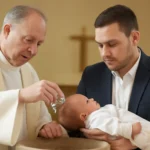
Many traditions, including Catholic and Orthodox, practice infant baptism, viewing it as the washing away of original sin; other groups believe baptism should only be for conscious believers.
What is the difference between immersion and sprinkling?
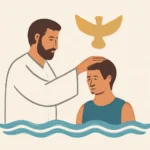
Immersion involves fully submerging the person in water, symbolizing death and rebirth, while sprinkling or pouring involves pouring water over the individual’s head; biblical precedent varies, but immersion is most closely associated with New Testament practices.