When someone asks, “Who is Malachi?” they may be wondering whether he was a person, the name of a biblical book, or one of the prophets who announced the Messiah. Malachi was a prophet of God who spoke to the people of Judah after the Babylonian exile. His message is preserved in the Book of Malachi, the final book in the Old Testament order used by most Christian Bibles.
Malachi lived during the period when the Jewish people had returned to Jerusalem, rebuilt the temple, and were trying to restore their community. The return had not solved every problem. Priests were treating worship carelessly, some people were breaking their marriage commitments, and many were asking why God seemed distant while dishonest people appeared to prosper.
The book answers those concerns through a series of conversations between God and the people. Malachi exposes empty religion, calls the community back to faithful worship, and points ahead to a coming messenger who will prepare the way for the Lord. Although the Bible gives few personal details about Malachi, his short book has a significant place in the story of redemption.
The name Malachi comes from a Hebrew word related to “my messenger” or “my angel.” The book begins with the phrase “an oracle” or “a message” through Malachi, depending on the English translation. Because of that wording, some readers and scholars have asked whether Malachi was the prophet’s personal name or whether it describes his role as God’s messenger.
The text itself does not identify Malachi’s father, hometown, tribe, or occupation. It also does not provide a narrative about his calling, as books such as Isaiah, Jeremiah, and Ezekiel do. What we know with confidence is that Malachi delivered a prophetic message to the people of Judah and addressed both religious leaders and ordinary worshipers.
The name fits the prophet’s work. Malachi did not present himself as the source of the message. He repeatedly speaks as a representative of the Lord, confronting the people’s arguments and announcing what God would do. His authority comes from the divine message he carries, not from a detailed account of his family background.
Helpful distinction: Malachi was the prophet, while the Book of Malachi is the written record of the message associated with his ministry. The book gives very little biography, so claims about his personal life should be treated cautiously.
Malachi is traditionally counted among the Twelve Minor Prophets. “Minor” does not mean less important or less inspired. It refers mainly to the shorter length of these prophetic books compared with Isaiah, Jeremiah, or Ezekiel. Malachi’s four chapters are brief, but they address worship, leadership, marriage, justice, repentance, and the future day of the Lord.
When and where Malachi ministered
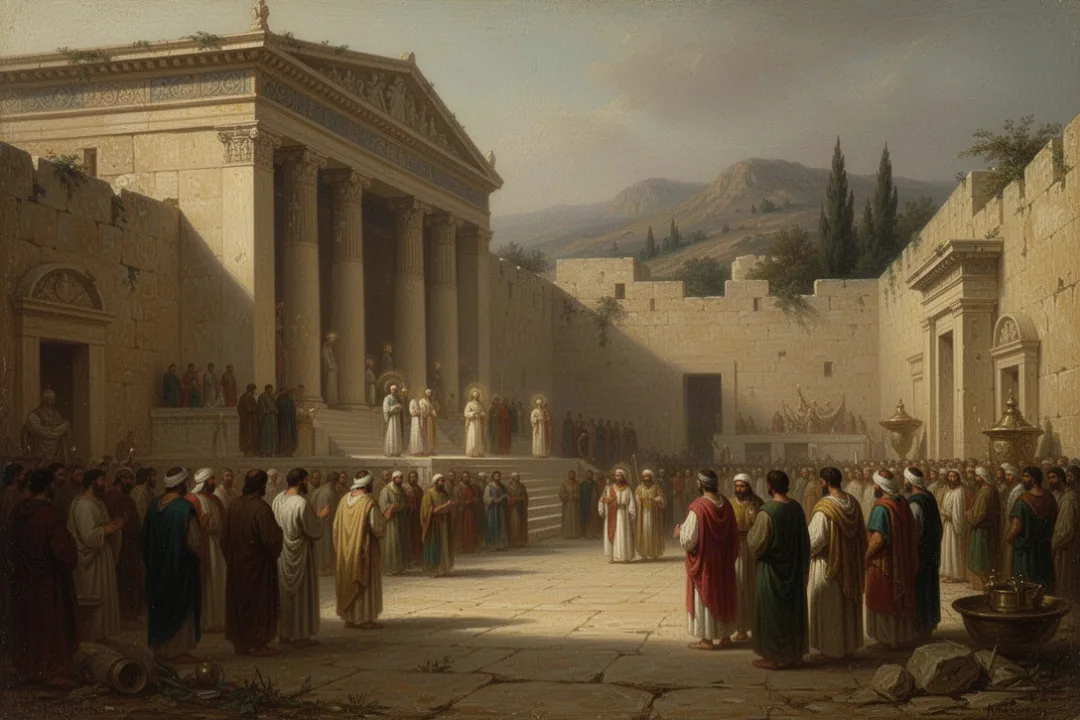
Malachi ministered after the Babylonian exile, when Judah was under Persian rule. The temple in Jerusalem had already been rebuilt, so the situation was different from the period when earlier prophets warned that Jerusalem and the temple would be destroyed. Malachi spoke to a community that had returned, rebuilt important institutions, and then grown discouraged by the slow and imperfect results.
The book does not give a precise date. Many scholars place Malachi’s ministry somewhere in the fifth century BCE, during the Persian period, although the exact timing is debated. References to a governor, the temple’s sacrificial system, and social problems among the returned exiles help establish the historical setting without providing a complete timeline.
Malachi’s audience appears to have been living in or around Jerusalem and participating in temple worship. The priests were responsible for presenting sacrifices, teaching the law, and guiding the people. The prophet therefore speaks directly to them, while also addressing the wider community’s behavior and assumptions about God.
The spiritual atmosphere was one of disappointment and apathy. Earlier prophets had spoken about restoration, blessing, and God’s glory returning to Jerusalem. Yet everyday life still included poverty, political dependence, unfairness, and delayed hopes. Some people responded by asking where God’s promises were. Others continued religious practices outwardly while withholding genuine honor from God.
Malachi’s setting can be understood through several conditions:
The temple was functioning, but worship had become careless and dishonoring.
The priests had lost their sense of responsibility and were accepting unsuitable offerings.
Some marriages were being treated unfaithfully, causing personal and communal harm.
People questioned God’s justice because arrogant or wicked people seemed to prosper.
Religious participation continued, but trust, obedience, and reverence had weakened.
This background explains why Malachi’s message is both corrective and hopeful. He does not tell a prosperous, confident nation to become more religious. He speaks to a tired community whose worship has become routine and whose expectations of God have collapsed into cynicism.
What Malachi says about worship and spiritual leadership
The first major concern in the book is the quality of worship. Malachi describes people bringing animals with defects for sacrifice, even though they would not offer such an animal to a human ruler. The issue is not merely the physical condition of the animals. It reveals a deeper attitude: the people are giving God what costs them little while claiming to honor him.
The priests are criticized because they permit or participate in this practice. Their role was not simply to perform rituals. They were expected to honor God, teach the people, and protect the holiness of worship. Instead, they treat the altar and the sacrifices as an unwanted burden. Malachi warns that religious leaders can damage a community when they normalize careless devotion.
The prophet’s criticism also reaches the congregation. The people cannot blame the priests for every problem while continuing to bring God second-rate offerings. Malachi presents worship as a matter of the heart expressed through actions. Words of respect mean little when a person’s choices show contempt.
The book also recalls the covenant with Levi, the priestly tribe. Malachi describes the proper priest as someone whose teaching should preserve knowledge and whose life should help others turn away from wrongdoing. This gives the reader a standard for spiritual leadership:
Reverence for God rather than concern for personal convenience.
Faithful teaching rather than distorted or selective instruction.
Integrity in conduct rather than a public religious role paired with private disobedience.
Care for the community rather than indifference to the effects of bad leadership.
Malachi’s point is not that every worshiper must perform ancient sacrifices. Christians read the book within the larger biblical story, in which temple sacrifices reach their fulfillment in Christ. The enduring principle is that worship should not be a performance that disguises indifference. What people offer God should reflect honor, sincerity, and obedience.
Practical question: Malachi invites you to examine whether your religious habits express genuine devotion or merely preserve an outward appearance. The warning applies to leaders, congregations, and private faith alike.
How Malachi addresses marriage, justice, and giving
Malachi moves from temple worship to relationships within the community. He condemns the men of Judah for acting faithlessly toward their wives and connects unfaithfulness in marriage with the community’s covenant obligations. The passage is sometimes discussed only as a debate about intermarriage, but its central emphasis is betrayal and covenant disloyalty.
The prophet presents marriage as a relationship involving faithfulness, responsibility, and the protection of the family. He criticizes the practice of divorcing a wife in order to pursue another relationship. The language is forceful because the behavior was not a private preference without consequences; it harmed spouses, families, and the moral stability of the community.
Malachi also confronts those who ask why God does not accept their offerings. Their religious actions cannot be separated from how they treat other people. This connection appears throughout the prophets: worship is not genuine when it is used to cover exploitation, deception, or cruelty.
The book then asks whether a person can rob God. In context, the accusation concerns the withholding of tithes and offerings intended to support worship and the community’s religious life. Malachi urges the people to return to God through faithful giving and presents a promise of provision. The point is not a guarantee that every generous person will become wealthy.
Instead, the passage challenges a community that wants God’s blessing while refusing its covenant responsibilities. Their lack of generosity reflects a deeper refusal to trust God. The prophet calls them to restore the practices that express dependence, gratitude, and responsibility toward the wider community.
These themes belong together rather than forming unrelated moral lessons. Malachi sees faithfulness to God in worship, marriage, finances, and justice as one integrated way of life. A person cannot honor God at the altar while treating a spouse unjustly or ignoring obligations to neighbors.
For readers today, the applications require care. Ancient Israel’s temple system and tithing regulations should not be transferred mechanically into every modern setting. Still, the book asks lasting questions:
Do your public religious practices match your private conduct?
Do you treat people close to you with covenant faithfulness and respect?
Are financial choices shaped only by self-interest, or also by gratitude and responsibility?
Do you expect spiritual benefits while resisting the obedience those benefits require?
Why Malachi speaks about the coming messenger
One of the best-known parts of the book is the promise that God will send a messenger to prepare the way. Malachi 3:1 presents this messenger as someone who comes before the Lord’s arrival at the temple. The book later returns to this promise near its ending, referring to Elijah before the great and fearful day of the Lord.
These passages are important because they connect Malachi to the expectation of a future act of divine intervention. The messenger is not sent merely to announce pleasant news. His work involves preparation, purification, and repentance. Malachi compares the coming Lord’s work to a refiner’s fire and cleansing soap, images that emphasize the removal of impurity and the restoration of proper worship.
In the New Testament, the Gospel writers connect the messenger promise with John the Baptist. Jesus identifies John with the expected Elijah-like figure in Matthew 11:14, while Luke 1:17 describes John’s ministry in language that recalls the promise about Elijah. Mark 1:2 also applies the messenger prophecy to the beginning of John’s ministry, though the quotation combines language from Malachi with another prophetic passage.
Christians therefore commonly read Malachi as pointing forward to John’s call to repentance and, beyond John, to Jesus. This does not mean Malachi gives a complete prediction of every event in the Gospels. Rather, his words establish a pattern: before God brings decisive salvation and judgment, he sends a messenger to awaken people and prepare them to respond.
Malachi’s promise has two sides. God comes to refine and restore, but also to judge those who persist in oppression and disobedience. The Lord’s arrival is good news for people who seek justice and live faithfully, yet it is a warning to those who exploit others while assuming religious identity will protect them.
The final reference to Elijah also points toward reconciliation within families. Malachi describes the turning of parents’ and children’s hearts toward one another before the day of the Lord. The image suggests that spiritual renewal is not abstract. It affects homes, relationships, and the way one generation receives responsibility for the next.
What the Book of Malachi teaches about God’s character
Malachi is sometimes remembered mainly for its warnings, but the book begins with a declaration of God’s love for Israel. The people question that love because their circumstances are difficult. God responds by pointing to the difference between Israel and Edom, showing that his covenant commitment has not disappeared simply because the people cannot see immediate evidence of prosperity.
The book repeatedly shows God responding to human objections. The people ask how God has loved them, how they have dishonored him, how they have wearied him, and how they should return. These questions create a courtroom-like conversation. God does not ignore their confusion, but he exposes the assumptions beneath it.
Several features of God’s character stand out:
God remains committed to his covenant, even when his people respond with indifference.
God cares about justice and sees the suffering caused by deception, oppression, and unfaithfulness.
God deserves wholehearted worship, not the leftovers of time, attention, or resources.
God disciplines in order to purify, not merely to punish without purpose.
God distinguishes between the faithful and the rebellious, even when that distinction is not immediately visible.
Malachi 3:6 is often cited for the idea that God does not change. In context, the statement explains why the descendants of Jacob have not been completely destroyed: God’s covenant character remains steady. The verse is not a promise that circumstances will never change. It emphasizes that God’s faithfulness provides the basis for repentance and hope.
The book also describes a future distinction between those who serve God and those who do not. Malachi 3:16-18 speaks of people who fear the Lord, talk with one another, and are remembered by God. Their quiet faithfulness matters even when public circumstances appear to reward arrogance.
Malachi 4 uses the image of the sun of righteousness rising with healing for those who honor God. Christians have interpreted this image in relation to the hope of salvation and the coming of Christ, while the immediate prophetic setting emphasizes God’s final justice and restoration. The image offers assurance that evil does not have the last word.
For that reason, Malachi is not simply a book about religious criticism. It is a call to recover honest worship, faithful relationships, patient trust, and hope in God’s justice. Its warnings are severe because the prophet believes God’s presence and promises are real. Its hope is strong because God has not abandoned his people.
How to read Malachi responsibly today
Malachi is short enough to read in one sitting, but its dialogue format can make it easy to misunderstand. The repeated questions may sound like neutral requests for information. Often they express denial or defensiveness. When the people ask how they have dishonored God, the question does not necessarily show humility; it may reveal that they do not recognize the seriousness of their behavior.
A careful reading should identify who is speaking, what accusation is being made, and whether the promise applies directly to the original covenant community or points forward in the biblical story. This prevents isolated verses from being turned into simple formulas about money, prosperity, or personal success.
You can read the book with these steps:
Read all four chapters together so the accusations and promises remain connected.
Mark the repeated questions and examine how God answers each one.
Separate the original setting of priests, sacrifices, tithes, and Persian rule from later theological applications.
Notice the relationship between worship and conduct, especially in the sections about marriage, justice, and giving.
Read the messenger promises alongside the New Testament passages that connect them with John the Baptist and Jesus.
Malachi’s message remains relevant wherever religious activity becomes detached from integrity. It challenges leaders who teach without practicing faithfulness, worshipers who offer God only what is convenient, and communities that ask why God is silent while tolerating injustice. At the same time, it reassures people who remain faithful that God sees them and will ultimately bring healing and justice.
So, who is Malachi? He is the largely unknown postexilic prophet whose brief message confronts Judah’s careless worship and broken faithfulness. His book stands at the close of the Old Testament, calling people back to God while looking ahead to the messenger who prepares the way for the Lord.
Frequently asked questions
Is Malachi a person or the name of a biblical book?
Both. Malachi is the name traditionally given to the prophet and to the book containing his message. The Hebrew term is related to “my messenger,” so some scholars have debated whether it was the prophet’s personal name or a title describing his role. The text does not provide enough biographical information to settle that question with certainty.
Was Malachi one of the twelve apostles?
No. Malachi was an Old Testament prophet who lived centuries before Jesus’ earthly ministry and the calling of the apostles. He is counted among the Twelve Minor Prophets, a collection of shorter prophetic books. “Minor” refers to the length of the writings, not to the prophet’s importance or authority.
What is the main message of Malachi?
Malachi calls God’s people to return to sincere covenant faithfulness. He criticizes careless worship, corrupt priestly leadership, marital unfaithfulness, injustice, and withheld offerings. He also promises that God will send a messenger, purify his people, judge evil, and bring healing and restoration to those who honor him.
Does Malachi predict John the Baptist?
Christians commonly understand Malachi’s promises about a coming messenger and Elijah-like figure as pointing to John the Baptist. The New Testament makes that connection in passages including Matthew 11:14, Mark 1:2, and Luke 1:17. Malachi’s prophecy focuses on preparing people through repentance before the Lord’s decisive arrival.










Leave a Reply