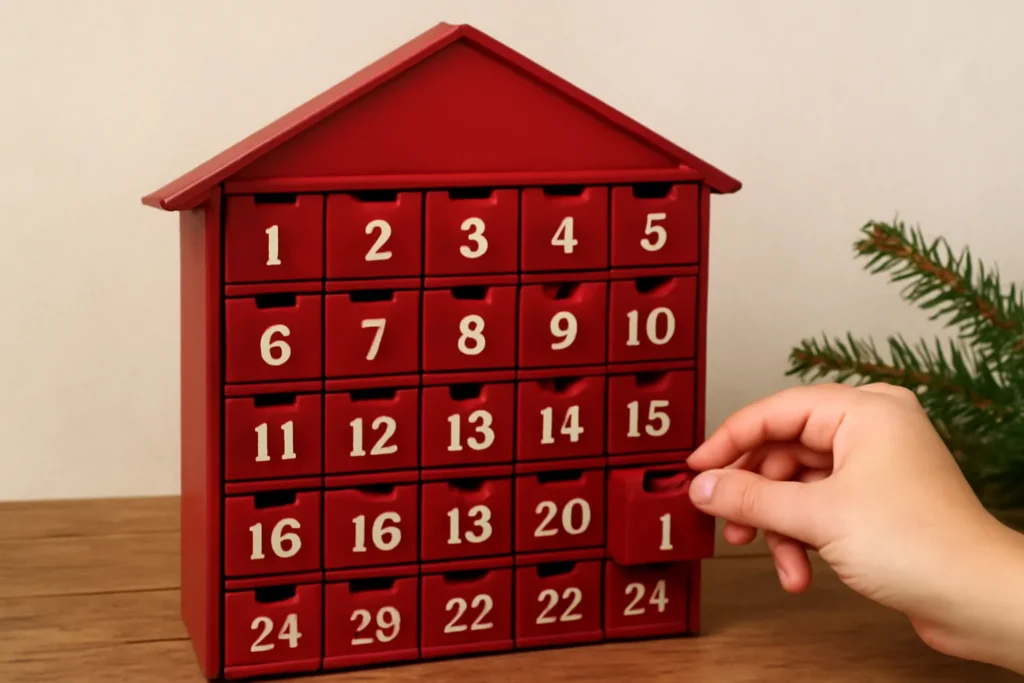
An Advent calendar is more than a simple countdown to Christmas. It is a small ritual that marks the passage of the season known as Advent, the four weeks leading up to the holiday. Traditionally, each day reveals a new surprise—often a window, a door, or a pouch—that opens to reveal something special: a picture, a tiny gift, a piece of chocolate, a verse, a carol lyric, or a message. Over time, the Advent calendar tradition has grown from a devotional tool in Christian households to a broadly shared cultural practice that appears in countless forms. Whether built around family memories, creative crafts, or moments of self-care, the calendar invites people of all ages to pause, reflect, and anticipate.
In many places, the calendar has become part of the seasonal rhythm—a daily reminder of warmth, generosity, and anticipation. While its roots lie in a religious festival, today’s calendars span a spectrum from deeply spiritual to delightfully secular. The essential idea remains the same: a gentle, daily invitation to slow down, savor small joys, and build a sense of community as Christmas approaches.
Origins of the Advent Calendar Tradition
The Advent calendar tradition traces its origins to 19th-century German-speaking regions, where families and churches used a variety of visual and devotional methods to structure the season. Early forms were simple and personal: a chalk mark on a door, a votive candle burned each evening, or a handwritten lyric or verse shared with children. These practices were less about material gifts and more about creating a shared sense of preparation for Christmas.
Religious roots and early practices
At its core, the calendar grew out of the Christian concept of Advent, a period of expectant preparation for the Nativity. Many early devotional calendars focused on daily prayers, Bible verses, or meditations. In some households, children would mark off each day with a white chalk line or a small religious image, turning the countdown into a ritual of faith, reflection, and community.
In addition to prayer and contemplation, these early calendars often included practical acts of kindness or family traditions. For example, a family might light a candle each Sunday in Advent and read a short devotion, or they might draw a name from a family member and exchange a small, thoughtful act. The emphasis was less on material novelty and more on intention: counting days with gratitude and hopeful anticipation.
Transition from devotional objects to mass-produced calendars
As printing technology and consumer culture evolved, the Advent calendar began to take on more tangible forms. In the late 19th and early 20th centuries, households started producing homemade calendars with cut-out doors, pictures, and tiny treats. The concept was democratized: families could customize calendars to suit their values, budgets, and children’s interests.
The modern commercial Advent calendar—often featuring a ready-to-open door or window for every day of December—emerged in the 20th century. The shift from purely devotional to largely secular or hybrid celebrations opened the door to a wide range of contents. By mid-century, chocolate calendars, illustrated cards, and small gifts had become familiar across many European countries, and later around the world. This period also saw the appearance of calendars focused on play, education, and wellness, broadening the appeal beyond strictly religious contexts.
A key takeaway about the origins of the Advent calendar is that its power rests not only in the act of opening something new each day, but in the rituals that give meaning to that act. The calendar invites a daily pause: a moment to reflect on the week that has passed, to anticipate what is coming, and to share a moment of joy with loved ones.
Evolution and Regional Variations
Across regions, the Advent calendar has absorbed local customs, languages, and materials. While the basic structure—a December countdown—remains constant, the calendar’s form and contents have diverged in delightful ways. Some communities emphasize religious observance, others focus on storytelling, crafts, or sweets, and many strike a balance between the two.
Germany and Central Europe: the cradle and the core
In its place of origin, the Advent calendar often retains a family-centered rhythm and a rich sense of tradition. Modern German calendars might feature chocolate behind each door, but more traditional forms emphasize daily readings, songs, or prayers. In some households, the calendar accompanies the Advent wreath—an evergreen ring with four candles, lit in sequence on the Sundays of Advent—creating a multi-sensory experience that blends visual beauty with sound and scent.
Scandinavia and Northern Europe: hygge and heritage
In Nordic countries, the advent period blends warmth and coziness with practical celebration. Calendars may include small candles, handmade crafts, or stories about winter landscapes. The emphasis is often on gentleness, minimalism, and the art of daily ritual—an approach that mirrors cultural values around cozy evenings, family togetherness, and mindful consumption.
The United Kingdom, Ireland, and the Anglophone world
In English-speaking contexts, Advent calendars frequently pair cultural icons with sweets, toys, or experiences. Over time, the UK and Ireland embraced a diverse array of calendars: from traditional chocolate calendars to ones featuring makers’ crafts, educational activities, and charitable prompts. The secularization of the calendar in these regions often blends with popular culture, allowing for calendars that emphasize storytelling, science experiments, or mini adventures.
North America and beyond: globalization and customization
In North America and other parts of the world, the Advent calendar has been adapted to reflect local tastes and dietary needs. Families may choose calendars that align with allergies, dietary restrictions, or personal interests—ranging from plant-based treats to non-food options like small tools, puzzles, or daily kindness challenges. The global reach of the calendar means it is found in schools, offices, and households, where it can be a shared project that teaches geography, history, or arithmetic while still preserving the tradition’s core countdown format.
Digital and hybrid calendars
The 21st century introduced digital and hybrid calendars that blend physical openings with online experiences. Digital advent calendars may offer interactive games, daily videos, or virtual tours, while hybrid versions combine physical items with QR codes that unlock online content. These formats preserve the sense of anticipation even when families are traveling, busy, or living apart.
Rituals and Practices Around the Advent Season
The charm of the Advent calendar tradition lies in its rituals—daily acts that anchor the season and foster connection. While every family may tailor rituals to its schedule and beliefs, several core practices recur across cultures.
Daily openings and discoveries
The most obvious ritual is the daily unveiling of a new surprise. Each morning or evening, participants pause to focus attention, reflect on the day’s meaning, and anticipate the moment of discovery. This simple cadence can turn ordinary December days into a sequence of small, shared joys.
Advent wreaths, candles, and music
In many homes, Advent wreaths and candles accompany the calendar. Lighting a candle for each Sunday or for each day of Advent creates a sensory ritual—sight, scent, and warmth all converging with the calendar’s daily reveal. Music, carols, and spoken verses often accompany the opening, reinforcing the seasonal mood.
Reading, sharing, and acts of kindness
Some calendars pair each door with a brief reading, a thoughtful prompt, or a kindness challenge. Examples include writing a note to a friend, performing a small service for a neighbor, or sharing a favorite story. These practices emphasize giving and community, transforming the calendar into a vehicle for generosity.
Many organizers use calendars to teach, spark creativity, and encourage curiosity. Content can include science facts, art prompts, language mini-lessons, or DIY kits. In this sense, the calendar becomes not just a countdown, but a structured season-long project that invites children and adults to learn something new every day.
A wide variety of calendars leverage multisensory experiences. Chocolates engage taste, while scented soaps, spices, or small bundles of fabric evoke scent and touch. Some calendars emphasize sustainable materials or handmade craftsmanship, inviting participants to slow down and consider the source of everyday pleasures.
Types of Advent Calendars: Contents, Formats, and Themes
Today’s calendar landscape is diverse. Beyond the classic chocolate calendar, there are many approaches that align with different preferences, dietary needs, and life stages. Below are several popular categories, each with its own signature appeal.
Chocolate and edible calendars
The traditional chocolate Advent calendar remains a beloved staple. Often featuring a different chocolate piece behind each door, these calendars merge a harmless daily treat with anticipation. Some modern versions emphasize fair-trade sourcing, artisanal chocolate, or regional flavors. For allergy-aware households, there are nut-free or dairy-free options, and even calendars that highlight fruit leather, dried fruit, or yogurt-covered treats.
Toy and craft calendars
Toy calendars or craft calendars present a daily small-building kit, puzzle piece, or craft activity. They are particularly appealing for younger children who enjoy a tangible project as part of their Advent routine. The content can range from mini figurines to tiny wooden blocks, stickers, or step-by-step art projects that accumulate into a final creation by Christmas Eve.
Beauty and self-care calendars
In many markets, beauty calendars or wellness calendars have gained popularity, especially among adults. Each day reveals a sample or a travel-size product, ranging from skincare to fragrance, makeup, or body care items. These calendars encourage mindful self-care and offer a way to explore new brands in a low-commitment format.
Experiential calendars
Not all calendars deliver physical objects. Some people prefer experiential calendars—collections of daily activities, challenges, or vouchers for experiences such as movie nights, family outings, or small adventures around town. These calendars emphasize memory-making and shared time rather than material items.
Non-food calendars and inclusive options
For households with dietary restrictions, allergies, or cultural considerations, there are many non-food Advent calendars. These may include seed packets for a winter garden, tiny tools for DIY projects, or educational quizzed cards. The goal is to preserve the sense of anticipation while respecting individual needs, making the season inclusive for all participants.
DIY and customizable calendars
A growing trend is the do-it-yourself Advent calendar—a home-made project that reflects family values, hobbies, and creativity. Crafting a calendar allows customization of contents, numbers, and themes. Some families reuse an old wooden box or a fabric pouch calendar year after year, refreshing the contents with each season’s unique touches.
Regional flavors and cultural twists
In some places, calendars incorporate regional candies, languages, or seasonal folklore. A calendar might share a traditional Christmas tale one day, a recipe card the next, or a folkloric craft connected to the local heritage. This regional flavor enriches the universal appeal of Advent while honoring local customs.
Ideas for Creating or Filling Your Own Advent Calendar
If you’re considering a handmade Advent calendar for your family or a classroom, you have countless options. Below are practical ideas organized by theme, along with quick tips to help you plan a calendar that is meaningful, affordable, and enjoyable.
Ideas for kids and families
Daily picture prompts that tell a short Christmas story or illustrate a winter scene.
Small puzzles or tiny toys that build into a larger scene or story by December 24.
Mini activities like family game nights, a short baking project, or a simple science demo.
Notes with kindness challenges such as writing a thank-you card or leaving a kind message for a neighbor.
Ideas for adults and couples
Mini indulgences, such as tea samplers, artisan aromatics, or travel-sized skincare.
Experiential tokens: vouchers for a movie night, a cooking class, or a “date night” activity.
Mindfulness prompts, journal cards, or small wellness activities like breathing exercises or quick stretches.
Educational micro-lessons: a daily history fact, a mini language tip, or a science trivia card.
Thematic calendar ideas
Nature and winter: seeds, pine-scented sachets, nature craft ideas, or winter scavenger hunt clues.
World Christmas traditions: a card from a different country with a brief tradition description and a recipe idea.
Kindness and generosity: daily acts that encourage community service or helping others.
DIY daily challenges: simple, gradually increasing tasks that teach skills such as origami, knot-tying, or watercolor techniques.
Practical tips for planning
Decide on a format early: physical calendar, digital, or a hybrid.
Set a realistic budget and plan contents accordingly to avoid last-minute stress.
Consider dietary and accessibility needs; include nut-free, gluten-free, or allergen-friendly options if needed.
Label or number doors clearly and keep a simple map or guide for parents or participants.
Meaningful and Sustainable Advent Calendars
Modern calendars often balance the desire for delight with a focus on sustainability and inclusivity. A thoughtful calendar can minimize waste, support ethical sourcing, and respect diverse beliefs within a family or community. Here are some approaches that honor the spirit of Advent without compromising ecological or social values.
Zero-waste calendars: use reusable pouches, small fabric bags, or a wooden rack. Fill with DIY items from recycled materials or locally sourced goods.
Upcycled or handmade contents: repurpose small containers or craft items from previous years, and rotate themes to keep the calendar fresh.
Non-food options for sensitized households: opt for small books, seeds for planting, or activity vouchers.
Local and fair trade contents: choose ethically produced items, highlight local artisans, or support charitable causes by including donation prompts or charity entries.
Accessibility considerations: large print cards, high-contrast imagery, or tactile elements for children with visual or motor challenges.
Digital and hybrid inclusivity
For families separated by distance or schedules, digital Advent calendars offer a flexible option. A daily video reading, an online scavenger hunt, or a collaborative calendar app can help people stay connected. Hybrid calendars combine tangible items with QR codes that reveal online experiences, ensuring that meaning travels beyond physical boundaries.
Advent Calendars as Cultural Learning Tools
Beyond personal joy, Advent calendars can be instruments for education and cross-cultural understanding. Teachers, libraries, and community centers use calendars to introduce children to languages, history, geography, and literature tied to the December season. When families share a daily fact or tradition from another culture, the practice becomes a bridge—an invitation to learn, respect, and celebrate difference.
Feature a daily short cultural note about a country’s Christmas or winter tradition.
Include a language snippet or a small vocabulary card that teaches a common greeting or word related to the season.
Pair with a curated story or folktale from around the world, fostering discussion and empathy.
The Art of Sharing: Community and Family Narratives
An Advent calendar can also become a family archive—a living record of what a household valued in a given year. The contents, the rituals, the photos, and the notes created along the way can be preserved, displayed, or handed down. In many households, each year adds a new layer to a family’s winter tradition, allowing future generations to glimpse how a particular era felt—whether it was shaped by a favorite author’s quotes, a beloved recipe, or a charitable initiative that grew into a year-long project.
Keep a small memory book alongside the calendar, noting favorite doors or moments from the season.
Include a family interview card where each member shares a thought about what Advent means to them.
Rotate responsibilities so that every year, different family members contribute content or choose a theme.
Practicalities: Getting Started and Maintaining the Rhythm
For anyone considering starting an Advent calendar, a few practicalities help ensure the experience is enjoyable and sustainable. The goal is to cultivate anticipation, not to turn December into a stress-filled scavenger hunt.
Choose a format that fits your household schedule. A daily routine works best when it aligns with mealtimes, bedtime, or after-school time.
Decide on a budget and content strategy. A modest calendar that emphasizes meaning over material abundance often yields more lasting joy.
Set boundaries for gift-giving. If you include items, aim for small, thoughtful pieces rather than high-priced purchases each day.
Prepare contents in advance. Having a plan and pre-packaged doors saves time and reduces last-minute stress.
Communicate with participants. Sharing expectations—especially with children—helps keep the calendar a source of delight rather than pressure.
Conclusion: The Timeless Appeal of Advent Calendar Tradition
From its humble religious origins in 19th-century Europe to its modern forms around the world, the Advent calendar remains a powerful ritual of anticipation, reflection, and connection. Its enduring appeal lies in its adaptability: you can honor a sacred rhythm, celebrate a secular countdown, or blend the two into a personal or family holiday custom that reflects your values.
Whether you prefer a classic chocolate calendar, a hands-on craft calendar, a beauty or wellness calendar, or a digital experience that travels across distances, the fundamental idea endures: a daily moment to slow down, notice the beauty of the season, and share a small joy with others. In a fast-paced world, this gentle ritual can ground us, invite gratitude, and remind us that the journey toward Christmas—like the month of December itself—is about presence, kindness, and connection.
As you consider your own Advent calendar this year, think about what would feel meaningful for you and your community. You might choose a calendar that teaches, a calendar that inspires, or a calendar that simply brings a smile to someone’s day. Whatever form it takes, the tradition invites us to begin December with intention, and to end it with a heart full of warmth and memory.









Leave a Reply