Ancient Israelites: History, Culture, and Key Facts
Ancient Israelites: History, Culture, and Key Facts
The story of the ancient Israelites unfolds across centuries of change in the Near East, from small pastoral communities to a society whose religious and cultural ideas echoed far beyond its borders. In archaeology, inscriptions, and the biblical tradition, these communities are sometimes described by different labels—Hebrews, Israelites, and the people of Israel—yet they share a core thread: a people bound to a covenant with their God, working within a complicated landscape of city-states, empires, and neighboring cultures. This article looks at early history, language, everyday life, and the defining moments that shaped ancient Israelite identity, from their emergence in the Bronze Age to the Persian period that followed the Babylonian exile.
The roots of the Israelite communities lie in the broader milieu of the late Bronze Age in the southern Levant. The people who would become known as Hebrews emerged in and around the land of Canaan, where diverse groups interacted with Egyptians, Mesopotamians, Egyptians, and Aramaean kingdoms. The early stages of identity formation involved shared worship, language, and some common customs, but the political map was fragmented. Families and tribes settled in different valleys and highlands, cultivating crops such as wheat and barley while raising sheep and goats. Over generations, some groups formed a more cohesive collective, partly shaped by the theological idea of a special relationship with the God of their ancestors.
A critical marker in the historical timeline is the emergence of a recognized presence in written records outside of their own scrolls. The Merneptah Stele, an Egyptian inscription dating to the late 13th century BCE, mentions a group called “Israel” in a way that points to a recognizable community rather than a mythical or purely legendary people. This is often cited as one of the earliest external attestations of an enduring Israelite or Hebrew presence in the region. While the details of how this group organized itself prior to the United Monarchy remain debated among scholars, most agree that by the late Bronze Age the Hebrew-speaking communities had developed distinctive practices, religious concepts, and social structures that would later crystallize into more formal institutions.
The centuries that followed saw a shift from a loose confederation of tribes toward more centralized leadership under recognizable patriarchal figures, not so much as a single monarchy from the outset but as a lineage of leaders who guided accompanying populations through periods of war, famine, and migration. A number of the traditions that came to define Israelite culture—law codes, ritual practices, and collective memory—were transmitted through families, priests, and elders who lived and worked in rural towns, market centers, and sanctuary sites.
Early geographic and cultural context
Land and settlement: The hill country and the Valley of Judah, with pockets of population in the highlands and in urban centers on major trade routes.
Language: A form of Northwest Semitic that evolved into what scholars call Biblical Hebrew, a language that carried on syllabic and alphabetic writing traditions.
Religion: A shared reverence for a divine presence that resided in a sanctuary or tabernacle, and a sense of covenant with a God who was closely involved in daily life and political events.
Society: Social ties were organized around kinship, village communities, and gradually developed priestly families who assisted in ritual life and local governance.
The People and Language
The story of the Hebrew-speaking population centers on language, worship, and literacy in a landscape where multiple cultures intersected. The term Israelite came to denote a people bound by a shared narrative and with distinctive practices that set them apart from their neighbors. The language of the early Israelites belongs to a broader family of Northwest Semitic dialects, and as such, it shared features with other Levantine languages of the period. The writing system associated with this language—early alphabets inscribed on clay and stone—became a durable vehicle for law, myth, poetry, and daily record-keeping.
By the period of the United Monarchy, the people known as children of Israel or Israelite communities spoke a language that was increasingly standardized for religious and administrative purposes. The shift toward written law and formal worship in urban centers elevated the role of priests and scribes, who used writing not only to preserve sacred texts but also to regulate commerce, land ownership, and civil obligations. The emergence of script and literacy enabled a more durable sense of collective memory—a factor that later shaped biblical narratives and the transmission of traditions.
The terms used to describe this group—Hebrews, Israelites, and the people of Israel—often reveal different angles of identity: linguistic, political, and religious. Although historians emphasize the fluidity of early identities, the continuity of worship, land, language, and law fosters a coherent picture of a people who saw themselves as part of a grander plan—one that involved a unique relationship with the God of their ancestors.
Society, Institutions, and Everyday Life
The social structure of the early Israelite communities was shaped by family lines, tribal affiliations, and religious duties. Kinship remained a powerful organizing principle, with households forming the basic unit of economy and ritual life. In rural areas, families practiced agriculture and herding, growing staples and raising flocks that provided meat, milk, and leather goods. As urbanization began to take hold in the later centuries, guilds of artisans, traders, and priests built a more complex social ladder that included scribes and administrators who could manage resources, land, and tribute.
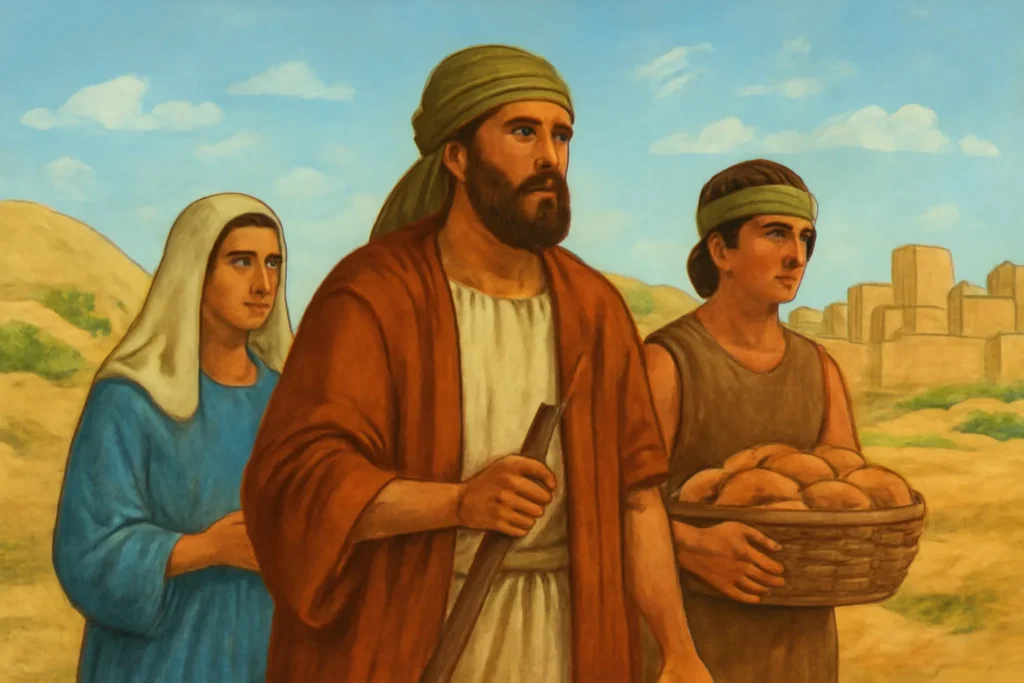
Domestic life varied by region and wealth, yet some patterns recur across the landscape. Homes in the countryside often featured simple, sun-dried brick or stone constructions, with courtyards, ovens, and storage pits. In city neighborhoods, houses might be closer together, with courtyards and alleyways that supported workshops or markets. Clothing depended on climate and status: woolen garments, tunics, belts, and leather sandals were common, while elites might adorn themselves with fine fabrics and jewelry crafted by skilled makers.
The economic base of the Israelite world rested on a mix of agriculture, pastoralism, and trade. Barley and wheat formed the staple diet, while olives, grapes, figs, and pomegranates supplied both food and trade goods. Animals such as sheep, goats, and cattle served as sources of meat, wool, and transport. In addition to farming, craftwork—such as pottery, metalworking, and weaving—sustained urban centers. Trade networks connected Hebrew communities with Phoenician cities along the coast, caravan routes through the interior, and, in the later periods, with the broader empires that dominated the region.
Family structure tended to be patriarchal, with elders and head-of-household authority guiding decisions about land, marriage, and ritual obligations. Yet women in the ancient Israelite world could exercise influence within the household and within the religious sphere, especially in the context of festival observances and burial practices. The life of the people of Israel thus included a balance of public duty and private responsibilities, a dual focus on community welfare and sacred memory.
Ritual life and sacred spaces
Tabernacle and sanctuary practices, evolving from portable worship to a more fixed temple complex in later periods.
Priests and Levites as custodians of ritual law, sacrifice, and musical traditions in service to the community.
Festivals such as Passover, Weeks (Shavuot), and Booths (Sukkot) that anchored the agricultural calendar to religious memory.
Purity and ritual laws governing purity in food, contact, and sacred spaces, shaping daily routines and social boundaries.
Religious Beliefs, Covenant, and Law
A central feature of the life of Israelite religion was the idea of a covenant: a binding agreement between the people and their God, in which obedience to divine commands would yield protection, land, and blessing. This theological frame helped knit disparate groups into a recognizable religious community, even as political power shifted from era to era. The idea of a single God who intervened in history and who was intimately involved in everyday affairs became a defining characteristic of the Hebrew people in the ancient world.
The law code associated with the Mosaic tradition—often summarized as the Mosaic Law or the Torah in later contexts—played a crucial role in shaping social norms, religious obligations, and ethical norms. The law covered civil matters, criminal proceedings, ritual purity, dietary restrictions, property rights, and family obligations. While the precise dating and authorship of many of these laws are debated by scholars, the general concept of a comprehensive legal framework binding the people to a divine will remains a hallmark of Israelite society.
The temple and sanctuary practices served as focal points of worship and communal identity. In the earliest period, worship centered on a portable sanctuary or tabernacle, a structure that allowed the presence of the divine in the midst of the people as they moved. Later, in the century after the United Monarchy, the construction of a monumental temple in Jerusalem embodied the consolidation of religious life around a single sacred space. The temple stood not only as a place for sacrifices but also as a symbol of political legitimacy, linking the covenantal relationship to the ruler and the city.
Key religious concepts and practices
Covenant as the framework for relationship with the God of their ancestors.
Monotheism emerging as a distinct stance in the ancient context, with a focus on exclusive worship and a rejection of idolatry in many spheres.
Prophetic voices who called for fidelity to the covenant and critique of social injustice or religious complacency.
Ritual purity practices that shaped daily routines, dietary habits, and the conduct of sacred gatherings.
Key Historical Periods: From Nomadic Roots to the Exile
The narrative arc of the Israelite tradition stretches across several distinct eras, each marked by political transformation, shifts in religious life, and changing relationships with neighboring powers. A recurring theme is the tension between local autonomy and imperial domination, a pattern that influenced both the memory of the people and the physical landscape of the region.
Late Bronze Age to early Iron Age: The formation of tribal associations, the adoption of a common religious tradition, and the consolidation of memory around ancestral figures.
United Monarchy (approximately 11th–10th centuries BCE): A period when leaders like Saul, David, and Solomon are said to have created a centralized political-religious framework, with Jerusalem rising as a symbolic center and the First Temple in the capital shaping ritual life.
Divided Kingdoms (Israel in the north and Judah in the south): A protracted period of fragile alliances, rival kings, and external threats from Assyria, Egypt, Aram-Damascus, and others, leading to the fall of the northern kingdom in 722 BCE and later the destruction of the southern temple in 586 BCE.
Babylonian Exile and Return: Deportations and the loss of homeland followed by Persian authorization of return and the rebuilding of the community, laying groundwork for a long-term religious and cultural reshaping.
Alongside political events, archaeology and epigraphy illuminate daily life, economic networks, and religious transformations. Some artifacts indicate continuity with earlier Canaanite cultures, while others reveal innovations and shifts that align with a distinct Israelite identity. The interplay of tradition and change is a recurring theme in the experiences of This ancient people.
Geography, Trade, and Economy
The homeland of the Hebrew communities lay at a crossroads of continents, where desert, coastal plains, and river valleys met. The geography influenced settlement patterns, agriculture, and defense strategies. Coastal cities offered access to Mediterranean trade routes, while inland towns relied on farming and pastoralism. As early as the Iron Age, these communities connected with larger powers through exchange networks that carried pottery, textiles, metals, olive oil, wine, and grain. Trade networks enabled exchange of ideas, religious concepts, and technological innovations across a broad region.
The economy was diverse. In the countryside, fields produced staple crops; in the hills, terraced farming and viticulture became important for both sustenance and trade goods. Sheep and goats supplied wool and meat, while cattle served as status symbols in some communities and as a means of transport. Craftspeople produced pottery, metal items, and textiles for daily use and ritual purpose. The presence of merchants and itinerant traders helped integrate Israelite settlements into larger regional economies, with cities acting as nodes in a broader network that included Philistine, Phoenician, Aramaean, and Egyptian spheres of influence.
When these communities faced foreign domination—especially during the Assyrian, Babylonian, and later Persian periods—their economies adapted. Some urban centers dissolved, while others reorganized under new governance structures that aligned with imperial systems. Yet the memory of agricultural cycles, harvest festivals, and sacred times endured in ritual calendars and communal songs.
Architecture, Sanctuaries, and Sacred Space
Sacred space is a recurring feature in the architectural imagination of the Israelite world. The earliest sanctuaries took the form of portable tabernacles, designed to house sacred items and provide a dwelling place for the presence of God during the community’s wanderings. These portable shrines were later complemented by more permanent structures as political power centralized around a capital city. The transition from the tabernacle to a fixed temple complex in Jerusalem represents a turning point in the religious landscape, signaling a shift toward a single center for sacrificial rites, priestly activity, and national identity.
The architecture of these sacred spaces reveals a dual aim: to be functional for worship and to project theological meaning. In many periods, ritual sacrifices, offerings, and festivals centered in the sanctuary as a tangible expression of faith in the God of the ancestors. The imagery used in descriptions of these spaces—curtains, altars, incense, and sacred vessels—reflects a world in which religion and politics were deeply interwoven, with the temple acting as a symbolic heart of the community.
Ritual artifacts and material culture
Sacrificial vessels and utensils used in offerings, often crafted for longevity and ceremonial use.
Religious inscriptions on ancient tablets and scrolls that reveal ritual knowledge and textual traditions.
Iconography in artistic elements that signals devotion and reverence for the divine presence.
Relations with Surrounding Peoples
The ancient Israelites did not exist in isolation; their stories unfold against a landscape of expanding empires and neighboring cultures. Egypt, to the southwest, offered a long arc of political interactions, from brief diplomatic contact to military campaigns. The rising power of Mesopotamian and Iron Age states brought the Israelites into contact with the Assyrians, Babylonians, and later the Persians. In the north, interactions with the kingdom of Aram-Damascus and with Phoenician city-states shaped trade routes, religious ideas, and political alignments. The Philistines—an influential coastal people—played a crucial role as neighbors and sometimes rivals, affecting settlement patterns, military campaigns, and cultural exchange.
The complex interactions with these neighbors included alliances, vassalage, migrations, and, at times, military conflict. Sometimes external powers used Israelite or Judahite rulers as allies or pawns in their broader strategies. In other moments, the people of Israel and their descendants asserted a degree of autonomy by maintaining their own legal and religious institutions, even under foreign rule. The memory of these relationships remained embedded in later religious and national narratives, where the experiences of exile and return acquired enduring symbolic resonance.
Transmission, Texts, and Education
The Hebrew tradition is inseparable from its textual heritage. The memory of the Israelites was preserved through oral tradition, genealogies, songs, and legal codes that were eventually codified in written form. Scribes, priests, and teachers played pivotal roles in educating the younger generation—passing down not only laws and rituals but also stories of ancestors, exodus events, and the covenantal relationship with the divine. The result is a durable tradition that could be recalled, interpreted, and adapted by later generations.
The written legacies of the ancient Hebrew people include law codes, narratives of kings and prophets, and revelatory literature that would later become central to Jewish, Christian, and academic study. Archaeology and textual analysis have helped scholars trace how these works emerged, how they were edited, and how they responded to changing social and political contexts. The process of transmission—through which memory became text—proved crucial for the continuity of a distinct Israelite identity across centuries of upheaval.
Education, literacy, and the role of scribes
Scribes—trained professionals who copied and interpreted sacred texts, records, and legal documents.
Boys and apprentices in religious schools or households learned prayers, laws, and ritual responsibilities.
Oral tradition as a reservoir of memory that accompanied written forms, allowing the community to preserve and adapt essential stories.
Key Facts and Quick References
To summarize central features of the ancient Israelite world, here are some concise, cross-cutting facts that help anchor the broader narrative:
Geographic range: A region spanning the hill country of Judea, the coastal plain, and portions of the Transjordan, with major centers in Jerusalem, Samaria, Lachish, Megiddo, and other locales.
Language: An early form of Hebrew within Northwest Semitic languages, sharing features with Aramaic and other Levantine tongues.
Religion: A distinct covenantal faith centered on a monotheistic trajectory that emphasized exclusive worship, sacred law, and a central sanctuary for communal life.
Law and order: A comprehensive body of religious and civil laws that guided daily life, social justice, family relations, and ritual purity.
Society: A composite society of rural families, urban artisans, priests, and elders, organized around kinship, worship, and civic rites.
Economy: An agrarian base with supplementary crafts, trade networks, and urban markets that connected to wider regional economies.
Key historical episodes: The rise of the United Monarchy under legendary rulers, the division into Israel and Judah, the fall of the northern kingdom to external powers, the Babylonian exile, and the Persian permit for return and rebuilding.
Legacy: The religious, ethical, and literary ideas of the ancient Hebrews left a cultural and spiritual footprint that would influence later Jewish and Christian traditions, as well as Western thought more broadly.
Across their centuries, the Hebrew people navigated a mosaic of loyalties, religious reforms, and shifting political realities. The memory of the covenant and the sanctuaries they built—whether in the portable tabernacle or the fixed Temple—remained central to their identity. Even as empires rose and fell, the idea of a people called to live by a shared law and a shared hope persisted, enabling the later development of a rich religious literature and a durable cultural memory.
Throughout the centuries, scholars and readers have used several terms to refer to this ancient population. The Israelites is the conventional term for the people who inhabited the land of Israel and Judah during the times described above. The label Hebrews emphasizes linguistic and cultural heritage—often highlighting the early language and the ancestral connection to the God of the patriarchs. In some contexts, the phrase people of Israel underscores national identity tied to land and communal memory. Each label carries nuances, and modern scholarship often uses them in nuanced ways to reflect changing historical and textual evidence.
The diversity within these populations is also important. Not every community identified themselves in the same way, and across centuries there were regional differences in worship, legal practice, and daily life. Yet despite internal variation, the broad arc of history—pilgrimage, exile, return, and reinterpretation—supplied a cohesive thread that linked generations of Israelite people.
Why This History Matters Today
The saga of the ancient Israelites is more than a chronicle of a people long ago. It provides critical insight into how a small, religiously defined community managed to influence later worldviews, legal concepts, and religious practices across broad regions. The idea of a covenant, the emphasis on a holy sanctuary, and the deliberate use of law to shape communal life are themes that have resonated for millennia. The narrative also illuminates how communities survive under foreign rule, preserve identity through memory and ritual, and adapt to new political realities—lessons that remain relevant to readers today who study religion, anthropology, and the history of ancient civilizations.
For students, educators, and curious readers, understanding the history, culture, and key facts of these populations helps illuminate the roots of later religious traditions and showcases how a small group managed to have a large, lasting impact on law, ethics, and spiritual imagination across cultures.







Leave a Reply