Who Are the Israelites in the Bible? Origins, History, and Their Role in Scripture
Who Are the Israelites in the Bible? Origins, History, and Their Role in Scripture
The question of who the Israelites are in the Bible touches on origins, identity, history, and a central thread that runs through the narrative of Scripture. From the patriarchs to the prophets, and through exile and return, the term encompasses a people defined by origin, covenant, and vocation. This article surveys the topic in depth, tracing how the term Israelites encompasses both a geneaological lineage and a theological calling, and how their story shapes biblical theology and literary imagination.
The Origins of the Israelites: Patriarchs, Names, and a Covenant People
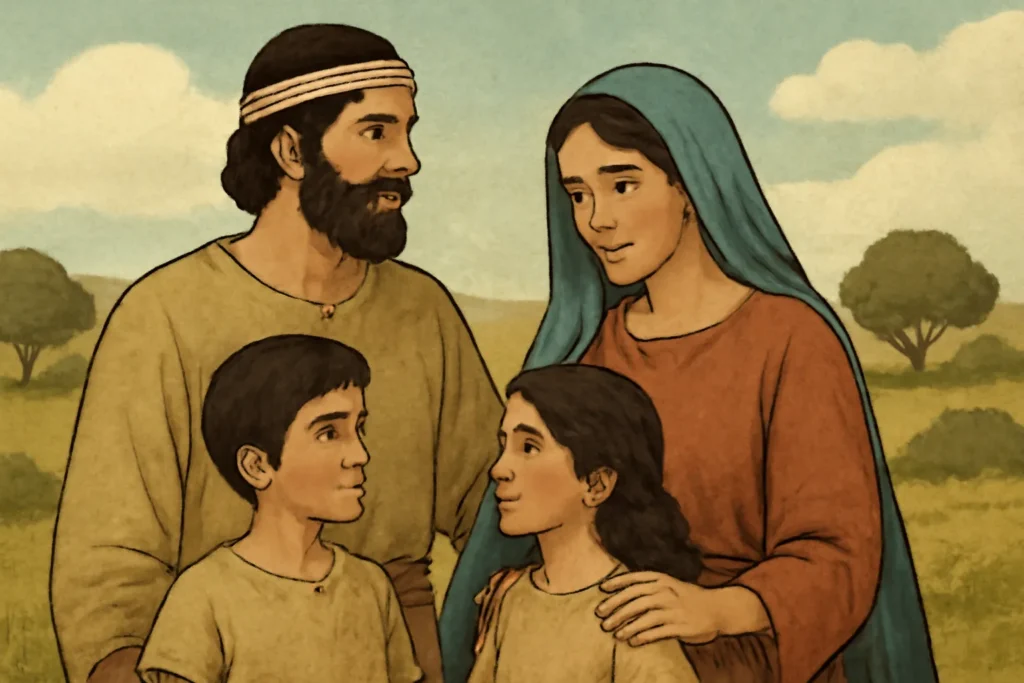
The starting point for understanding who are the Israelites lies in the figure of Jacob, the son of Isaac and grandson of Abraham. Jacob’s name is later changed to Israel after a dramatic night of wrestling, and he becomes the ancestral father of the people who bear his new name. The descendants of Israel are traditionally counted as the twelve tribes, named after Jacob’s twelve sons. In this broader sense, the Israelites are the descendants of Jacob, and the term often functions as a shorthand for the nation that emerges from this clan family.
Key points about the origins include:
Patriarchal foundations: The biblical narrative begins with God’s call and covenants with Abraham, who is promised to become a great nation. The promise is renewed with Isaac and then with Jacob, setting the stage for a people who will be both blessed and called to bless the world.
Name and identity: The name Israel (Israel) becomes a proper name for the person and, by extension, for the people who descend from him. This is not merely a genealogical label; it carries destiny and vocation as the recipients of divine promise.
Tribal structure: Jacob’s twelve sons yield the twelve tribes of Israel. The lineage ties the people to a shared ancestry, a common faith, and a set of obligations under God’s covenant.
Within the Hebrew Bible, the phrase “the people of Israel” or “the Israelites” often designates both an ethnic/kinship group and a faith community bound by divine revelation. The early narrative emphasizes that this is a people not merely of blood but of covenantal identity, shaped by their relationship to the God who called Abraham and his heirs.
From Slavery to Freedom: The Exodus, Sinai, and the Covenant
One of the most defining episodes in the biblical account is the journey from Egyptian bondage to the land promised to their forefathers. The exodus becomes a foundational story, shaping how the Israelites understand themselves and their relationship to God. The event is inseparable from the revelation at Sinai, where God gives the Mosaic Law and estable a formal covenant with the people.
The Exodus as Identity-Formation
The liberation from Egypt is more than a historical escape; it is a theological act that defines what it means to be the Israelites. The festival calendar, the dietary rules, the ceremonial responsibilities, and the social constitution of the people all flow from this pivotal moment. The exodus narrative teaches that the God of Abraham, Isaac, and Jacob is a God who hears, acts justly, and calls a people to holiness and loyalty.
Important elements of this period include:
Covenantal ritual: The giving of the Law at Sinai includes the Ten Commandments and a broader set of laws that regulate worship, civil life, and ritual purity.
Wilderness formation: The decades in the desert are a time of testing, instruction, and national formation where the people learn to trust and obey the God who has delivered them.
Identity through memory: The narration sustains a memory of deliverance, which becomes a recurring motif in later prophetic and liturgical writings.
Conquest and Settlement: The Land, the Tribes, and the Covenant Community
After crossing the Jordan, the Israelites enter the land of Canaan and establish a confederation among the twelve tribes. This period is marked by territorial allotments, local leadership, and a flexible, sometimes unstable political system. The biblical account emphasizes fidelity to the covenant as the key factor that determines whether the people prosper in the land or experience hardship and exile.
The Tribal Confederation and the Land
The distribution of land among the tribes creates a semi-federal framework. The tribes maintain a shared identity, but governance is largely local, with elders and judges providing leadership in many communities. The idea of a central, united monarchy is not fully realized in this era; instead, readers encounter a rhythm of local leadership, periodic military campaigns, and prophetic voices calling the people back to fidelity.
Judges as leaders: In the absence of a centralized king, charismatic judges arise to resolve disputes, defend the people, and remind them of their obligation to obey the covenant.
Temple and worship: Jerusalem gradually emerges as a religious center, especially with the later move of the Ark and eventual temple traditions. The temple becomes a focal point for national identity and worship.
Memory and law: The law code is not merely a set of rules; it encodes social justice, worship, and communal ethics that shape daily life for the Israelites in the land.
The period of settlement under the tribes, while diverse in practice, sustains a consistent claim: the Israelites are a people called to live in a way that reflects their covenant with the God who delivered them from Egypt and brought them into this land.
The United Monarchy: A Nation Under a Temple-Based Covenant
Ancient Israel’s political evolution culminates in the era of the united monarchy, with Saul, David, and Solomon as the principal kings. This phase is often seen as the peak of biblical Israel’s political and religious life, when the people exist as a single entity with a centralized cult, a capital at Jerusalem, and a unified sense of mission.
Key figures: Saul, David, and Solomon
Saul begins as the anointed king chosen to unify the tribes, but his reign is marked by challenges, including disobedience that complicates the early story of the Israelites. David becomes the archetype of kingship, uniting the tribes, expanding the political sphere, and consolidating religious life around a central throne. Solomon completes the temple project and secures a high-water mark for the monarchy, though internal tensions and external pressures begin to unsettle the unity of the nation.
Covenantal blessings: The monarchy is framed by covenants—promises that attach success to obedience and faithfulness.
Temple theology: The temple becomes the symbolic and literal center of Israelite worship, reinforcing the bond between national identity and divine presence.
Challenges: The foundations of wealth, power, and religious exclusivity bring internal strife, prophetic critique, and future division.
The era of the united monarchy, though brief in the broader sweep of biblical history, remains a touchstone for what it means to be an Israelite under a single covenantal regime. It also sets up the eventual division of the nation and foreshadows the theological debates surrounding leadership, purity, and loyalty to the covenant.
Division, Exile, and Return: The Two Kingdoms and the Covenant Remembered
After Solomon’s reign, the kingdom splits into two: the northern kingdom of Israel and the southern kingdom of Judah. This division highlights differences in political destiny, religious leadership, and prophetic voices. The biblical record emphasizes that the people’s trajectory—whether prosperous or beset by calamity—depends on fidelity to the covenant and trust in the God who called Abraham, Isaac, and Jacob.
The Northern and Southern Kingdoms
The two kingdoms commonly carry distinct theological and political profiles. Israel (the north) experiences a series of dynastic changes and is repeatedly addressed by prophets who call the people back to covenant loyalty. Judah (the south), with its capital in Jerusalem and the temple, also encounters prophetic critique, especially when kings align with foreign powers or tolerate injustice within the land.
The prophetic voice: The prophets address both kingdoms, urging repentance, social justice, and steadfast worship of the God of Israel.
The exile: The northern kingdom falls to the Assyrians in the 8th century BCE; the southern kingdom falls to the Babylonians in the 6th century BCE, leading to an exile that reshapes communal memory.
The return: A remnant returns under Persian authority, and a rebuilt temple and city system reconstitute some aspects of Israelite identity in a renewed land.
The deportation and later return are central to biblical theology because they test and refine the concept of the people of Israel as a community defined by covenant loyalty rather than mere geographical presence. The exilic and post-exilic periods also give rise to rich literary and theological developments that shape how Israel understands its identity in relation to God’s purpose for the world.
Liminal Identities: The Mosaic Covenant, the Law, and The Prophetic Voice
Throughout Israel’s history, the meaning of being the Israelites is inseparable from the Mosaic Covenant and the Law. The Torah functions as the charter of the people, prescribing not only religious duties but also social justice, economic fairness, and communal responsibility. The prophets arise to interpret failures of fidelity, warn about consequences, and point forward to hope in God’s future restoration.
The Mosaic Covenant and the Law
The Law is not merely a set of rules; it embodies a vision for holy living in a world where the God of Israel is uniquely present among his people. Observing the sabbath, honoring parents, caring for the vulnerable, and maintaining purity codes are all integrated into a larger narrative about identity, worship, and social order. The covenant includes blessings for obedience and warnings for disobedience, shaping the Hebrew Bible’s moral landscape.
Ceremonial and civil law: Rules governing worship, ritual purity, social justice, and communal life define practical conduct for the Israelites in daily life.
Temple-centered worship: The temple is the dwelling place of divine presence for the people, a focal point for national identity and liturgical practice.
Prophetic critique: When the people deviate, prophets call for repentance and remind them of their vocation to bear God’s justice to the nations.
The prophetic voices contribute a dynamic dimension to the story of the Israelites by offering critique, lament, and hope. They interpret historical events through the lens of a covenantal relationship with God, insisting that fidelity to the covenant is more crucial than political expediency or ritual performance alone.
Identity, Ritual, and Memory: How the Israelites Remember Themselves in Scripture
Over the centuries, the concept of Israelite identity evolves in response to changing political conditions, exile, and the experience of living among other nations. The memory of the exodus and the covenants continues to shape how the people understand their relationship to God and to each other. The stories about the ancestors, the laws, the temple, and the prophets converge to create a coherent, if sometimes tension-filled, self-understanding.
Ritual life and national memory
Worship practices, festivals, dietary laws, and ritual purity all function as living reminders of the covenant and the God who delivered Israel. These rituals serve not only as acts of piety but as acts of cultural continuity that sustain a distinct people within larger empires.
Festivals: Passover, Weeks (Shavuot), and Booths (Sukkot) anchor the calendar in the exodus and agricultural cycles, reminding the Israelites of God’s power and provision.
Dietary and purity codes: These rules symbolize holiness and distinguish the people in ways that point beyond mere customs to a unique relationship with God.
Lament and hope: The biblical literature includes laments that acknowledge suffering, alongside prophetic promises of restoration and renewal.
Despite changes in political power and foreign domination, the scriptural record portrays the Israelites as a people defined by a living relationship with God, a shared law, and a common history of deliverance and covenant faithfulness.
The Israelites in Scripture: Theological Roles and Redemptive Purpose
Beyond their historical trajectory, the Israelites fulfill several theological roles in Scripture. They are portrayed as the bearer of divine revelation, the witnesses to God’s faithfulness, and the recipients of promises that shape later biblical and even Christian understandings of mission and salvation history. The idea of the people of Israel as a “light to the nations” appears in prophetic literature, while messianic expectations in later books are anchored in the Davidic covenant and the longing for a future Davidic king.
Key roles and motifs
Several recurring motifs stand out in Scripture regarding the Israelites:
Messianic anticipation: God’s promises to the house of David generate expectations about a future king who will reign with justice and restore the nation.
Witness to the nations: The biblical narrator often frames Israel’s calling as a vocation to reveal the knowledge of God to the world, shaping a broader theological horizon.
Covenantal fidelity: The call to obedience and loyalty to the covenant remains central, even when the people fail or fall into exile.
In this light, the Israelites function not only as a historical community but as a theological symbol. They embody the possibility and limits of divine-human relationship in a world of politics, power, and human frailty. The biblical authors repeatedly invite readers to see the Israelite story as part of a larger story of creation, fall, redemption, and restoration that culminates in the biblical witness to God’s purposes for all nations.
The Two Testaments: Israel’s Place in Jewish and Christian Scriptures
In both Jewish and Christian traditions, the identity and history of the Israelites are central. In Judaism, the continuity of the people with their ancestors, the land, and the law forms the core of communal life and religious practice. In Christian interpretation, the Israelites are often read through the lens of fulfillment and continuity, with Jesus described as the fulfillment of certain promises to Israel and the establishment of a new covenant that extends beyond ethnic Israel to include Gentiles who share in faith.
The biblical narrative across traditions
Across traditions, several themes recur when interpreting who are the Israelites and what their story means for faith communities today:
Identity tied to covenant: The people are defined by their covenant relationship with God, not by ethnic permanence alone.
Scriptural continuity: The Hebrew Bible’s portrayal of Israel’s history lays groundwork for Christian and Jewish reading of salvation history.
Unfolding revelation: Israel’s story is viewed as a progressive revelation of God’s plan, culminating in broader implications for all nations.
Despite differences in interpretation, both traditions affirm that the Israelites occupy a foundational place in the biblical narrative. Their experiences—deliverance, covenant, leadership, exile, and return—provide a framework for understanding salvation, justice, faith, and the possibility of renewal in a world often marked by conflict and change.
Understanding Variations in Language: How We Speak of the Israelites
Scholars and readers use a variety of terms to describe the same people, depending on the period, emphasis, or linguistic tradition. Alternatives to the Israelites include the children of Israel, the House of Israel, the people of Israel, Israelites, and Hebrews (in earlier periods). Each term highlights a slightly different facet of identity—genealogical descent, political affiliation, or religious vocation.
Children of Israel: Emphasizes lineage and familial identity.
House of Israel: Conveys a dynastic or national sense tied to leadership and governance.
People of Israel: A generic, broad designation that includes citizens, worshipers, and those bound by covenant.
Hebrews: An older term used in certain biblical books to refer to the people in earlier historical phases or from a linguistic-cultural perspective.
These nuances matter for readers who want to grasp how the biblical authors construct a cohesive yet multi-faceted identity for this ancient community. The same set of traditions can be described with different emphasis depending on the text and its audience, but the core sense of a people called by God remains constant.
Frequently Asked Questions About the Israelites
To help synthesize the material, here are concise answers to common questions about the Israelites in the Bible.
Who were the Israelites in biblical times? They were the descendants of Jacob (also called Israel), comprising the twelve tribes, bound by the covenant with God, living in and around the land of Canaan, Egypt, and later exilic regions, with a shared religious and cultural identity.
What is the significance of the Exodus? The Exodus is foundational for Israelite identity, illustrating God’s deliverance, the giving of the law at Sinai, and the formation of a people whose life is structured by covenant loyalty.
How did the monarchy shape Israelite identity? The United and later divided monarchies centered worship in Jerusalem, framed political power by covenantal promises, and produced both exemplary leaders and prophetic critiques that shaped enduring questions about leadership, justice, and faithfulness.
What happened to the Israelites in exile? Exile tests the covenant, leads to spiritual and literary renewal, and ultimately fosters a reimagining of identity that remains central in both Judaism and Christianity.
What is the relevance of Israel in New Testament interpretation? In Christian readings, Israel’s story is often seen as a prefiguration of the church’s mission, with Jesus presenting a renewed covenant that invites all nations into faith, while still affirming the enduring significance of God’s ancient promises to the people of Israel.
In sum, the Israelites in the Bible are not a single static group but a dynamic, evolving community whose identity is defined by a living relationship with God, a history marked by divine acts of deliverance and instruction, and a prophetic expectation of restoration and renewal. Their story, told across many books and genres, continues to illuminate questions about faith, justice, destiny, and the meaning of being a people called by God.








Leave a Reply