The word baptism is used in many Christian traditions with slightly different nuances, but at its core it refers to a rite of initiation that signifies a person’s
entry into the life of faith, the church, and the community of those who follow Jesus. When people talk about the baptism definition, they are asking what marks this rite as distinctive, what symbols or actions it contains, and what it means for the individual and for the community.
In this article, we use a broad, ecumenical lens to explore the definition of baptism across different traditions, describe the baptismal definition as it is taught and practiced, and explain the baptism meaning and baptism significance for believers. We will discuss how the term is used in scriptural contexts, how local churches interpret it, and how modern Christians wrestle with questions about infant versus believer’s baptism, immersion versus pouring, and the inclusive or exclusive nature of the rite.
Defining Baptism: Core Elements of the Baptism Def
Although there are many varieties of baptismal practice, several elements recur in most discussions of the baptism definition:
Water as the primary outward symbol, representing purification, cleansing, and new life.
Initiation into the life of the Christian community, often described as entry into theBody of Christ or into the Church as a people set apart for God.
Public profession or endorsement of faith, where a person publicly associates with the gospel and with a local congregation.
Trinitarian invocation in many traditions (Father, Son, and Holy Spirit) as part of the rite or as its theological framing.
Symbolic acts that may include immersion in water, pouring water over the head, or sprinkling, depending on the denomination and its theological emphases.
Grace and faith as the underlying framework, recognizing that the ritual communicates a spiritual reality that is received by faith, often aided by the faith community and the church’s sacramental life.
The baptism def emphasizes that this is not merely a human ceremony but a spiritual act that embodies trust in God’s promises. In this sense, the definition of baptism is both theological and practical: a religious rite with visible signs that communicates an inward reality.
Historical Roots and Theological Foundations
The concept of baptism has deep roots in the biblical narrative and in early Christian practice. While the exact form and purpose of the rite have evolved, the core idea—an implicit or explicit commitment to recommit to God and to join a community—remains central across many Christian traditions.
Baptism in the New Testament and Early Church
Many scholars describe the baptism definition in terms of ritual immersion or water baptism that symbolized repentance for sin and a turning toward God. In the earliest decades of the church, baptism was closely linked to profession of faith, catechesis, and incorporation into the Christian community. In some contexts, baptism was tied to initiation into a faith community that gathered for teaching, breaking of bread, prayer, and mutual care.
Development Through the Ages
As church communities grew and developed, the practice of baptism diversified. Some traditions emphasized infant baptism as a way of dedicating a child to God and bringing them into the covenant community. Other traditions stressed that baptism should be reserved for those who consciously profess faith in Jesus, leading to the practice known as believer’s baptism. The baptismal definition thus became a spectrum rather than a single, uniform ceremony.
Influence of Culture and Language
Language and culture shaped how the rite was performed. Different terms entered the conversation—baptize versus wash, immersion versus pouring, and the use of water in varying amounts and forms. Throughout, the essential idea remained: baptism is a rite that communicates a sacred association with God and with a community of faith.
The baptism meaning is multifaceted. For individuals, baptism often signifies a turning point—an initiation into a life oriented toward God, a symbol of cleansing, renewal, and rebirth. For communities, baptism serves as a public witness, a shared identity marker, and a moment of mutual accountability and encouragement.
Spiritual Significance
Many traditions understand baptism as a sign of grace, a visible sign of an invisible work of God in a person’s life. In this sense, the baptism definition includes the conviction that grace is conveyed through a ritual that points beyond the water to the transformative work of the Holy Spirit. Believers often speak of baptism as a personal encounter with divine mercy, a moment when the Holy Spirit is believed to be at work, sealing a child of God with a new future.
Communal Significance
Baptism places an individual into a community—the church—where members pledge to support one another in growth, repentance, service, and faithfulness. The baptism meaning thus includes a social dimension: the person is not only cleansed personally but welcomed into a living body that bears one another’s burdens and celebrates together.
In many traditions, baptism is tied to a public commitment to live in accordance with Christian teachings. This is sometimes described as an intention to imitate Christ, to pursue justice, to cultivate spiritual disciplines, and to bear witness to the gospel in everyday life. The rite is therefore not an end in itself but a gateway into ongoing formation and discipleship.
Variations in Practice: How Baptism Is Carried Out Across Traditions
Because the baptism definition is interpreted through theological lenses, practice varies. Here is a broad snapshot of common patterns.
Infant Baptism vs. Believer’s Baptism
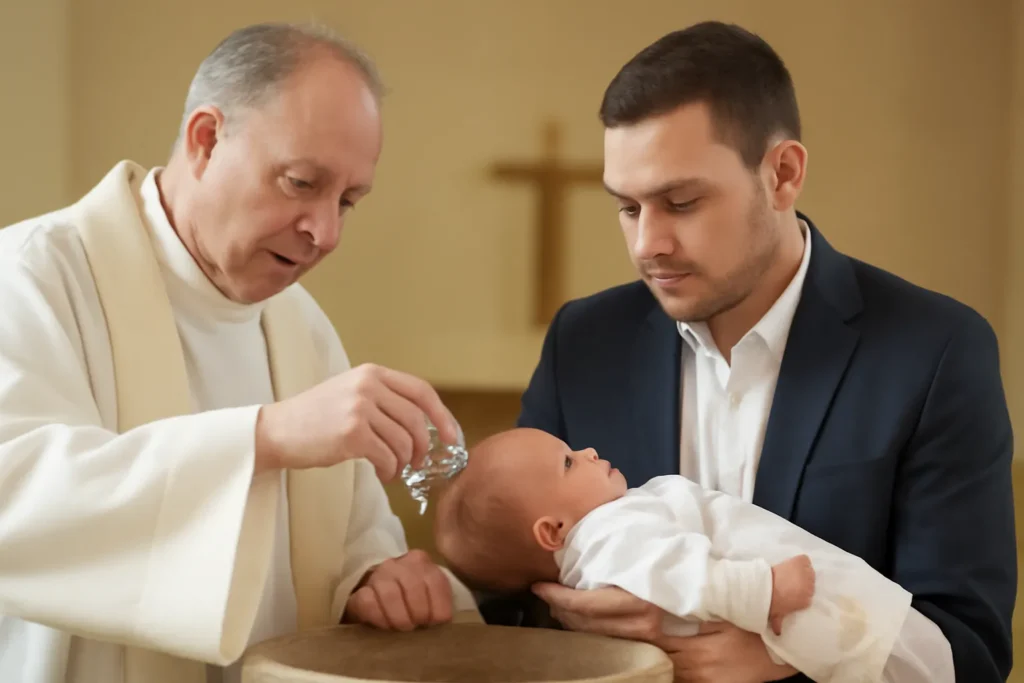
Infant baptism is practiced in many Catholic, Orthodox, Anglican, and some Protestant churches. It is often tied to the concept of covenant and grace extended to the child, with the expectation that the individual will later affirm faith personally (confirmation) and participate fully in the life of the church.
Believer’s baptism emphasizes personal confession of faith, repentance, and a conscious decision to follow Christ. It is common in many Baptist and Anabaptist communities and is usually performed after a person has professed faith.
Forms of Water Use: Immersion, Pouring, or Sprinkling
Immersion involves full or partial submersion in water and is seen in traditions that stress burying the old self and rising to new life with Christ.
Pouring (aspersion) is a practical and symbolic alternative used in many traditions where immersion is not feasible or where the symbolic meaning of cleansing remains central.
Sprinkling is a common form in some denominations and in congregations that emphasize the cleansing and purifying aspect of baptism in a gentler, symbolic manner.
Connection to Other Sacraments
In certain churches, baptism is consistently linked with other rituals, especially the Eucharist (or Holy Communion). In such contexts, baptism may be followed by regular participation in the Lord’s Supper as part of a continuous rhythm of grace and remembrance.
Frequency and Settings
Rituals may occur within a worship service or as a separate ceremony.
Some churches celebrate baptism as a sacramental moment within a larger liturgical calendar, while others place emphasis on spontaneous baptisms in response to a decision for faith.
Interpretive Lenses: Theological Emphases on the Baptism Def
Different Christian traditions articulate the baptism definition in ways that reflect their theological commitments.
In these traditions, baptism is commonly described as a sacrament, through which grace is conferred. Infant baptism is widely practiced, and the rite typically involves pouring or immersion, with an emphasis on incorporation into the Church and cleansing from original sin. The baptismal definition in these contexts includes a sense of uniting the person with the Body of Christ and the ongoing life of the Church.
Protestant and Anglican understandings of baptism definition vary. Some traditions stress baptism as an outward sign of inward faith and a covenantal rite that marks inclusion in the Christian community. Others highlight the grace of God and interpret baptism as a symbolic act of faith, repentance, and new birth. In many Anglican communities, infant baptism is paired with confirmation as a way to affirm faith publicly.
Believer’s Baptism and Anabaptist Traditions
The baptism meaning in Baptist and Anabaptist circles centers on personal faith and voluntary confession. Here, baptism is explicitly connected to a conscious response to the gospel and to the believer’s response to grace. The emphasis is often on the operator of faith and the avoidance of infant baptism, aligning with a conviction that baptism should follow personal decision.
Pentecostal and Charismatic Variants
In Pentecostal contexts, baptism may be associated with the baptism of the Holy Spirit, gifts of the Spirit, and a heightened sense of personal empowerment for mission. While the physical act of water baptism remains important, the emphasis may shift toward a transformative encounter with God that enables a Spirit-led life.
Restorationist and Latter-day Saint Perspectives
Some restorationist churches teach that baptism is essential for salvation and entry into a covenant community. In the Latter-day Saint tradition, baptism by immersion for the remission of sins is followed by confirmation and reception of the Holy Ghost, forming a framework for ongoing spiritual growth.
Common Misconceptions About Baptism
As with any ancient rite, a number of misunderstandings surround the concept of baptism def. Here are some frequent misconceptions and clarifications.
Baptism saves you apart from faith: In most traditions, baptism is a sign that communicates what God has already accomplished by grace; faith is the necessary response that receives the benefits symbolized in the rite.
Infants cannot understand baptism: In many communities, infant baptism is not about adult understanding but about covenant and the practice of community care, with the expectation of later confirmation or personal faith.
Water alone makes baptism valid: The act of baptism relies on the intention of the participant and the faith community. The symbolism of water works in combination with faith, grace, and community language.
All baptisms are identical: Different traditions use variations in modality (immersion, pouring, sprinkling) and timing (infant vs. believer’s baptism), reflecting distinct theologies and pastoral goals.
Ecumenical Reflections: Toward Unity in the Baptism Def
In contemporary Christian discourse, there is a growing emphasis on ecumenical dialogue around the baptism definition. While differences remain, many Christians recognize that baptism is a shared sign of the same gospel—God’s grace extended to the world through the church. Conversations focus on what all traditions can affirm: baptism as initiation into the people of God, a public witness to the gospel, and a step toward a life of discipleship.
Shared Commitments Across Traditions
Belief in the Trinity as a framework for the baptismal formula in many churches, especially in those with a Trinitarian baptism tradition.
Acknowledgment that baptism is a communal rite, not only a private or individual act.
An emphasis on the transformative potential of baptism, not merely as a ritual but as a lived faith response.
While agreements exist, the baptism meaning may differ in emphasis. Some communities stress grace and covenant, others emphasize proclamation and personal faith. The ongoing conversation seeks to preserve the integrity of each tradition while recognizing the shared central sign of divine grace.
Practical Guidance: If You Are Exploring The baptism definition
For individuals considering baptism or families preparing for infant baptism, practical questions often shape the journey. Here are some practical considerations that frequently come up in local church settings:
What is required to participate in baptism in your local church? Are there classes, interviews, or statements of faith to complete?
What is the form of the rite in your tradition—immersion, pouring, or sprinkling? Is there a preference or a doctrinal reason for the chosen form?
How does baptism relate to other steps in discipleship—catechesis, confirmation, or reception into membership?
What promises are made by sponsors or the church during infant baptism or believer’s baptism?
The practical steps often reflect the theological framework of the local community. If you are exploring this rite, it can be helpful to speak with a pastor, Christian educator, or a baptismal instructor to understand how the baptism definition is lived out in that particular tradition.
Conclusion: Embracing the Breadth of the Baptism Def
The baptism def across Christian traditions is a richly textured concept that communicates much more than a one-line definition. It is a ritual that enacts grace, solidarity, and identity within the Body of Christ. Whether expressed through infant baptism or believer’s baptism, whether performed through immersion, pouring, or sprinkling, the central significance remains: baptism marks a movement from separation to belonging, from sin to grace, from fear to trust in God’s promises.
In exploring the definition of baptism, readers encounter a tapestry of theological reflections, liturgical practices, and pastoral hopes. The meaning of baptism is not exhausted by a single description; instead, it unfolds as a dynamic rite that continues to shape lives and communities as they follow the Lamb who was slain and who calls his followers to live in love, justice, and peace.







Leave a Reply