History of Baptism: Origins, Practices, and How It Evolved
History of Baptism: Origins, Practices, and How It Evolved
Baptism has a history as intricate as it is enduring. From ancient cleansing rites to modern theological debates, the story of baptism unfolds across cultures, languages, and centuries. This article traces the history of baptism through its origins, its changing practices, and the ways it has evolved within diverse Christian communities. Along the way, you’ll encounter the many ways scholars, clergy, and laypeople have understood baptism’s meaning, its method, and its role in the life of faith.
Origins: Jewish Roots, Greek Hellenistic Influence, and the Baptism of John
To understand the origins of baptism, scholars look to two broad sources: biblical ritual washings in Judaism and the broader Greco‑Roman world’s fascination with purification and initiation rites. The Hebrew Bible and post‑biblical Jewish practice contain explicit and implicit forms of cleansing by immersion or partial immersion in water, including the tevillah ritual immersion described in rabbinic literature and the use of the mikveh, a ritual bath intended for purification, conversion, and spiritual renewal. In many respects, these cleansing rites were about separation from the old life and preparation for a new phase of communal living.
In the first century CE, the term baptizein—a Greek verb meaning to dip, plunge, or immerse—was already part of the wider Hellenistic vocabulary for ceremonial washings. The Gospel writers and apostolic authors used this word to convey more than mere washing; baptism signified entry into a new community and a new order of life. In this sense, the history of baptism in early Christianity begins with a convergence: Jewish purification motifs meet a distinctive Christian call to faith, repentance, and new birth.
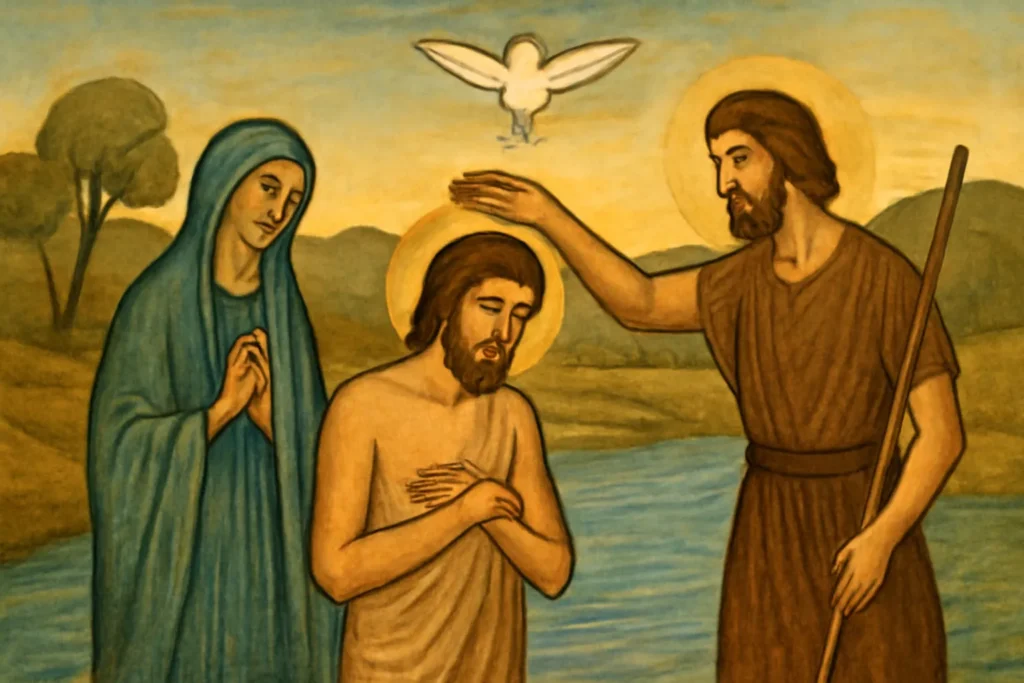
Central to the Jewish–Christian bridge in the baptismal history is the figure of John the Baptist. John operated in a landscape shaped by Jewish repentance movements that emphasized repentance and moral reform. His baptism of repentance in the Jordan River drew large crowds and carried a strong prophetic authority. The narrative emphasizes repentance as a prerequisite for the coming kingdom of God, and baptism became a public sign of that repentance. For many scholars, John’s rite did not merely imitate old purifications; it reinterpreted cleansing as a preparation for the imminent divine act that would bring greater renewal.
Another key dimension of the history of Christian baptism concerns how John’s baptism differed from what Jesus would do. When Jesus approached John to be baptized, he did so not for repentance but to identify with sinful humanity and to inaugurate his public ministry. This act, described in the Gospels, points toward the deeper sacramental meaning of baptism in Christian interpretation: baptism is not simply cleansing from sin but incorporation into the life of Christ and participation in the mission of the church. The nexus of these events is echoed in Paul’s letters, where baptism itself is seen as a participation in death and resurrection with Christ.
In addition to scriptural accounts, the early baptismal trajectory is also rooted in early Christian catechesis and community life. Prospective converts often underwent a period of instruction, moral formation, and discernment. The exact sequence—catechesis, renunciation of idols, confession of faith, and baptism—began to crystallize as a distinctive Christian initiation rite. The mode of baptism, the location (rivers, pools, or baptismal fonts), and the question of who administers the rite would all become topics of discussion in the understandings of the history of baptism as the church grew and diversified.
Early Practice: Immersion, Prayer, and the Rite of Initiation
John the Baptist, Jesus, and the Seedbed of the Rite
The earliest Christian communities treated baptism as a public sign of inclusion into the people of God. While John’s baptism was one of repentance, the early Christian baptism acquired a distinct christological focus: it was tied to faith in Jesus, acceptance of the gospel, and incorporation into the church’s life. In the New Testament, baptism is linked with the forgiveness of sins, the gift of the Holy Spirit, and a new identity as a disciple of Christ. These associations mark a shift in the baptismal history from a ritual purification to a transformative initiation into the people of God.
In practice, the earliest Christian baptism often occurred in settings where water was available, such as rivers, streams, or pools near house churches. Some early communities used immersion, while others practiced affusion (pouring) or aspersion (sprinkling) when immersion was impractical. The important thing, for the earliest believers, was not the exact method alone but the theological meaning: baptism as participation in the death and resurrection of Christ, and as a sign of belonging to a new creation.
The rite of baptism in the earliest centuries was frequently accompanied by instruction and public profession. Catechesis prepared the candidate for baptism, while baptism itself signified a break with former loyalties and a new allegiance to Christ. In many communities, baptism occurred along with the Eucharist, forming a central axis of worship and identity. The baptismal practice in the early church was thus deeply communal: the ritual was not a private act but a transition into the corporate life of believers who would share in the table of the Lord.
As the Christian movement spread across the Mediterranean world, regional customs emerged. Some communities maintained deliberate hours of fasting before baptism, others placed emphasis on the laying on of hands, prayers for the Holy Spirit, and anointing with oil as part of the broader rite of initiation. These variations contributed to a diverse, but interconnected, history of baptism across early Christian communities.
From Persecuted Movement to State-Religions: The Theological Turn and Institutionalization
As Christianity moved from a persecuted minority to an established religion within the Roman Empire and beyond, the practice and meaning of baptism shifted in response to new social and theological pressures. This transition gave rise to sustained debates about who should be baptized, what constitutes valid baptism, and how baptism relates to other sacraments and rites of the church. The baptismal history thus becomes a story of continuity and tension: continuity in its core meaning as initiation into Christ’s life, and tension in how it would be administered, by whom, and at what age.
One crucial line of development concerns infant baptism. In the second and third centuries, a growing number of communities began to baptize infants, influenced by interpretations of the covenantal promises and the belief that God's grace could be at work even in the life of a child. Over time, theologians like Augustine articulated arguments that helped ordinary Christians recognize infant baptism as a legitimate and essential practice, framing it as part of God’s gracious act and the church’s pastoral care for families. This turn would become a defining feature of Western Christianity and would shape the later distinctions between different Christian traditions.
Modes, Means, and the Theological Significance of Water
The manner in which baptism is performed has been a central topic in the history of baptism. Two broad questions repeatedly surface: what is the proper mode (immersion, pouring, or sprinkling), and what is the proper subject (adult believers or infants, or both in various traditions)? The answers have varied across time and place, often reflecting broader convictions about the nature of grace, community, and covenant.
In the earliest centuries, immersion was common in many communities, especially where river or lake water was readily available. Immersion carried a vivid symbolism: a death to the old life and a burial with Christ, followed by rising to new life. As Christianity spread to urban environments and large congregations, especially in the Western Roman world, practical considerations led to the widespread use of affusion (pouring) or aspersion (sprinkling) with water. These methods preserved the symbolic elements of baptism while accommodating larger crowds, infant baptisms, and temporary scarcity of full immersion venues.
Today, Christian traditions maintain a spectrum of practice. Some churches emphasize immersion as the most faithful sign of death and resurrection with Christ, while others value the solemnity and efficiency of pouring. The important theme in the baptismal theology remains that water is the sign through which God’s grace is conferred, whether by immersion or by pouring, and that the sacramental effect resides in God’s promise rather than the exact physical action alone.
Water as Sign, Sacrament, and Covenant
Across centuries, water has stood as a powerful and versatile symbol in the history of baptism. Water signifies cleansing from sin, initiation into the church, and union with Christ. It marks a boundary between the old life and the new life, between the world and the community of faith. In many traditions, baptism is closely linked to other rites—such as anointing with oil (chrism), the laying on of hands, and, in some places, a vocational and liturgical commissioning after baptism. This constellation of practices underscores the multi‑layered significance of baptism as both a spiritual turning point and a social event that marks a person’s entry into a shared life of worship and mission.
Administration and Believer’s Movement: Infant Baptism, Believer’s Baptism, and the Reformation
The question of who may be baptized has been one of the most contested issues in the history of baptism. A long pre‑Reformation pattern in the Western church leaned toward infant baptism, bolstered by theological arguments about covenant continuity, divine grace, and the role of the church in nurturing faith. The Protestant Reformation revived a critical debate about the mode and eligibility of baptism, giving rise to a range of practices and identities that persist to the present day.
Infant Baptism in Catholic and Orthodox Traditions
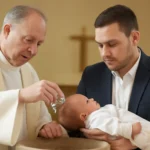
In the Catholic and Orthodox worlds, infant baptism has long been seen as essential to the reception of grace and the cleansing of original sin. Catholic practice emphasizes baptism as the entry into the life of grace, with the baptismal rite often accompanied by godparents, exorcisms, renunciations of sin, and a later, complementary catechetical formation. In the Orthodox Church, baptism is typically a three‑fold immersion performed in the name of the Holy Trinity, often immediately followed by chrismation (anointing with holy oil) and the Eucharist for infants. The overarching idea in these traditions is that baptism initiates a lifelong process of sanctification and participation in the life of the church.
The sixteenth century brought a radical rethinking of baptism’s eligibility. Anabaptists rejected infant baptism, arguing that baptism should be reserved for those who could consciously profess faith in Christ. They insisted on adult, believers’ baptism based on personal confession and repentance. This stance led to significant social and political tensions in many regions and gave rise to the term believer’s baptism as a defining feature of certain Protestant communities.
The Continent and Britain saw a broad spectrum of responses. Some reformers—Luther, Zwingli, and Calvin—adopted infant baptism but reinterpreted the ceremony in light of reformational theology. Others, including various Anabaptist and later Baptist groups, embraced believers’ baptism as a conscious confession of faith. The result is a diverse landscape of modern practice, where the history of baptism includes both the reaffirmation of infant baptism and the revival of adult baptism as a central practice in many ecclesial communities.
Denominational Traditions: How Baptism Is Practiced Across Churches
Across the Christian world, baptism has developed into distinct liturgical forms that reflect doctrinal emphases, ecclesial structures, and cultural contexts. Here is a concise map of how different traditions tend to approach the rite, while acknowledging shared core meanings of initiation, cleansing, and incorporation into the body of Christ.
Catholic Church: Infant baptism is common; water may be poured or immersion in some liturgical settings; the rite is connected to salvation, forgiveness of sins, and entry into the church, with confirmation (in the West) following later, and Eucharist as part of ongoing formation.
Eastern Orthodox Church: Typically uses triple immersion in the name of the Trinity; chrismation follows baptism; emphasis on mystical participation in the life of the church and the Holy Spirit.
Anglican and Episcopal Churches: Practice a broad spectrum from infant baptism with confirmation to adult baptism; liturgies emphasize the catechetical path and the covenantal community of faith.
Lutheran Churches: Infant baptism is standard; adoption of a liturgical form that includes the Word, water, and the promise of grace; often linked with confirmation in adolescence or adulthood.
Reformed and Presbyterian Traditions: Emphasize covenant theology; infant baptism is common; the rite is connected to the covenant community and the etiology of faith within the church’s instruction.
Baptist Traditions: Strong emphasis on believer’s baptism by immersion; church autonomy; baptism occurs as a public profession of faith by those who personally confess Jesus as Lord.
Anabaptist and Mennonite Groups: Early conviction that baptism should follow personal repentance and faith; often practices of adult baptism and a life of discipleship that follows baptism.
Pentecostal and Charismatic Churches: Emphasize the initial act of water baptism as entry into the community, often accompanied by a separate experience described as the baptism with the Holy Spirit, which may involve accompanying spiritual gifts.
Jehovah’s Witnesses: Practice baptism by immersion after a person has accepted their doctrinal framework; baptism is associated with entrance into the faith community and a commitment to living by its teachings.
Latter‑day Saints (Mormons): Baptism by immersion is required for membership; followed by confirmation and reception into the church; the rite is part of a broader program of covenants with God.
Rituals, Symbols, and Meanings Across Time
Beyond the question of who is baptized and how the rite is performed, the history of baptism is also a continuous study of symbols and accompanying practices. The water ritual is commonly paired with signs that convey cleansing, rebirth, and the recipient’s new status within the community. In many traditions, baptism is followed by the laying on of hands, prayers for the Holy Spirit, and, in Orthodox and Catholic contexts, anointing with oil. These elements highlight a broader sacramental logic: baptism is not a single moment but part of a larger sequence of rites that celebrate and secure spiritual transformation.
In art, liturgy, and ritual calendars, baptism has also taken on seasonal and liturgical significance. For example, in some Christian communities, baptism is celebrated on the feast of Easter or Epiphany, aligning with themes of resurrection and revelation. The symbolism of water — its cleansing, its life‑giving power, and its capacity to re-create—appears repeatedly in sermons, devotional writings, and catechetical manuals across centuries. The baptismal symbolism thus helps believers visualize and enter into the mystery of God’s grace through water and word.
Regional Variations and Global Perspectives
The global history of baptism shows how a single rite can acquire many forms while retaining a common meaning. In some regions, large outdoor baptismal rites along rivers or in open waters reflect the ancient practice of immersion; in others, indoor fonts and carefully liturgical liturgies emphasize sacramental precision and pastoral care. Cultural contexts—whether urban or rural, whether steeped in ancient liturgical tradition or vibrant with revivalist energy—shape how baptism is taught, celebrated, and remembered.
As a result, the history of baptism is also a history of community identity. For many Christians, baptism is a public testimony of belonging to a people who live by faith in Jesus Christ. For others, it is a lifelong process of discipleship that begins with the rite but continues through catechesis, service, and participation in the church’s mission. Across time and space, the story of baptism remains a reliable lens for understanding how communities understand grace, covenant, and the ongoing work of God in the world.
Modern Developments and Ecumenical Reflections
In recent centuries, the history of baptism has become an arena for ecumenical dialogue, biblical interpretation, and social engagement. Debates about baptismal eligibility and mode continue in some settings, while others emphasize the shared core of baptism as entry into the life of Christ and the church. In ecumenical conversations, scholars and church leaders explore common ground—such as the baptismal creed, the universal call to repentance, and the believer’s response of faith—while acknowledging the legitimate diversity of practice across denominations.
Contemporary discussions also consider the implications of baptism in a pluralistic world. Questions about baptism for same‑sex couples, interfaith families, and global mission challenge traditional boundaries and invite creative theological reflection. The history of baptism in the modern era thus becomes a living conversation: a dynamic negotiation of how best to communicate the gospel’s welcome, how to nurture faith communities, and how to honor the mystery and grace that baptism embodies.
Key Themes Across the History of Baptism
Purification and new birth: From cleansing rites to birth into a new life in Christ.
Initiation into community: Entry into the church as a visible sign of belonging and responsibility.
Authority and rite administration: The question of who can baptize and under what conditions, with divergent practices in different eras.
Mode and meaning: Immersion, pouring, or sprinkling—all reflecting theological commitments about grace, covenant, and church life.
Covenant theology and the shaping of church tradition: Infant baptism as inclusion in the covenant; believer’s baptism as personal profession of faith.
In sum, the history of baptism is not a single, unchanging story but a tapestry of interpretations and practices that respond to the needs and understandings of believers in every era. From the Jordan River to modern baptismal fonts, from the early Christian catechumenate to contemporary church campaigns for inclusion and mission, baptism has remained a core rite that signals God’s grace, invites faith, and binds communities into a shared life of witness in the world.
For readers exploring this subject, notable avenues for further study include the New Testament portraits of baptism, patristic writings on initiation, medieval and scholastic treatments of sacraments, Reformation debates, and current ecumenical discussions about baptism’s meaning in a diverse, pluralistic society. Each of these lines of inquiry reveals broader patterns in the history of baptism and helps illuminate why believers across different traditions continue to celebrate this ancient rite with reverence, curiosity, and hope.







Leave a Reply