What Is Baptism in the Catholic Church? A Comprehensive Guide to the Rite, Beliefs, and Significance
What Is Baptism in the Catholic Church? A Comprehensive Guide to the Rite, Beliefs, and Significance
In the Catholic Church, baptism is the first and foundational sacrament by which a person is incorporated into Christ and into the life of the Church. It is not merely a ceremonial act, but a sacred rite that communicates grace, designs the believer for a life of discipleship, and enrolls the individual among the people of God. This article offers a comprehensive guide to what baptism in the Catholic Church means, how the rite is celebrated, the beliefs behind it, and the significance it holds for individuals, families, and the wider community of faith.
Baptism in the Catholic tradition is the sacramental doorway into Christian life. It marks a person as a disciple of Christ and a member of the Church, making present the grace that saves. The Catholic understanding draws from Sacred Scripture, Sacred Tradition, and the teaching of the Magisterium. In short, baptism is the act by which a person is cleansed from sin, is born anew in the Spirit, and is brought into communion with the Father, the Son, and the Holy Spirit.
Historically, Catholic theology describes baptism as both a sign and a source of grace. As a sign, it points to the mystery of salvation already accomplished in Christ. As a source, it conveys actual grace that heals, reforms, and sanctifies the person being baptized. The Church teaches that through this merciful gift, the baptized person is drawn into the life of the Triune God and joined to the communion of believers. The effect of baptism is not simply an outward ritual; it is the transformation of the person’s inner life and their relationship with God.
Different expressions are used to refer to this sacrament, each highlighting a facet of its reality. For example, many people speak of the “sacrament of baptism,” the “baptismal rite,” or the “Catholic baptism.” Regardless of the phrase, the core meaning remains the same: an invitation into God’s grace and into the life of the Church, with responsibilities that accompany belonging to the Body of Christ.
The Catholic Church also emphasizes that baptism is most commonly received in infancy, but it is not limited to children. Baptism is also celebrated for adults who convert to Catholicism through the Rite of Christian Initiation of Adults (RCIA). In all cases, the essential elements—water, the Trinitarian formula, and the minister—are configured to express and confer the grace of God.
The rite of baptism: an overview of the main elements
The baptismal rite is a structured sequence of prayers, readings, signs, and actions that together declare and enact the salvation promised by Christ. While local customs can reflect cultural variety, the essential elements are consistent across the Catholic Church worldwide.
Preparation: The assembly gathers for the celebration, and the candidate (or candidates, if more than one) may prepare with sponsors and the priest. For infant baptism, parents and Godparents present themselves to make promises of faith on behalf of the child.
The Liturgy of the Word: Readings from Scripture and a homily open the heart to God’s saving plan in Christ. The proclamation of the Word invites the faithful to reflect on grace, conversion, and the life to which baptism calls them.
The Exorcisms and Renunciations: A series of prayers in which the Church renounces sin and the powers of darkness and expresses faith in Christ’s victory. In infant baptisms, these renunciations are professed on behalf of the child by the parents and godparents.
The Profession of Faith: The baptismal candidates or their sponsors profess the Nicene or Apostle’s Creed, publicly declaring belief in the Triune God and in the Church’s teaching. This profession expresses the faith that is being entrusted to the baptized person.
The Blessing of Water and the Preparation for Baptism
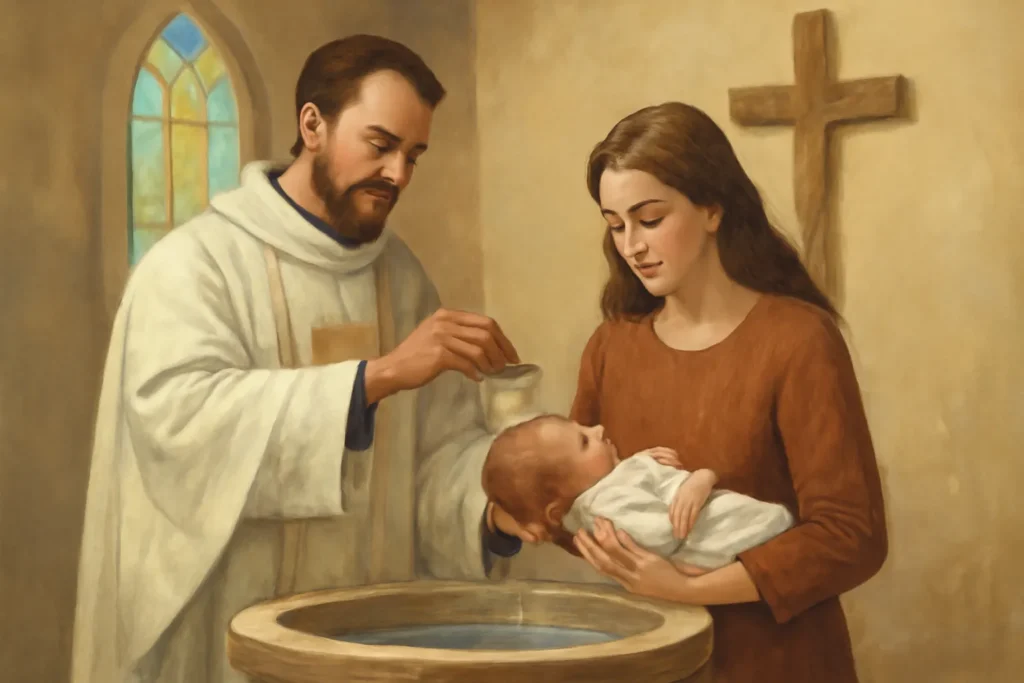
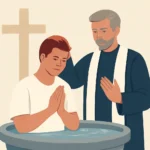
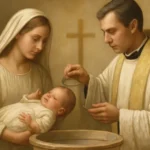
The Baptism: The essential moment when the candidate is washed with water (either by pouring three times over the head or by immersion) while the priest or minister pronounces the form: “N., I baptize you in the name of the Father, and of the Son, and of the Holy Spirit.”
The Anointing with Sacred Chrism: After the baptism, the newly baptized is anointed with sacred chrism as a seal of belonging to Christ and of receiving the gifts of the Holy Spirit.
The Clothing with a White Garment: Symbolizing new life in Christ and the virtue of purity. The white garment is assigned to the baptized to remind them to live as children of light.
The Lighting of the Paschal Candle: The candle, lit from the Easter candle, is given to the newly baptized by the sponsor to symbolize the light of Christ shining in the life of the faithful.
Conclusion and Welcome: The faith community welcomes the new member, and the celebration often includes a receiving of the Eucharist if the baptized person is already prepared for full communion.
The specific arrangements can vary, but the above sequence reflects the standard rhythm of the Catholic baptismal ceremony as found in liturgical books such as the Roman Rite.
Matter, form, and minister in Catholic baptism
To understand the Catholic doctrine of baptism, it is helpful to distinguish three essential aspects: matter, form, and minister.
Matter: Water
The matter of baptism is water, which serves as the physical sign conveying cleansing and new life. Water can be applied as a single or multiple pourings on the head, or, in some historic and regional practices, through immersion. What matters for validity is the use of water and the intention to baptize in the name of the Father, the Son, and the Holy Spirit. The water stands for spiritual reality: washing away sin, dying to the old self, and rising to share in Christ’s resurrection.
The form consists of the invocations spoken by the minister: “N., I baptize you in the name of the Father and of the Son and of the Holy Spirit.” The exact name is spoken for the candidate, and the Trinity’s invocation is essential to the sacrament’s validity. The language expresses the Catholic belief in the unity of the divine persons and the baptismal baptismal act’s connection to the life of the Trinity.
Minister: Who can baptize?
Under normal circumstances, the minister of baptism is a bishop, priest, or deacon, or another authorized person performing the rite in the celebration of the Church. In instances of danger of death or other extraordinary circumstances where no priest is available, anyone who has the intention to do what the Church does in baptism can validly baptize, using the correct form and with water. This exception reflects the Church’s concern to ensure access to the grace of baptism even in emergencies.
The theological significance of baptism
Baptism in the Catholic Church is more than a sign; it is the actual reception of grace that initiates a new life in Christ. The effects of the sacrament include the following:
Remission of sins: Original sin is washed away, and if there are actual sins, they are forgiven in the case of adults; for infants, anything that can be atoned for is entrusted to the grace of God.
Birth into the divine life: The baptized person becomes a child of God, part of Christ’s Body, and a temple of the Holy Spirit.
Incorporation into the Church: The believer is joined to the People of God and to the missionary life of the Church.
Adoption by God the Father: The baptismal person is welcomed as a son or daughter of the Father within the communion of saints.
Sanctifying grace and grace-filled life: The indwelling of the Holy Spirit enables a life of virtue and growth in holiness.
Responsive call to discipleship: Baptism marks a commitment to live as a disciple of Christ, to love God and neighbor, and to participate fully in the worship and mission of the Church.
In Catholic teaching, baptism is the “gateway” that makes possible the reception of the other sacraments. It does not guarantee automatic sinless living, but it establishes a life-transforming bond with Christ and the Church that invites ongoing conversion and fidelity to the Gospel.
Infant baptism and adult baptism: two paths into the Church
The Catholic Church values both infant baptism and baptism of adults who convert. Each path reflects different pastoral realities, but both share the same essential realities and purposes of the sacrament.
Infant baptism is common in the Catholic Church because it mirrors the universal human condition—original sin—and because early incorporation into the community of believers helps form a supportive Christian environment for the child. In this practice, the parents and godparents make solemn promises to raise the child in the Catholic faith and to lead a life consistent with the Gospel. The baptism initiates the child into the life of Christ, the Church, and a community of faith that will pray for and with the child as the family grows in faith.
Adult baptism or baptism through RCIA
For those who arrive later in life, the Catholic Church has a well-defined process called the Rite of Christian Initiation of Adults (RCIA). This program offers catechesis, liturgical formation, and spiritual preparation for those who wish to receive the sacrament of baptism, and often confirmation and the Eucharist as part of the Easter Vigil or on another suitable liturgical occasion. Adult baptism emphasizes a personal decision and a conscious assent to Christian belief and the life of faith after a period of discernment and instruction.
Both paths recognize that the gift of baptism remains the same in effect, though the journeys leading to it may differ. The Catholic Church considers that God’s grace is accessible to all who respond in faith, whether as a child or as an adult.
Godparents, sponsor roles, and the community dimension
The baptismal ceremony is not a private event but a communal act within the Church. Those who accompany the person to baptism—especially the godparents—have important responsibilities that extend beyond the moment of the rite.
Godparents: In infant baptisms, one or two godparents (one male and one female is common, though the Church allows two or more) are chosen to accompany the child in the faith. They commit themselves to helping the parents raise the child in the Catholic faith and to be witnesses of Christian living.
Sponsors: Adults who are baptized and confirmed may have sponsors or members of the parish who assist them in their faith journey and in integrating Catholic life into daily practice.
Family and parish community: The baptism acknowledges that the faith is nurtured within a larger community—the parish—where the newly baptized is welcomed, catechesis continues, and a network of prayer and support is formed.
In addition to these roles, the baptismal rite itself contains prayers for the child’s guardians, a request for the descent of the Holy Spirit, and blessings that reinforce the covenant between God and the baptized person and the Church.
Baptismal symbols and sacred signs
Several signs and items accompany the baptism, each carrying a layered meaning that points to the grace conferred by the sacrament. The Catholic ritual uses these tangible signs to reveal the spiritual reality at work.
Water: The primary symbol of cleansing, new birth, and life in the Spirit.
Chrism (sacred oil): The anointing with sacred chrism marks the baptized as a member of Christ the Priest, Prophet, and King, sharing in the mission of the Church.
White garment: Represents purity and the new life given to the believer.
Candle: A reminder that Christ is the light of the world, and the baptized are called to radiate that light in the world.
Salt (in some Western and regional rites): Symbolizes the preservation and seasoning of life with grace, though it is not universally used in all baptismal rites today.
Each symbol contributes to a fuller understanding of what the Catholic Church believes God is doing through baptism: cleansing from sin, enabling a new life in grace, integrating the believer into the body of Christ, and sending the believer into the world as a light of the Gospel.
Baptism and ecumenical relationships
The Catholic Church recognizes the sanctity and validity of baptism performed in other Christian communities provided certain conditions are met. If water is used and the Trinitarian formula is spoken with the intended meaning of baptizing, Catholic canon law generally accepts those baptisms as valid. This acknowledgement reflects the unity of the people of God in Christ, while also recognizing differences in theology, ecclesial structure, and the fullness of the sacramental life that Catholics believe is present within the Catholic Church.
When Catholics meet someone who has been baptized in another Christian tradition, the Church often accepts that baptism as a true baptism, though it is typically asked that that person joins the Catholic Church through the appropriate rite and may receive confirmation and the Eucharist in due time. In some ecumenical contexts, Catholics may also participate in or celebrate intercommunion arrangements when appropriate and guided by local bishops’ conferences and the Holy See.
Practical considerations: timings, expectations, and aftercare
Practices around baptism reflect pastoral realities, local customs, and liturgical calendars. Here are some practical points that families and catechists often consider:
Scheduling: For infants, baptism is often celebrated on Sundays after Mass or on feast days. For adults, baptism is typically part of the Easter Vigil or a suitable Sunday during the rubrical year, following RCIA process.
Preparation: Parents and Godparents participate in baptism preparation sessions to reflect on the meaning of the sacrament, the responsibilities involved, and the faith formation that will accompany the child.
Celebration of the Eucharist after baptism
Ongoing formation: The church encourages ongoing catechesis and participation in parish life to nourish the faith that baptism began.
Baptism in relation to the other sacraments
Within Catholic theology, baptism is the gateway to the other sacraments. It prepares the soul to receive the Holy Spirit more fully in Confirmation, and then to participate in the Eucharist, which is the source and summit of Catholic life. Baptism also lays the groundwork for a right relationship to reconciliation, marriage, holy orders, and anointing of the sick, depending on one’s state in life. The sequence of initiation—Baptism, Confirmation, and the Eucharist—forms the core of Catholic initiation and the formation of a mature, living faith.
Because it is foundational, the Church speaks of baptism as the door into the life of grace. Individuals baptized in the Catholic Church are then formed and nurtured by the Church’s teaching, sacraments, and sacramental life so that they can grow into a deeper friendship with Christ and a more faithful witness to the Gospel.
Common questions about Catholic baptism
Here are concise answers to some frequently asked questions about baptism in the Catholic Church. This section is intended to clarify key points that people often wonder about when approaching the sacrament.
The Catholic Church teaches that baptism is necessary for salvation in the sense that it is the ordinary means by which one enters the life of Christ and the Church. However, the Church also recognizes the possibility of salvation for those who, through no fault of their own, do not know Christ or His Church but seek God with a sincere heart and follow the paths of desire and grace. This is expressed in the concepts of baptism of desire and baptism by blood, which reflect God’s universal salvific will.
What if a child is not baptized soon after birth?
Catholic practice emphasizes the importance of baptism as soon as possible, but it also recognizes that delays can occur for legitimate reasons. The Church encourages families to arrange baptism with their parish and to begin faith formation promptly so that the child can grow in the life of grace as early as possible.
What happens if a person was baptized in another Christian tradition?
As noted above, if the baptism in another tradition used water and the Trinitarian formula with the intent to baptize in the name of the Father, Son, and Holy Spirit, it is generally considered valid by the Catholic Church. The person may then complete full reception of the Catholic sacramental life, including confirmation and the Eucharist, according to the canonical norms.
No. In Catholic theology, baptism can never be repeated because it imprints an indelible spiritual character, a permanent mark on the soul, that makes the baptized member a child of God and a member of the Church for life. If there is doubt about whether a baptism was valid, the Church provides discernment and pastoral care to resolve the matter.
Conclusion: the living meaning of baptism in Catholic life
Though the language may vary across cultures and languages, the core truth remains constant: baptism is God’s gracious invitation to a life in Christ. It marks a person’s entry into the Church, bestows divine life through grace, and calls the baptized to a journey of faith, hope, and love. It is the cognate of a lifelong Christian vocation—a gift that begins in a simple act of water and words and continues in daily conversion, prayer, worship, service to others, and participation in the sacramental life of the Church.
Whether addressing baptism in the Catholic Church for an infant, an adult convert, or a person seeking to understand the Catholic approach to the Christian initiation, the essential truth endures: through this holy rite, God’s grace is poured into human hearts, inviting each of us to live as new creations in Christ and to participate more fully in the mission of the Gospel.





Leave a Reply