Baptism Symbolism in Romans 6: Meaning and Significance
Baptism Symbolism in Romans 6: Meaning and Significance
In the letter to the Romans, the apostle Paul engages a vivid array of images to describe what happens
when a person is united to Christ by faith. Among these, the baptism imagery stands out as a
multifaceted symbol that ties together death, burial, resurrection, and a transformed life. Baptism in Romans 6 is not presented as a magical ceremony
that merely cleans the outside; it is a deeply instructive metaphor about identity, allegiance, and
the power to live differently because one stands in a new relationship with Jesus Christ.
Death, Burial, and Resurrection: Baptism as Union with Christ
The opening lines of Romans 6 center the mind on a decisive transfer: believers enter into a
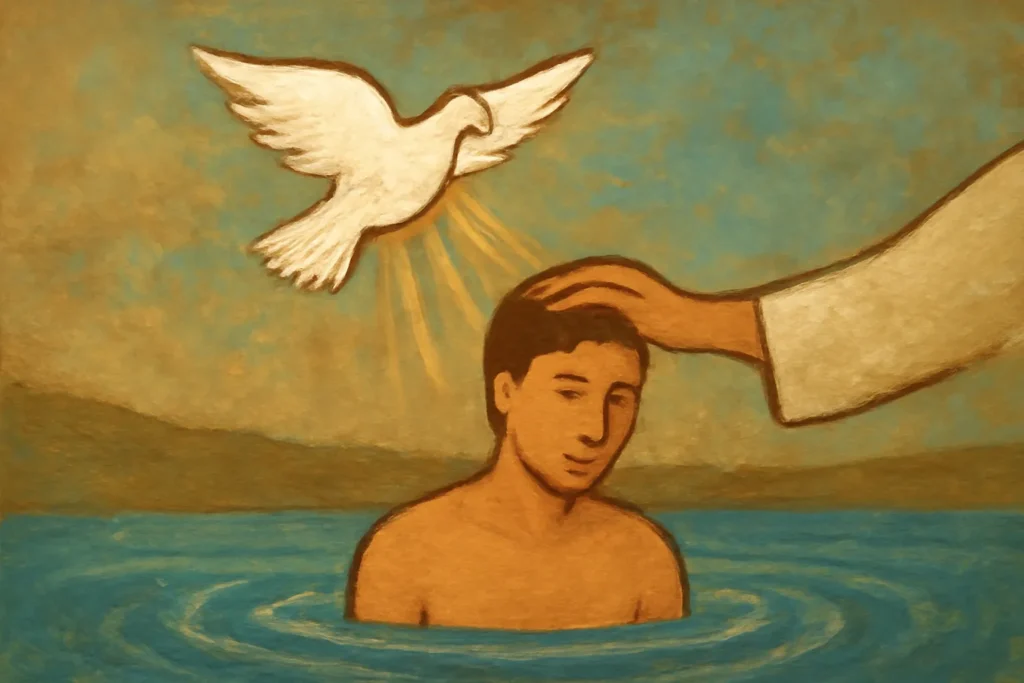
participation in Christ’s own death and resurrection. Paul writes that we are "buried with him through baptism into death" and that just as Christ was raised, we too may live a new life. In this framing, baptism becomes the narrative frame for what it means to be in Christ.
There is a powerful sequence of movements in this image. First is death to the old self and sin’s dominion—not a symbolic death only, but a foundational redefining of identity. Second is burial with Christ, a symbolic grave that signifies the end of the old life’s controlling power. Third is the resurrection to new life, a life marked by possibility, obedience, and a transformed will. Read together, these elements describe a holistic change that penetrates beliefs, desires, and habits.
In this sense, baptism in Romans 6 functions as a sacramental-like sign that encodes the believer’s union with Christ. It links participation in Jesus’ death with a corresponding participation in his resurrection. The effect is not magical; it is transformative and relational. The believer is no longer identified primarily by past sins or by ethnic or social status, but by a new standing in Christ—one that opens the door to living "in the Spirit" and turning away from patterns that once ruled the self.
Baptism as a concrete symbol of being in Christ
Paul’s wording emphasizes that baptism places the believer in a specific place: in Christ. This is not merely a ceremony; it is a statement about belonging. To be baptized into death with Christ is to acknowledge that sin’s punishment and power were borne by Jesus on the cross, and to confess that the believer’s life now belongs to God because Jesus’ life has been credited to him or her. The symbol thus communicates an ontological shift—the person is now defined by Christ’s work, not by his or her former failures.
Burial with Christ and the Road to New Life
A second central image in Romans 6 is that of burial. The language of burial is not incidental; it is chosen deliberately to illustrate
that the old life has been laid to rest. The dead person, when buried, is no longer exposed to the same forces that governed life above ground. Paul uses this image to explain how sin’s power is broken, not simply opposed. The act of burial serves as a decisive boundary marker: what was, has passed away; what is to come is a new life made possible by Christ’s resurrection.
A key effect of this burial symbolism is the emergence of a new orientation toward life. The believer is invited to live in a way that reflects resurrection life, not mere moral adjustment. This is why Paul can say that Christians should present themselves to God as people who are alive from the dead and whose members are instruments of righteousness. The burial imagery thus grounds practical living in a theological foundation: the life now lived is grounded in a reality bigger than personal effort.
Identity reorientation: The believer’s core identity shifts from being defined by sin to being defined by Christ.
Authority transfer: Sin’s “rule” or “dominion” is displaced by submission to God’s will.
Symbolic boundary: The grave marks a radical separation from the patterns that once controlled behavior.
When Paul uses the phrase that Christians are "buried with him through baptism into death," he is not describing a mere ritual. He is narrating a change in the person’s inner allegiances and the direction of life. The grave becomes a symbol for a choice to renounce the old life and embrace a life oriented toward God.
Resurrection and New Life: The Promise Attached to Baptism
If burial signals departure from the old life, resurrection proclaims the possibility of a new life. Romans 6 makes explicit that the purpose of this union with Christ—through baptism—is that believers might "live a new life." This is not about a reinvention of self by sheer human effort; it is about a life animated by the power and presence of the risen Christ. The image of resurrection in Paul’s argument functions as a guarantee of ongoing transformation and a forecast of future glory.
In this sense, baptism functions as a signpost toward eternal life begun in the present. The Christian does not wait for life to be renewed someday; the renewal begins now, by the Spirit who works through faith and the ongoing experience of Christ’s risen life. The symbolism of rising with Christ in baptism challenges believers to assess whether their daily rhythms reflect a life that is consistently oriented toward God’s reign.
The continuity between death and life in the Christian journey
The juxtaposition of dying and rising with Christ creates a dynamic pattern for the believer’s journey. The old life “dies” in the sense that its controlling powers lose their ultimate authority. Yet this is not merely negative—that is, it is not only about refusing sin. It is profoundly affirmative: a new life is given, sustained, and shaped by Christ’s victory. The calculus is simple in form, but profound in consequence: if you died with Christ, you also live with him, and if you live with Christ, you are called to live in a way that mirrors his righteousness.
Freedom from Sin and Slavery: The Ethical Grounding of Baptismal Imagery
Romans 6 explicitly frames baptism in the language of freedom. The Christian, having died to sin, is invited to no longer let sin reign in his or her mortal body. The imagery emphasizes that sin’s power to control behavior has been broken through the engaging work of Christ. In the ethical landscape of the letter, baptism symbolizes more than personal experience; it is a declaration that the believer’s life will be governed by a new master—God—rather than by the power of sin.
This section of Paul’s letter can be understood as a deep pastoral concern: how should a community shaped by grace and justified by faith live on a daily basis? The answer in Romans 6 is not vague. It is concrete and contract-like: present yourselves to God as those who have died to sin but are alive to God; let your body as an instrument of righteousness serve God rather than sin. This is where baptism’s symbolism takes on practical energy for life in the church and in the world.
Living as those who have died to sin
Contentment with grace, not fear of punishment—the believer now responds to God’s love rather than trying to earn approval through works.
Moral imagination reoriented—choices, desires, and relationships are reframed in light of new life.
Public witness—the life of a baptized believer becomes a testimony to the power of the gospel in everyday living.
Ethical Consequences: A Call to Sanctified Living
The ethical dimension of Romans 6 emerges directly from the baptismal imagery. If the believer has been joined to Christ in his death and resurrection, then Christ’s trajectory begins to shape the believer’s choices. The call to present oneself to God “as those who have been brought from death to life” becomes a framework for daily decisions: how we spend our time, how we treat others, how we use our talents, and how we resist the patterns of sin that once felt natural.
The language of instruments of righteousness—to use the old-burial metaphor in a positive sense—remains a central aim. The body becomes an instrument by which the new life is expressed. Baptism, in this sense, is not a one-time tag but a daily orientation: the believer continually negotiates the pull of sin and the call to live in tribute to God’s grace.
Renovated desires: desires aligned with love for God and neighbor replace patterns of self-centered or destructive behavior.
Rituals as reminders: baptism and related practices in the church can function as recurring reminders of the identity and call described in Romans 6.
Community accountability: a fellowship of believers can encourage one another to live in light of their baptismal identity.
Identity and Community: Baptism as Public Declaration
Beyond the individual spiritual transformation, baptism in Romans 6 functions as a public identification with a people—those who belong to Christ. While Romans 6 does not provide a detailed liturgical script, the symbolic weight of baptism suggests that the believer’s life should bear clear marks of allegiance to Jesus. In many Christian communities, baptism becomes a rite of initiation, a visible sign of inward change, and a shared proclamation of the gospel’s power to unite people across differences.
This communal dimension aligns with the broader biblical narrative in which baptism marks entry into the people of God. The imagery in Romans 6 helps explain why baptism is often celebrated after a profession of faith, not merely as a personal moment but as a covenantal sign that confirms belonging to the body of Christ. The symbolism of being buried with Christ, raised to new life, and joined to a community of believers is thus a powerful narrative for the church’s life together.
How baptism shapes ecclesial identity
Baptism marks the boundary between "before" and "after" in a believer’s story.
It signifies a shared story of death to sin and newness of life that transcends cultural and social divisions.
It creates a common ground for catechesis, worship, and service within the church body.
Washing, Cleansing, and Purification: Distinctions and Overlaps
While Romans 6 foregrounds baptism as a participation in death and resurrection, the broader New Testament canon also presents baptism alongside imagery of cleansing and purification. The symbolism of washing is closely associated with renewal and the setting apart of the believer for God’s purposes. In Paul’s argument, the cleansing motif is not separate from the death and resurrection motif; rather, it is woven into the same fabric of transformation. The cleansing that baptism pictures is primarily spiritual and moral, a removal of the guilt and power of sin, which is then synthesized with the gift of new life in Christ.
The resulting synthesis—forgiveness provided in Christ and transformation empowered by the Spirit—offers a robust picture of salvation that moves beyond mere ritual. Baptism, in this sense, serves as a theological signal that the old life has passed away and that a new patient and purposeful life of obedience has begun.
Different interpretive angles on the baptism image
Spiritual baptism, in which the believer’s union with Christ is experienced through faith and the work of the Spirit, not strictly through the outward act of water baptism.
Water baptism, as a rite of initiation and public confession, which visually communicates the inner reality described by Paul.
Covenantal symbolism, echoing the people of God’s covenant and the new identity created by belonging to Christ.
Historical Context and Theological Implications
Understanding Romans 6 in its first-century context helps illuminate why baptism is such a prominent symbol in Paul’s argument. In early Christian communities, baptism was a key marker of entry into the Jesus-following movement and a ritual that communicated alignment with the gospel’s claims about Jesus’ death and resurrection. Yet Paul’s emphasis—birth through death and new life—was not merely about the outward sign; it was about a transformation in the believer’s relationship to sin, self, and God. This makes baptism a deeply theological act that shapes preaching, catechesis, and pastoral care.
Contemporary readers can draw practical lessons from this: baptism points to a holistic salvation that integrates belief, allegiance, behavior, and communal life. It invites believers to read their daily lives through the lens of the cross and resurrection, to treat sin not as a mere moral failing, but as a misalignment with the life God intends for his people.
Variations in Baptismal Imagery: Broader Semantic Range
Romans 6 uses a cluster of interrelated images to convey a single, coherent truth: through faith in Christ, the believer enters a new life that begins in the present and culminates in future glorification. Beyond the explicit phrases of death, burial, and resurrection, several related images enrich the meaning and allow for broader theological reflection:
Identification with Christ's crucifixion as the moment of breaking the power of sin over life.
Union with Christ as the underlying solidarity that makes ethical renewal possible.
New identity that redefines the person’s vocation and purpose in the world.
Public declaration of faith and belonging to a community of believers.
Integrating Baptism Symbolism into Teaching and Worship
For pastors, educators, and lay leaders, Romans 6 offers several ways to teach this symbolism with clarity and pastoral sensitivity. Some practical approaches include:
Using the death-burial-resurrection sequence as a structural outline for sermons that address sin, repentance, and life in Christ.
Highlighting the ethics of new life by connecting Romans 6 to daily disciplines, such as prayer, confession, and acts of service.
Framing baptism as a liturgical memory that reorients believers each time they recall their baptism or witness others being baptized.
Encouraging effective catechesis that teaches not only the outward act but the inward reality it signifies.
Common Questions About Baptism in Romans 6
As readers and communities wrestle with the meaning of Romans 6, several pertinent questions frequently arise. This section offers concise answers that reflect the passage’s distinctive emphases while acknowledging broader Christian traditions.
Does Romans 6 teach water baptism as essential for salvation? The passage emphasizes a symbolic baptism into death and resurrection, but Paul’s focus is on union with Christ and the transformation that follows. Many traditions view water baptism as an important sign of that inward reality, while others emphasize an intimate, Spirit-initiated baptism that may occur apart from the outward rite.
What is the role of the Holy Spirit in Romans 6? The Spirit empowers believers to live in newness of life. While Romans 6 centers on baptism as a symbol of union with Christ, the Spirit’s work is the internal power that makes the new life possible and sustainable.
How should believers respond to this symbolism today? By living out the identity baptized into Christ—pursuing holiness, pursuing love, and embracing the freedom from sin that Paul describes—while also valuing the community life that baptism fosters.
In sum, the baptism symbolism in Romans 6 offers a rich, layered, and practical framework for understanding what it means to live as a disciple of Jesus. It anchors theological claims about sin, grace, and salvation in tangible imagery that believers can grasp, articulate, and embody. Whether approached as a spiritual reality, a liturgical rite, or a combination of both, the symbolism points toward a life reoriented by the death and resurrection of Christ—one that is lived not under the sway of sin, but in the freedom and power of God’s grace.
For readers exploring biblical theology, the Romans 6 baptism imagery stands as a robust example of how symbol and doctrine interact. It invites ongoing reflection on how personal faith translates into daily obedience, how public declarations of faith relate to private devotion, and how the church can faithfully communicate a message that is at once solemn, hopeful, and transformative.







Leave a Reply