After Communion Prayer: Meaning, Prayers, and Reflections
After Communion Prayer: Meaning, Prayers, and Reflections
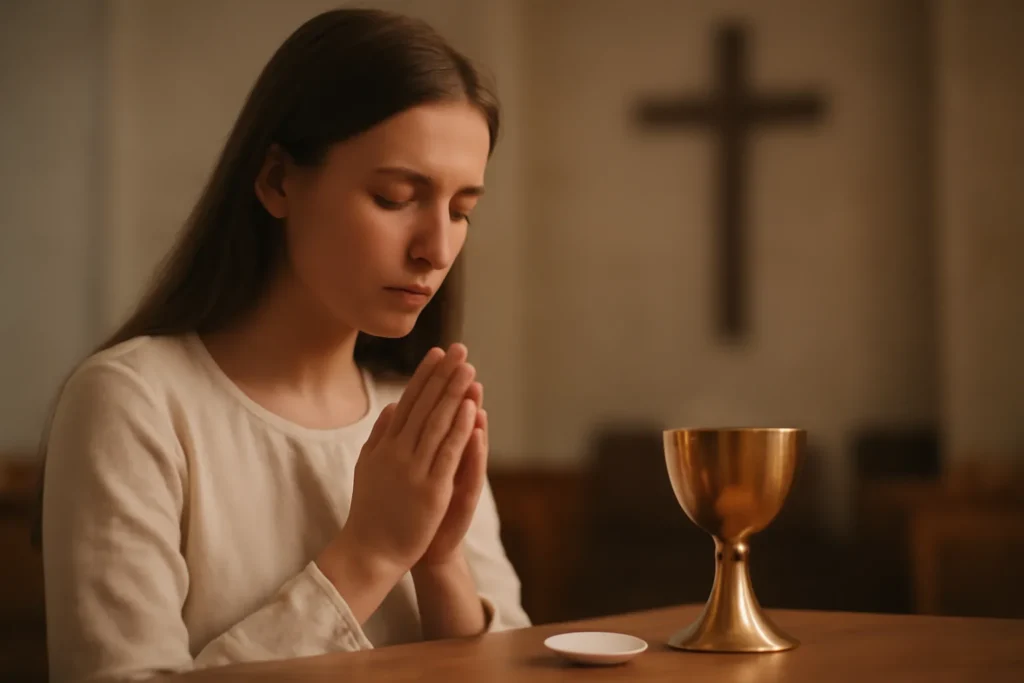
In many Christian traditions, the moment after receiving the Eucharist is treated as a distinct and sacred portion of the liturgy. The after Communion prayer, also called the post-Communion prayer, the prayer after Communion, or the Thanksgiving after the Eucharist, is more than a closing formula. It is a theological and spiritual practice that helps believers savor the gift just received, anchor the grace of the sacrament in daily life, and orient the Christian community toward mission and service. This article explores the meaning of the after-Communion practice, surveys prayers across traditions, and offers reflections on how to engage with this sacred moment in a way that enriches personal devotion and communal worship.
Meaning and purpose of the post-Communion practice
The after Communion moment serves several interrelated purposes. First, it is a time of gratitude for the gift of Christ’s presence in the Eucharist. Second, it signals a transition from a liturgical act to a life of discipleship, inviting the faithful to carry the grace received at the altar into the ordinary hours ahead. Third, it provides space for adoration and, in many communities, a period of quiet contemplation or prayerful listening. Finally, the after-Communion prayer often includes a practical dimension: a request for strength to live out the faith, a commitment to intercede for others, or a commissioning to acts of service and witness.
In some traditions, this moment emphasizes the union with Christ that the Eucharist confers. The believer is reminded that receiving the body and blood of Christ is not a distant event but a transformative encounter that invites transformation into Christ-like love. In this sense, the post-Communion reflection helps believers heed Jesus’ summons to abide in Him and to become the hands and feet of mercy in the world.
Across languages and cultures, there is a shared instinct to end the Communion rite with a prayer that grounds the blessing just received in concrete action. The after-communion devotion is not an abstract ending but a bridge to the next ordinary moment: family life, work, service, and mission. When done well, it becomes a deliberate catechetical moment—teaching the faithful how to translate Eucharistic faith into daily life.
Theological foundations of the post-Communion devotion
The practice of offering a prayer after Communion is rooted in both Scripture and early Christian worship. In John 6, Jesus speaks about eating His flesh and drinking His blood as a form of abiding life. While the exact words of the Gospel encounter are not a liturgical manual, they underscore the living reality that the Eucharist is bread for the journey and drink for the soul. The practice is also linked to passages that highlight thanksgiving, sacrifice, and intercession, such as 1 Thessalonians 5:18—“give thanks in all circumstances; for this is the will of God in Christ Jesus for you.” The after-Communion prayer, then, is a deliberate act of thanksgiving that acknowledges both the gift and the call that follows it.
Historically, early Christians often reserved a period of congregation-wide thanksgiving after the celebration of the Eucharist, with silent adoration and spoken prayers that expressed gratitude for the mysterious grace at work. Over the centuries, as liturgical books and rubrics developed, the post-Communion moment became more structured in some traditions, while remaining flexible and quiet in others. Regardless of form, the essential theology remains constant: the Eucharist is not a closed event but a portal into grace that invites a renewed life of faithfulness.
From a pastoral perspective, the post-Communion prayer is a way to articulate the pastoral goal of the Eucharist: to form a people who live out the peace of Christ, who forgive and are forgiven, and who extend mercy to a world in need. The prayer after Communion often centers on three focal verbs: thanksgiving, transformation, and mission. When these themes are present, the after-Communion practice becomes a concise catechesis in devotion, virtue, and vocation.
Variations across Christian traditions
Catholic and Anglican/Episcopal practice
In the Roman Catholic tradition, the aftermath of Holy Communion is typically followed by a brief period of quiet, a communal blessing, and a concluding prayer. The Prayer after Communion in many parishes may begin with a simple invitation such as “Let us pray,” and is often a short, standing-alone prayer that asks God to strengthen faith, increase charity, and grant grace for daily life. Some communities also use extended forms that reflect the monthly or seasonal lectionary, weaving in themes from the Scripture readings of the day.
In the Anglican and Episcopal churches, the post-Communion moment often includes a standard prayer after Communion that emphasizes thanksgiving and the sending forth of the faithful. The language can be slightly more expansive, reflecting the broader liturgical tradition that blends prayer, praise, and a commissioning to serve the world in Christ’s name. Some parishes reserve time for silent reverence, while others insert a brief congregational prayer of intercession for the church and the world before the final blessing.
Both Catholic and Anglican paths typically place a strong emphasis on the unity of the Body of Christ and the call to live out the sacramental grace in concrete acts of love, justice, and mercy. The form may differ, but the underlying aim is the same: to convert contemplation into action, and to translate Eucharistic reception into daily generosity.
Orthodox and Eastern Christian practice
In the Orthodox and Eastern traditions, the post-Communion moment can be marked by a serene silence, a longer period of private devotion, and a ritual act of giving thanks that may be recited aloud or whispered. Orthodox practice often highlights the sense of theology of thanksgiving (eucharistia) that permeates the entire liturgical life. The post-Communion prayers in many Orthodox communities are deeply rooted in the rich spiritual vocabulary of the Church Fathers and the liturgical hymns, emphasizing purification, transformation, and the blessing of daily life in light of the divine gift just received.
Lutheran, Reformed, and Protestant variations
In the Lutheran tradition, after receiving the elements, communicants commonly return to their place with a spirit of gratitude and contemplation, followed by a responsive prayer that thanks God for the sacrament and petitions that Christ’s life be formed in them. The focus is often on the grace that sustains faith and the mission to live out the gospel in daily work and relationships.
Among Reformed and broader Protestant groups, post-Communion devotion can be highly varied. Some congregations emphasize a brief “Thanksgiving” prayer and a period of quiet, while others incorporate a short litany of intercession for the church, the nation, and the needs of the world. Regardless of the exact form, the central aim remains: to acknowledge the sacrament’s gift and to invite ongoing conversion and service.
Non-denominational and ecumenical practice
In non-denominational or ecumenical settings, post-Communion prayers are often crafted to be inclusive and contemporary, focusing on personal gratitude, the presence of Christ, and the call to live out one’s faith in practical ways. These prayers may be short and informal, or they may be more structured as a brief litany of thanks, intercession, and blessing. The essential elements—thanksgiving, transformation, and a sense of mission—t recur across these contexts as well.
Common themes found in after-Communion prayers
Gratitude for the gift of the Eucharist and the grace God has poured into the soul.
Reparation for sins and failures, acknowledging God’s merciful forgiveness.
Transformation—a prayer that the grace received will shape the believer’s thoughts, words, and actions.
Adoration of Christ present in the sacrament and a desire to deepen the love of God.
Intercession for others—family, church, community, leaders, and those in need.
Commissioning or a renewed sense of vocation—to live out the gospel, serve the neighbor, and bear witness to Christ in daily life.
Unity with the Body of Christ—the prayer often affirms fellowship with fellow believers and the Church universal.
These recurring motifs may present themselves in different theological accents depending on a tradition’s emphases, but they form a coherent pattern: Eucharistic grace received is not a private treasure but a shared summons to love and service.
Examples of post-Communion prayers and reflections
Here are representative forms you might encounter or adapt in various Christian settings. They illustrate how after-Communion prayers can vary in tone—from formal and liturgical to intimate and personal—while preserving the core intention of thanksgiving, transformation, and mission.
Example A: Catholic-inspired post-Communion prayer (short form)
Let us pray. We thank you, O Lord, for this great gift at the table of your Son. Strengthen our faith and deepen our charity, that we may live as brothers and sisters of one another. Guard us from pride and indifference, and send us forth to love and heal the world in your name. Through Christ our Lord. Amen.
Lord, we thank you for the nourishment of your body and blood. May this sacrament seal in us the unity of the Body of Christ and empower us to go in peace to love and serve the Lord. May the grace we have received bear fruit in truth, mercy, and justice, in our homes, workplaces, and communities. Amen.
Example C: Orthodox-inspired thanksgiving after the Eucharist
We give thanks to you, O Master, who throne upon the cherubim, who has fed us with the heavenly food and granted us the body and blood of your New Covenant. Strengthen us by your grace to walk in your truth, to seek the good of all, and to be a living temple of your presence in the world. Grant rest to the weary and courage to the faithful. Amen.
Example D: Protestant contemporary post-Communion prayer
Gracious God, we are grateful for this gift of grace. Help us to carry the peace we have received into our daily lives. Teach us to serve with humility, to forgive as we have been forgiven, and to live in such a way that others may see your love through us. In Jesus’ name we pray. Amen.
These examples reflect a basic structure: thanksgiving, petition, and a sense of mission. You can adapt the language to fit your tradition, your congregation, and your own prayer style.
Practical guidance for praying after Communion
Best practices for personal post-Communion prayer
Silence and stillness: Allow time for quiet, listening for God’s guiding voice.
Scripture reading: Reflect on a short passage related to the Eucharist, such as John 6 or 1 Corinthians 11, and consider how it speaks to your life today.
Journaling: Write a brief note about what you received, what you feel moved to change, and whom you will pray for.
Petition and intercession: Lift up the needs of others—family, church, community, and world.
Contemplative acts: If you have time, engage in a brief act of service or an intention to do a good deed in the coming day.
Guidelines for group worship
Keep the post-Communion period focused and reverent; avoid long or distracting readings immediately after Communion.
Offer a short, inclusive prayer that all participants can join in aloud or silently.
Include a moment of silent adoration or a brief hymn that expresses gratitude and reverence.
End with a blessing or sending prayer that reinforces the mission aspect of the sacrament.
Tips for variety and breadth
Because churches differ in tradition and culture, you can introduce variety while preserving clarity. Consider alternating between a traditional, formal post-Communion prayer and a shorter, more contemporary form. You might also select a seasonally appropriate theme—gratitude in Thanksgiving, mercy during Lent, or hope during Advent—to keep the practice vibrant throughout the year.
Reflections on the after-Communion experience
Engaging with the after-Communion experience invites the faithful to move from the sacramental moment into action. Here are several lines of reflection that may enrich personal devotion or public worship:
For many believers, the post-Communion period becomes a daily rhythm: a morning or evening prayer that echoes the themes of gratitude, transformation, and the vocation to serve. This rhythm helps make the Eucharist a living reality rather than a fixed ritual. The practice supports spiritual growth by keeping the sacrament's grace in view as life unfolds with its joys and challenges.
In this sense, the after-Communion prayer is less about a single moment and more about a spiritual posture—an ongoing attentiveness to God’s presence, a readiness to forgive, a willingness to give, and a resolve to pursue justice and mercy. When this posture characterizes a believer or a community, the post-Communion experience loses its function as a closing formula and becomes a dynamic engine for spiritual fruitfulness.
A concluding perspective: cultivating a meaningful after-Communion habit
To cultivate a meaningful post-Communion habit, consider the following practical steps:
Intentional pause: Immediately after communion, take 30 seconds to pause with gratitude, allowing the sense of receiving Christ to settle in.
Personalized prayer: Use a short, personal prayer that expresses gratitude and asks for guidance for the day ahead.
Scripture reflection: Read a brief verse or a contemplative passage and reflect on its relevance to your current circumstances.
Intercession: Lift up specific people or needs, joining the wider church’s intercession with your own.
Action: Decide on one concrete act of mercy or service you can undertake in the next day or week as a tangible response to the sacrament.
Sharing: If you worship in a community, consider sharing a short intention with others and praying it together, if appropriate.
By approaching the after-Communion moment with intentionality, you enable the sacramental gift to permeate not just personal devotion but communal life as well. The after-Communion practice thus becomes a bridge—connecting the heavenly reality celebrated at the altar with the earthly reality of daily living.
Final considerations: inclusivity, accessibility, and continuity
Any discussion of the after-Communion prayer should honor the diversity of Christian worship. Some congregations emphasize liturgical precision and set texts, while others prize spontaneous, Spirit-led prayer. Both approaches can foster authentic encounter with God when grounded in reverence and scriptural sensibility.
Accessibility matters too. For people with hearing or cognitive differences, provide clear, concise prayers, printed or projected in the service, and offer an opportunity to participate in different ways—spoken, sung, or silent. The value of this moment does not rest in a single form but in the depth of communion with Christ and the shared commitment to live out that communion in love.
Ultimately, the after-Communion devotion invites believers to a sustained posture of thanksgiving, transformation, and mission. It is a moment that gathers grace, invites reflection, and sends forth the Church with renewed vigor to be a sign and instrument of God’s kingdom. Whether you encounter a short, quiet pause or a richly liturgical conclusion, let this moment be a teacher and a catalyst—shaping the hours ahead as a living response to the gift of Christ’s presence in the Eucharist.






Leave a Reply