Advent Candles and Colors: Meaning, Traditions, and Home Decor
Advent is a season of preparation, reflection, and hopeful anticipation that precedes the celebration of Christmas. Central to many homes and churches is the Advent wreath, a living circle of evergreens adorned with candles whose colors carry symbolism for each week. The practice of lighting candles during Advent offers a tangible rhythm to the season: a weekly, then daily, reminder that time moves toward the coming of Christ. In this article, you will find a thorough overview of the candle colors, their meanings, the associated traditions, and practical ideas for incorporating these elements into your home decor with depth and intention.
Origins and Meaning: Why candles and colors?
The combination of an Advent wreath and candles emerged from European Christian liturgical practices, blending symbolism with a creative, family-centered way to mark the weeks of waiting. The circular wreath itself symbolizes eternity, continuity, and the unbroken life of faith. The candles add a temporal dimension: each light represents a week of Advent, the growth of hope, and the expectation that the Light will come into the world.
Across different Christian traditions, the colors chosen for Advent candles are selected to highlight the emotional and spiritual tone of each week. While the most common palette is a triad of Purple (Violet) candles with a single Rose (Pink) candle, you will also encounter variations that reflect regional customs or particular denominations. Understanding these color choices helps families interpret scripture readings, prayers, and music associated with each Sunday.
Colors and Their Meanings
The traditional purple (violet) candles: preparation and penance
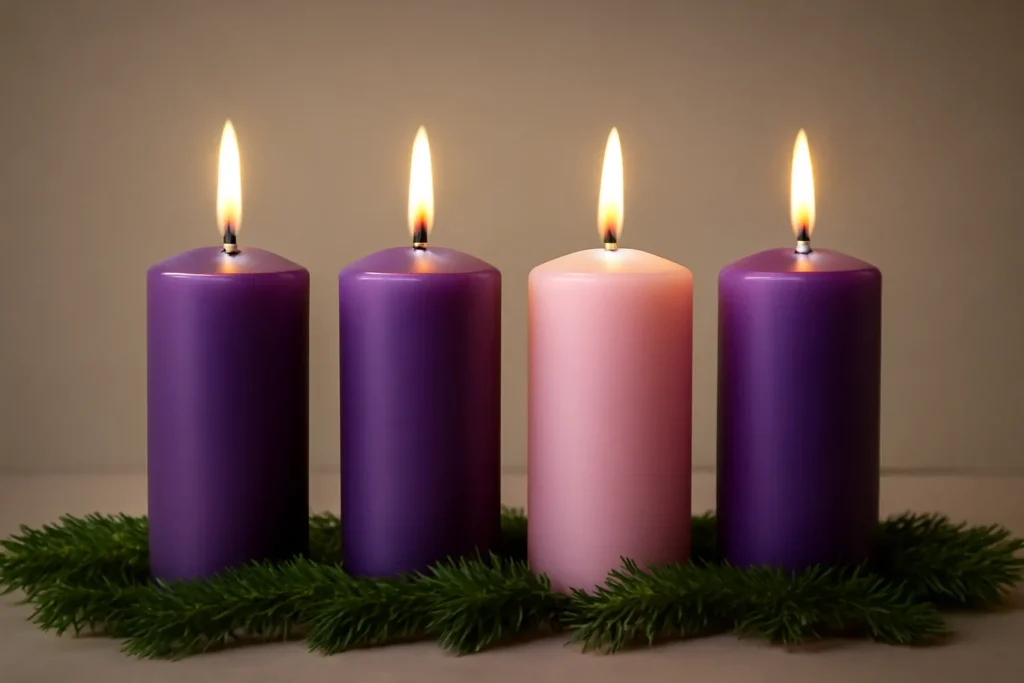
The classic arrangement features three purple (violet) candles and one pink (rose) candle on the wreath, often accompanied by a center white or gold candle that is lit on Christmas Eve or Christmas Day. The Purple color conveys penitence, humility, and the expectation of Christ’s coming. It signals a sober yet hopeful mood—an invitation to examine one’s life and prepare the heart for a holy season.
In many homes, each purple candle is associated with a specific theme for the week: hope, preparation, and watchfulness. The lighting ritual becomes a guided practice of reflection, prayer, and family conversation. In liturgical contexts, purple is a sign of preparation and repentance, inviting believers to a more intentional pace during Advent.
The rose (pink) candle: joy in the midst of waiting
The single rose candle is lit on the third Sunday of Advent, known as Gaudete Sunday in the Latin tradition, which means “rejoice.” This candle marks a shift in the season from penance and anticipation toward a more joyful mood as Christmas draws near. The rose color symbolizes a renewed sense of hope and celebration that sits alongside the ongoing season of waiting.
In many households, lighting the rose candle is a moment for gratitude and communal singing. It is a reminder that even while we prepare for the feast, there is reason to rejoice in the mercy and anticipation fulfilled in the coming of Christ.
Blue Advent candles: a northern or Protestant variation
In some Protestant or Scandinavian traditions, the color palette for Advent candles shifts toward blue. Blue can convey the same themes of expectation and longing as purple, but it carries its own cultural resonance in places where blue is associated with the season. Blue Advent candles may appear in wreaths or as part of home displays, offering a more contemporary or regional flavor while preserving the sense of liturgical tempo.
If you encounter blue candles, you might see them arranged with two blues and two purples, or with one blue in place of a purple, depending on the family tradition. The key idea remains: a gradual awakening of faith, heightened by the seasonal rhythm of lighting and prayer.
White and gold: Christmas lights, purity, and culmination
Some homes or churches supplement the traditional four-candle arrangement with a Christ candle in the center—usually white or gold—to be lit on Christmas Eve or Christmas Day. The white Christ candle represents the light of Christ entering the world, the fulfillment of the season’s longing, and the purity of the Nativity narrative. In other cultural contexts, a golden center candle carries a sense of triumph and joy that culminates the Advent journey.
When used, the center candle is typically larger or more prominent and serves as a focal point for the final weeks of Advent. Families may light the center candle at the evening meal on Christmas Eve or during Christmas morning celebrations, turning the ritual into a bridge from Advent to the Christmas season.
Advent Wreaths: Structure, design, and variations
The typical Advent wreath is a circular evergreen arrangement adorned with candles, evergreens, berries, ribbons, and sometimes additional symbols. The evergreen itself is a symbol of life and resilience through winter’s long nights. The different color schemes and decorative accents can enhance spiritual meaning while also serving as a seasonal home décor element.
Standard four-candle setup
Three purple (violet) candles and one pink (rose) candle arranged around the wreath, with space for a central Christ candle.
A center Christ candle (white or gold) lit on Christmas Eve or Christmas Day in many traditions.
Possible variations include two blue candles and two purple candles instead of the standard trio of purple candles, depending on regional practice.
Five-candle or regional variations
In some settings, a five-candle wreath exists, featuring four outer candles plus a separate inner or central candle. The outer colors may be arranged as two blues and two purples or as a mix that reflects local custom.
Some households replace one purple candle with blue or switch to all purple or all blue for a less traditional, more contemporary aesthetic.
Others adopt a mixed palette that includes white or gold accents on the wreath in addition to the outer candles, creating a dual symbolism of Advent waiting and Christmas arrival.
Design and symbolism in wreath decor
Evergreen branches symbolize eternal life and steadfast faith, a constant reminder that God’s promises endure beyond winter’s dark days.
Ribbons, pine cones, and berries can echo the candle colors or introduce complementary tones like ivory, silver, or deep green for a harmonious seasonal look.
Natural elements such as cinnamon sticks or citrus slices can add scent and symbolic warmth, enhancing the sensory experience of Advent.
The ritual of lighting candles guides daily or weekly contemplation. The order and interpretation can vary by tradition, but a common pattern helps families structure their devotion and conversations.
First Sunday: Light the first purple candle and, if applicable, the accompanying blue candle. The reading and reflection often focus on hope and the anticipation of the coming Light.
Second Sunday: Light the second purple candle. Reflections commonly center on preparation and the call to spiritual readiness.
Third Sunday (Gaudete Sunday): Light the pink/rose candle in addition to the first two purples. This week is a moment of joy amid waiting, recognizing God’s mercy already at work.
Fourth Sunday: Light the fourth purple candle (and the rose candle if not already lit). The emphasis often expands to watchfulness and community faith as Christmas draws near.
Christmas Eve/Day: If a center Christ candle is present, it is lit to mark the arrival of Christ, signaling the transition from Advent to Christmas.
Some families begin the season with a solemn color emphasis (purple/violet) and gradually introduce the rose candle as a sign of changing mood. Others follow a blue Advent scheme, especially in congregations that observe a calendar with blue as the liturgical color for Advent. Regardless of color scheme, the practice encourages calm, family conversation, and spiritual focus during a busy time of year.
Advent candles and home decor: practical decorating ideas
The colors of Advent candles can become a unifying design thread throughout your home. Below are ideas to translate liturgical symbolism into a warm, welcoming decor that remains meaningful.
Wreath as a centerpiece or door accent
Hang a classic Advent wreath on a door, fireplace mantel, or kitchen table as a visual anchor for the season. Use coordinating ribbons that reflect your color scheme—e.g., deep purple velvet ribbons with rose accents or a cool blue and silver palette for a modern look.
When space is limited, opt for a compact wreath placed on a tray with other seasonal elements like pinecones, citrus slices, and a few candles to echo the four-week rhythm.
For safety and practicality, place the wreath on a heat-resistant surface away from drafts, pets, and small children, and consider using LED flameless candles for daytime displays.
Table settings that reflect Advent colors
Set a table runner or placemats in purple and rose with white or gold accents to symbolize Advent’s progression toward the Nativity.
Use cloth napkins in alternating colors or a single color with small evergreen sprigs at each place setting to create a cohesive, festive feel.
Place a mini Advent wreath or a velvet-couching centerpiece near the table as a focal point for daily family devotionals.
Mantel and living room accents
In the living spaces, incorporate evergreen garlands intertwined with lights in purple, rose, or blue to echo the candles’ color story.
Display framed scripture verses or prayers near the garland to invite daily reflection during Advent.
Use seasonal ornaments that echo the candle colors—glass spheres in violet and pink, or matte ceramic stars in blue and white—to create a cohesive look without clutter.
Decorating with symbolism beyond color
Include symbols of waiting and light: lanterns, small stars, or a miniature manger scene. These elements reinforce the narrative of longing and fulfillment central to Advent.
Consider a family prayer board. Each week add a short reflection or a prayer task that aligns with the candle’s theme, encouraging participation from children and guests alike.
If you prefer a minimalist aesthetic, focus on a single color accent in a clean, modern design—perhaps a sleek wreath with a single rose candle and a white Christ candle—so the symbolism remains clear without visual clutter.
Practical tips for working with Advent candles at home
Safe placement: Place candles on heat-resistant trays or holders on a sturdy, non-flammable surface. Keep them away from curtains, papers, or decorative elements that could catch fire.
Supervision: Never leave burning candles unattended. Extinguish all candles before leaving a room or going to sleep.
Stability: Use stable holders to prevent tipping. If you have pets or small children, consider using LED advent candles or battery-operated LED lights as a safer alternative for daytime display.
Wreath maintenance: Refresh evergreens as needed and lightly mist with water to keep the greens looking fresh throughout the season.
Color coordination: If you are starting new traditions, choose a color palette that resonates with your family’s beliefs and aesthetics—whether traditional purple/rose or a blue-inspired scheme—and stay consistent to preserve the symbolism.
Variations by tradition and culture
Advent traditions vary across regions and denominations, and these differences are often reflected in color choices, candle counts, and ritual practices. Exploring these variations can deepen appreciation for the season’s universality and its local expressions.
In many Catholic, Anglican, and Lutheran communities, the purple candles anchor the wreath with a single rose candle lit on Gaudete Sunday. The Christ candle in the center is often reserved for Christmas Eve, giving a climactic finish to the Advent journey. The readings, prayers, and hymns in these traditions tend to emphasize themes of repentance, longing, and eventual fulfillment.
Some Protestant traditions in Northern Europe favor a blue Advent palette, which can reflect historical liturgical choices and regional symbolism. In certain homes, two blue candles and two purple candles stand in for the standard arrangement, or a full set of blue candles replaces purple. The Gaudete Sunday moment, if observed, is often marked with a rose candle regardless of the color scheme. The overall tone remains one of hopeful anticipation and moral preparation.
In some Eastern Christian contexts, Advent is observed differently from Western calendars, and candle symbolism may be integrated with the fasts, feasts, and worship cycles particular to that tradition. Colors can vary, and instead of a strict four-candle scheme, households may adopt a simple prayer rhythm that uses light and scent as reminders of the coming Light.
Across the globe, contemporary Christian households experiment with a variety of designs—two tones, mixed metallic accents, or entirely nontraditional shades. The underlying idea is to make the Advent season meaningful in a modern home while preserving the core rhythm of counting down to Christmas. Whether you favor classic symbolism or a minimalist aesthetic, the essential practice remains the same: deliberate time for reflection, gratitude, and community.
Advent candles and education: teaching themes with color and light
Advent is an excellent opportunity to involve children and guests in a learning experience about symbolism, history, and liturgical practice. Color, light, and ritual become accessible pathways to discuss deeper questions about hope, preparation, joy, and celebration.
Discussion prompts by candle week
First purple candle: What does it mean to prepare, not just to hurry? How can we prepare our hearts and homes for good news?
Second purple candle: In what ways can we practice patience and generosity during this season?
Rose candle: What brings you joy in the midst of anticipation? How can joy coexist with longing?
Fourth purple candle: How does community support help us stay hopeful and faithful through Advent?
Christ candle (center): How does the incarnation change the way we view time, light, and love?
Frequently asked questions about Advent candles and colors
Why are there four candles on the Advent wreath?
Traditionally, four candles represent the four weeks of Advent. In some versions, a center Christ candle is added for Christmas Eve or Christmas Day to symbolize Jesus as the Light entering the world.
What do the colors mean exactly?
Aptronyms vary by tradition, but common meanings are:
Purple (violet): preparation and penitence
Rose (pink): joy in anticipation
Blue: alternate liturgical color in some Advent calendars
White (or gold): Christ’s birth, light, and purity when used for the center candle
Can Advent candles be used for home décor year-round?
Yes, especially if you enjoy a color-themed natural ambiance. Consider swapping the lit candles or recreating the arrangement with non-flame lighting for safety during the rest of the year.
Is an Advent wreath necessary?
No—many households enjoy the practice without a wreath. The candles, readings, and prayers can be adapted to a single candle on a table, a small display on a mantel, or even a decorative centerpiece with colored candles and symbolic elements.
Conclusion: embracing tradition, meaning, and home comfort
Whether you follow a strict liturgical calendar or simply enjoy the warmth and symbolism of candles during the winter season, Advent candles and colors offer a meaningful framework for daily life. The colors themselves carry a language—purple signaling preparation, rose signaling joy, blue offering an alternative tone, and white or gold signaling fulfillment and light—that can deepen conversations, enhance family routines, and elevate home décor with intention.
By combining ancient symbolism with modern décor, you can create a welcoming, reflective atmosphere that is both aesthetically pleasing and spiritually enriching. The goal is not to rigidly replicate a tradition but to make a personal practice that invites stillness, gratitude, and hope. If you decide to experiment with color palettes, candle counts, or centerpieces, remember that the most important candle in the room is the one that lights up conversation, strengthens togetherness, and encourages compassionate acts during the Advent season.









Leave a Reply