Introduction: Bible artwork as a doorway to faith, culture, and craft
Bible artwork is not a single genre but a vast field that spans centuries, geographies, and media. From the glow of medieval stained glass windows to the psychological depth of a Baroque altarpiece, from illuminated manuscripts that shimmer with gold to contemporary paintings that reinterpret ancient stories, biblical imagery has served as a conduit for devotion, instruction, and communal memory. This article offers a comprehensive guide to the masterpieces, styles, and meanings embedded in bible art, and it provides practical guidance for readers who wish to read these works with greater clarity and sensitivity. Whether you are a student of art history, a believer seeking deeper understanding, or simply curious about how artists have rendered sacred narratives, the journey through biblical imagery reveals a great deal about faith, culture, and the human eye.
What exactly is Bible artwork?
The term bible artwork encompasses any visual creation whose subject matter is drawn from the Bible—the sacred scriptures of Judaism and Christianity, which together form a rich repository of narratives, characters, symbols, and theological themes. This broad category includes:
Iconography and symbolic representation in churches and chapels
Illuminated manuscripts and book illustration
Frescoes, panel paintings, altarpieces, and sculpture
Stained glass and other liturgical art that educates worshippers
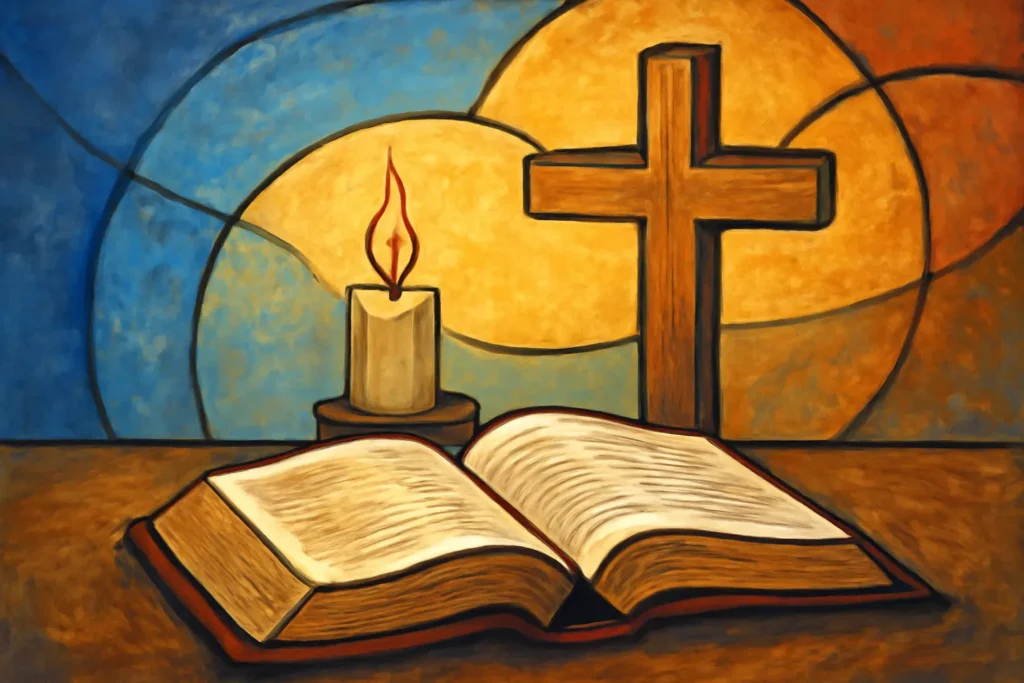
Contemporary bible artwork in painting, drawing, digital media, comics, and installation art
The aim of bible art is often didactic, devotional, and commemorative. It communicates narratives and theological meanings even to those who cannot read the text, while also inviting interpretation, contemplation, and dialogue. The study of these works combines art history, theology, archaeology, and aesthetics, showing how different cultures visualize the sacred and how artists translate ancient words into visual form.
Historical horizons: epochs and turning points in Bible artwork
The story of bible artwork is a long conversation between text and image. Each era added its own conventions, technologies, and sensibilities. Here is a compact map of major periods, with notes on what makes the artwork of each era distinctive.
Early Christian and Byzantine art
In the first centuries after Christ, Christian art was often symbolic rather than naturalistic. Iconography—the system of symbols and motifs—took center stage in the creation of icons, mummy-like mosaics, and frescoed walls. In the Byzantine world, hallowed space, gold backgrounds, and frontal, solemn figures conveyed timeless truths rather than momentary realism. These works prioritized didactic clarity, liturgical use, and the experience of transcendence.
Medieval and Gothic transformations
As Christian Europe shifted toward more expressive narrative cycles, bible art became more legible to public worshippers. Illuminated manuscripts expanded in size and ornament; stained glass windows turned churches into luminous catechisms. Artisans experimented with naturalistic detail within a symbolic framework, and the stories of the Bible grew into communal, theatrical experiences for parishioners and pilgrims.
Renaissance and humanism
The Renaissance reframed biblical storytelling through a revived interest in antiquity, human anatomy, perspective, and naturalism. Great painters such as Leonardo da Vinci, Raphael, and Michelangelo reinterpreted biblical scenes with psychological depth, technical mastery, and innovative composition. Yet even as artists pursued realism, they remained attentive to theological symbolism, typology, and the purpose of art within worship.
Baroque and beyond
The Baroque era brought drama, movement, and emotional intensity to biblical narratives. Works by Caravaggio, Rubens, and Bernini fused light and shadow, dynamic composition, and sensuous color to illuminate spiritual conflict, mercy, and judgment. Beyond the Baroque, modern and contemporary art reimagined biblical themes in new media and with diverse perspectives, expanding the field while often raising questions about authority, tradition, and relevance.
Styles, media, and techniques in Bible artwork
The visual language of bible art is as varied as the periods in which it was produced. Understanding the technical choices helps viewers read the works more accurately and appreciate the decisions that shape meaning.
Fresco and wall painting
Fresco is a durable method in which pigments are applied to damp plaster. It creates a seamless integration with architecture and lends itself to large biblical cycles on church walls and chapels. Fresco cycles often narrate multiple scenes in chronological order, instructing viewers as they move through a sacred space.
In panel painting, artists use wooden boards prepared with gesso and paint with tempera or oil. Altarpieces—often triptychs or polyptychs—were centerpieces of liturgical ritual and devotional life, functioning as visual sermons that accompany the Mass and processions.
Icon painting and iconography
Icons in the Byzantine and Orthodox traditions are not just pictures but acts of prayer and windows to the divine. They adhere to conventions of proportion, gaze, and gesture that convey spiritual meanings, often emphasizing the revelatory presence of holy figures.
Illuminated manuscripts
In the medieval and early modern world, illuminated manuscripts used gold leaf, vibrant pigments, and meticulous script to illustrate biblical texts, psalms, and prayers. The interplay of text and image in these manuscripts enhances the sense of sacred speech made visible.
Sculpture and relief
Sculptors contributed to the Bible’s visual culture through relief sculpture on altars, portals, and tomb sculptures, as well as freestanding figures. Three-dimensional form could dramatize biblical momenta with tactile presence, drawing the viewer into tactile and emotional engagement.
Stained glass and light
The stained glass windows of medieval and Gothic churches turned color and light into a sacred alphabet. The luminous language of glass communicates biblical narratives through form, color, and rhythm of light that shifts with the day and seasons.
Modern media and reinterpretation
In modern and contemporary practice, artists work in painting, printmaking, photography, digital media, and installation. These works may revisit biblical episodes from fresh angles, explore personal spirituality, or critique tradition. Regardless of medium, the aim remains: to illuminate, challenge, or nourish the viewer’s encounter with scripture and meaning.
Subjects and motifs: what biblical imagery often shows
Bible narratives provide a repertoire of scenes, figures, and motifs that recur across cultures and centuries. Understanding these common subjects helps viewers interpret unfamiliar works and recognize the intent behind a composition.
New Testament scenes
The Annunciation (Gabriel announces to Mary)
The Nativity (Birth of Jesus) and the Adoration of the Magi
Christ healing the sick and other miracles
The Last Supper and the institution of the Eucharist
The Crucifixion and the Resurrection
The Apostolic journeys and early Christian scenes
Old Testament narratives
Creation and the Fall, the Flood, and the Patriarchs
The Exodus from Egypt and the Red Sea crossing
Stories of Prophets and visions (Isaiah, Ezekiel, Jeremiah)
Iconic scenes like David and Goliath, Daniel in the Lions’ Den, and the Song of Songs
Parables, typology, and allegory
Bible art often conveys moral and theological meaning through parables, symbolic figures, and typology—where events or characters in the Old Testament foreshadow those of the New Testament. This layered storytelling invites contemplation about fulfillment, covenant, and divine mercy.
Images of saints and prophets frequently appear in biblical art as models of virtue, warning, intercession, or advocacy. The presence of angels, archangels, and heavenly hosts likewise signals the transcendent dimension of scripture.
Masterpieces across regions: landmark works in Bible imagery
While the spine of Bible artwork runs through Europe, the global scope of Christian art means notable works appear in diverse contexts. Here are some representative masterpieces and the regions that fostered them.
Italian masters and centers of vision
Arena Chapel (Cappella degli Scrovegni) in Padua, Giotto di Bondone — fresco cycles of the Passion and the Virgin
Fra Angelico — Annunciation and other sacred paintings that fuse clarity, devotion, and transcendence
Leonardo da Vinci — The Last Supper (Milan) and his studies of anatomy and perspective
Raphael — The Transfiguration (Rome) and Christ Blessing cycles
Michelangelo — ceiling scenes from Genesis and The Creation in the Sistine Chapel, along with biblical figures in the Last Judgment
Northern European traditions
Gothic altarpieces and illuminated manuscripts from regions such as Flanders, the Netherlands, and Germany
Jan van Eyck, Rogier van der Weyden, and Dirk Bouts — theological depth conveyed through meticulous realism and symbolism
Christ figures and scenes from the Life of Christ and the Passion cycle in altarpieces and polyptychs
Spanish and Portuguese sacred painting
Spanish Baroque artists—Velázquez and Zurbarán—interpreted biblical subjects with drama, light, and moral clarity
Portuguese and Flemish influences in the Iberian world enriched devotional painting and altarpieces
Byzantine and Eastern Christian art
Iconographic cycles in churches, with emphasis on theophany and liturgical function
Iconostases and mosaics that guide contemplative prayer through repeated forms and hierarchical scale
Modern reinterpretations and contemporary voices
Graphic novels and illustrated Bibles that retell biblical stories for new audiences
Contemporary painters exploring biblical themes with non-traditional materials, urban settings, or abstract forms
Public art installations that reframe biblical narratives in relation to current social and ethical questions
How to read Bible artwork: a practical guide for viewers
Looking at bible artwork is an encounter with language in color, form, and symbol. The following steps can help you derive a richer understanding without requiring a specialized art-history background.
Start by recognizing the narrative or figure depicted. Is it a New Testament scene like the Annunciation, a miracle, or the Crucifixion? Or does it illustrate an Old Testament event like the Expulsion from Eden or Jonah and the Whale? Pinpointing the moment helps you interpret the emotion and message the artist aims to convey.
Read symbolic language and iconography
Biblical art often communicates through symbols: lambs and doves for Christ, keys for St. Peter, halos representing sacred status, and the use of #colors# to indicate virtues or vices. Familiarize yourself with common motifs, but also be attentive to local variations—symbolic language can shift with culture and era.
Consider composition and focal points
How the painter arranges figures and objects affects meaning. A central, monumental figure may signify authority or blessing; a diagonal line might create dynamic tension; a gaze directed toward a figure outside the frame can invite the viewer to participate in the scene. The composition helps guide your emotional and spiritual reading.
Context matters: liturgical, patron, and cultural frames
Many works were created for specific churches, chapels, or patrons, so their iconography often aligns with devotional practices, the sermon cycle, or the donor’s wishes. Understanding the historical and liturgical context can reveal layers of meaning that might not be immediately evident from the image alone.
When comparing different media—fresco vs. panel painting vs. stained glass—note how each medium alters the viewer’s experience. Fresco integrates with architecture and time of day; stained glass alters light and mood; a carved altarpiece makes the biblical scene tangible in three dimensions. Each choice shapes how the story is perceived.
The deeper meanings: theology, pedagogy, and devotion in Bible artwork
Bible imagery carries multiple layers of meaning. Beyond telling a story, art can teach doctrinal truths, commemorate covenants, and invite spiritual reflection. The following themes recur across periods and regions.
Visual art communicates essential beliefs—such as the divinity and humanity of Christ, the Trinity, and the sacred role of Mary and the saints—through codified forms. Even when the text is not present, the image can articulate how the Church understands salvation, incarnation, and mercy.
Didactic and catechetical functions
For centuries, congregations learned from images as much as from reading. The cycle of scenes in a church, or a carefully crafted altar piece, served as a public catechism—teaching the faithful through narrative, dialogue between figures, and moral instruction.
Didactic reach in modern reinterpretations
Contemporary artists often revisit biblical stories to address present concerns—justice, mercy, vulnerability, and resilience. This recontextualization invites new audiences to encounter timeless questions: what do these stories mean now? how do they speak to contemporary life? and what is the role of faith in a plural, pluralistic world?
Preservation, collection, and display: caring for Bible artwork
The stewardship of sacred images requires careful attention to conservation, handling, and display ethics. Whether in a parish, a museum, or a private collection, several principles help ensure the longevity and accessibility of these works.
Conservation ethics emphasize minimal intervention and documentation of a work’s history.
Environmental controls—stable temperature, humidity, and light levels—protect fragile materials such as pigments, parchment, and wood.
Interpretive labeling and contextual information aid viewers in understanding the biblical references, historical background, and artistic method.
Access and inclusivity ensure that diverse audiences can engage with Bible imagery, including translations of captions, accessible viewing spaces, and educational programs.
Museums and churches alike increasingly present biblical art through digital catalogs, high-resolution imagery, and virtual tours, enabling a global audience to study masterpieces and to explore regional variations without compromising physical integrity.
Practical tips for a rich encounter with Bible artwork
Approach with prior knowledge: a brief reading on the narrative can deepen your comprehension as you view the artwork.
Observe the face and gaze: what emotions do the figures convey? How does the artist direct your attention?
Note color and light: how do they set mood, indicate divinity, or dramatize a moment?
Pay attention to setting and landscape: is the scene set within a symbolic space or a realistic environment?
Look for repetition of motifs across works and periods to understand shared theological concerns.
For those studying Bible imagery academically, it can be helpful to create a small catalog of motifs, media, and regions. For example, track shows of typology (Old Testament figures foreshadowing New Testament realities) or analyze how a single scene is reimagined by a different artist or culture.
Glossary of terms and concepts you’ll encounter
Iconography: the set of symbols, figures, and motifs used to convey sacred meanings.
Typology: a narrative technique in which events or persons in the Old Testament prefigure those in the New Testament.
Altarpiece: a painted or sculpted work placed behind an altar, often serving as a focal point for devotion.
Fresco: a mural painting executed on freshly laid lime plaster, ensuring durability and integration with architecture.
Illuminated manuscript: a hand-held book with decorative borders, initials, and miniature illustrations, often with gold leaf.
Altar cycle: a sequence of scenes presented together to tell a continuous story, typically in a single altarpiece or series.
Conclusion: the living conversation of Bible artwork
Bible artwork stands at the intersection of devotion, culture, and artistry. Its long history demonstrates how communities across time have used images to engage with sacred narratives, to teach, to worship, and to imagine. From the solemnity of Byzantine icons to the dramatic intensity of Baroque altarpieces, from the delicate pages of medieval manuscripts to the bold experiments of contemporary painters, bible art remains a dynamic field that invites ongoing study and attentive viewing. When you step before a work of biblical imagery, you are not just witnessing a representation of a story—you are entering a dialogue between text, painter, patron, and viewer. The meaning unfolds in layers: the visible form, the symbolic language, the devotional purpose, and the wider cultural moment that gave rise to the piece. For all these reasons, exploring bible artwork is not only an art-historical pursuit; it is a way of encountering faith through shared human creativity.
Whether you are visiting a grand cathedral, flipping through a richly illustrated manuscript, or exploring a modern reinterpretation, approach Bible imagery with curiosity, respect, and a readiness to learn. In doing so, you’ll discover not only the masterpieces themselves but also the meanings they have carried—and continue to carry—for generations of believers and admirers.





Leave a Reply